DKMA to provide beneficiary cards to Muslim working women too

[email protected] (CD Network | Suresh)
September 27, 2016

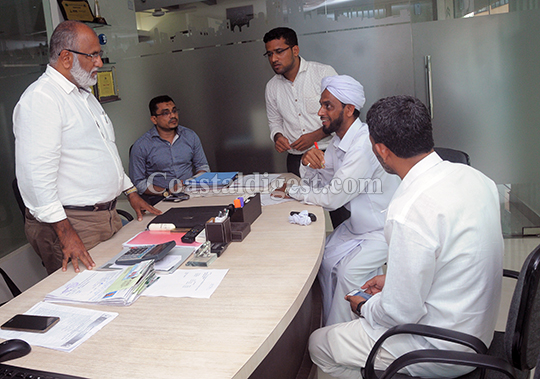
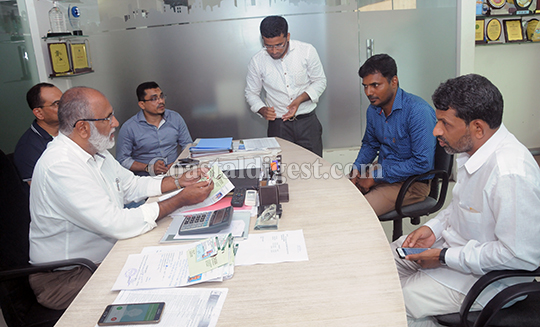
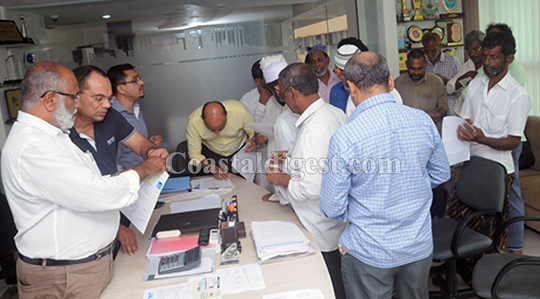
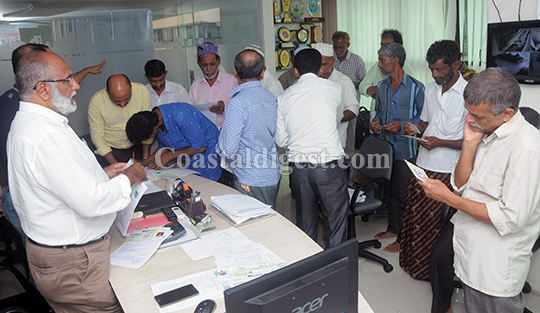
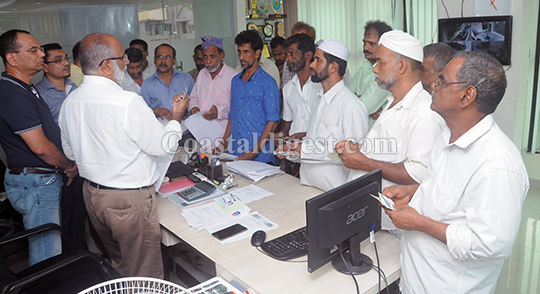
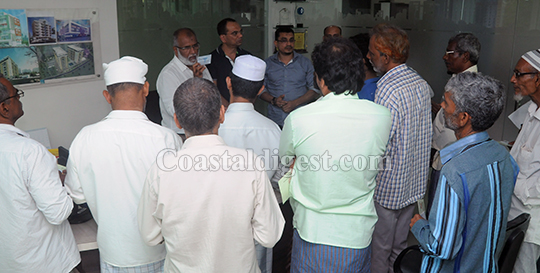
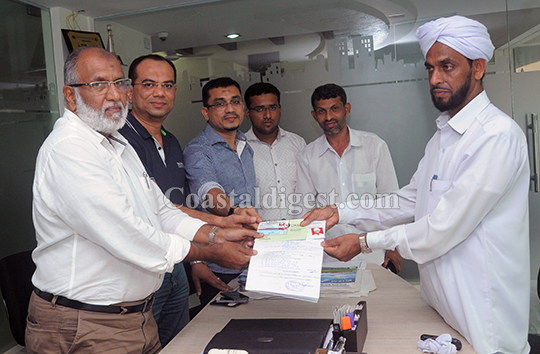
Mangaluru, Sep 27: Dakshina Kannada Muslim Association, a newly formed group of philanthropists, has said that it would distribute beneficiary cards to the Muslim working women too if they were found eligible.
smr 2

S M Rashid Haji, the president of the Association told media persons on Tuesday that they have already distributed cards to around 85 beneficiaries.

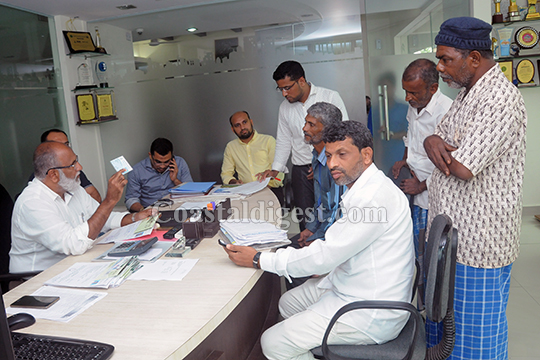
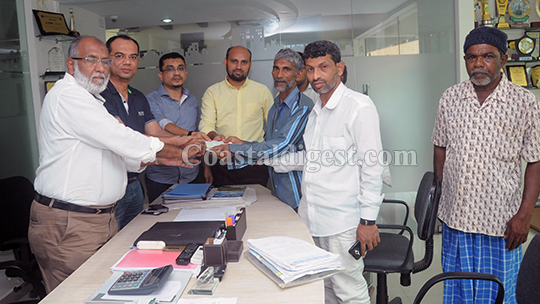
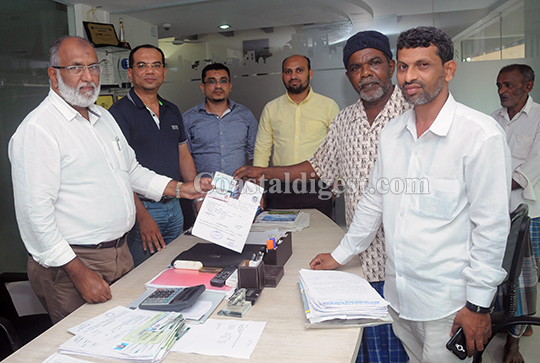
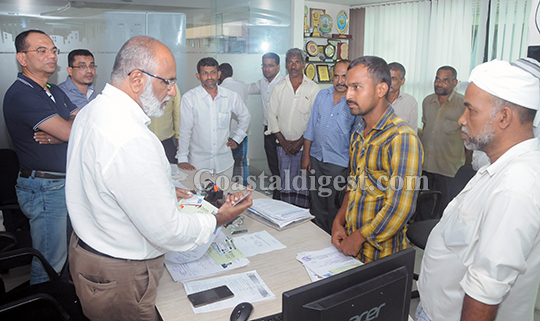
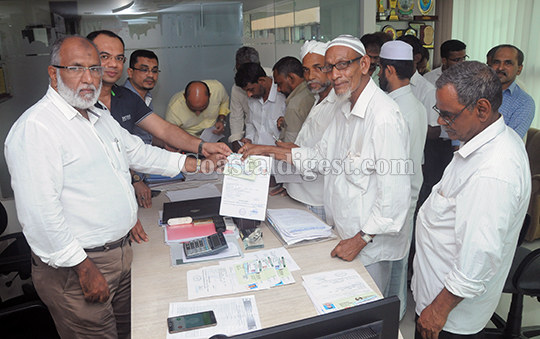
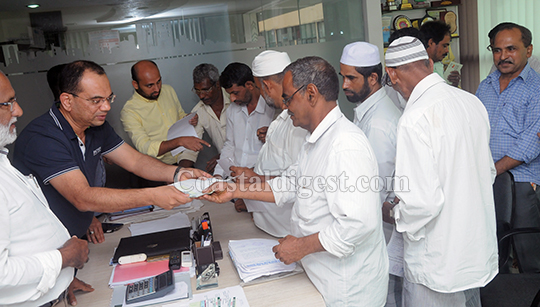
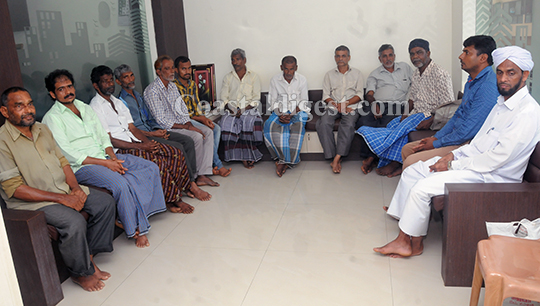
“Today, we distributed beneficiary cards, health cards and free SIM cards to the sole bread winners of 32 poor families. In the past we had distributed such cards to over 50 beneficiaries,” he said.

He said that aspirants of the beneficiary cards can still apply for the same with a certificate from their jurisdictional mosque jamaaths. The last date to submit applications is November 30, 2016.

The intention behind the formation of the Association was to help the poor families in case of the sudden demise of their breadwinners. The Association will donate Rs 2 lakh to the family of each beneficiary card holder after his or her demise.

The families of only those who get beneficiary cards from DKMA will be eligible to receive the amount after their demise. They beneficiaries will also be eligible to get free treatment at Yenepoya Medical College Hospital at Deralakatte.

He said that the Association will distribute beneficiary cards the poor men or women only if they were the breadwinners of their family. “Cards will not be distributed to those who don't work,” he clarified.

Donors Mansoor Azad, Shaukath, Asif Home Plus and Sulaiman Karaya were present on the occasion.

Also Read: DK Muslim Association' launched to help bereaved Muslim families
smr 1

smr 3

smr 4

smr 5

smr 6

smr 7

smr 8

smr 9

smr 10

smr 11

smr 12

smr 15

smr 16

Comments

Shahul
 - 
Wednesday, 28 Sep 2016

Masha allah

Good work by DKMA commendable. Keep it up.

Add new comment

  • Coastaldigest.com reserves the right to delete or block any comments.
  • Coastaldigset.com is not responsible for its readers’ comments.
  • Comments that are abusive, incendiary or irrelevant are strictly prohibited.
  • Please use a genuine email ID and provide your name to avoid reject.
Agencies
January 1,2020

Kanpur, Jan 1: In a seemingly bizarre development, the IIT in Kanpur has set up a panel to decide whether the poem "Hum dekhenge lazim hai ki hum bhi dekhenge", penned by Faiz Ahmad Faiz, is anti-Hindu.

The panel has been set up in response to complaints filed by a faculty member who claimed that the students, during a protest, sang this poem which was anti-Hindu.

The poem reads thus -- "Lazim hai ke hum bhi dekhenge. Jab arz-e-Khuda ke kaabe se. Sab bhut uthwaye jayenge, Hum ahl-e-safa mardood-e-harm. Masnad pe bithaye jayenge. Sab taaj uchale jaenge. Sab takht giraye jayenge. Bas naam rahega Allah ka. Hum dekhenge."

It was the last line that has turned into a bone of contention. Translated into English, it means, 'When thrones will vanish, only Allah's name will remain' -- implying the misleading translation by the professor.

The poem had been written by Faiz in reference to military dictator Zia-ul-Haq in 1979 and was against the military rule in Pakistan. Faiz had left leanings and was an atheist. He was known for his revolutionary writings that kept him in jail for several years.

It may be recalled that the IIT-Kanpur students had taken out a peaceful march on the campus on December 17 in support of the students of Jamia Millia Islamia and during the march, the students sang the Faiz poem.

According to IIT Deputy director Manindra Agarwal: "In the video, the students are seen reciting the Faiz poem which can also be perceived as being anti-Hindu.

The IIT faculty member, in his complaint, has alleged that the students made anti-India and communal statements during their demonstration in solidarity with the Jamia students.

The complaint was based on two lines of the poem, which have obviously been misinterpreted -- "When all idols will be removed, only Allah's name will remain."

The faculty member has stated that "organisers and masterminds must be identified and expelled immediately."

Fifteen other students have also signed the complaint filed by the professor against the protesting students.

Meanwhile, IIT students have said that the faculty member who lodged the complaint has been banned on a social networking site for posting communal content.

In an article published on the IIT-Kanpur student media portal, the students clarified what exactly happened on the day of protest and how their chant was given a 'communal and misleading' turn. They stated that they had recited a few lines of the Faiz poem in reference to the police crackdown on the Jamia students.

Comments

Add new comment

  • Coastaldigest.com reserves the right to delete or block any comments.
  • Coastaldigset.com is not responsible for its readers’ comments.
  • Comments that are abusive, incendiary or irrelevant are strictly prohibited.
  • Please use a genuine email ID and provide your name to avoid reject.
News Network
July 12,2020

Bosnia, Jul 12: Bosnians commemorated on Saturday the massacre of about 8,000 Muslim men and boys in Srebrenica, marking the 25th anniversary of killings that shocked the world and have stood out as Europe's only atrocity since World War Two constituting genocide.

Nine newly identified victims were buried at a flower-shaped cemetery near the town, where tall white tombstones mark the graves of 6,643 other victims.

"After 25 years we succeeded in finding his mortal remains, so they can be laid to their final rest," said Fikret Pezic, who buried his father Hasan.

The remains of some 1,000 victims of the massacre in the eastern town during Bosnia's 1992-1995 war are still missing.

Ifeta Hasanovic decided to bury incomplete remains of her husband, saying: "We were aware they cannot be complete after 25 years, at least there are some, I did not want to make any new delays."

World leaders addressed the ceremony by video link, unable to attend because of coronavirus epidemic. Instead of the tens of thousands visitors who typically attend the commemoration each year, only a few thousand came after organisers banned organised visits.

During the Bosnian war, Bosnian Serb forces pushed non-Serbs out of territories they sought for their Serb statelet. Fleeing Muslims took shelter in several eastern towns, including Srebrenica, that were designated as United Nations "safe zones".

On July 11, 1995, the Serb forces commanded by General Ratko Mladic overran Srebrenica, which was protected by lightly armed Dutch peacekeepers.

They sent women and children away and captured and executed the men and boys they found. The bodies were dumped into mass graves and later exhumed by U.N. investigators and used as evidence in war crimes trials of Bosnian Serb leaders.

"We grieve with the families that tirelessly seek justice for the 8,000 innocent lives lost, all these years later," said U.S. Secretary of State Mike Pompeo. Washington brokered Bosnia's peace deal months after the massacre.

Most people at the commemoration were Muslim Bosniaks, reflecting conflicting narratives about the bloodshed - which hinders reconciliation nearly 25 years after the end of war in which about 100,000 people were killed.

The U.N. war crimes tribunal for the former Yugoslavia convicted Mladic and his political chief Radovan Karadzic over Srebrenica genocide but they remained heroes for Serbs, many of whom deny that genocide happened.

On Saturday, the Serbs in the nearby town of Bratunac organised an event marking July 11 as the "Srebrenica Liberation Day".

Sefik Dzaferovic, the Bosniak chairman of Bosnia's tripartite presidency, called for legislation that would ban denial of genocide.

"There can be no trust as long as we witness attacks on the truth, denial of genocide and glorification and celebration of executors," Dzaferovic told the commemoration gathering.

Comments

Add new comment

  • Coastaldigest.com reserves the right to delete or block any comments.
  • Coastaldigset.com is not responsible for its readers’ comments.
  • Comments that are abusive, incendiary or irrelevant are strictly prohibited.
  • Please use a genuine email ID and provide your name to avoid reject.
News Network
June 6,2020

New Delhi, Jun 6: With the coronavirus pandemic showing no signs of abating, it seems unlikely that Muslims from India will be able to undertake the Hajj pilgrimage this year.

However, the government will take a final decision on the matter only after Saudi Arabia makes its position on hosting the pilgrimage clear.

A circular issued by the Hajj Committee of India on Friday said only a few weeks are left for the preparatory work in India for Hajj 2020, yet the Saudi authorities have not communicated any further development regarding the pilgrimage.

"In view of the several inquiries received and concerns expressed over uncertainty over Hajj 2020, it has been decided by the Hajj Committee of India that, those pilgrims who desire to cancel their Hajj journey this year, their 100 per cent amount paid so far will be refunded without any deductions," the circular issued by Hajj Committee of India CEO Maqsood Ahmed Khan said.

"Coronavirus cases are increasing in Saudi Arabia and two lakh people have to go from here. We had made preparations, but now there is very little time left. We are waiting for an official word from Saudi Arabia," a top source said.

In response to a question, the source said, "This time, it is unlikely that people will be able to undertake Hajj from India."

Uncertainty has been looming large over this year's Hajj in the wake of the coronavirus pandemic and though Saudi Arabia has not made a decision on whether the annual pilgrimage will be held or not, it did ask Muslims to delay their bookings till there is more clarity.

The bilateral annual Hajj 2020 agreement between India and Saudi Arabia was signed last December. In 2020, a total of 2 lakh Indian Muslims were expected to perform Hajj.

Over 95,000 COVID-19 cases and more than 600 deaths have been reported in Saudi Arabia due to the coronavirus pandemic, according to Johns Hopkins University data.

Some countries have decided not to send their people for Hajj this time. The most prominent among these is Indonesia, the country with the largest Muslim population in the world.

The Hajj 2020 is proposed in the period between late July and early August.

The Hajj is one of the five pillars of Islam which every Muslim is required to complete at least once in their lifetime if they are healthy enough and have the means to do so.

Comments

Add new comment

  • Coastaldigest.com reserves the right to delete or block any comments.
  • Coastaldigset.com is not responsible for its readers’ comments.
  • Comments that are abusive, incendiary or irrelevant are strictly prohibited.
  • Please use a genuine email ID and provide your name to avoid reject.