Eid al-Fitr: A festival of unity and thanksgiving

Heraa Hashmi
June 25, 2017

Today as the first rays of sunlight appeared, Muslims in many countries wake for Eid al-Fitr, the festival of the breaking of the fast. It marks the end of Ramadan, a month in which every Muslim (who is able to) fasts from food and water from dawn to dusk. The Qur’an, Islam’s holy book, was believed to have been revealed during this month.
eidulfitr

Eid al-Fitr is one of two annual festivals in Islam, different from Eid al-Adha, oft used interchangeably due to the similar names. This Eid, Eid al-Fitr, celebrates the completion of Ramadan, while Eid al-Adha, the feast of sacrifice, marks the end of Hajj, the annual pilgrimage to Makkah.

The exact date of Eid al-Fitr is difficult to predict as it’s dependent on the Islamic lunar-based calendar. The dates are decided according to the phases of the moon so it moves 10 to 11 days back each year in respect to the solar-based Gregorian calendar. Eid al-Fitr is observed when the new moon is sighted in the region, signifying the end of the 9th month of the Islamic calendar, Ramadan, and the start of the 10th month, Shawwal. This year it is on the 25th of June, but many countries around the world will be celebrating it on the 26th or 27th.

The significance of Eid al-Fitr is primarily spiritual. The month of Ramadan is seen as the holiest month of the year, culminating in Eid. The Prophet Muhammad (peace be upon him) said, “Whoever spends the nights of Ramadaan in prayer out of faith and in the hope of reward, his previous sins will be forgiven” (Sahih Muslim and Bukhari).

Muslims thank Allah for enabling them the health and capacity to fast and worship throughout the month. It is not a celebration of the end of Ramadan, but rather of the happiness of remaining steadfast through a blessed time. In fact, the day of Eid al-Fitr is one of the only days of the year on which fasting is prohibited, as the day is reserved for celebration. Many Muslims feel sorrow at the passing of Ramadan, counting the days until the next year arrives.

Eid al-Fitr is observed a public holiday in many Muslim countries, with school and work taking vacation days. In non-Muslim majority countries, this is not the case, but many employers and schools will make allowances for Muslims to take time off for their celebration.

Muslims celebrate Eid al-Fitr by spending time with loved ones and contributing to the community. It is obligatory upon Muslims, provided they are financially stable, to begin the day by paying Zakat al-Fitr (a special alms given at the end of Ramadan) to the poor and needy so they may have the means to celebrate the day along with others. Zakat al-Fitr is a special form of charity, given in addition to the annual zakat of 2.5% of one’s economic surplus. Charity is a vital aspect of Islam as one of its pillars. If one is not financially able to give zakat, they are eligible as a recipient instead.

Once the religious duty is fulfilled, Muslims gather to offer Eid Prayer, a special prayer only done twice a year. The prayer is usually offered early in the morning. Muslims greet each other by saying “Eid Mubarak, translated as “have a blessed Eid”.

The prayer is followed by a short sermon to remind people of the blessings of God, to reflect on the holy month that’s been completed. While the entire month was a time of spirituality and developing good habits, the day of Eid marks the beginning of a goal to maintain those habits throughout the year.

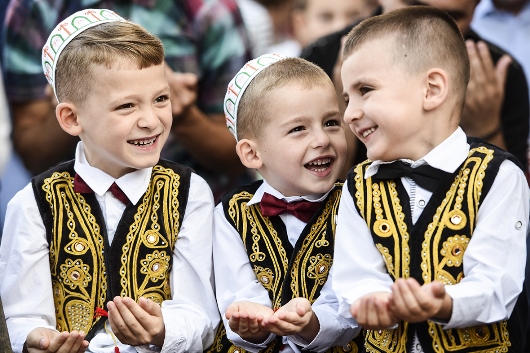
After the prayer, there are other traditions of Eid, such as wearing one’s best clothes and visiting family and friends. Sweets are exchanged, women and children adorn their hands with mehendi, and luncheons and dinners are often held with a spread of a variety of food. Kids are given Eidi, gifts of money, from the elders in the community. In Ramadan, one of the recommended ways to break fast is with the community, and this carries into the Eid celebrations. Muslims are encouraged to share meals with their neighbors, coworkers, and classmates.

Celebrations last long into the night and even throughout the week. It’s seen as a time of unity and giving thanks to Allah (God) for enabling them to complete the month of spiritual cleansing, forgiveness, and compassion.

Heraa Hashmi

The author, Heraa Hashmi, is a 19 year old University student at Boulder, Colorado. She’s studying Molecular Biology and is the president of Muslim Student Association. Recently she founded Muslims Condemn, a spreadsheet with over 5000 instances of Muslims condemning terrorism and is a part of the Bridge Initiative at Georgetown University, an initiative dedicated to tackling Islamophobia through education. This is her first article for coastaldigest.com

Comments

Add new comment

  • Coastaldigest.com reserves the right to delete or block any comments.
  • Coastaldigset.com is not responsible for its readers’ comments.
  • Comments that are abusive, incendiary or irrelevant are strictly prohibited.
  • Please use a genuine email ID and provide your name to avoid reject.
Agencies
July 31,2020

Mount Arafat, July 30: Muslim pilgrims converged Thursday on Saudi Arabia's Mount Arafat for the climax of this year's hajj, the smallest in modern times and a sharp contrast to the massive crowds of previous years.

A tight security cordon has been erected all around the foot of the rocky hill outside Mecca, also known as Jabal al-Rahma or Mount of Mercy.

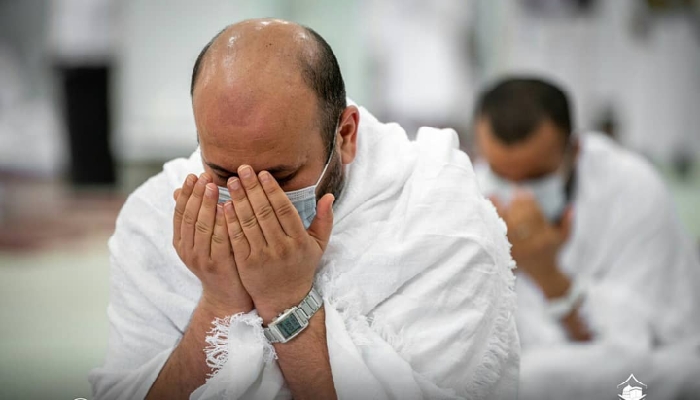
Pilgrims, donning masks and observing social distancing, were brought in buses from neighbouring Mina, state television showed, as Saudi authorities impose measures to prevent a coronavirus outbreak.

They were subject to temperature checks and attended a sermon -- which state media said was translated into 10 languages -- before they set off on the climb to the summit for hours of Koran recitals and prayers to atone for their sins.

The scene was strikingly different to last year's ritual when a sea of pilgrims ascended Mount Arafat, marshalled by tens of thousands of stewards in a bid to prevent any crushes.

After sunset prayers, pilgrims will make their way down Mount Arafat to Muzdalifah, another holy site where they will sleep under the stars to prepare for the final stage of hajj, the symbolic "stoning of the devil".

It takes place on Friday and also marks the beginning of Eid al-Adha, the festival of sacrifice.

The hajj, one of the five pillars of Islam and a must for able-bodied Muslims at least once in their lifetime, is usually one of the world's largest religious gatherings.

But only up to 10,000 people already residing in the kingdom will participate in this year's ritual, compared with 2019's gathering of some 2.5 million from around the world.

"You are not our guests but those of God, the custodian of the two holy mosques (Saudi Arabia's King Salman) and the nation," Hajj Minister Mohammad Benten said in a video released by the media ministry on Wednesday.

Security cordon

A security cordon has been thrown around the holy sites to prevent any security breaches, an interior ministry spokesman said.

Riyadh faced strong criticism in 2015 when some 2,300 worshippers were killed in the deadliest stampede in the gathering's history.

But this year, those risks are greatly reduced by the much smaller crowd.

The pilgrims have all been tested for the virus, and foreign journalists were barred from this year's hajj, usually a huge global media event.

As part of the rites completed over five days in the holy city of Mecca and its surroundings, the pilgrims converged on Mount Arafat after spending the night in Mina.

A district of Mecca, Mina sits in a narrow valley surrounded by rocky mountains, and is transformed each year into a vast encampment for pilgrims.

They began the hajj on Wednesday with their first "tawaf", the circumambulation of the Kaaba, a large structure in Mecca’s Grand Mosque towards which Muslims around the world pray.

The Kaaba is draped in a black cloth embroidered in gold with Koranic verses and known as the kiswa, which is changed each year during the pilgrimage.

Pilgrims were brought inside the mosque in small batches, walking along paths marked on the floor, in sharp contrast to the normal sea of humanity that swirls around the Kaaba during hajj.

Comments

Add new comment

  • Coastaldigest.com reserves the right to delete or block any comments.
  • Coastaldigset.com is not responsible for its readers’ comments.
  • Comments that are abusive, incendiary or irrelevant are strictly prohibited.
  • Please use a genuine email ID and provide your name to avoid reject.
News Network
July 29,2020

Bengaluru, July 29: The Central Crime Branch arrested four international drug peddlers belonging to Kerala and recovered drugs worth Rs 1.25 crore from them, said Karnataka Home Minister Basavaraj Bommai on Wednesday.

"We have started a war on drugs. Our agenda is to curb the drug mafia not only in Bengaluru, but in entire Karnataka. Many people are involved in the drug mafia. They are targeting students, other states, and international students who can spend and afford to become victims," said Bommai.

The recovered items include 2,000 kg LSD strips, 110 grams MDMA Cristol, 10 ecstasy tablets, 5 kg Ganja, five cell phones, weighing machine and pouches.

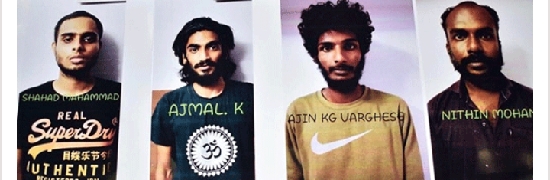
"When we raided a house in Soladevanahally police station area, we arrested Shahad Mohammed, Azmal, Ajin KG Verghese and Nitin Mohan. All are from Kerala and we will arrest their contacts as well. They are involved in the dark web mafia," Bommai said.

He said the peddlers were using post offices and couriers for their business.

"I'll speak to the central government, the home ministry and postal department, and other issues related to this mafia. Canada, Netherlands, and other nations are also involved in this mafia," said the state home minister.

"People from influential backgrounds are also involved in this mafia, but our objective is zero tolerance. We are using our intelligence. Drugs are coming from other states like AP, Goa, and other states," he said.
Bommai said he was personally addressing this case and appealed for support from parents, schools and colleges.

"I'm addressing this issue personally because it's important to curb the drug mafia. I need support from schools and college managements and parents. I'll also call college and hostel managements before colleges start. We will make managements responsible," he said.

Comments

Add new comment

  • Coastaldigest.com reserves the right to delete or block any comments.
  • Coastaldigset.com is not responsible for its readers’ comments.
  • Comments that are abusive, incendiary or irrelevant are strictly prohibited.
  • Please use a genuine email ID and provide your name to avoid reject.
News Network
March 23,2020

Mangaluru, Mar 23: People in Thukkottu and Ullal area of Mangaluru are in panic after a local woman who recently returned from a foreign country fell ill.

On receiving information the health officials from Ullal PHC visited the house of the woman, who is suffering from fever and cold. They provided her medicines and asked her to remain quarantined at home.

It is said that the woman's mother, who had come to a grocery shop near Thokkottu, informed the shopkeeper that her daughter, who had returned from abroad, was suffering from fever.

The alert shopkeeper, understanding the gravity of the situation, informed ZP Standing Committee on Health and Education President Dhanalakshmi Gatti, who in turn brought the issue to the notice of health officials.

The health officials rushed to her house and diagnosed her. However, the authorities have requested the local people not to be panicked as it is not yet confirmed whether the woman is suffering from COVID-19 caused by the novel coronavirus.

Comments

Add new comment

  • Coastaldigest.com reserves the right to delete or block any comments.
  • Coastaldigset.com is not responsible for its readers’ comments.
  • Comments that are abusive, incendiary or irrelevant are strictly prohibited.
  • Please use a genuine email ID and provide your name to avoid reject.