



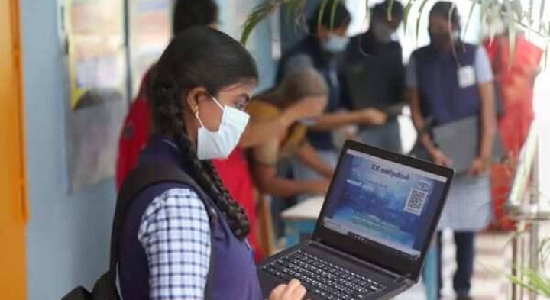
New national education policy: Here are some of the key highlights

Agencies
July 29, 2020

New Delhi, Jul 29: The new National Education Policy (NEP) approved by the Union Cabinet on Wednesday is set to usher in a slew of changes with the vision of creating an education system that contributes directly to transforming the country, providing high-quality education to all, and making India a global knowledge superpower.

The draft of the NEP by a panel headed by former Indian Space Research Organisation (ISRO) chief Kasturirangan and submitted to the Union Human Resource Development Minister Ramesh Pokhriyal when he took charge last year. The new NEP replaces the one formulated in 1986.

Some of the key highlights of the New Education Policy are:-

The policy aims to enable an individual to study one or more specialized areas of interest at a deep level, and also develop character, scientific temper, creativity, spirit of service, and 21st century capabilities across a range of disciplines including sciences, social sciences, arts, humanities, among others.

It identified the major problems facing the higher education system in the country and suggested changes such as moving towards multidisciplinary universities and colleges, with more institutions across India that offer medium of instruction in local/Indian languages, a more multidisciplinary undergraduate education, among others. 

The governance of such institutions by independent boards having academic and administrative autonomy has also been suggested.

Under the suggestions for institutional restructuring and consolidation, it has suggested that by 2040, all higher education institutions (HEIs) shall aim to become multidisciplinary institutions, each of which will aim to have 3,000 or more students, and by 2030 each or near every district in the country there will be at least one HEI.

The aim will be to increase the Gross Enrolment Ratio in HEIs including vocational education from 26.3 per cent (2018) to 50 per cent by 2035.

Single-stream HEIs will be phased out over time, and all will move towards becoming vibrant multidisciplinary institutions or parts of vibrant multidisciplinary HEI clusters.

It also pushes for more holistic and multidisciplinary education to be provided to the students.

Comments

Add new comment

  • Coastaldigest.com reserves the right to delete or block any comments.
  • Coastaldigset.com is not responsible for its readers’ comments.
  • Comments that are abusive, incendiary or irrelevant are strictly prohibited.
  • Please use a genuine email ID and provide your name to avoid reject.
Agencies
July 13,2020

Kolkata, July 13: Debendra Nath Roy, a member of the West Bengal legislative assembly (MLA) from the Bharatiya Janata Party (BJP), was found dead near his house in north Bengal’s Uttar Dinajpur district on Monday morning.

BJP leaders and his family members have alleged that he was murdered. 

BJP president JP Nadda has expressed “shock” at Roy’s “deplorable and suspected heinous killing” and condemned the incident.

He questioned the rise of “gunda raj” in West Bengal under Chief Minister Mamata Banerjee’s watch amid the worsening law and order in the state, which is slated to hold assembly polls next year, where the BJP is seen to be the primary challenger to the CM’s citadel.

“The suspected heinous killing of Debendra Nath Ray, BJP MLA from Hemtabad in West Bengal, is extremely shocking and deplorable. This speaks volumes of the gunda raj and failure of law and order in the Mamata Banerjee-led government. People will not forgive such a government in the future. We strongly condemn the incident,” he tweeted.

The BJP has demanded a Central Bureau of Investigation (CBI) probe into the lawmaker’s unnatural death.

His body was found in the balcony of a shop near his house at Bondol in Hemtabad, Uttar Dinajpur district, on Monday morning.

“The body has been sent for autopsy. We are investigating the case. No one has been detained for questioning or arrested so far,” said a police official from Uttar Dinajpur district, requesting anonymity.

“Roy was murdered. The way his body was found suggests that it was a premeditated murder and the accused tried to pass it off as a suicide. The ruling TMC (Trinamool Congress) is involved in his murder,” alleged Rahul Sinha, national secretary, BJP.

The TMC, however, refuted the BJP’s allegations.

“I heard that he (Roy) died by suicide. Police are investigating the case. Let the truth come out. If he has been murdered, then the culprits should be identified and punished as per law,” said Kanhaiyalal Agarwal, a TMC leader from Uttar Dinajpur district.

BJP leaders said some people had called Roy around 1 am on Monday and he went out of his home. His body was found on Monday morning.

Roy had won the Bengal assembly elections from Hemtabad on a Communist Party of India (Marxist) ticket in 2016, but joined the BJP last year.

Comments

Add new comment

  • Coastaldigest.com reserves the right to delete or block any comments.
  • Coastaldigset.com is not responsible for its readers’ comments.
  • Comments that are abusive, incendiary or irrelevant are strictly prohibited.
  • Please use a genuine email ID and provide your name to avoid reject.
News Network
March 10,2020

New Delhi, Mar 10: Minutes after Jyotiraditya Scindia submitted his resignation to the party membership to Congress chief Sonia Gandhi, the Congress expelled him for anti-party activities after reports emerged that he had met PM Modi and Amit Shah.

Disgruntled Congress leader Jyotiraditya Scindia met Prime Minister Narendra Modi on Tuesday amid indications that he might join hands with the BJP to topple the Madhya Pradesh government.

Sources said Scindia first met Union Home Minister Amit Shah, and then the two leaders met Modi at the prime minister's residence.

Legislators loyal to Scindia, who has been upset with the Congress leadership with his marginalisation in the affairs of the Madhya Pradesh Congress, are likely to quit the party to reduce the Kamal Nath-led government to a minority.

It is likely to be followed by the Bharatiya Janata Party staking claim to form the government in the state.

The Congress President has approved the expulsion of Jyotiraditya Scindia from the Indian National Congress with immediate effect for "anti-party activities," said KC Venugopal, General Secretary Congress.

No person is, nor will be greater than the party: Congress youth wing chief

Indian Youth Congress (IYC) chief Srinivas B V on Tuesday slammed Jyotiraditya Scindia, who has announced his resignation from the primary membership of the Congress, and thanked party chief Sonia Gandhi for expelling the former Guna MP "who was promoting anti-party activities and factionalism".

"The history of 1857 and 1967 was once again repeated," Srinivas B V said, referring to the 1857 Revolt against East India Company and the role of the Scindia royals back then as well as Vijayaraje Scindia's switch from the Congress to the Jana Sangh in 1967.

"I would like to thank Congress president Sonia Gandhiji for taking the strong steps to expel the leader who was promoting anti-party activities and factionalism," the IYC chief said.

"No person is, nor will be greater than the party," he added.

Comments

Add new comment

  • Coastaldigest.com reserves the right to delete or block any comments.
  • Coastaldigset.com is not responsible for its readers’ comments.
  • Comments that are abusive, incendiary or irrelevant are strictly prohibited.
  • Please use a genuine email ID and provide your name to avoid reject.
News Network
January 15,2020

Srinagar, Jan 15: The Jammu and Kashmir administration on Tuesday evening allowed mobile Internet in parts of Jammu region and broadband in establishments providing essential services, days after the Supreme Court ordered a review of the curbs imposed in the Union Territory.

The order comes into effect from January 15 and shall remain in force for seven days, a government communication said.

In a three-page order, the administration asked Internet service providers to offer broadband facility (with Mac binding) to all institutions dealing with essential services such as hospitals, banks and government offices.

In order to facilitate tourism, the broadband Internet services would be provided to hotels and tour and travel establishments, the order said.

Mac Binding essentially means to enforce a client machine to work from a particular Internet Protocol address.

"Prior to giving such facility, the service providers have been asked to install necessary firewalls and carry out white-listing of sites that would enable government websites and website dealing with essential services like e-banking," the order said.

However, all social media sites remain out of bounds. "There shall be complete restrictions on social media applications allowing peer-to-peer communication and virtual private network applications for the time being," the order said.

The institutions and government offices that are being provided Internet access shall be responsible to prevent misuse, according to the order.

It said the 2G mobile connectivity on post-paid mobiles for accessing white-listed websites including e-banking will be allowed in districts of Jammu, Samba, Kathua, Udhampur and Reasi -- all in the Jammu region.

The order said that the police has brought material relating to the terror modules operating in Jammu and Kashmir including handlers from across the border who are attempting to aid and incite people by transmission of fake news and targeted messages through use of Internet.

The relaxation came days after the Supreme Court said access to the Internet is a fundamental right under Article 19 of the Constitution.

The SC verdict had come on Friday on a batch of pleas challenging the curbs imposed in Jammu and Kashmir after the Centre's abrogation of provisions of Article 370 on August 5 last year.

The court had also asked the Jammu and Kashmir administration to review within a week all orders imposing curbs in the Union Territory.

It had asked the J-K administration to restore Internet services in institutions such as hospitals and educational places providing essential services.

The J-K administration's Tuesday communication said that in view of the Supreme Court directions, the situation has been reviewed and Internet has been opened whereever it was possible keeping in view the security consideration.

In Kashmir, 400 additional Internet kiosks will be established, besides the 900 terminals which are already operational in the Valley.

Comments

Add new comment

  • Coastaldigest.com reserves the right to delete or block any comments.
  • Coastaldigset.com is not responsible for its readers’ comments.
  • Comments that are abusive, incendiary or irrelevant are strictly prohibited.
  • Please use a genuine email ID and provide your name to avoid reject.