Mangaluru: Colourful kites paint the sky at Panambur beach

[email protected] (CD Network | Suresh, Chakravarthi)
January 16, 2016

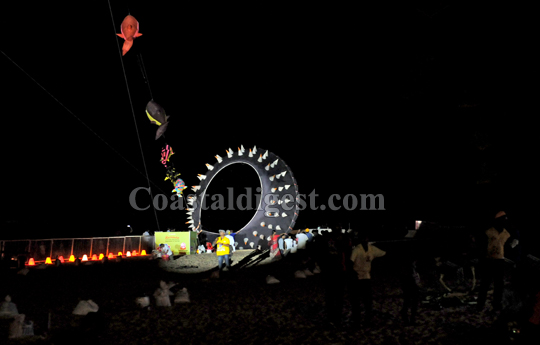
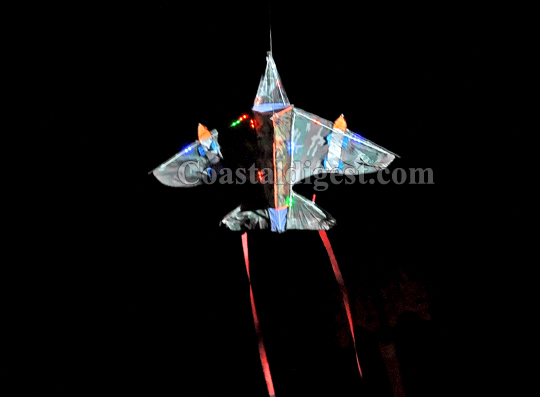
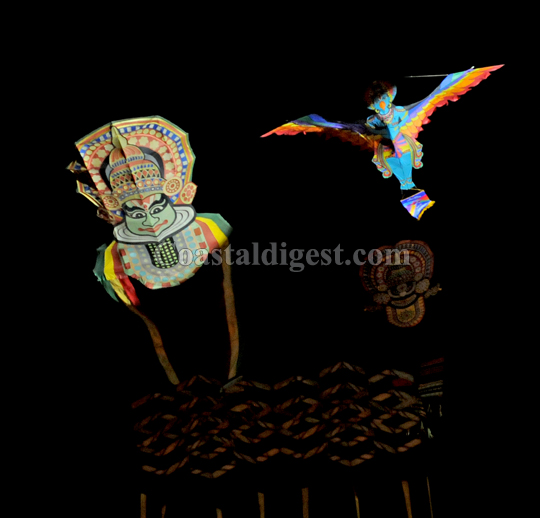
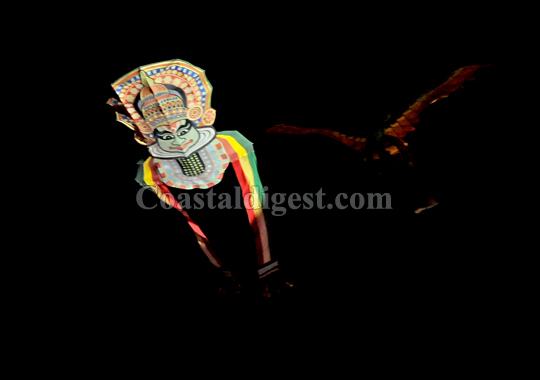
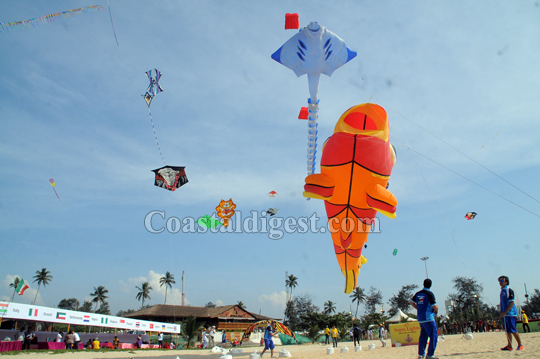
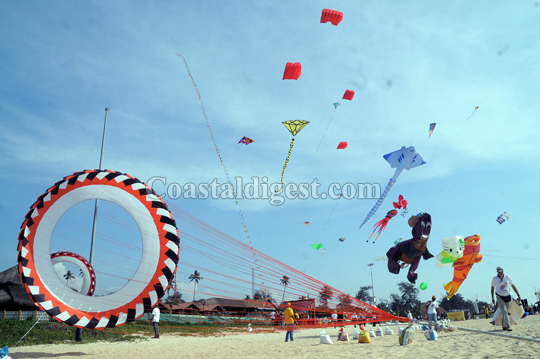
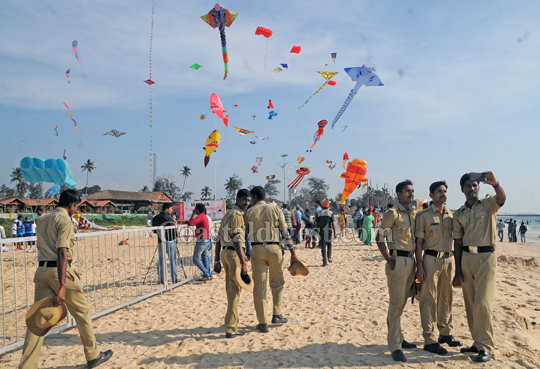
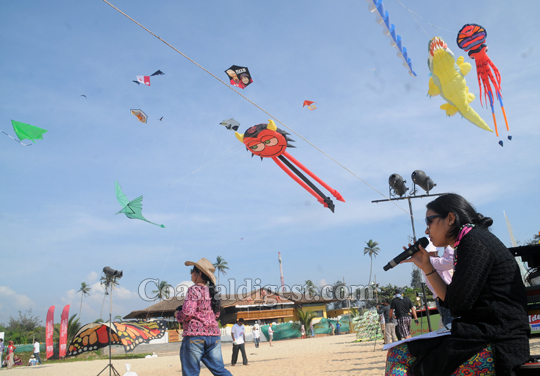
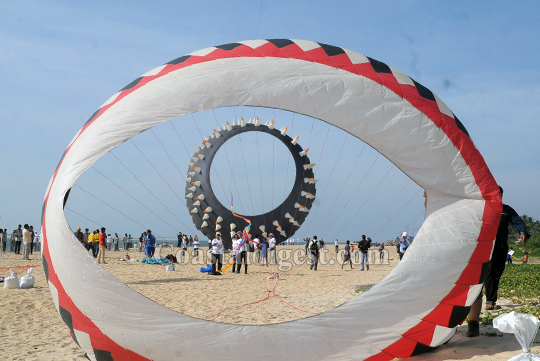
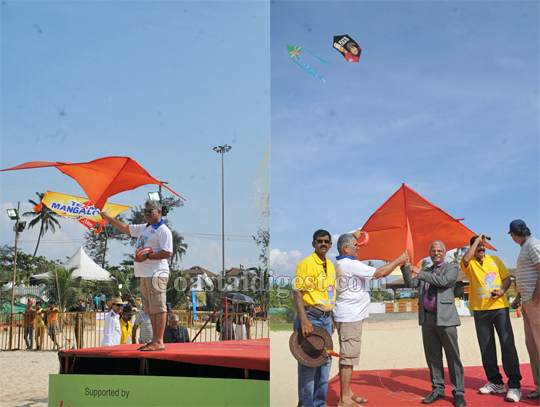
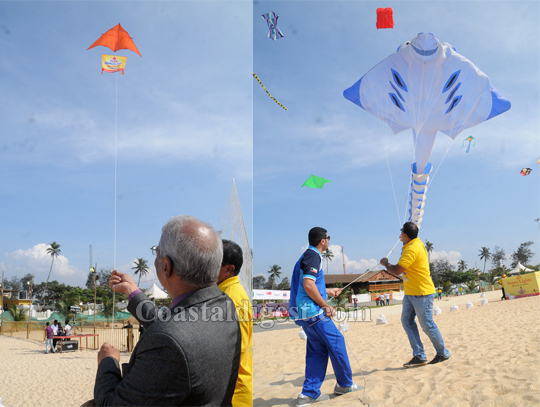
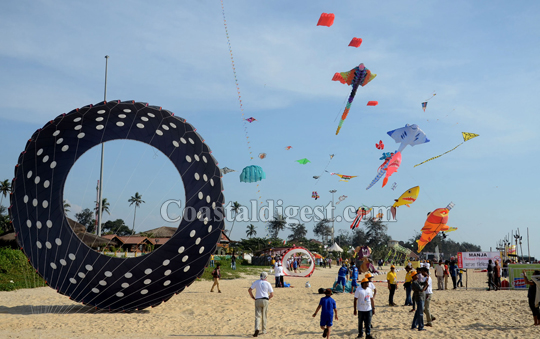
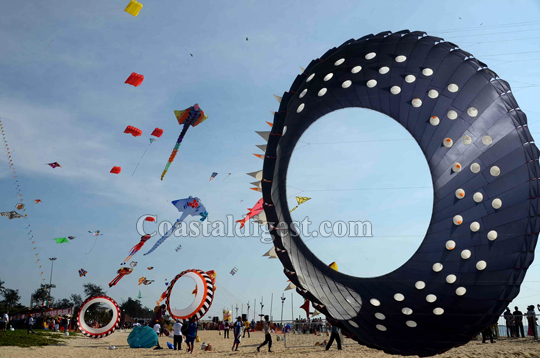
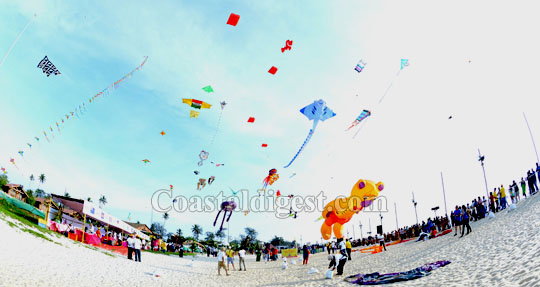
Mangaluru: Jan 16: Hundreds of colourful kites adored the skies of Panambur beach at the International Kite Festival organised by Rotary International in the city on Saturday.
kitss 1

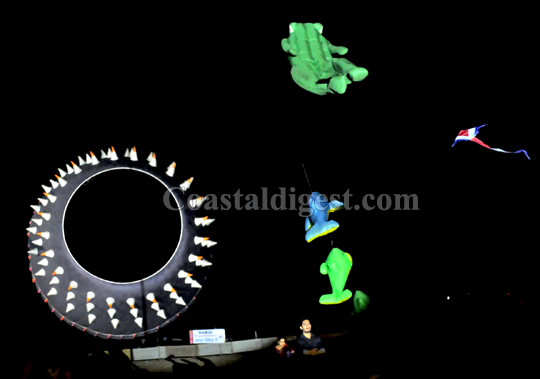
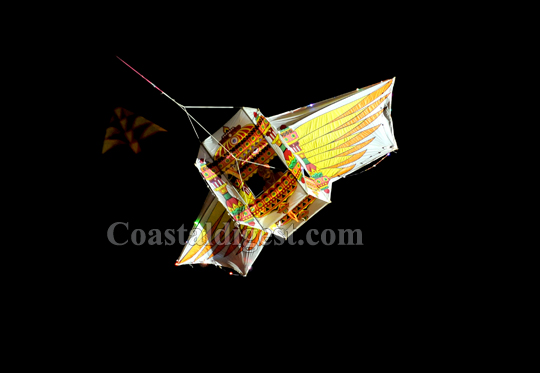
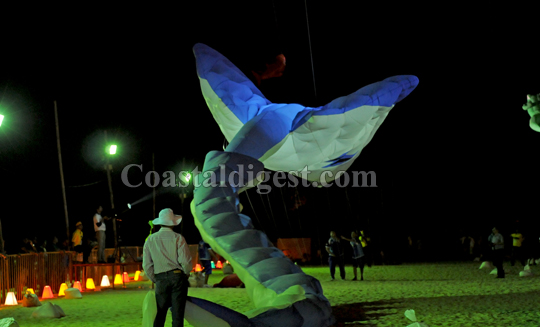
Kite flyers from various countries took part in the fest and variety of uniquely-shaped kites reflected the theme ‘One kite, one earth, one family’.

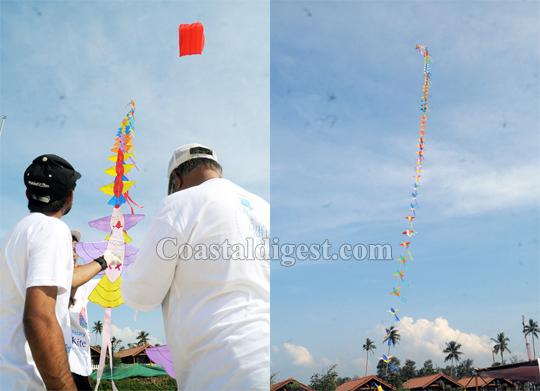
Speaking to Deccan Herald, Michael Alwares from Australia said that he has been flying the box kite, which is a typical Australian kite. He said the 15 metre long kite has 20 box shaped kites attached to it symmetrically. Alwares, who has been nurturing this hobby for the last 32 last years, has been teaching children kite-flying at various places. Alwares said it is his first time in an International Kite Festival.

Ashok H Shah from Dahane, Maharastra, said he is represents his professional kite flyers group, Ashok Designer Kite and had brought 30 kites. He said he is taking part in the kite festival for the fourth time in Mangaluru. The 300-feet bird train kite and 3D tiger kite were among the kites flown by him. He has won several prizes in Gujarat Kite Festival and holds a Limca Record for conducting workshop for 1,100 children at a time on kite flying in Sholapur. He added the crowd in Mangaluru is disciplined and the wind is excellent.

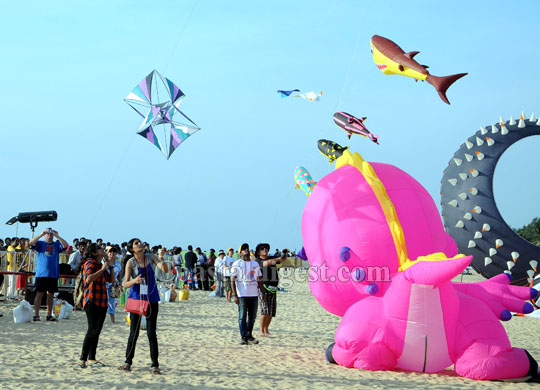
The traditional Cambodian kite, which creates musical sounds when it flies, stickless balloon-like kites and turbine shaped rotating kite attracted attention. Kites designed in the form of octopus, fish, cow and such other kites in different shapes and sizes amused the crowd.

Ariel photography, based on picavet lacing technique, carried out by NITK?team led by Dr Prithviraj, Assistant Professor, department of Applied Mechanics and Hydraullics, were among the highlights of the fest.

Kite photography competition was also held on the occasion. Participants from Australia, Cambodia, France, Germany, India, Italy, Kuwait, Netherlands, Nigeria, Singapore, Thailand, Turkey, Ukraine and United Kingdom took part. Rotary International District Governor Dr Bharatesh inaugurated the fest. Ramakrishna Kamath and Team Mangalore Founder Sarvesh Rao were present among others.

kitenight 1

kitenight 2

kitenight 3

kitenight 4

kitenight 5

kitenight 6

kitenight 7

kitenight 8

kitenight 9

kitenight 10

kitenight 11

kitenight 12

kitenight 13

kitenight 14

kitenight 15

kites 1

kites 2

kites 3

kites 4

kites 5

kites 6

kites 7

kites 8

kites 9

kitesFest 2

kitesFest 3

kitesFest 4

kitss 2

kitss 3

Comments

Add new comment

  • Coastaldigest.com reserves the right to delete or block any comments.
  • Coastaldigset.com is not responsible for its readers’ comments.
  • Comments that are abusive, incendiary or irrelevant are strictly prohibited.
  • Please use a genuine email ID and provide your name to avoid reject.
News Network
January 25,2020

New Delhi, Jan 25: The latest edition of the Oxford Advanced Learner's Dictionary features 26 new Indian English words, including Aadhaar, chawl, dabba, hartal and shaadi.

The 10th edition of the dictionary, which was launched on Friday, has 384 Indian English words and incorporates over 1,000 new words such as chatbot, fake news and microplastic.

The dictionary focuses on language change and its evolution through the years, and has ensured that the language and examples used in the new edition are relevant and up to date with the times, Oxford University Press (OUP) said.

The new edition comes with interactive online support through the Oxford Learner's Dictionaries website and an app. The website includes advanced features such as audio-video tutorials, video walkthroughs, self-study activities and enhanced iWriter and iSpeaker tools.

"This edition has 26 new Indian English words of which 22 figure in the printed dictionary. The other four are in the digital version," said Fathima Dada, Managing Director (Education Division) at OUP.

Some of other new Indian words in the dictionary are auntie (while aunty already figures in the English dictionary, auntie is an Indianism), bus stand, deemed university, FIR, non-veg, redressal, tempo, tube light, veg and videograph.

The four new Indian English words in the online version of the dictionary are current (for electricity), looter, looting and upazila (one of the areas that a district is divided into for administration purposes).

According to OUP, the new edition provides better, more accurate and understandable definitions with examples, usage notes and additional resources to help the learner use the right word in the right context.

"Prevalence and common usage are the main criteria for enlisting new words. We scan the globe for words which are often used by people while speaking English. Then these words go through a rigorous testing process," Dada said.

"As OUP is the custodian of English language globally, these words have to go through its processes," she told PTI.

The Oxford Advanced Learner's Dictionary, she said, has been reinventing itself for nearly eight decades, anticipating the growing learning requirements of learners.

"The 10th edition also is equipped with a strong digital support system, including an app," she said.

It is equipped with several digital tools. With iSpeaker, learners can get help preparing for speaking exams and presentations. With iWriter, learners can plan, write and review their written work. Text Checker allows the teacher to check any text against the Oxford 3000, 5000, and OPAL (Oxford Phrasal Academic Lexicon) written word list.

Resources accessible through online premium access include lesson plans, worksheets, video walkthroughs, and classroom and self-study activities. With the OALD app one can find 86,000 words, 95,000 phrases, 112,000 meanings and 237,000 examples.

The dictionary, which spans 77 years, was originally published in Japan in 1942 and was first brought out by OUP in 1948. The learner's dictionary is based on the original values of its creator, Albert Sydney Hornby, whose aim was to help language learners worldwide understand the meaning of English words.

Comments

Add new comment

  • Coastaldigest.com reserves the right to delete or block any comments.
  • Coastaldigset.com is not responsible for its readers’ comments.
  • Comments that are abusive, incendiary or irrelevant are strictly prohibited.
  • Please use a genuine email ID and provide your name to avoid reject.
News Network
January 3,2020

Bengaluru, Jan 3: Former Karnataka chief minister and Congress leader Siddaramaiah on Friday criticised Prime Minister Narendra Modi and said that 90 per cent of the promises made by him remain unfulfilled.

"He (Prime Minister Modi) had promised that in 2020 the economy will be doubled, but only their troubles have doubled. He just lied. 90 per cent of the promises made by Modi have remained unfulfilled," Siddaramaiah told media here.

Siddaramaiah's remarks come at a time when Prime Minister Modi is on a two-day visit to the state.

"In August, there was severe flood in state, he didn't visit Karnataka at that time. Flood situation was in 23 districts. Prime Minister will tweet for small issues. But at the time of severe flood he didn't even tweet. In 2009, Manmohan Singh was the Prime Minister. He did aerial survey of the state and announced Rs 1500 crore relief on spot," Siddaramaiah said.

"This time the estimated damage due to flood is more than Rs 1 lakh crores," he said.

He went on to say, "Prime Minister came to witness Chandrayaan-2. He did not give time to Chief Minister and ministers and opposition party to meet him and discuss about floods."

"When I was the Chief Minister, the Prime Minister visited the state two times. Prime Minister had told at the time of inauguration of food park that there will be 10,000 direct employment and 25,000 employment. But nothing has happened till now," Siddaramaiah said.

Besides the Prime Minister, Siddaramaiah also criticised Chief Minister BS Yediyurappa.

"In last election, Prime Minister had told that, if BJP comes to power in Centre and state, there will be development. But nothing has happened. Chief Minister and ministers should have spoken to the Prime Minister about relief funds. The central government should have announced it as National disaster... That's why I called BS Yediyurappa as weak Chief Minister," Siddaramaiah said.

"He had said if BJP is in power at the centre and state, doors of fortune of the state will be opened. People trusted him and gave 25 seats in Lok Sabha elections. But now, he doesn't even open the doors of his house for his party leaders," he said.

Congress leader further cornered the Prime Minister over his address in Tumkuru Mutt on Thursday and said, "We admit Pakistan is an evil country. But what are you doing about minorities in our country? You are bringing law against the minorities. Is that right? And you give speech about these things in front of young children."

Prime Minister Modi is on a two-day visit to Karnataka and is attending several events as part of his official engagements.

Comments

Add new comment

  • Coastaldigest.com reserves the right to delete or block any comments.
  • Coastaldigset.com is not responsible for its readers’ comments.
  • Comments that are abusive, incendiary or irrelevant are strictly prohibited.
  • Please use a genuine email ID and provide your name to avoid reject.
News Network
April 19,2020

Kasaragod, Apr 19: Kasaragod, Kerala's COVID-19 hotspot, is the only district in the southern state lacking adequate health infrastructure.

In spite of treating the highest number of COVID-19 patients in the state with meagre infrastructural facilities and even without the support of a medical college in the north Kerala district, no deaths have been reported due to coronavirus.

The state health department views the performance of M Kunhiraman and his team, consisting of Janardhana Naik and Krishna Naik, at the General hospital in Kasaragod as a success story.

"Not only did they control the situation quickly with minimum infrastructure, they also started turning out a large number of negative cases within a few weeks and creditably ensured zero mortality.

This can be showcased as a best global model," Chairman of the Information Education and Communication (IEC) Committee and Project Director Kerala State Aids Control Society, R Ramesh said.

Recalling the ordeal, Janardhana Naik said his first major challenge was the physical examination of a patient with suspected COVID-19.

"Even with the PPE kit, nobody knew how effective they were and it took a whole 30 minutes to wear them properly.

But as time passed, we got accustomed to it," he said.

The traditional method of dealing with a patient involved knowing his or her history, observation and physical examination.

For hundreds of years, the hands-on body approach has been the soul of the doctor-patient relationship -- taking the pulse, tapping on and listening to the chest, feeling lumps.

With the onset of COVID-19 all that has changed.

"In fact, the whole exercise was fraught with grave risks because everything connected with COVID-19 was new.

Doctors have to keep a distance even though the physical examination wearing a Personal Protective Equipment (PPE) is difficult.

Sounds from the body are inaudible, vision is blurred through the smog-covered goggles and a stethoscope seldom has any use," Janardhana Naik said.

It was from March 15 that the hospital started receiving COVID-19 patients, primarily from Dubai.

By the time the first person came, the hospital was ready for him.

Soon, patient numbers began to swell and in a couple of weeks they reached about 91.

From then on, it was teamwork.

Committees were formed for each and every task, including the help desk, IT, treatment, medical board, training, food, waste disposal and data maintenance.

Initially, patients had many misgivings about the hospital.

"Some were disillusioned and even aggressive. Some were not happy with the facilities the hospital had to offer.

But gradually through good treatment and counselling by a psychiatrist, who visited the hospital on alternate days, the confidence and mood of the patients changed and they became friendly with the staff," Naik elaborated.

Counselling was also given to the concerned family members of the patients.

Besides treatment, the medical staff had to spend a considerable amount of time clearing the doubts of patients.

When they got discharged some patients insisted on seeing the faces of the medical staff, who till then were anonymous entities covered from head to toe.

Some even wanted to take selfies with them.

However, the medical team politely turned down their requests and preferred to remain hidden in their work attires.

The mood of the patients also rubbed off on the doctors and hospital staff.

All the physicians and hospital staff are now more confident of dealing with contagious diseases after treating COVID-19 patients.

"Our previous experience of treating H1N1, Chikungunya and Dengue cases helped us a lot.

Words of encouragement from the Health Minister K K Shailaja, Health Principal Secretary Dr Rajan N Khobragade and Health Services Director Dr Sarita R L gave us the impetus to build up confidence.

Moreover, the field health workers did a wonderful job in containing the viral spread," Naik added.

As the number of coronavirus cases rose, the state government on April 5 deputed a 26-member medical team from Thiruvananthapuram to set up a COVID-19 hospital in the district.

They turned a block of the under construction Government Medical College as a hospital-like facility, setting up a 200 bed facility to treat coronavirus patients.

Comments

Add new comment

  • Coastaldigest.com reserves the right to delete or block any comments.
  • Coastaldigset.com is not responsible for its readers’ comments.
  • Comments that are abusive, incendiary or irrelevant are strictly prohibited.
  • Please use a genuine email ID and provide your name to avoid reject.