


MLA Bava accuses Samiti of blocking Suratkal-Kana-MRPL road repair work

[email protected] (CD Network)
October 27, 2016

Mangaluru, Oct 27: Accusing the Kana Nagarika Horata Samiti of trying to mislead people of his constituency by holding unnecessary protests, Mangaluru North MLA B A Mohiuddin Bava said that he left no stone unturned to accomplish the Suratkal-Kana-MRPL road repair work at the earliest.
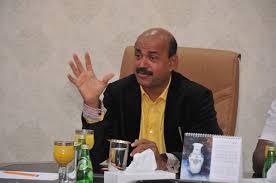
bava copyResponding to the allegations that he ignored the protesters and refused to pay heed to their agony, Mr Bava said that he could not stop his car at the protest site on Wednesday as he had to reach Mangaluru International Airport on time.

“After reaching Saudi Arabia I came to know through coastaldigest.com that the protesters had levelled several baseless allegations against me. Yes, I did not stop the car. Had they asked me to visit them and to accept memorandum, I would have definitely visited them before going to Airport,” he said, accusing the Samiti activists of resorting to personal attack against him.

Double standard

Mr Bava went on to claim that the leaders of Nagarika Horata Samiti, which is comprised of left-wing activists, in fact made all possible efforts to delay the road repair work in order to mobilize people to stage a protest.

“The Mangaluru City Corporation was about to start the repair work. However, the office bearers of the same Samiti did not allow them to commence the work and questioned how could they start work without formal approval of the tender,” he said adding that the real intention of the agitators is politicising the issue and building public opinion against local MLA. “They are trying to portray me as a joker,” he lamented.

He said that he had even taken the Deputy Commissioner to the spot and convinced him the seriousness of the issue. “When we exert pressure on the authorities to commence the work at the earliest, they exert pressure to delay the work. People should understand their double standard,” he said.

Mr Bava said that a couple of days ago, residents of Kana and surrounding areas under the banner of another organisation had staged a protest with the same cause, i.e. the speedy repair of Suratkal-MRPL-Kana road, and they had invited him too. “I visited them and they put forth their demand without any drama. They did not even insult me,” he said.

He also promised to complete the road repair work within 30 days even if the Samiti tried to create hurdles for the work.

Permanent solution

The Congress MLA said that he never sat idle thinking it was MRPL and other companies' responsibility to repair the road. “I am longing for a permanent solution to the problem of the 4.5 km stretch. I have personally met chief minister and held a meeting with state level authorities,” he said adding that modalities of Rs 50 crore project will be worked out soon.

Development works

Mr Bava also said that as an MLA he has concentrated more on developmental works and that his constituency witnessed more development in last three years compared to the term of his predecessors. “If anyone has any doubt on my claim they can clarify it through RTI,” he said.

Also read: MLA Mohiuddin Bava snubs road agitators, flies to Saudi Arabia

Comments

Rikaz
 - 
Saturday, 29 Oct 2016

Great job Mr. Bava.....All the best....dont listen to so called samiti...ignore them....do your good job as usual.....

Daily Commuter
 - 
Thursday, 27 Oct 2016

Ayyo..whom to believe?..If what Mr. Bava is saying right then shame on so called Samithi leader..If not shame on our MLA..anyhow suffered long enough..lets wait another 30 days..hope my problem will be solved soon

Parvez
 - 
Thursday, 27 Oct 2016

Looks like some vested interests are behind tarnishing the emage of MLA. Give MLA a bit time. He is a man of action. He will do the needful.Don't try to do the politics.

Mohamed
 - 
Thursday, 27 Oct 2016

MLA sir, go ahead with your working style. do not pay attention to few jobless ppl, as of now, you have done good job, keep it up

Add new comment

  • Coastaldigest.com reserves the right to delete or block any comments.
  • Coastaldigset.com is not responsible for its readers’ comments.
  • Comments that are abusive, incendiary or irrelevant are strictly prohibited.
  • Please use a genuine email ID and provide your name to avoid reject.
News Network
July 28,2020

Bengaluru, Jul 28: In view of the COVID-19 pandemic, the Bruhat Bengaluru Mahanagara Palike (BBMP) on Monday advised people not to visit temples, mosques and other places of worship during the coming festival season.

"COVID-19 is now spreading rapidly in Karnataka, especially in Bengaluru. The festival season is starting with Varamahalakshmi festival on July 31, followed by Bakrid, Raksha Bandhan, Janmashtami, Gowri Ganesha, Moharram and then Onam. This festival season is the riskiest time for the spread of the coronavirus. Therefore, please STRICTLY follow the rules in order to stay safe. Do not visit religious places even if they are officially declared open," a notification from BBMP said.

In the context of Bakrid, unauthorised animal sacrifice (slaughtering) was prohibited in BBMP limits on roads and sidewalks, religious places, school and college premises, playgrounds and other public areas, as per the Karnataka Municipal Corporation Act of 1976.

"Unauthorised animal sacrifice (slaughtering) is a punishable offence under Section 3 of the Karnataka Prevention of Animal Sacrifices Act 1959 and Rules and the Amendment Act 1975, which provides for a maximum penalty of six months or Rs 1000, or both. According to the Karnataka Prevention of Animal Sacrifices Act 1959, slaughter-worthy animals can only be slaughtered in official slaughterhouses," the notification said.

Comments

Add new comment

  • Coastaldigest.com reserves the right to delete or block any comments.
  • Coastaldigset.com is not responsible for its readers’ comments.
  • Comments that are abusive, incendiary or irrelevant are strictly prohibited.
  • Please use a genuine email ID and provide your name to avoid reject.
Agencies
February 6,2020

Wuhan, Feb 6: Chinese multinational conglomerate holding company Tencent has allegedly published "real" data on the novel coronavirus deaths, with briefly listing death toll as 24,589 -- way too higher than over 500 deaths China has officially announced to date.

According to Taiwan News, "Tencent... seems to have inadvertently released what is potentially the actual number of infections and deaths, which were astronomically higher than official figures".

Tencent, on its webpage titled "Epidemic Situation Tracker," showed confirmed cases of novel coronavirus (2019-nCoV) in China as standing at 154,023 - over 10 times the official figure given to the world on February 1.

Data leaked: Tencent lists 25,000 deaths in China, 1.54 lakh infections from coronavirus
It listed the number of suspected cases as 79,808, four times the official figure.

"The number of cured cases was only 269, well below the official number that day of 300. Most ominously, the death toll listed was 24,589, vastly higher than the 300 officially listed that day".

Once people noticed this, Tencent immediately updated the numbers to reflect the government's "official" numbers.

"Netizens noticed that Tencent has on at least three occasions posted extremely high numbers, only to quickly lower them to government-approved statistics," said the report.

Some people speculated a coding problem may be behind the real "internal" data but others believe that someone is actually trying to reveal the real numbers.

Tencent was yet to officially comment on these reports.

"According to multiple sources in Wuhan, many coronavirus patients are unable to receive treatment and die outside of hospitals."

There have been multiple reports of Wuhan officials cremating deceased coronavirus victims before they could be added to the official death toll.

The Wall Street Journal reported that the coronavirus numbers coming out of China are "fishy".

If the numbers from the alleged Tencent leak are accurate, it would put coronavirus' mortality rate at almost 16 per cent. By comparison, SARS' mortality rate was 9.6 per cent, reports CCN.

Caijing, an independent magazine based in Beijing that covers societal, political, and economic issues, has also claimed that the Communist Party of China (CCP) is underreporting the extent of the coronavirus outbreak.

Caijing's article on Coronavirus that detailed how Wuhan officials are not reporting real figures was censored in China.

As of Thursday, the official death toll in China rose to 563, with 28,018 confirmed cases.

Comments

Add new comment

  • Coastaldigest.com reserves the right to delete or block any comments.
  • Coastaldigset.com is not responsible for its readers’ comments.
  • Comments that are abusive, incendiary or irrelevant are strictly prohibited.
  • Please use a genuine email ID and provide your name to avoid reject.
Ram Puniyani
January 14,2020

In the beginning of January 2020 two very disturbing events were reported from Pakistan. One was the attack on Nankana Sahib, the holy shrine where Sant Guru Nanak was born. While one report said that the place has been desecrated, the other stated that it was a fight between two Muslim groups. Prime Minister of Pakistan Imran Khan condemned the incident and the main accused Imran Chisti was arrested. The matter related to abduction and conversion of a Sikh girl Jagjit Kaur, daughter of Pathi (One who reads Holy Guru Granth Sahib in Gurudwara) of the Gurudwara. In another incident one Sikh youth Ravinder Singh, who was out on shopping for his marriage, was shot dead in Peshawar.

While these condemnable attacks took place on the Sikh minority in Pakistan, BJP was quick enough to jump to state that it is events like this which justify the Citizenship Amendment Act (CAA). Incidentally CAA is the Act which is discriminatory and relates to citizenship with Religion, which is not as per the norms of Indian constitution. There are constant debates and propaganda that population of Hindus has come down drastically in Pakistan and Bangla Desh. Amit Shah, the Home minister stated that in Pakistan the population of Hindus has come down from 23% at the time of partition to 3.7% at present. And in Bangla Desh it has come down from 22% to present 8%.

While not denying the fact that the religious minorities are getting a rough deal in both these countries, the figures which are presented are totally off the mark. These figures don’t take into consideration the painful migrations, which took place at the time of partition and formation of Bangla Desh later. Pakistan census figures tell a different tale. Their first census was held in 1951. As per this census the overall percentage of Non Muslim in Pakistan (East and West together) was 14.2%, of this in West Pakistan (Now Pakistan) it was 3.44 and in Eat Pakistan it was 23.2. In the census held in Pakistan 1998 it became 3.72%. As far as Bangla Desh is concerned the share of Non Muslims has gone down from 23.2 (1951) to 9.6% in 2011.

The largest minority of Pakistan is Ahmadis, (https://minorityrights.org/country/pakistan/) who are close to 4 Million and are not recognised as Muslims in Pakistan. In Bangla Desh the major migrations of Hindus from Bangla Desh took place in the backdrop of Pakistan army’s atrocities in the then East Pakistan.

As far as UN data on refugees in India it went up by 17% between 2016-2019 and largest numbers were from Tibet and Sri Lanka.  (https://www.un.org/en/development/desa/population/migration/publication…)

The state of minorities is in a way the index of strength of democracy. Most South Asian Countries have not been able to sustain democratic values properly. In Pakistan, the Republic began with Jinnah’s classic speech where secularism was to be central credo of Pakistan. This 11th August speech was in a way what the state policy should be, as per which people of all faiths are free to practice their religion. Soon enough the logic of ‘Two Nation theory” and formation of Pakistan, a separate state for Muslim took over. Army stepped in and dictatorship was to reign there intermittently. Democratic elements were suppressed and the worst came when Zia Ul Haq Islamized the state in collusion with Maulanas. The army was already a strong presence in Pakistan. The popular formulation for Pakistan was that it is ruled by three A’s, Army, America and Allah (Mullah).

Bangla Desh had a different trajectory. Its very formation was a nail in the coffin of ‘two nation theory’; that religion can be the basis of a state. Bangla Desh did begin as a secular republic but communal forces and secular forces kept struggling for their dominance and in 1988 it also became Islamic republic. At another level Myanmar, in the grip of military dictatorship, with democratic elements trying to retain their presence is also seeing a hard battle. Democracy or not, the army and Sanghas (Buddhist Sang has) are strong, in Myanmar as well. The most visible result is persecution of Rohingya Muslims.

Similar phenomenon is dominating in Sri Lanka also where Budhhist Sanghas and army have strong say in the political affairs, irrespective of which Government is ruling. Muslim and Christian minorities are a big victim there, while Tamils (Hindus, Christians etc.) suffered the biggest damage as ethnic and religious minorities. India had the best prospect of democracy, pluralism and secularism flourishing here. The secular constitution, the outcome of India’s freedom struggle, the leadership of Gandhi and Nehru did ensure the rooting of democracy and secularism in a strong way.

India so far had best democratic credentials amongst all the south Asian countries. Despite that though the population of minorities rose mainly due to poverty and illiteracy, their overall marginalisation was order of the day, it went on worsening with the rise of communal forces, with communal forces resorting to identity issues, and indulging in propaganda against minorities.

While other South Asian countries should had followed India to focus more on infrastructure and political culture of liberalism, today India is following the footsteps of Pakistan. The retrograde march of India is most visible in the issues which have dominated the political space during last few years. Issues like Ram Temple, Ghar Wapasi, Love Jihad, Beef-Cow are now finding their peak in CAA.

India’s reversal towards a polity with religion’s identity dominating the political scene was nicely presented by the late Pakistani poetess Fahmida Riaz in her poem, Tum bhi Hum Jaise Nikle (You also turned out to be like us). While trying to resist communal forces has been an arduous task, it is becoming more difficult by the day. This phenomenon has been variously called, Fundamentalism, Communalism or religious nationalism among others. Surely it has nothing to do with the religion as practiced by the great Saint and Sufi traditions of India; it resorts mainly to political mobilization by using religion as a tool.

Comments

Ashi
 - 
Tuesday, 14 Jan 2020

If Malaysia implement similar NRC/CAA, India and China are the loser.

Add new comment

  • Coastaldigest.com reserves the right to delete or block any comments.
  • Coastaldigset.com is not responsible for its readers’ comments.
  • Comments that are abusive, incendiary or irrelevant are strictly prohibited.
  • Please use a genuine email ID and provide your name to avoid reject.