


Mumbai dance bars to reopen amid fears of sex trafficking

March 16, 2016

Mumbai, Mar 16: After a 10-year hiatus, dance bars are set to reopen in Mumbai and Maharashtra state with activists warning women and girls could be trafficked and abused in these venues but bar owners arguing this is legitimate, needed work.
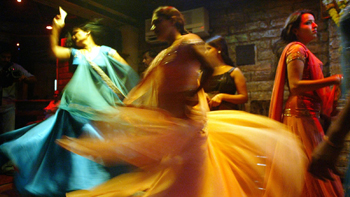
dancebarMaharashtra in 2005 suspended the licences of hundreds of bars and hotels that featured skimpily dressed women dancing to Bollywood tunes on a small stage for male customers.

But after several appeals over the years against the ban, the Supreme Court ordered the state to issue licences from 15 March on condition that certain rules are adhered to.

When the bars were shut in 2005, about 75,000 women were estimated to be working there and bar owners said the women were earning a legitimate living.

But activists and charities feared the women were victims of trafficking and the bars were fronts for brothels.

“It's not as if shutting them down stopped trafficking, but reopening them would legitimise it and give traffickers another reason to dupe and abuse women and girls,” said Suparna Gupta, founder of Aangan Trust which works with victims of trafficking.

“A majority of dance bars were doubling up as brothels, and we established a clear link between many rescued minor girls and these establishments.”

State chief minister Devendra Fadnavis last week said the government was not in favour of reopening dance bars and will draft legislation to find a way around the Supreme Court ruling.

About 150 bars and hotels in Mumbai and about 1,200 in the state are applying for licences, according to an industry lobby.

South Asia, with India at its centre, is the world's fastest-growing and second-biggest region for human trafficking after Southeast Asia, according to the United Nations Office for Drugs and Crime.

Mumbai, India's financial hub, is one of the biggest destinations for trafficked women and children.

Most of them are brought from other states and neighbouring countries, including Nepal and Bangladesh, under the guise of securing a well-paid job in a home or shop but are sold into sex work or forced into manual labour.

The Maharashtra government, which opposes dance bars on the grounds of obscenity, had proposed more than two dozen conditions for new licences but the Supreme Court rejected some of them, including requiring a live stream to police stations.

Instead, closed-circuit televisions will be installed at the entrance, with a limit of four dancers per bar, a railing around the performance area, and a distance of at least 5 feet between the stage and customers.

Women won't be permitted to dance in an obscene manner and customers cannot fling money at the dancers, the rules state.

Hotel and bar owners have lobbied against some of these conditions, calling them unreasonable.

“What has the state done in the last 10 years for the rehabilitation of the thousands of women who lost their livelihood overnight?” said Adarsh Shetty, head of the Indian Hotel and Restaurant Association in Mumbai.

Many women who found themselves without a job then were forced into prostitution or trafficked to Gulf nations, said Bharat Thakur, president of the Dance Bars' Association in Mumbai, which has criticised the state's “moral policing”.

Comments

IBRAHIM.HUSSAIN
 - 
Thursday, 17 Mar 2016

This would be good news for Dance Bar Owners, mostly from costal Karantaka, specially DK, and Udipi Districts. It was alleged that Dance Bar Association paid 35 Lakhs cheque to the BJP party fund for shutting their mouth against opening of Dance Bars. Dance Bars are nothing but a red light homes.

Dance Bar is another name of Cabaret Dance or Strip Dances. The day is not far every city of the India will have Strip Dance Bars which will destroy the peace of society and heritage of India.

As far as livelihood of the Dance Bars females and other workers concerned government of Maharastra should have made alternate arrangement for them for their livelihood. But they did not.

Very sad news of opening Dance Bars.

Suleman
 - 
Wednesday, 16 Mar 2016

BJP promoting \Cultural events\". Situation changed after 10 years of ban."

WellWisher
 - 
Wednesday, 16 Mar 2016

Dear Bros from The Rightwing of all religions,

It is time to show the universal brotherhood.

Please step forward and stop our mothers, sisters and daughters from falling into the hands of the pimps who are involved in such a heinous business called Dance bar who eventually end up trading them to the brothels.

PLZ ALL POLITICALLY POWERFULL PEOPLE OF INDIA PUT YOUR HANDS TOGETHER TO SAVE UR MOTHER,SISTERS and DAUGHTERS.

JAI HIND

Fair talker
 - 
Wednesday, 16 Mar 2016

Ladies are not safe in modesty if working in such exploiting atmosphere. their respect dignity are damaged.

If these 75,000 lady workers are required to work in a very sensitive situation to support their family, then it is the responsibility of the society to arrange them a job or support.

For such a state these 75,000 number is a not a matter.
Give jobs to their male members as much as possible and the rest of the ladies can be given even good gov't jobs.

Whoever showing pity are not genuinely concerned. Bar and Hotel owners are not expressing real pity.

Kumaraswamy
 - 
Wednesday, 16 Mar 2016

next trip to mumbai :P

Add new comment

  • Coastaldigest.com reserves the right to delete or block any comments.
  • Coastaldigset.com is not responsible for its readers’ comments.
  • Comments that are abusive, incendiary or irrelevant are strictly prohibited.
  • Please use a genuine email ID and provide your name to avoid reject.
News Network
April 9,2020

Apr 9: A panel of experts in the Karnataka state has suggested that the ongoing lockdown should be continued in districts identified as Covid-19 hotspots, including Bengaluru, to limit the spread of the pandemic.

IT companies and government offices providing essential services should be allowed to function with 50% staff, according to the committee headed by Narayana Health chairman Dr Devi Shetty, which submitted its report to chief minister BS Yediyurappa on Wednesday.

It has also asked the government to ease restrictions gradually and take adequate care over the next six months to contain the outbreak. The committee urged the government not to permit AC buses and metro services till April 30 and allow private vehicles only on alternate days (even-odd number-wise) for two weeks after April 15.

The government must close schools and colleges till May 31 and allow only inter-state movement of goods transport. The government could allow non-AC shops to open. It has suggested that the ban on inter-state train and flight services should continue.

Education minister S Suresh Kumar, who is the state Covid-19 spokesperson, said the Cabinet, which is meeting on Thursday, may discuss the recommendations and take a view on de-escalation of the lockdown.

Prime Minister Narendra Modi will interact with chief ministers through videoconference on April 11, after which the government will get an idea about the Centre’s thinking, he said.

While some states including Kerala, Maharashtra and Telangana have favoured continuation of the lockdown, Yediyurappa has not taken any stand publicly and has instead been implementing the Centre’s decision.

Six new cases

Karnataka on Wednesday reported six new Covid-19 positive cases, including that of a 65-year-old person in Kalaburagi, who died due to severe acute respiratory infection.

The health authorities have issued a notice to the private hospital -- where the deceased was initially admitted before being taken to a government hospital -- for not reporting the case to the government. The government has locked down the hospital, kept its entire medical team under quarantine, and police have registered a case of criminal negligence against the hospital authorities.

Of the other five positive cases, two had a travel history to Delhi, one had contact with a Dubai returnee and two others had close contacts with infected people.

This takes the total number of positive cases in the state to 181. Five people have died, while 28 have been discharged so far.

Comments

Add new comment

  • Coastaldigest.com reserves the right to delete or block any comments.
  • Coastaldigset.com is not responsible for its readers’ comments.
  • Comments that are abusive, incendiary or irrelevant are strictly prohibited.
  • Please use a genuine email ID and provide your name to avoid reject.
News Network
May 10,2020

Shimoga, May 10: Karnataka Chief Minister B S Yediyurappa was all praise for a nine-month pregnant nurse, who is still attending to work at a Covid-dedicated hospital in the state, braving all odds in the wake of novel coronavirus pandemic.

Roopa, a resident of Gajanur, works at the Sri Jayachamarajendra Taluk Hospital in Tirthahalli.

The Chief Minister called the nurse up and admired her sense of duty after he came to know that she has been turning up at the hospital despite being in the advanced stage of pregnancy.

Comments

Add new comment

  • Coastaldigest.com reserves the right to delete or block any comments.
  • Coastaldigset.com is not responsible for its readers’ comments.
  • Comments that are abusive, incendiary or irrelevant are strictly prohibited.
  • Please use a genuine email ID and provide your name to avoid reject.
Ram Puniyani
January 14,2020

In the beginning of January 2020 two very disturbing events were reported from Pakistan. One was the attack on Nankana Sahib, the holy shrine where Sant Guru Nanak was born. While one report said that the place has been desecrated, the other stated that it was a fight between two Muslim groups. Prime Minister of Pakistan Imran Khan condemned the incident and the main accused Imran Chisti was arrested. The matter related to abduction and conversion of a Sikh girl Jagjit Kaur, daughter of Pathi (One who reads Holy Guru Granth Sahib in Gurudwara) of the Gurudwara. In another incident one Sikh youth Ravinder Singh, who was out on shopping for his marriage, was shot dead in Peshawar.

While these condemnable attacks took place on the Sikh minority in Pakistan, BJP was quick enough to jump to state that it is events like this which justify the Citizenship Amendment Act (CAA). Incidentally CAA is the Act which is discriminatory and relates to citizenship with Religion, which is not as per the norms of Indian constitution. There are constant debates and propaganda that population of Hindus has come down drastically in Pakistan and Bangla Desh. Amit Shah, the Home minister stated that in Pakistan the population of Hindus has come down from 23% at the time of partition to 3.7% at present. And in Bangla Desh it has come down from 22% to present 8%.

While not denying the fact that the religious minorities are getting a rough deal in both these countries, the figures which are presented are totally off the mark. These figures don’t take into consideration the painful migrations, which took place at the time of partition and formation of Bangla Desh later. Pakistan census figures tell a different tale. Their first census was held in 1951. As per this census the overall percentage of Non Muslim in Pakistan (East and West together) was 14.2%, of this in West Pakistan (Now Pakistan) it was 3.44 and in Eat Pakistan it was 23.2. In the census held in Pakistan 1998 it became 3.72%. As far as Bangla Desh is concerned the share of Non Muslims has gone down from 23.2 (1951) to 9.6% in 2011.

The largest minority of Pakistan is Ahmadis, (https://minorityrights.org/country/pakistan/) who are close to 4 Million and are not recognised as Muslims in Pakistan. In Bangla Desh the major migrations of Hindus from Bangla Desh took place in the backdrop of Pakistan army’s atrocities in the then East Pakistan.

As far as UN data on refugees in India it went up by 17% between 2016-2019 and largest numbers were from Tibet and Sri Lanka.  (https://www.un.org/en/development/desa/population/migration/publication…)

The state of minorities is in a way the index of strength of democracy. Most South Asian Countries have not been able to sustain democratic values properly. In Pakistan, the Republic began with Jinnah’s classic speech where secularism was to be central credo of Pakistan. This 11th August speech was in a way what the state policy should be, as per which people of all faiths are free to practice their religion. Soon enough the logic of ‘Two Nation theory” and formation of Pakistan, a separate state for Muslim took over. Army stepped in and dictatorship was to reign there intermittently. Democratic elements were suppressed and the worst came when Zia Ul Haq Islamized the state in collusion with Maulanas. The army was already a strong presence in Pakistan. The popular formulation for Pakistan was that it is ruled by three A’s, Army, America and Allah (Mullah).

Bangla Desh had a different trajectory. Its very formation was a nail in the coffin of ‘two nation theory’; that religion can be the basis of a state. Bangla Desh did begin as a secular republic but communal forces and secular forces kept struggling for their dominance and in 1988 it also became Islamic republic. At another level Myanmar, in the grip of military dictatorship, with democratic elements trying to retain their presence is also seeing a hard battle. Democracy or not, the army and Sanghas (Buddhist Sang has) are strong, in Myanmar as well. The most visible result is persecution of Rohingya Muslims.

Similar phenomenon is dominating in Sri Lanka also where Budhhist Sanghas and army have strong say in the political affairs, irrespective of which Government is ruling. Muslim and Christian minorities are a big victim there, while Tamils (Hindus, Christians etc.) suffered the biggest damage as ethnic and religious minorities. India had the best prospect of democracy, pluralism and secularism flourishing here. The secular constitution, the outcome of India’s freedom struggle, the leadership of Gandhi and Nehru did ensure the rooting of democracy and secularism in a strong way.

India so far had best democratic credentials amongst all the south Asian countries. Despite that though the population of minorities rose mainly due to poverty and illiteracy, their overall marginalisation was order of the day, it went on worsening with the rise of communal forces, with communal forces resorting to identity issues, and indulging in propaganda against minorities.

While other South Asian countries should had followed India to focus more on infrastructure and political culture of liberalism, today India is following the footsteps of Pakistan. The retrograde march of India is most visible in the issues which have dominated the political space during last few years. Issues like Ram Temple, Ghar Wapasi, Love Jihad, Beef-Cow are now finding their peak in CAA.

India’s reversal towards a polity with religion’s identity dominating the political scene was nicely presented by the late Pakistani poetess Fahmida Riaz in her poem, Tum bhi Hum Jaise Nikle (You also turned out to be like us). While trying to resist communal forces has been an arduous task, it is becoming more difficult by the day. This phenomenon has been variously called, Fundamentalism, Communalism or religious nationalism among others. Surely it has nothing to do with the religion as practiced by the great Saint and Sufi traditions of India; it resorts mainly to political mobilization by using religion as a tool.

Comments

Ashi
 - 
Tuesday, 14 Jan 2020

If Malaysia implement similar NRC/CAA, India and China are the loser.

Add new comment

  • Coastaldigest.com reserves the right to delete or block any comments.
  • Coastaldigset.com is not responsible for its readers’ comments.
  • Comments that are abusive, incendiary or irrelevant are strictly prohibited.
  • Please use a genuine email ID and provide your name to avoid reject.