Muslim population rose in India because they got 'special rights': Yogi Adityanath

News Network
January 15, 2020

Jan 15: Uttar Pradesh Chief Minister Yogi Adityanath said on Tuesday that the Muslim population in India increased manifold since the partition because they were given special rights and facilities, according to a report by The Indian Express.

"The Muslim population in India has increased manifold since 1947, it has gone up by seven to eight times. No one has any objection. If they, as citizens of the country, work for development, they are welcome. Their population has increased because they have been given special rights and facilities. All possible steps were taken to ensure their growth," Adityanath said while addressing a rally in Gaya organised by the BJP in support of the Citizenship (Amendment) Act.

He asked the audience, "But what happened in Pakistan?" Claiming that the Hindu population in Pakistan had decreased since 1947, he asked why it was so.

Yogi said that the countrywide anti-CAA protests are a "conspiracy" hatched from afar by those resentful of a united and grand India and these are being aided by a "crooked" opposition. He further charged that those opposing the legislation were committing the "paap" (sin) of working against national interests.

"For taking such a step, Prime Minister Narendra Modi and Home Minister Amit Shah deserve acclaim. Instead, they are being attacked", Yogi lamented.

Comments

India
 - 
Wednesday, 15 Jan 2020

He himself contradicts his statements. He claims the Muslim population rose 8-9 (according to him) times since 1947. If he was educated its simple 73 years have passed the population grows. Still, the Muslim population is only a minority against the majority. He talks about special rights and facilities given yes agreed but not by him it's by the Constitution of India and for all the minorities. So it's not you its Constitution of India.  The majority of the people are against the act CAA is against the very fundamental of the Constitution of India which PM & HM are taking away from the people. If you disagree, disrespect, go against it then you are against the country itself in Hindi deshdruhi. 

Add new comment

  • Coastaldigest.com reserves the right to delete or block any comments.
  • Coastaldigset.com is not responsible for its readers’ comments.
  • Comments that are abusive, incendiary or irrelevant are strictly prohibited.
  • Please use a genuine email ID and provide your name to avoid reject.
News Network
February 3,2020

New Delhi, Feb 3: In the third such incident inside of a week, two unidentified persons opened fire outside Gate No. 5 of Jamia Millia Islamia on Sunday night, the Jamia Coordination Committee (JCC) said.

A statement issued by the committee, a group comprising students and alumni of the university formed to protest against the Citizenship Amendment Act, said the attackers were on a red Rcooty.

No one was injured in the attack. One of the miscreants was wearing a red jacket, the statement said.

"Firing has taken place at Gate No.5 of Jamia Millia Islamia right now by two unidentified persons. As per report, one of them was wearing a red jacket and driving a red Scooty having vehicle no. 1532 or 1534," the statement said.

Police said they were verifying the JCC's claims.

Asim Mohammed Khan, former Congress MLA from Okhla, said the incident occurred around 11.30 pm. "We heard the gunshot. That is when we stepped out to see and the two men left on a Scooty," a student said.

"We have taken down the vehicle number and called police," he added.

This is the third firing incident in the Jamia Nagar area in a week.

On Thursday, a minor fired at anti-CAA protesters marching towards Rajghat, injuring a student.

Two days later, a 25-year-old fired two rounds in air in Shaheen Bagh in Jamia Nagar. No one was hurt in the incident.

The incident on Sunday night triggered panic in the area. A police vehicle had reached the spot after the incident but was chased away by angry students.

Hundreds of students and locals gathered outside the university.

Many raised slogans against the Delhi Police. They also staged a dharna outside the Jamia Nagar police station.

Shezad Ahmed, a JMI student and resident of Zakir Nagar, said they were not even allowed to protest peacefully.

"We are not going to be deterred by such incidents. We will continue with our protest," he added.

Comments

Add new comment

  • Coastaldigest.com reserves the right to delete or block any comments.
  • Coastaldigset.com is not responsible for its readers’ comments.
  • Comments that are abusive, incendiary or irrelevant are strictly prohibited.
  • Please use a genuine email ID and provide your name to avoid reject.
Agencies
July 29,2020

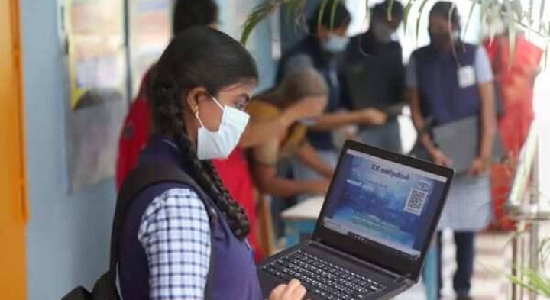
New Delhi, Jul 29: The new National Education Policy (NEP) approved by the Union Cabinet on Wednesday is set to usher in a slew of changes with the vision of creating an education system that contributes directly to transforming the country, providing high-quality education to all, and making India a global knowledge superpower.

The draft of the NEP by a panel headed by former Indian Space Research Organisation (ISRO) chief Kasturirangan and submitted to the Union Human Resource Development Minister Ramesh Pokhriyal when he took charge last year. The new NEP replaces the one formulated in 1986.

Some of the key highlights of the New Education Policy are:-

The policy aims to enable an individual to study one or more specialized areas of interest at a deep level, and also develop character, scientific temper, creativity, spirit of service, and 21st century capabilities across a range of disciplines including sciences, social sciences, arts, humanities, among others.

It identified the major problems facing the higher education system in the country and suggested changes such as moving towards multidisciplinary universities and colleges, with more institutions across India that offer medium of instruction in local/Indian languages, a more multidisciplinary undergraduate education, among others. 

The governance of such institutions by independent boards having academic and administrative autonomy has also been suggested.

Under the suggestions for institutional restructuring and consolidation, it has suggested that by 2040, all higher education institutions (HEIs) shall aim to become multidisciplinary institutions, each of which will aim to have 3,000 or more students, and by 2030 each or near every district in the country there will be at least one HEI.

The aim will be to increase the Gross Enrolment Ratio in HEIs including vocational education from 26.3 per cent (2018) to 50 per cent by 2035.

Single-stream HEIs will be phased out over time, and all will move towards becoming vibrant multidisciplinary institutions or parts of vibrant multidisciplinary HEI clusters.

It also pushes for more holistic and multidisciplinary education to be provided to the students.

Comments

Add new comment

  • Coastaldigest.com reserves the right to delete or block any comments.
  • Coastaldigset.com is not responsible for its readers’ comments.
  • Comments that are abusive, incendiary or irrelevant are strictly prohibited.
  • Please use a genuine email ID and provide your name to avoid reject.
News Network
March 10,2020

Mar 10: Indian energy tycoon Mukesh Ambani is no longer Asia’s richest man, relinquishing the title to Jack Ma after oil prices collapsed along with global stocks.

The rout, exacerbated by mounting fears that the spread of the novel coronavirus will thrust the world into a recession, erased $5.8 billion from Ambani’s net worth on Monday and pushed him to No. 2 on the list of Asia’s richest people, according to the Bloomberg Billionaires Index. Ma, the Alibaba Group Holding Ltd. founder who relinquished the No. 1 ranking in mid-2018, is back on top with a $44.5 billion fortune, about $2.6 billion more than Ambani.

Oil plunged the most in 29 years on Monday as Saudi Arabia and Russia vowed to pump more in a struggle for market share. The slump comes just as the coronavirus is spurring the first decline in demand in more than a decade. That raises questions about whether Ambani’s flagship Reliance Industries Ltd. will be able to cut net debt to zero by early 2021, as he has pledged. The plan hinges on a proposal to sell a stake in the group’s oil and petrochemicals division to Saudi Arabian Oil Co., the world’s biggest crude producer.

While the coronavirus has curtailed some of tech giant Alibaba’s businesses, the damage has been mitigated by increased demand for its cloud computing services and mobile apps.

Reliance Industries, by comparison, has no such silver lining. The Indian conglomerate’s shares plunged 12% on Monday, the most since 2009, extending this year’s decline to 26%. Alibaba’s American depositary receipts have slipped 6.8% so far in 2020.

Ma reclaims crown after Reliance shares were pummeled in 2020.

Few of the world’s billionaires fared well in Monday’s collapse as the S&P 500 Index and Dow Jones Industrial Average each plunged more than 7.5%, the most since the 2008 financial crisis, threatening to end the longest bull market in history. But no one did worse than those whose fortunes are underpinned by oil. Wildcatter Harold Hamm’s fortune was cut almost in half to $2.4 billion and fellow oil magnate Jeff Hildebrand lost $3 billion, bumping both from Bloomberg’s 500-member wealth ranking.

In a pivot toward new businesses such as telecommunications, technology and retail, Ambani’s Reliance Industries has piled on billions of dollars of debt over the years.

It spent almost $50 billion -- most of it funded by borrowings -- to build Reliance Jio Infocomm Ltd., which became India’s No. 1 wireless carrier within about three years of its debut. As the mobile venture took off, Ambani also unveiled plans for an e-commerce empire to rival Amazon.com Inc. in India.

Addressing concerns over the liabilities, Ambani pledged in August to cut the group’s net debt to zero from about $21 billion as of last March. The Aramco deal is crucial to that plan for which Reliance Industries has valued its oil-to-chemicals division at $75 billion including debt, implying a $15 billion valuation for the 20% stake that’s for sale.

Signs of a potential delay to that deal unnerved some investors, hammering the stock since it touched a record high on Dec. 19.

Reliance Industries expected the Aramco transaction to be completed by March, but people familiar with the matter said in February that talks were still ongoing to bridge differences between the two parties over the deal’s structure.

Adding to the uncertainty, Indian Prime Minister Narendra Modi’s administration has petitioned a court to halt the proposed stake sale, threatening a key source of funds needed to pare net debt.

But Ambani, 62, may soon bounce back from the setback, said Harish H.V., managing partner at ECube Investment Advisors in Bengaluru, India.

“The game isn’t over,” he said. “Ambani has successfully built a robust business model which would keep him in the game. Moreover, his telecom business will start yielding results in coming years.”


Comments

SmR
 - 
Tuesday, 10 Mar 2020

The curses of the bank depositors savings which vanished with collapsing economy and fraudlent seems to have gradully affecting riches of Ambani's.


AU
 - 
Tuesday, 10 Mar 2020

in Holy Quran Allah says; but they plan and Allah plans, and Allah is the best planners..(Surah Al Anfal 8:30)

Add new comment

  • Coastaldigest.com reserves the right to delete or block any comments.
  • Coastaldigset.com is not responsible for its readers’ comments.
  • Comments that are abusive, incendiary or irrelevant are strictly prohibited.
  • Please use a genuine email ID and provide your name to avoid reject.