


Nearly 14% Indians are mentally ill, reveals Nimhans study

[email protected] (CD Network)
October 12, 2016

Bengaluru, Oct 12: A nationwide study conducted by National Institute of Mental Health & Neurosciences (Nimhans) has revealed a shocking prevalence of mental illness in India. At least 13.7 per cent of India's general population has been projected to be suffering from a variety of mental illnesses; and 10.6 per cent of this requires immediate intervention.
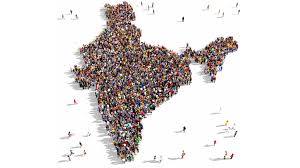
indiaIn all, nearly 150 million Indians are in a need of active medical intervention, according to the study, submitted by Nimhans to the Union ministry of health and family welfare on Monday.

Concerned over the growing problem of mental health in India, the ministry had appointed Nimhans to study the mental health status in the country in 2014 to come up with stronger mental health policies.

The aim of the survey was to study the magnitude of the problem in the country when Dr P Satish Chandra was the director of Nimhans.

India was one of the first countries to develop a national mental health programme in the early 1980s, but there was no proper study to understand the spread and estimate of mental illness in the state.

Although a mental health survey was conducted almost a decade ago, there were several fallacies in that report. The report stated that the estimates at the national and state levels were not possible due to methodological limitations.

The current study, starting from data collection, was initiated in 2014. Through computer-generated random selection, primary data was collected from 12 states with a sample size of 34,802 people.

A pilot study was done in Kolar in Karnataka. It covered all important aspects of mental illness that included substance abuse, alcohol use disorder, tobacco use disorder, severe mental illness, depression, anxiety, phobia, post-traumatic stress disorder, among others.

The prevalence of mental morbidity was found to be very high in the Indian urban centres with higher prevalence of schizophrenia, mood disorders and neurotic- or stress-related disorders.

Researchers have attributed the disturbing scenario to fast-paced lifestyles, stress, complexities of loving, breakdown of support systems and challenges of economic instability.

One of the biggest concerns emerging from the study is that despite three out of four persons experiencing severe mental disorders, huge treatment gaps exist.

Apart from epilepsy, the treatment gap for all mental health disorders is more than sixty per cent. In fact, the economic burden of mental disorders is so huge that affected families had to spend nearly Rs 1,000-1,500 a month mainly for treatment and to access care.

Due to the stigma attached with mental disorders, nearly 80 per cent of people suffering from mental disorders had not received any treatment despite being afflicted by the illness for over 12 months.

Poor implementation of programmes under the national mental health programme has been found to be the main culprit for this scenario.

They not only have a low priority in the public health agenda but the health information system itself does not prioritise mental health.

Not only is there a paucity of mental health specialists, the institutional care in India, too, has been found to be limited.

The researchers suggest that mental health financing needs to be streamlined. The other problems also include interrupted drug supply to treat mental illness.

Comments

Ahmed USA
 - 
Thursday, 13 Oct 2016

Sam ,u proved urself to be a student of madrasa .message board itself clearly says many have become mentally retards becoz of many reason ..one is triple talaq ..now they cannot escape from marriage after raping woman. Second ..surgical strike hit them most becoz many of them thought their relatives can do anything in Pakistan .but now their dreams are shattered .third point arrest of salafist linked Isis elements .4th point losing grip on central govt as iron man is ruling the central .mr sam .1.25 billion population yaar .have commonsense .max voters 65crores .in that Muslims didn't vote for bjp and 31% they have received .FYI how much your siddu got do u know ? .send ur kids at least to schools instead of salafist madrasas..at least they don't become like you .

Rikaz
 - 
Wednesday, 12 Oct 2016

Modi promised 15 lakhs and ache din and may be he is also one of them....

Ashwin
 - 
Wednesday, 12 Oct 2016

SAM, UAE
You are wrong, 14% of the people are those who voted for the Looters party inspite of their pro Pak, non stop looting, minority appeasing policy. This list includes Puppu, Mani, Khurshid, Diggy etc

Go Moothra
 - 
Wednesday, 12 Oct 2016

Those who changed clothes (Chaddi to trouser) .....recently ...but could not change their Minds.....

Shaad
 - 
Wednesday, 12 Oct 2016

We know 31% Indians who elected present Govt. are mentally ill, how come it reduced to 14%? May after 2 years some realised their mistakes..!

SAM
 - 
Wednesday, 12 Oct 2016

Don't understand why the NIMHANS spent so much to reveal that the number of people voted for NDA are mentally ill.

17 Cr out of 1.25 Billion voted for NDA which is 14%.

Surely Arnab Go & Swami are the on the top list who needs to be admitted to ICU.

Abdul Narayan Dsouza
 - 
Wednesday, 12 Oct 2016

Arnab Gobar swami and Naren Kothi will be in the list

Abbu Beary
 - 
Wednesday, 12 Oct 2016

Some saffron group activists all of a sudden become mentally ill if they were caught in terror case. I want to know whether they also included in this 14 per cent ?

Add new comment

  • Coastaldigest.com reserves the right to delete or block any comments.
  • Coastaldigset.com is not responsible for its readers’ comments.
  • Comments that are abusive, incendiary or irrelevant are strictly prohibited.
  • Please use a genuine email ID and provide your name to avoid reject.
Wafa Sultana
April 4,2020

Over the last couple of days when the world was occupied with unifying efforts to fight the deadly Covid19 pandemic, sections of Indian media provided viewers a familiar scapegoat – the Indian Muslims – who are often stereotyped as a community being constantly at loggerheads with the citizenry and the State. Biased media channels were quick to resort to blaming the entire Muslim community for the spread of the disease in the country, thanks to an ill-timed Tablighi Jamaat gathering at its international headquarters in Delhi’s Nizamuddin. Unsurprisingly, the opprobrium was also marked by a sudden spike in WhatsApp forwards of videos with people wearing skullcaps licking spoons and performing Sufi breathing rituals, suggesting some sort of wild conspiracy on the part of the community to spread the virus.  Some media channels were quick to formulate, hypothesize and provide loose definitions of a newly discovered form of Jihad i.e. ‘Corona Jihad ’ thereby vilifying the Islamic faith and its followers.

While the investigation on the culpability of the organizers of the Nizamuddin event is still ongoing, there is enough information to suggest that the meeting was held before any lockdown was in force, and the problem began when there was no way of getting people out once the curfew was announced. Be that as it may, there is little doubt that organizing a meet of such a scale when there is a global pandemic smacks of gross misjudgment, and definitely the organizers should be held accountable if laws or public orders were defied. Attendees who attempt to defy quarantine measures must be dealt with strictly. However, what is alarming is that the focus and narrative have now shifted from the unfortunate event at Nizamuddin to the Tablighi Jamaat itself.

For those not familiar with the Tablighi Jamaat, the organization was founded in 1926 in Mewat by scholar Maulana Mohammad Ilyas. The Jamaat’s main objective was to get Muslim youth to learn and practice pristine Islam shorn of external influences. This is achieved through individuals dedicating time for moral and spiritual upliftment secluded from the rest of the world for a brief period of time. There is no formal membership process. More senior and experienced participants typically travel from one mosque to other delivering talks on religious topics, inviting local youth to attend and then volunteer for a spiritual retreat for a fixed number of days to a mosque in a nearby town or village to present the message to their co-religionists. Contrary to ongoing Islamophobic rhetoric, the movement does not actively proselytize. The focus is rather on getting Muslims to learn the teachings and practices of Islam.  This grassroots India-based movement has now grown to almost all countries with substantial Muslim populations. Its annual meets, or ‘ijtemas’ are among the largest Islamic congregations in the world after the annual Haj. One of the reasons for its popularity and wide network in the subcontinent and wordwide is the fact that it has eschewed the need for scholarly intervention, focusing on peer learning of fundamental beliefs and practice rather than high-falutin ideological debates. The Tablighi Jamaat also distinguishes itself from other Islamic movements through its strictly apolitical nature, with a focus on individual self-improvement rather than political mobilization. Hardships and difficulty in the world are expected to be face through ‘sabr’ (patience) and ‘dua’ (supplication),  than through quest for political power or influence. In terms of ideology, it is very much based on mainstream Sunni Islamic principles derived from the Deobandi school.

So, why is all this background important in the current context? While biased media entities have expectedly brought out their Islamophobic paraphernalia out for full display, more neutral commentators have tried to paint the Tablighi Jamaat as a fringe group and have tried to distance it from 'mainstream Muslims'. While the intent is no doubt innocent, this is a trap we must not fall into. This narrative, unfortunately, is also gaining ground due to apathy some Muslims have for the group, accusing it of being “disconnected from the realities of the world”. Unlike other Muslim organizations and movements, the Tablighi Jamat, by virtue of its political indifference, does not boast of high-profile advocates and savvy spokespersons who can defend it in mainstream or social media.  The use of adjectives such as 'outdated' and 'orthodox' by liberal columnists to describe the Jamaat feeds into the malignant attempt to change the narrative from the control of the spread of the pandemic due to the Nizamuddin gathering to 'raison d'etre' of the organization itself.

A large mainstream religious group like the Tablighi Jamaat with nearly a hundred-year history, normally considered to be peaceful, apolitical and minding its own business is now suddenly being villainized owing to unfortunate circumstances. Biased media reactions filled with disgust and hate seem to feed the Indian public conscience with a danngerous misconception - to be a nominal Muslim is okay but being a practicing one is not.  For those committed to the truth and fighting the spread of Islamophobia, the temptation to throw the entire Tablighi Jamaat under the bus must be resisted.

The writer is a lawyer and research scholar at Qatar University. Her research interests include Islamic law and politics.

Comments

zahoorahmed
 - 
Saturday, 4 Apr 2020

great article! provides a great perspective on tableeg jamat

Add new comment

  • Coastaldigest.com reserves the right to delete or block any comments.
  • Coastaldigset.com is not responsible for its readers’ comments.
  • Comments that are abusive, incendiary or irrelevant are strictly prohibited.
  • Please use a genuine email ID and provide your name to avoid reject.
News Network
April 4,2020
Udupi, Apr 4: District Commissioner Jagadeesh has warned that the vehicles of people who break lockdown norms will be seized.
 
Addressing the media, he said, “People who want to buy essential items are allowed come out of the house between 1100 hrs and 1900 hrs, but we have noticed that some are unnecessarily coming out and blocking the roads. If this continues, vehicles of such people will be seized.”
 
No new COVID-19 positive cases were reported since Friday Udupi district.

Comments

Add new comment

  • Coastaldigest.com reserves the right to delete or block any comments.
  • Coastaldigset.com is not responsible for its readers’ comments.
  • Comments that are abusive, incendiary or irrelevant are strictly prohibited.
  • Please use a genuine email ID and provide your name to avoid reject.
coastaldigest.com news network
July 13,2020

Mangaluru, July 13: Nalin Kumar Kateel, MP of Dakshina Kannada, has appealed the chief minister to give nod to impose a week-long lockdown in the coastal district in the wake of mounting coronavirus cases.

Mr Kateel, who is also the president of Karnataka BJP, participated in a video conference with chief minister BS Yediyurappa along with Deputy Commissioner Sindhu B Rupesh and district in charge minister Kota Srinivas Poojary.

The final decision about the lockdown in the district will be taken following a meeting under the leadership of the deputy commissioner, wherein the elected representatives of the district will express their opinions.

Comments

Add new comment

  • Coastaldigest.com reserves the right to delete or block any comments.
  • Coastaldigset.com is not responsible for its readers’ comments.
  • Comments that are abusive, incendiary or irrelevant are strictly prohibited.
  • Please use a genuine email ID and provide your name to avoid reject.