I-day Cup Football tourney: Rosario, Aloysius College emerge champions

August 16, 2013
football_1
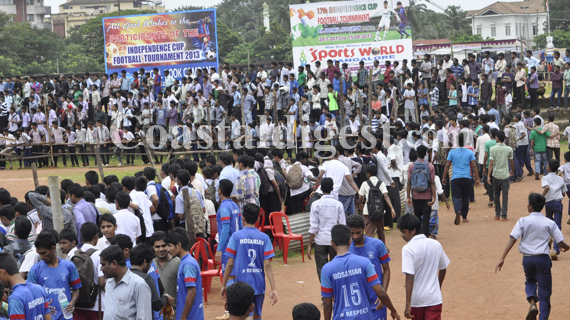
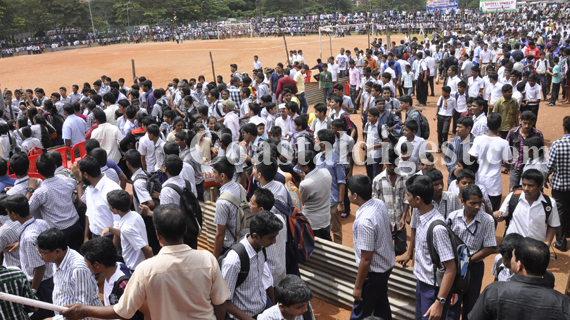
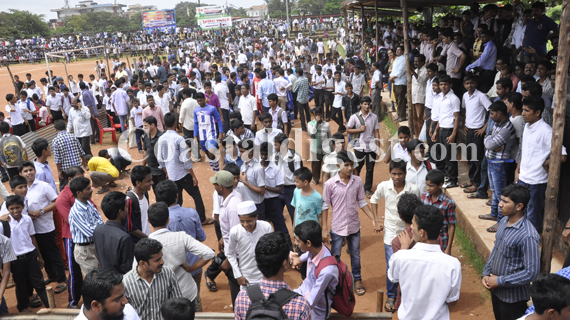
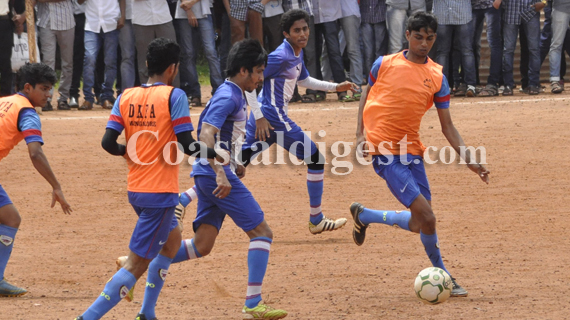
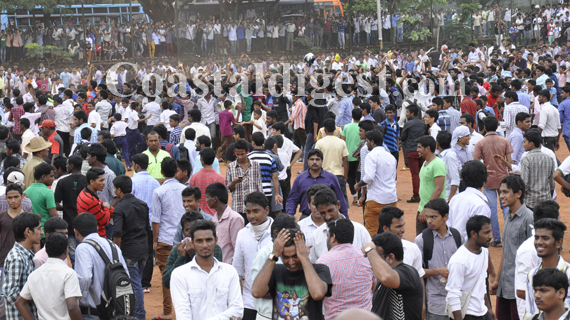
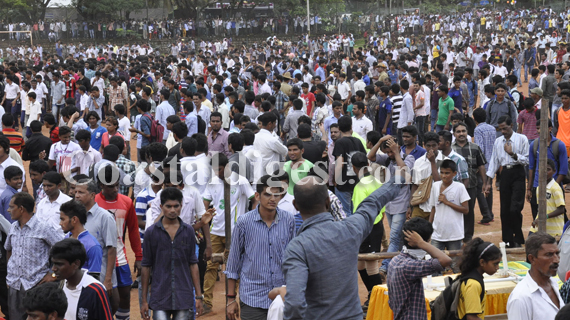
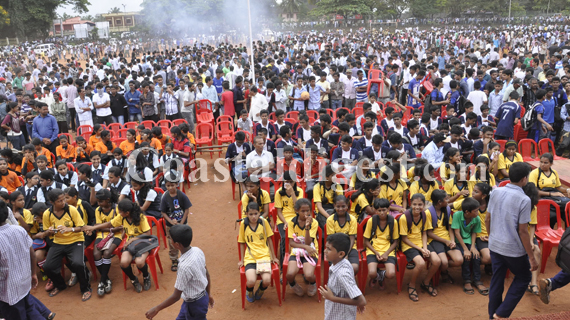
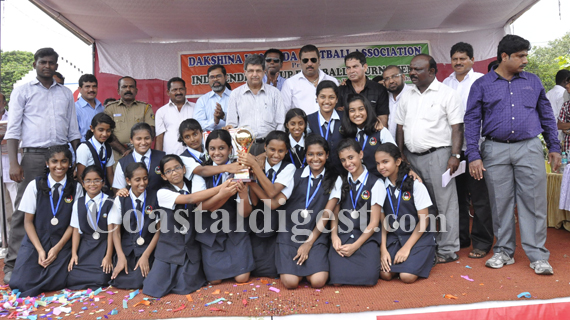
Mangalore, Aug 16: Rosario Degree College and St. Aloysius PU College and High School teams emerged as the champions of 17th Independence Cup Football tournament on Thursday.

The tournament was organised by Dakshina Kannada District Football Association (DKDFA) at Nehru Maidan.

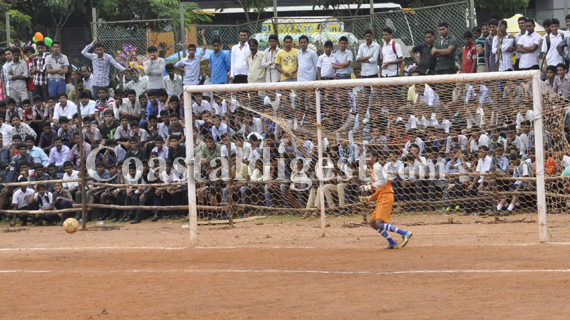
Rosario college of Mangalore had to play against Meridian College, Ullal in the finals. However, as both the teams were equally good, the match had to be decided in a tie-breaker.

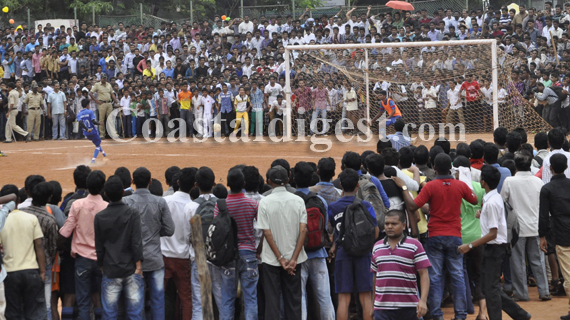
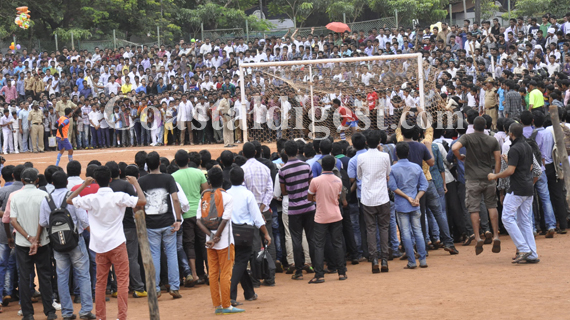
During the tie-breaking penalty shoot-out, Rosario scored four goals, while Meridian scored the first and failed in scoring the second and third.

As a result, Rosario emerged as champions.

In PU section, the final match was between St Aloysius College 'A' team and St Aloysius College 'B' team. In the tie-breaker phase, the 'A' team scored 1 and 'B' failed to score the goal.

In High School Boys level match, St Aloysius and Milagres High School played against one another and Aloysius won with four goals in the tie-breaker and Milagres scored three.

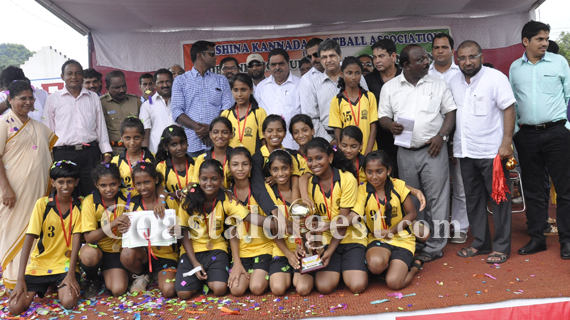
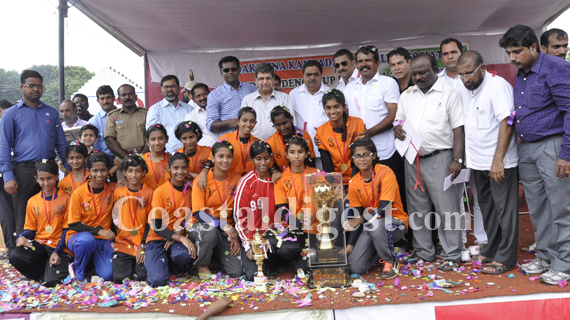
In High School girls Level match, St Joseph team, Bajpe won against Sacred Hearts, Kulashekhar.

In primary school Girls match, Sacred Hearts girls defeated Morning star Bajpe team.

In primary school Boys, Sayed Madani school Ullal defeated the boys of Morning star school.

Valedictory

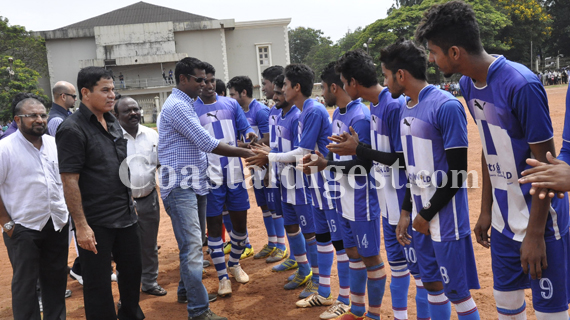
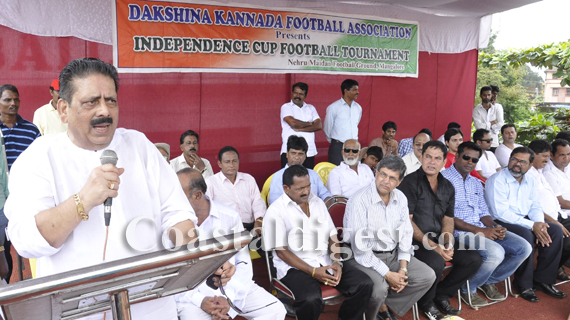
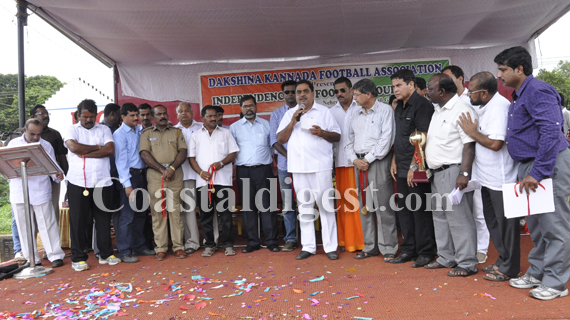
The winning and runner teams were feted in the valedictory by the District-in-charge Minister B Ramanath Rai.

Speaking on the occasion, Raman Vijayan former player of National Football Team said “Mangalore has got a lot of talent and potential. However, they lack encouragement and guidance. In this regard, players in this regard, would be trained under the Bangalore South United Club”.

Prizes were distributed among the winners of primary and high school teams. The referees and guests were also felicitated on the occasion.

D M Aslam, President of DKDFA submitted a memorandum to the minister urging the development of football ground in Mangalore.

Sadanand Shetty, president of Sports Promoters presided over the ceremony. Vijaynath Vittal Shetty, manging trustee, Bhootanatheshwar temple, Jayaram Hande, chief manager of Karnataka Bank, K.P. Acharya,assistant chief manager of Union Bank of India, corporators including Abdul Latheef, Mohammad Kunjathooru, PIC M. Diwakar, businessmen Shekhar Putran, Manohar Kumar Bengre, Sathish Kumar, Vijay Suvarna, member of Karnataka State Football federation, Abdul Rehman, Nemiraj Bengre former football player, Anil PV treasurer of DKDFA and others were present.

Mohammad Hussain Bolar, secretary of DKDFA welcomed the gathering while Dinesh Karkera proposed the vote of thanks and also compered the programme.


football_2
football_3
football_4
football_5
football_6
football_7
football_8
football_9
football_10
football_11
football_12
football_13
football_14
football_15
football_16
football_17
football_18
football_19
football_20
football_21
football_22
football_23
football_24

Comments

Antwan
 - 
Thursday, 14 Apr 2016

What i do not realize is in truth how you're no longer actually much more neatly-appreciated than you may be
right now. You are very intelligent. You know thus considerably when it comes to this subject,
produced me in my opinion consider it from numerous numerous angles.

Its like men and women aren't interested unless it is one thing to
accomplish with Woman gaga! Your personal stuffs nice.
Always handle it up!

my blog post how to lose man boobs (Sherrill: http://howtolosemanboobsfast.strikingly.com/)

Add new comment

  • Coastaldigest.com reserves the right to delete or block any comments.
  • Coastaldigset.com is not responsible for its readers’ comments.
  • Comments that are abusive, incendiary or irrelevant are strictly prohibited.
  • Please use a genuine email ID and provide your name to avoid reject.
News Network
May 28,2020

May 28: The Karnataka State Election Commission on Thursday announced postponement of gram panchayat polls citing the COVID-19 pandemic.

Out of 6,025 gram panchayats, the tenure of 5,800 gram panchayats will end by June-August 2020.

"After examining the feasibility of conducting general elections to gram panchayats, the State Election Commission, considering the current situation as exceptional circumstance, has decided to temporarily postpone the general elections to the gram panchayats," the SEC said in a release.

It said after examining the situation in the days to come, the decision will be taken on holding the general elections to the gram panchayats.

The CEC also states that report by Deputy Commissioners of districts on holding the elections was verified and it has been found that district administrations are involved in COVID-19 related work and there will be shortage of staff and transport facilities for the elections. Besides, there would be a problem in maintaining law and order.

Last week through a letter to Deputy Commissioners of districts, the commission had sought opinion on holding panchayat polls amid the COVID-19 crisis. It had also pointed out that electoral roll needs to be prepared and reservations had to be allocated as per the new amendments.

Stating that the state election commission's decision to postpone gram panchayat elections was against the provisions of the Karnataka Panchayat Raj Act 1993, the Leader of Opposition Siddaramaiah said the Congress will question this "undemocratic act" in the court of law.

He accused the commission of playing to the BJP's tune and said the congress will protest the decision at gram panchayat level.

Opposition parties in the state, especially congress, have been demanding elections.

The government was in favour of postponement of polls and wants to have administrative committees to govern the panchayats, until the polls are held, according to government sources.

The Congress, raising apprehension about administrative committees, has accused the government of conspiring to have ruling BJP workers as its members.

A congress delegation had last week submitted a petition to State Election Commissioner B Basavaraju and urged the Commission to hold elections.

The congress had even suggested continuation of sitting panchayat members until the polls are held, instead of appointing administrative committees.

Comments

Add new comment

  • Coastaldigest.com reserves the right to delete or block any comments.
  • Coastaldigset.com is not responsible for its readers’ comments.
  • Comments that are abusive, incendiary or irrelevant are strictly prohibited.
  • Please use a genuine email ID and provide your name to avoid reject.
News Network
June 20,2020

Bengaluru, Jun 20: The Karnataka Health Department has issued guidelines on the admission of COVID-19 patients in private hospitals after clinical assessment, mandating that the district surveillance officer (DSO) should be first informed to initiate further procedures, an official said on Friday.

"A health team sent by the DSO should visit the home or hospital where the patient is staying. The team should conduct a rapid assessment of his or her health condition," said Karnataka's Additional Chief Secretary Jawaid Akhtar.

In the rapid health condition assessment, the team should first check the patient's body temperature, followed by SpO2 (oxygen saturation) level and confirm if there are any comorbidities such as hypertension, diabetes, tuberculosis, HIV, cancer, stroke etc.

Depending on the health condition of patients, Akhtar said, two categories have been made.

"Those who have body temperature greater than 37.5 degrees Celsius, SpO2 level below 94 percent, elderly (above 60 years) and suffering from known comorbid conditions should be taken to a dedicated Covid hospital (DCH)," he said.

"All other patients, even if older but not suffering from co-morbidities, those below 60 and suffering from co-morbidities and asymptomatic cases should be taken to a dedicated Covid health centre (DCHC) or a private hospital as opted by the patient," he added.

Private hospitals have been asked to pitch in due to the rising number of cases in Karnataka. Currently, there are 2943 active cases in the state after 337 cases were reported on Friday.

"The patients are assessed clinically and evaluated at DCHCs or private hospitals with appropriate diagnostic tests. After evaluation, if the patients are asymptomatic, they are shifted to a COVID Care Centre (CCC) for further management," said Akhtar.

CCCs are expected to be equipped with ventilated rooms, pulse oximeters, handheld thermal scanners and blood pressure apparatus.

A nurse has to be present round the clock for every 50 patients and should visit each patient twice a day for assessment whereas the medical officer has to visit the CCC once a day. He should also be available on call in case of an emergency.

Staff serving food and others should wear personal protective equipment and an N-95 mask. Explaining the procedures at DCHCs, Akhtar said general examinations for medical conditions like body temperature, BP, pulse, oxygen saturation and urine output should be in place.

Investigations such as complete blood count, fasting blood sugar, random blood sugar, liver function tests, renal function tests, ECG and chest X-ray facilities should be available.

"DCHCs should ensure that above examinations are over in an orderly timeline of 24 hours and depending on the examination, the patient is continued to be lodged at the DCHC or sent to DCH or CCC," said the senior officer.

Likewise, the discharge policy should be done as per the protocols issued by the Health Department from time to time.

The Karnataka government is yet to fix an upper limit on the cost of treating COVID-19 patients in private hospitals. While reports indicated that this could be capped at Rs 5200 per day, health officials are yet to specify this is the case. Private hospitals in the state have asked the government to take a collaborative approach in deciding the fixed cap on treatment cost.

Comments

Add new comment

  • Coastaldigest.com reserves the right to delete or block any comments.
  • Coastaldigset.com is not responsible for its readers’ comments.
  • Comments that are abusive, incendiary or irrelevant are strictly prohibited.
  • Please use a genuine email ID and provide your name to avoid reject.
Ram Puniyani
January 14,2020

In the beginning of January 2020 two very disturbing events were reported from Pakistan. One was the attack on Nankana Sahib, the holy shrine where Sant Guru Nanak was born. While one report said that the place has been desecrated, the other stated that it was a fight between two Muslim groups. Prime Minister of Pakistan Imran Khan condemned the incident and the main accused Imran Chisti was arrested. The matter related to abduction and conversion of a Sikh girl Jagjit Kaur, daughter of Pathi (One who reads Holy Guru Granth Sahib in Gurudwara) of the Gurudwara. In another incident one Sikh youth Ravinder Singh, who was out on shopping for his marriage, was shot dead in Peshawar.

While these condemnable attacks took place on the Sikh minority in Pakistan, BJP was quick enough to jump to state that it is events like this which justify the Citizenship Amendment Act (CAA). Incidentally CAA is the Act which is discriminatory and relates to citizenship with Religion, which is not as per the norms of Indian constitution. There are constant debates and propaganda that population of Hindus has come down drastically in Pakistan and Bangla Desh. Amit Shah, the Home minister stated that in Pakistan the population of Hindus has come down from 23% at the time of partition to 3.7% at present. And in Bangla Desh it has come down from 22% to present 8%.

While not denying the fact that the religious minorities are getting a rough deal in both these countries, the figures which are presented are totally off the mark. These figures don’t take into consideration the painful migrations, which took place at the time of partition and formation of Bangla Desh later. Pakistan census figures tell a different tale. Their first census was held in 1951. As per this census the overall percentage of Non Muslim in Pakistan (East and West together) was 14.2%, of this in West Pakistan (Now Pakistan) it was 3.44 and in Eat Pakistan it was 23.2. In the census held in Pakistan 1998 it became 3.72%. As far as Bangla Desh is concerned the share of Non Muslims has gone down from 23.2 (1951) to 9.6% in 2011.

The largest minority of Pakistan is Ahmadis, (https://minorityrights.org/country/pakistan/) who are close to 4 Million and are not recognised as Muslims in Pakistan. In Bangla Desh the major migrations of Hindus from Bangla Desh took place in the backdrop of Pakistan army’s atrocities in the then East Pakistan.

As far as UN data on refugees in India it went up by 17% between 2016-2019 and largest numbers were from Tibet and Sri Lanka.  (https://www.un.org/en/development/desa/population/migration/publication…)

The state of minorities is in a way the index of strength of democracy. Most South Asian Countries have not been able to sustain democratic values properly. In Pakistan, the Republic began with Jinnah’s classic speech where secularism was to be central credo of Pakistan. This 11th August speech was in a way what the state policy should be, as per which people of all faiths are free to practice their religion. Soon enough the logic of ‘Two Nation theory” and formation of Pakistan, a separate state for Muslim took over. Army stepped in and dictatorship was to reign there intermittently. Democratic elements were suppressed and the worst came when Zia Ul Haq Islamized the state in collusion with Maulanas. The army was already a strong presence in Pakistan. The popular formulation for Pakistan was that it is ruled by three A’s, Army, America and Allah (Mullah).

Bangla Desh had a different trajectory. Its very formation was a nail in the coffin of ‘two nation theory’; that religion can be the basis of a state. Bangla Desh did begin as a secular republic but communal forces and secular forces kept struggling for their dominance and in 1988 it also became Islamic republic. At another level Myanmar, in the grip of military dictatorship, with democratic elements trying to retain their presence is also seeing a hard battle. Democracy or not, the army and Sanghas (Buddhist Sang has) are strong, in Myanmar as well. The most visible result is persecution of Rohingya Muslims.

Similar phenomenon is dominating in Sri Lanka also where Budhhist Sanghas and army have strong say in the political affairs, irrespective of which Government is ruling. Muslim and Christian minorities are a big victim there, while Tamils (Hindus, Christians etc.) suffered the biggest damage as ethnic and religious minorities. India had the best prospect of democracy, pluralism and secularism flourishing here. The secular constitution, the outcome of India’s freedom struggle, the leadership of Gandhi and Nehru did ensure the rooting of democracy and secularism in a strong way.

India so far had best democratic credentials amongst all the south Asian countries. Despite that though the population of minorities rose mainly due to poverty and illiteracy, their overall marginalisation was order of the day, it went on worsening with the rise of communal forces, with communal forces resorting to identity issues, and indulging in propaganda against minorities.

While other South Asian countries should had followed India to focus more on infrastructure and political culture of liberalism, today India is following the footsteps of Pakistan. The retrograde march of India is most visible in the issues which have dominated the political space during last few years. Issues like Ram Temple, Ghar Wapasi, Love Jihad, Beef-Cow are now finding their peak in CAA.

India’s reversal towards a polity with religion’s identity dominating the political scene was nicely presented by the late Pakistani poetess Fahmida Riaz in her poem, Tum bhi Hum Jaise Nikle (You also turned out to be like us). While trying to resist communal forces has been an arduous task, it is becoming more difficult by the day. This phenomenon has been variously called, Fundamentalism, Communalism or religious nationalism among others. Surely it has nothing to do with the religion as practiced by the great Saint and Sufi traditions of India; it resorts mainly to political mobilization by using religion as a tool.

Comments

Ashi
 - 
Tuesday, 14 Jan 2020

If Malaysia implement similar NRC/CAA, India and China are the loser.

Add new comment

  • Coastaldigest.com reserves the right to delete or block any comments.
  • Coastaldigset.com is not responsible for its readers’ comments.
  • Comments that are abusive, incendiary or irrelevant are strictly prohibited.
  • Please use a genuine email ID and provide your name to avoid reject.