Overeating, stress = high BP, diabetes = chronic kidney diseases: Dr Vivek Pathak

[email protected] (CD Network | Photos by Suresh)
June 15, 2015

Mangaluru, Jun 15: Stating that diabetes and high blood pressure are the two primary reasons for chronic kidney diseases (CKD), Dr Vivek Pathak, a renowned nephrologist, said that the prevention of such diseases is cheaper to undergoing treatment later.

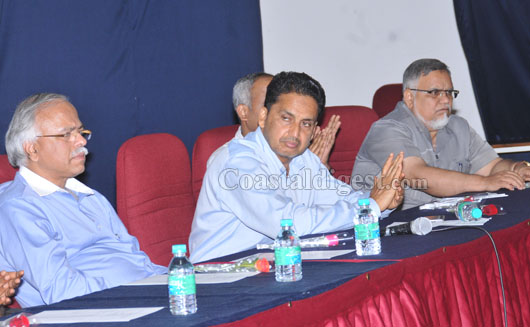
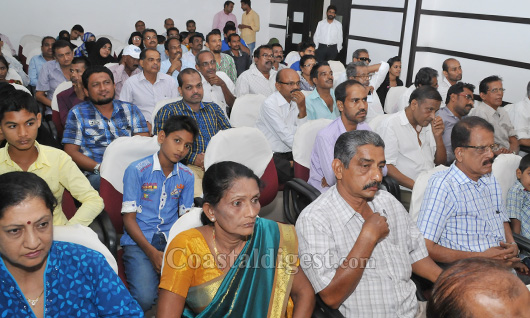
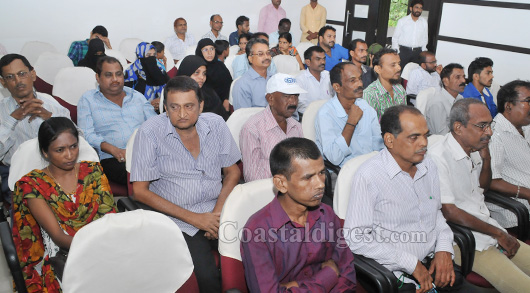
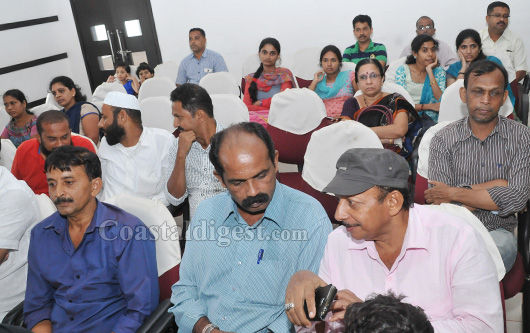
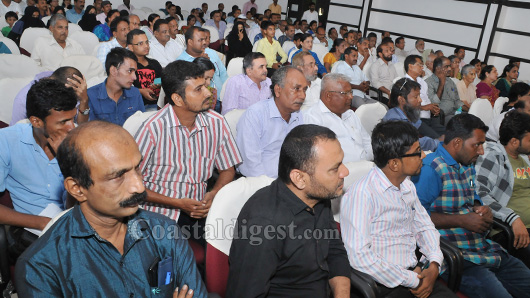
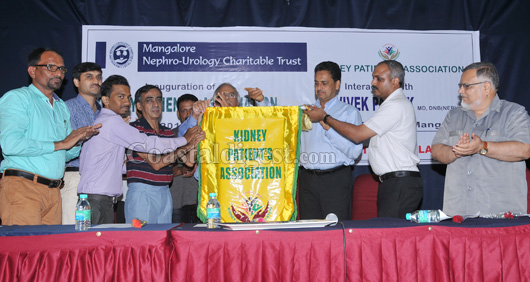
Dr Pathak, a consultant nephrologist at Kovai Medical Center and Hospitals, Coimbatore, known for steroids-free kidney transplantations, was speaking at the inauguration of Kidney Patients’ Association in the city on Sunday.
Kidney association 14 1

“Overeating leads to obesity which in turn leads to diabetes and high BP. No one dies by eating less,” he reminded, adding that stress also would invariably contribute to diabetes and high blood pressure.

Besides diabetes and high BP, such diseases could also happen hereditarily, especially when marriages were done among close relatives. Such practices should stop, he said.

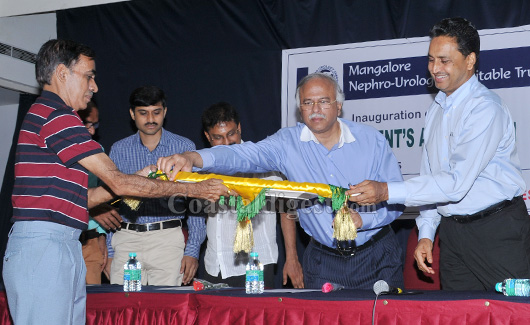
Earlier, the association was formally inaugurated by A B Ibrahim, Deputy Commissioner, DK. Speaking on the occasion, he said that CKD were not included in health schemes because of the alleged involvement of kidney rackets.

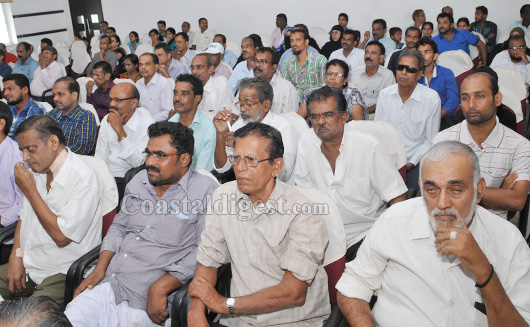
Kidney association 14 1

However, it was true that patients were forced to undergo physical and financial ordeal, he said. “I will send a proposal to the government to bring them under the Vajpayee Arogyashree scheme,” Mr. Ibrahim said.

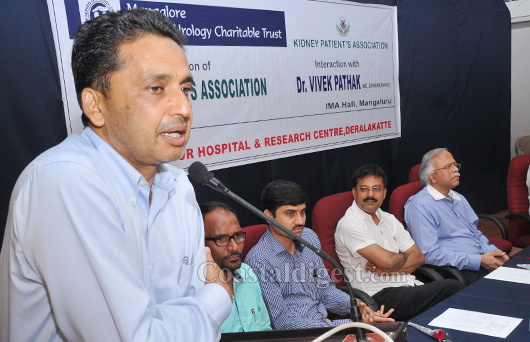
In his introductory address, Umar U.H., one of the members of Mangalore Nephro-Urology Charitable Trust that is promoting the association, said unlike other diseases, kidney disease would not be known till both the kidneys were damaged. While many other diseases were covered under government health schemes, chronic kidney diseases were not part of them.
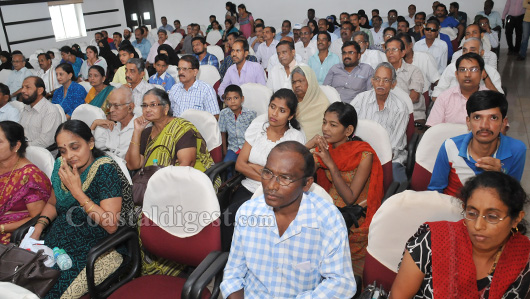
Kidney association 14 1

Those undergoing dialyses as well as transplantation would have to spend thousands of rupees every month for medicines and treatment, he said.

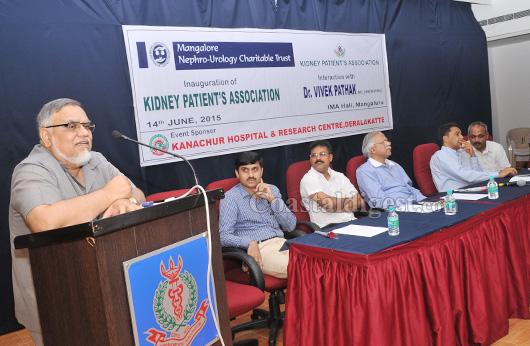
Mohammed Saleem, chairman of the Trust, said it had been conducting awareness programmes on kidney diseases for the past three years. So far, help from society — associations, organisations, temple committees, Masjid jamats etc. — was being taken for treatment or dialysis of poor kidney patients. However, such a practice cannot go for long and the association was conceptualised.

Besides creating a corpus for the financial needs of patients, the association would also work as a collective to demand facilities for them, Dr. Saleem said.

Every dialysis centre would have information centres of the association where new patients would be informed about the procedure of treatment and available alternatives. It would primarily aim at disseminating information, he said.
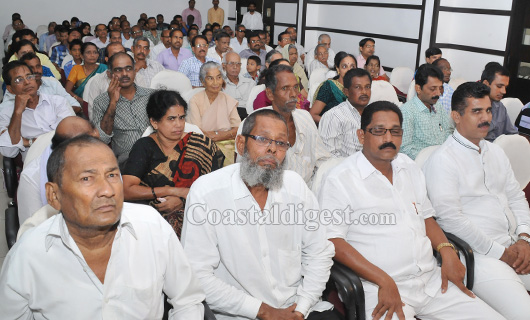
Kidney association 14 1

Kidney association 14 1

Kidney association 14 1

Kidney association 14 1

Kidney association 14 1

Kidney association 14 1

Kidney association 14 1

Kidney association 14 1

Kidney association 14 1

Kidney association 14 1

Comments

Michel
 - 
Thursday, 18 Feb 2016

I havee been surfing online more than 3 hours today, yet I never found any interesting article like yours.
It is pretty worth enough for me. Personally, if all site owners and
bloggerrs made gookd content as you did, the internet will be much
more useful than ever before.

Here is my web-site; private storage gold iras (Florene: http://www.fellas.nl/Activiteiten/Activiteit/26-04-2013/TGIF-borrel_Gro…)

Levi
 - 
Friday, 29 Jan 2016

Many researchers believe that cinnamon might help
maintain normal levels of blood glucose levels.
Results noticed in patients have been administered 3 doses of cinnamon every day for 40 days included lowered blood triglycerides, reduced blood sugar, and decreased cholesterol.
Cinnamon was also given in other experiments alongside a placebo and
patients who received the cinnamon were found to possess significantly lower amounts of glucose inside blood.

Also visit my homepage diabetes
diet: http://diabetesbetter.com/

Add new comment

  • Coastaldigest.com reserves the right to delete or block any comments.
  • Coastaldigset.com is not responsible for its readers’ comments.
  • Comments that are abusive, incendiary or irrelevant are strictly prohibited.
  • Please use a genuine email ID and provide your name to avoid reject.
News Network
January 2,2020

Mysuru, Jan 2: Mysuru-based Karnataka State Open University is gearing up to offer courses online from this year onwards and a proposal in this connection will be placed before the University Grants Commission (UGC) this month, after approval from the board of management.

As of now, the university offers 31 courses, including undergraduate, postgraduate, and diploma programmes.

Vice-chancellor Vidyashankar S Said that the university will submit its proposal to the UGC soon.

“This is being done to make learning convenient and help students study their courses of choices from the comfort of their homes.”

After launching online admissions for courses, this is another step to go paperless and towards an e-campus, the V-C explained.

The university has also proposed to launch 12 new courses for 2020-21.

A proposal in this regard will be placed before the board for approval on Thursday and the same will be submitted to the UGC for its nod.

Prof. Vidyashankar said the these courses will be in addition to the 31 already available.

The new courses include LLM, MA in Education, BBA, BSc, BCA, diploma in Information Technology, postgraduate diploma in Information Technology, BSc in Information Technology, MSc in Information Technology, MSc in Botany, PG diploma in Banking and Insurance, MSc in Zoology, MA in Telugu, Executive MBA, and MSc in Food Sciences and Nutrition.

The new courses had been proposed based on students’ feedback and the trend.

The V-C said the admissions for the January cycle have begun and over 380 students had so far taken admissions online.

“We are hoping for good admissions this cycle and are expecting around 12,000 admissions,” he replied.

Comments

Add new comment

  • Coastaldigest.com reserves the right to delete or block any comments.
  • Coastaldigset.com is not responsible for its readers’ comments.
  • Comments that are abusive, incendiary or irrelevant are strictly prohibited.
  • Please use a genuine email ID and provide your name to avoid reject.
Wafa Sultana
April 4,2020

Over the last couple of days when the world was occupied with unifying efforts to fight the deadly Covid19 pandemic, sections of Indian media provided viewers a familiar scapegoat – the Indian Muslims – who are often stereotyped as a community being constantly at loggerheads with the citizenry and the State. Biased media channels were quick to resort to blaming the entire Muslim community for the spread of the disease in the country, thanks to an ill-timed Tablighi Jamaat gathering at its international headquarters in Delhi’s Nizamuddin. Unsurprisingly, the opprobrium was also marked by a sudden spike in WhatsApp forwards of videos with people wearing skullcaps licking spoons and performing Sufi breathing rituals, suggesting some sort of wild conspiracy on the part of the community to spread the virus.  Some media channels were quick to formulate, hypothesize and provide loose definitions of a newly discovered form of Jihad i.e. ‘Corona Jihad ’ thereby vilifying the Islamic faith and its followers.

While the investigation on the culpability of the organizers of the Nizamuddin event is still ongoing, there is enough information to suggest that the meeting was held before any lockdown was in force, and the problem began when there was no way of getting people out once the curfew was announced. Be that as it may, there is little doubt that organizing a meet of such a scale when there is a global pandemic smacks of gross misjudgment, and definitely the organizers should be held accountable if laws or public orders were defied. Attendees who attempt to defy quarantine measures must be dealt with strictly. However, what is alarming is that the focus and narrative have now shifted from the unfortunate event at Nizamuddin to the Tablighi Jamaat itself.

For those not familiar with the Tablighi Jamaat, the organization was founded in 1926 in Mewat by scholar Maulana Mohammad Ilyas. The Jamaat’s main objective was to get Muslim youth to learn and practice pristine Islam shorn of external influences. This is achieved through individuals dedicating time for moral and spiritual upliftment secluded from the rest of the world for a brief period of time. There is no formal membership process. More senior and experienced participants typically travel from one mosque to other delivering talks on religious topics, inviting local youth to attend and then volunteer for a spiritual retreat for a fixed number of days to a mosque in a nearby town or village to present the message to their co-religionists. Contrary to ongoing Islamophobic rhetoric, the movement does not actively proselytize. The focus is rather on getting Muslims to learn the teachings and practices of Islam.  This grassroots India-based movement has now grown to almost all countries with substantial Muslim populations. Its annual meets, or ‘ijtemas’ are among the largest Islamic congregations in the world after the annual Haj. One of the reasons for its popularity and wide network in the subcontinent and wordwide is the fact that it has eschewed the need for scholarly intervention, focusing on peer learning of fundamental beliefs and practice rather than high-falutin ideological debates. The Tablighi Jamaat also distinguishes itself from other Islamic movements through its strictly apolitical nature, with a focus on individual self-improvement rather than political mobilization. Hardships and difficulty in the world are expected to be face through ‘sabr’ (patience) and ‘dua’ (supplication),  than through quest for political power or influence. In terms of ideology, it is very much based on mainstream Sunni Islamic principles derived from the Deobandi school.

So, why is all this background important in the current context? While biased media entities have expectedly brought out their Islamophobic paraphernalia out for full display, more neutral commentators have tried to paint the Tablighi Jamaat as a fringe group and have tried to distance it from 'mainstream Muslims'. While the intent is no doubt innocent, this is a trap we must not fall into. This narrative, unfortunately, is also gaining ground due to apathy some Muslims have for the group, accusing it of being “disconnected from the realities of the world”. Unlike other Muslim organizations and movements, the Tablighi Jamat, by virtue of its political indifference, does not boast of high-profile advocates and savvy spokespersons who can defend it in mainstream or social media.  The use of adjectives such as 'outdated' and 'orthodox' by liberal columnists to describe the Jamaat feeds into the malignant attempt to change the narrative from the control of the spread of the pandemic due to the Nizamuddin gathering to 'raison d'etre' of the organization itself.

A large mainstream religious group like the Tablighi Jamaat with nearly a hundred-year history, normally considered to be peaceful, apolitical and minding its own business is now suddenly being villainized owing to unfortunate circumstances. Biased media reactions filled with disgust and hate seem to feed the Indian public conscience with a danngerous misconception - to be a nominal Muslim is okay but being a practicing one is not.  For those committed to the truth and fighting the spread of Islamophobia, the temptation to throw the entire Tablighi Jamaat under the bus must be resisted.

The writer is a lawyer and research scholar at Qatar University. Her research interests include Islamic law and politics.

Comments

zahoorahmed
 - 
Saturday, 4 Apr 2020

great article! provides a great perspective on tableeg jamat

Add new comment

  • Coastaldigest.com reserves the right to delete or block any comments.
  • Coastaldigset.com is not responsible for its readers’ comments.
  • Comments that are abusive, incendiary or irrelevant are strictly prohibited.
  • Please use a genuine email ID and provide your name to avoid reject.
News Network
January 25,2020

Bengaluru, Jan 25: Karnataka Health Minister B Sriramulu on Friday, hit out at JD(S) leader HD Kumaraswamy, accusing the former Chief Minister of pursuing "vote bank" politics and advised him to move to Pakistan.

"It is better to move to Pakistan...if he shows so much love towards Pakistan, why should he live in India? He should not do dual politics like this. He wants to be fair to Pakistan and also to India," Sriramulu said.

Terming it as "double standards", the Minister said: "From so many years, you have been doing vote bank politics. You have to understand one thing...you are the son of former Prime Minister and also a former Chief Minister. By giving these type of statements, I think it will hurt the citizens of India. If you want to do vote bank politics I must suggest that it is better to leave the country."

His statement comes after Kumaraswamy took a jibe at BJP over its "obsession with Pakistan".

Comments

Add new comment

  • Coastaldigest.com reserves the right to delete or block any comments.
  • Coastaldigset.com is not responsible for its readers’ comments.
  • Comments that are abusive, incendiary or irrelevant are strictly prohibited.
  • Please use a genuine email ID and provide your name to avoid reject.