


Relief for Yeddyurappa?as HC quashes 15 land cases against him

January 6, 2016

Bengaluru, Jan 5: The High Court on Tuesday quashed all the 15 FIRs filed against former chief minister B S Yeddyurappa with the Lokayukta police in connection with denotification of land in and around Bengaluru city.
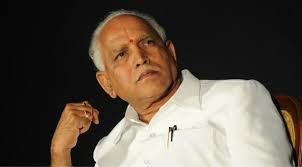
yeddyurappaAllowing the petition filed by Yeddyurappa, Justice Rathnakala in the order stated that FIRs cannot be filed based on the report of the Comptroller and Auditor General (CAG). However, the bench said that the other contentions of the petitioner are kept open.

A private complaint was registered with the Lokayukta police by Jayakumar Hiremath, based on which 15 FIRs were filed against Yeddyurappa. First, three FIRs were filed, saying that land was denotified at survey number 251 in Halagevaderanahalli in Bengaluru South, survey numbers 5/1 and 6/3 in Bilekahalli and survey number 117 in JB Kaval.

The same bench had granted stay on proceedings based on the FIRs. Subsequently, 12 FIRs were filed, saying land was denotified at JP Nagar, HRBR Layout, Jayanagar 8th block, Rachenahalli and surrounding areas.

The CAG report said that denotifying land had caused loss to the State’s exchequer. Questioning the basis and seeking quashing of the FIRs, Yeddyurappa had approached the High Court. Senior counsel C V Nagesh, appearing for Yeddyurappa, had contended that FIRs filed by Lokayukta were based on the CAG report and not on the PAC (Public Accounts Committee) report, which is normally placed before the House to decide on the matter.

In the CAG report, it is said that the land has been denotified, but it is not said that it is illegal. He has contended that the FIR has not been filed as per Section 12 of the Lokayukta Act, which calls for a compliance report to be placed before the competent authority, who is the governor in this case.

Additional Solicitor General Krishna S Dixit, representing CAG, contended that its report was the sole property of parliament and that the sanctity of the report must be maintained and not misused by other organs of the State. The question whether the CAG report must be allowed for publication or not has to be decided in the House.

This report cannot be used as evidence to file criminal complaints as it is used for making public policies.

Comments

mohammad.n
 - 
Wednesday, 6 Jan 2016

Another Salman Khan, good.!
Ache Din continues...

Add new comment

  • Coastaldigest.com reserves the right to delete or block any comments.
  • Coastaldigset.com is not responsible for its readers’ comments.
  • Comments that are abusive, incendiary or irrelevant are strictly prohibited.
  • Please use a genuine email ID and provide your name to avoid reject.
Agencies
May 8,2020

Washington D.C., May 8: The prime time for brain development in a child's life is the first year, where the infant spends most of the time asleep. It is the time when neural connections form and sensory memories are encoded.

However, when sleep is disrupted, as occurs more often among children with autism, brain development may be affected, too.

New research led by the University of Washington finds that sleep problems in a baby's first 12 months may not only precede an autism diagnosis but also may be associated with altered growth trajectory in a key part of the brain, the hippocampus.

The study, which was published in the American Journal of Psychiatry, researchers report that in a sample of more than 400 taken of 6- to 12-month-old infants, those who were later diagnosed with autism were more likely to have had difficulty falling asleep.

It also states that this sleep difficulty was associated with altered growth trajectories in the hippocampus.

"The hippocampus is critical for learning and memory, and changes in the size of the hippocampus have been associated with poor sleep in adults and older children.

As many as 80 per cent of the children with autism spectrum disorder have sleep problems," said Annette Estes, director of the UW Autism Center and senior author of the study.

"In our clinical experience, parents have a lot of concerns about their children's sleep, and in our work on early autism intervention, we observed that sleep problems were holding children and families back," added Estes, who is also a UW professor of speech and hearing sciences.

"It could be that altered sleep is part-and-parcel of autism for some children. One clue is that behavioural interventions to improve sleep don't work for all children with autism, even when their parents are doing everything just right. This suggests that there may be a biological component to sleep problems for some children with autism," said Estes.

To consider links among sleep, brain development, and autism, researchers at the IBIS Network looked at MRI scans of 432 infants, surveyed parents about sleep patterns, and measured cognitive functioning using a standardized assessment.

At the outset of the study, infants were classified according to their risk for developing autism: Those who were at higher risk of developing autism -- about two-thirds of the study sample -- had an older sibling who had already been diagnosed.

Infant siblings of children with autism have a 20 per cent chance of developing autism spectrum disorder -- a much higher risk than children in the general population.

In the current study, 127 of the 432 infants were identified as "low risk" at the time the MRI scans were taken because they had no family history of autism.

They later evaluated all the participants at 24 months of age to determine whether they had developed autism. Of the roughly 300 children originally considered "high familial risk," 71 were diagnosed with autism spectrum disorder at that age.

Problems with sleep were more common among the infants later diagnosed with an autism spectrum disorder, as were larger hippocampi. No other subcortical brain structures were affected, including the amygdala, which is responsible for certain emotions and aspects of memory, or the thalamus, a signal transmitter from the spinal cord to the cerebral cortex.

The authors note that while parents reported more sleep difficulties among infants who developed autism compared to those who did not, the differences were very subtle and only observed when looking at group averages across hundreds of infants.

Sleep patterns in the first years of life change rapidly as infants transition from sleeping around the clock to a more adult-like sleep/wake cycle. Until further research is completed, Estes said, it is not possible to interpret challenges with sleep as an early sign of increased risk for autism.

Comments

Add new comment

  • Coastaldigest.com reserves the right to delete or block any comments.
  • Coastaldigset.com is not responsible for its readers’ comments.
  • Comments that are abusive, incendiary or irrelevant are strictly prohibited.
  • Please use a genuine email ID and provide your name to avoid reject.
News Network
April 12,2020

Bengaluru, Apr 12: The Karnataka government is studying in-depth the consequences of the possible relaxation of lockdown norms after April 14 and plans to come out with a clear roadmap in a day or two, a key Minister said on Sunday.

Medical Education Minister K Sudhakar, who is in charge of all matters related to COVID-19, told PTI that the pros and cons of any decision that the Government intends to take is being looked at in detail.

"We are trying to understand how the situation would be of any action that we intend to take. We need to foresee the repercussions or results of our action. That we have to keep it in mind and make a decision. After-effects of the decisions we intend to take, that is more important, he said. You will have clarity (on the possible relaxation of lockdown norms) in a day or two. For everything (government decisions) we will give the reasoning for what action we would like to take; with the reasoning, we will give a decision," the Minister added.

Government sources said some relaxation in liquor sales, stopped during the lock-down period, is likely after the ongoing 21-day national clampdown ends on April 14. Twelve of the state's 30 districts remain free from the COVID-19 pandemic. Till Saturday, Karnataka reported 215 COVID-19 positive cases, including six deaths and 39 discharges.

Comments

Add new comment

  • Coastaldigest.com reserves the right to delete or block any comments.
  • Coastaldigset.com is not responsible for its readers’ comments.
  • Comments that are abusive, incendiary or irrelevant are strictly prohibited.
  • Please use a genuine email ID and provide your name to avoid reject.
News Network
July 5,2020

Bengaluru, Jul 5: In the midst of the Covid-19 pandemic and the fear of layoffs lurking everywhere, the state government is holding a first-of-its-kind virtual job fair on July 10, to help people find jobs commensurate with their skill sets.

Co-ordinated by the Karnataka Skill Development Corporation (KSDC), the job fair will see participation of more than 40 companies for about 6,000 job openings.

The government will connect companies with job seekers who have registered on the recently-launched Skill Connect portal or on the Kaushalya Karnataka’s portal for migrant workers from the state who have returned home.

A candidate can either directly apply to a company, or await the portal to match their skills with available jobs. There is also a self-evaluation section on the website which will suggest whether a candidate needs to further skill oneself or whether they are eligible for jobs with their current set of skills. 

Firms such as Life Insurance Corporation, Barbeque Nation and Arvind Mills are among the participants.

Comments

Sheela Anagolum
 - 
Friday, 10 Jul 2020

Looking to build literacy, numeracy and basic life skills for students in the ages of 14-19

Add new comment

  • Coastaldigest.com reserves the right to delete or block any comments.
  • Coastaldigset.com is not responsible for its readers’ comments.
  • Comments that are abusive, incendiary or irrelevant are strictly prohibited.
  • Please use a genuine email ID and provide your name to avoid reject.