


Saudi Arabia third happiest country in the world: Survey

January 10, 2016

Jeddah, Jan 10: Saudi Arabia has come third in a poll for the world’s happiest countries – in a list which features almost no European. The research was carried out by WIN/Gallup International, a polling association which interviewed 66,040 people from 68 countries.

The kingdom has only been pipped to top position by Fiji and Colombia.
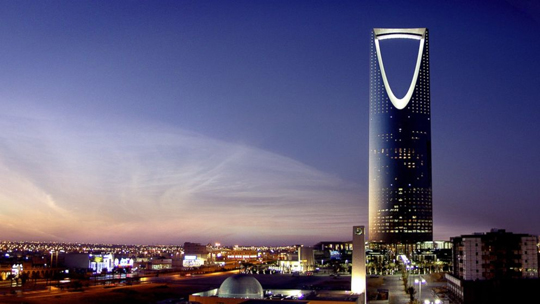
saudi

At an average temperature of about 26C in January, the beautiful Fiji islands have an evident advantage.

Fiji has an average all-year round temperature of 26 C and apparently happy citizens.

Indeed, nearby Mexico ranked as the world’s eighth happiest country.

The findings suggest that either people have different perceptions of what “happiness” means, or that material wealth, ideological freedom and civil stability do not necessarily translate into personal contentedness.

China and Fiji are also two of the most hopeful nations, with China also the third most optimistic about economic prosperity. Nigerians are the most optimistic about their economy.

Europe, meanwhile, barely made it into the top 10 countries for happiness.

Iceland, which has one of the highest percentage of women working outside the home, was the only European country to make the top 10, sharing joint tenth position with China.

Italy is the least hopeful nation out of their 68 nations surveyed, while Greece is the third most unhappy country – and France and Italy tie as the 10th most unhappy.

As 2015 came to an end, 66% of respondents to the WIN/Gallup International survey said that they are happy, down slightly from 70% in 2014. Of the 66040 people surveyed, 10% said that they were unhappy, up 4% from 2014. Overall, that means that the world is 56% net happy (happiness minus unhappiness). In 2015 the net happiest country in the world is Colombia (85%), in stark contrast the world’s unhappiest country is Iraq at -12% net happiness.

The study showed that 45% of the world is optimistic for the economic outlook in 2016 over double (22%) of those who are pessimistic. It’s perhaps unsurprising that Greece is the most pessimistic (-65% net optimistic) country given their current perilous financial position. The most optimistic nation when it comes to the economy is Nigeria (61% net optimism). When it comes to a demographic breakdown young people prove to be considerably more optimistic than older generations with 31% net optimistic for the under 34s compared to just 13% for the over 55s.

As part of their analysis WIN/Gallup International has grouped the world into three tiers: Prosperous (the G7); Emerging (G20 excluding the original G7) and Aspiring (all others) nations. Whilst there is huge disparity in income levels across these three tiers, the level of net happiness across all three (Prosperous 42%, Emerging 59% and Aspiring 54%) is notably high. However the findings on hope and economic optimism vary markedly across the tiers. According to the global poll, Prosperous nations display the least hope and economic optimism with 6% and -16% respectively; to the contrary Emerging nations are very hopeful about the future and far more optimistic about the economic outlook at 50% and 36% meanwhile the Aspiring nations sit between the two on hope (29%) and economic optimism (16%).

Jean-Marc Leger, President of the Association, said: “2015 has been a tumultuous year for many across the globe, despite that the world remains largely a happy place. 45% of the world is optimistic regarding the economic outlook for 2016, up by 3 percent compared to last year.”

Comments

Add new comment

  • Coastaldigest.com reserves the right to delete or block any comments.
  • Coastaldigset.com is not responsible for its readers’ comments.
  • Comments that are abusive, incendiary or irrelevant are strictly prohibited.
  • Please use a genuine email ID and provide your name to avoid reject.
News Network
April 26,2020

Dubai, Apr 26: The Central Bank of the UAE (CBUAE) has instructed financial institutions in the country to search and freeze all bank accounts of Indian billionaire BR Shetty and his family along with those of companies where he has a stake.

The apex bank has also blacklisted several firms associated with Shetty along with their entire senior management.

In an advisory issued last week, CBUAE cited decisions of the Federal Attorney General and asked financial institutions to search and freeze any bank accounts, deposits or investments in the name of Shetty or his family members.

Financial institutions have been directed to stop transfers from these accounts and deny access to deposit boxes.

Currently in India and facing a string of charges, Shetty is the founder of NMC Health.

The heathcare provider was placed into administration by a UK court recently following an application by the Abu Dhabi Commercial Bank (ADCB) which alone has an exposure of $981 million (Dh3.6 billion).

Overall, UAE banks have a combined exposure of more than Dh8bn to NMC which owes money to Oman-based banks and financial institutions as well.

Probing credit facilities
The Central Bank has sought information about credit facilites extended to the Shettys along with details of their safe deposit boxes and the financial transfers they have made till date.

A similar advisory has been issued for NMC Healthcare and NMC Holding, based on the decision of the Head of Plenary Fund Prosecution.

The Central Bank has also blacklisted several companies associated with Shetty. Key staff members of these firms have been similarly blacklisted.

Comments

Angry Indian
 - 
Monday, 27 Apr 2020

when you make money with good country you should not make doka to that country, first of all we indian have bad name in GCC now this will make more dought on indian hindus..


after BJP come to power in india,our country is acting like maron, this will only end with final WAR.

Add new comment

  • Coastaldigest.com reserves the right to delete or block any comments.
  • Coastaldigset.com is not responsible for its readers’ comments.
  • Comments that are abusive, incendiary or irrelevant are strictly prohibited.
  • Please use a genuine email ID and provide your name to avoid reject.
Agencies
March 23,2020

Riyadh, Mar 23: King Salman on Sunday issued an order imposing a curfew across Saudi Arabia from Monday evening to control the spread of the COVID-19 disease.

A royal court statement carried by the Saudi Press Agency (SPA) said the curfew will start at 7 p.m. until 6 a.m. every day for 21 days from the evening of 28 Rajab 1441 in the Hijri calendar, equivalent to March 23, 2020 in the Gregorian calendar.

King Salman's order followed an announcement by the Health Ministry of 119 new coronavirus cases on Sunday, raising the total number in the Kingdom to 511.

The order enjoins citizens and residents alike to stay in their homes during the curfew hours for their own safety.

The statement said the Ministry of Interior will undertake the necessary measures to implement the curfew, and all civil and military authorities are ordered to cooperate fully.

Exclusions

A subsequent statement issued by the Ministry of Interior and carried by SPA said those excluded from the curfew are workers from the following vital industries and government services:

• Food sector (points of sale) such as catering and supermarkets And poultry and vegetable shops, meat, bakeries, food factories and laboratories;

• Health sector, such as pharmacies and the like, medical clinics (dispensaries), hospitals, laboratories, factories, factories and materials and medical devices;

• Media sector in its various means;

• Transportation sector, such as those transporting goods, parcels, customs clearance, warehouses, warehouses, logistics services, supply chains for the health sector, the food sector, and port operations;

• E-commerce activities such as those working in the electronic procurement applications for the excluded activities and those working in the delivery applications of the excluded activities;

• Accommodation services activities such as hotels and furnished apartments;

• Energy sector such as gas stations and emergency services for the electric company;

• Financial services and insurance sector, such as direct accidents (Najm), urgent health insurance services (approvals), and other insurance services;

• Telecom sector as Internet and communication network operators;

• Water sector, such as the water company emergency services and home drinking water delivery service (graying).

Additional exclusions

The Interior Ministry statement also said movement during the curfew time will be allowed for security, military and health cars, government regulatory services vehicles, and activity vehicles excluded in the vital industries and services mentioned above. 

Delivery services through smart device applications (express delivery services) during the curfew will be allowed for food and drug needs and other essential goods and services that are excluded and delivered to homes. Excluded activities can be known by calling the toll-free number in all regions of the Kingdom 999, except for the Makkah Al-Mukarramah region, which is called at 911.

Muezzins will be allowed to access mosques to lift the call to prayer at the time of the curfew.

Workers in diplomatic missions and international organizations and the like residing in the Diplomatic Quarter will be allowed to move during the curfew period to and from their business headquarters in the neighborhood.

Comments

Add new comment

  • Coastaldigest.com reserves the right to delete or block any comments.
  • Coastaldigset.com is not responsible for its readers’ comments.
  • Comments that are abusive, incendiary or irrelevant are strictly prohibited.
  • Please use a genuine email ID and provide your name to avoid reject.
Arab News
March 9,2020

Dubai, Mar 9: The eyes of the world will be on the oil markets when the big trading hubs in Europe and North America open following the end of the deal between Saudi Arabia and Russia that has helped to sustain crude at relatively high levels for the past three years.

There were big falls on Friday when ministers from the Organization of the Petroleum Exporting Countries (OPEC) failed to get a deal with non-OPEC members — the so-called OPEC+ — to extend output agreements. Brent oil was down nearly 10 percent at $45.27 going into the western weekend.

Saudi Aramco took immediate action to cut prices after the OPEC+ collapse, offering big discounts for crude deliveries from next month, when the current output restrictions end.

According to a notification sent to customers by Saudi Aramco, seen by Arab News, the Kingdom’s oil giant will cut between $4 and $8 per barrel, with the biggest discounts being offered to buyers in northwest Europe and the US.

Roger Diwan, an oil analyst at consultancy IHS Market, said: “We are likely to see the lowest oil prices of the past 20 years in the next quarter.”

West Texas Intermediate, the US oil benchmark, fell to $28.27 in November 2001.

The move raises the possibility of a “crude war” between the three biggest oil blocs — the US, Russia and the Arabian Gulf. Some analysts believe the American shale industry is more vulnerable to low prices than either the Russians or the Saudis.

Robin Mills, head of the Qamar consultancy, told Arab News: “I don’t think this was premeditated but Saudi Arabia has clearly swung quickly into action to put the Russians under pressure. But the Russians, with low debt and a flexible exchange rate, can cope with a few months of low prices.”

The boom in US shale has made the country the biggest oil producer in the world, but with high financing costs. Lower global prices would put a lot of shale companies out of business.

On the other hand, American motorists, and President Donald Trump, would be pleased to see lower fuel prices in an election year.

In Moscow, one prominent financier with ties to the Kingdom played down the long-term significance of the Vienna fallout.

Kirill Dmitriev, chief executive of the Russian Direct Investment Fund, told Arab News: “Saudi Arabia is our strategic partner, and cooperation between our two countries will continue in all areas. We will also continue to work within the framework of the Russia-Saudi Economic Council.”

One Russian official, who asked not to be named, added: “There is a good relationship between Alexander Novak, Russian energy minister, and his Saudi counterpart Prince Abdul Aziz bin Salman, and I am sure they will continue talking to each other less formally.”

Comments

Add new comment

  • Coastaldigest.com reserves the right to delete or block any comments.
  • Coastaldigset.com is not responsible for its readers’ comments.
  • Comments that are abusive, incendiary or irrelevant are strictly prohibited.
  • Please use a genuine email ID and provide your name to avoid reject.