India ranked 77th on a sustainability index that takes into account per capita carbon emissions and ability of children in a nation to live healthy lives and secures 131st spot on a flourishing ranking that measures the best chance at survival and well-being for children, according to a UN-backed report.
The report was released on Wednesday by a commission of over 40 child and adolescent health experts from around the world. It was commissioned by the World Health Organization (WHO), UN Children's Fund (UNICEF) and The Lancet medical journal.
In the report assessing the capacity of 180 countries to ensure that their youngsters can survive and thrive, India ranks 77th on the Sustainability Index and 131 on the Flourishing Index, it said.
Flourishing is the geometric mean of Surviving and Thriving. For Surviving, the authors selected maternal survival, survival in children younger than 5 years old, suicide, access to maternal and child health services, basic hygiene and sanitation, and lack of extreme poverty.
For Thriving, the domains were educational achievement, growth and nutrition, reproductive freedom, and protection from violence.
Under the Sustainability Index, the authors noted that promoting today's national conditions for children to survive and thrive must not come at the cost of eroding future global conditions for children's ability to flourish.
The Sustainability Index ranks countries on excess carbon emissions compared with the 2030 target. This provides a convenient and available proxy for a country's contribution to sustainability in future.
The report noted that under realistic assumptions about possible trajectories towards sustainable greenhouse gas emissions, models predict that global carbon emissions need to be reduced from 39·7 giga tonnes to 22·8 gigatonnes per year by 2030 to maintain even a 66 per cent chance of keeping global warming below 1·5°C.
It said that the world's survival depended on children being able to flourish, but no country is doing enough to give them a sustainable future.
"No country in the world is currently providing the conditions we need to support every child to grow up and have a healthy future," said Anthony Costello, Professor of Global Health and Sustainability at University College London, one of the lead authors of the report.
"Especially, they're under immediate threat from climate change and from commercial marketing, which has grown hugely in the last decade," said Costello – former WHO Director of Mother, Child and Adolescent health.
Norway leads the table for survival, health, education and nutrition rates - followed by South Korea and the Netherlands. Central African Republic, Chad and Somalia come at the bottom.
However, when taking into account per capita CO2 emissions, these top countries trail behind, with Norway 156th, the Republic of Korea 166th and the Netherlands 160th.
Each of the three emits 210 per cent more CO2 per capita than their 2030 target, the data shows, while the US, Australia, and Saudi Arabia are among the 10 worst emitters. The lowest emitters are Burundi, Chad and Somalia.
According to the report, the only countries on track to beat CO2 emission per capita targets by 2030, while also performing fairly – within the top 70 – on child flourishing measures are: Albania, Armenia, Grenada, Jordan, Moldova, Sri Lanka, Tunisia, Uruguay and Vietnam.
"More than 2 billion people live in countries where development is hampered by humanitarian crises, conflicts, and natural disasters, problems increasingly linked with climate change," said Minister Awa Coll-Seck from Senegal, Co-Chair of the commission.
The report also highlights the distinct threat posed to children from harmful marketing.
Evidence suggests that children in some countries see as many as 30,000 advertisements on television alone in a single year, while youth exposure to vaping (e-cigarettes) advertisements increased by more than 250 per cent in the US over two years, reaching more than 24 million young people.
Studies in Australia, Canada, Mexico, New Zealand and the US – among many others – have shown that self-regulation has not hampered commercial ability to advertise to children.
Children's exposure to commercial marketing of junk food and sugary beverages is associated with purchase of unhealthy foods and overweight and obesity, linking predatory marketing to the alarming rise in childhood obesity, it said.
The number of obese children and adolescents increased from 11 million in 1975 to 124 million in 2016 – an 11-fold increase, with dire individual and societal costs, the report said.
To protect children, the authors call for a new global movement driven by and for children.
Specific recommendations include stopping CO2 emissions with the utmost urgency, to ensure children have a future on this planet; placing children and adolescents at the centre of global efforts to achieve sustainable development, the report said.
New policies and investment in all sectors to work towards child health and rights; incorporating children's voices into policy decisions and tightening national regulation of harmful commercial marketing, supported by a new Optional Protocol to the UN Convention on the Rights of the Child, it said.



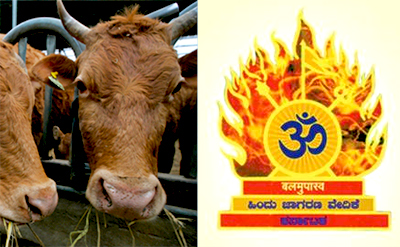 Gurumurthy, one among the five Dalits attacked on July 10 in Shantipura colony, was in fact one of the founders of Hindu Jagarana Vedike's branch in Kunduru village near here. Four years ago, he conducted an event in the village organising all Dalits.
Comments
Once the cow became sacred and the Broken Men continued to eat beef, there was no other fate left for the Broken Men except to be treated unfit for association, i.e., as Untouchables. There was a time when the ancestors of the present day Untouchables were not Untouchables vis-a-vis the villagers but were merely Broken Men, no more and no less, and the only difference between them and the villagers was that they belonged to differ
Naren and Viren.....if you dont like the journalism of CD why waste your time here....Go and read any RSS note books...you can learn more hatred....and Burn your GAaf........and then Use Itch Guard...
Hey has keep there women in burkha ha ha
Days to come (In-Shaa Allah) all the LIES and Deceptions of Hindutuva terrorist will come out.
The Dalit should not fear in exposing their Discriminations... cheddis hold outs are getting fired from the bottom... and they already started feeling the burn when muslims started to oppose their discrimination. We Muslims & Dalits should unite to fight their discrimination agenda... We Muslims know their hatred propaganda.. but WE believe ALLAH will take care of their evil agenda. Till now we know many things are exposed. When it is out of their hands they resort to acts like Cowards like killing.
ya ya .. CD digest journo ( i dont think he has passed journalism course ) has seen and was seeing Beeef eating of HJV ... cmon guys .. right sensible articles ...
may be this cow has got married to bull
The same Gujarat dalit was used against Muslims in Godhra communal riots. Big fishes supplied all the weapons to Dalit prior riots and Dalits used that opportunity more than big Fish's expectations. Thousands of lives irrespective women, child, old age, youths, teens burned everywhere and thousands of rapes, loot since law and order tied up by Gujarat CM.
World beef exports - Ranking of countries.............
1. India
2. Australia
3. Brazil
4. USA
I think it is better change their religion to Islam....where they would get desired respect and dignity....there is no upper and lower caste in it....Well come guys!
Add new comment