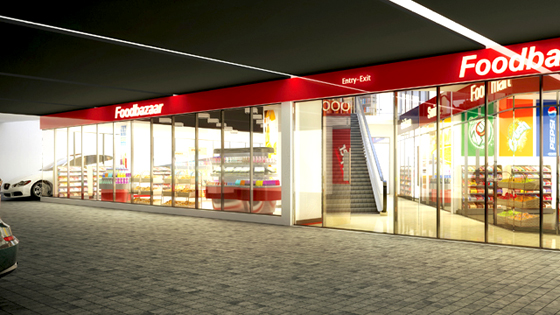
Transit One: Heralding the concept of theme-based malls in Mangaluru

[email protected] (Business Desk)
February 19, 2016

Mangaluru: Whether we like it or not malls have become more of a norm than an exception in India. The only visible change is that from big multilevel malls the focus is slowly shifting towards smaller and theme based malls, which no doubt is a welcome development.
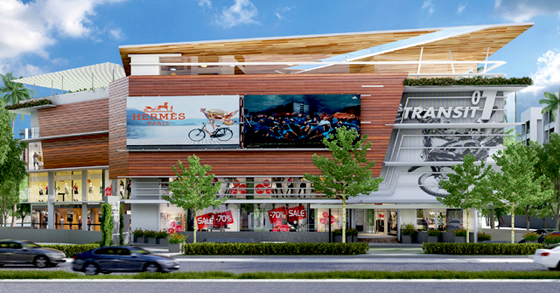
transit1

Mangaluru is also fast catching up with this trend thanks to the initiative taken by Ecologic Habitats LLP, a well-known real estate firm comprising of a team having over 30 years of experience in the field. This real estate leader, in association with Caizer group, is all set to introduce a theme based transit mall aptly named "Transit One." 'Stop, recharge, restart', is the basic concept theme of the mall coming up on NH66, opposite Unity Hall, just a stone's throw from the busy and upcoming Thokkottu junction. Being a transit mall its aim is to target both the local populace as well as the travellers passing through this busy highway.

Come November and the foundation for this smaller version of the mall, the first of its kind in Mangaluru, will be laid and the ground plus four storey mall will be ready in the next 2 ½ years. Slated to come up in a 40 cent land adjacent to NH-66, Transit One will be an affordable and egalitarian mall catering to the local demographic unlike the existing huge malls that cater only to a section of the society. Nevertheless, the promoters say "This is basically a stop-over mall where we want travellers to stop, recharge and restart. Size-wise it is not a huge mall but it will have everything that malls have. We will set new benchmarks with many firsts to the credit of this mall. We want to give shops to every category of people - those who come with an investment of Rs 10 lakhs to 10 crores. We believe that the design, location, structure, elevation and the novel concept of the project will make Transit One the most attractive destination of Mangaluru with unlimited opportunities to unwind and skylark.

Potential for Growth

The setting of this upcoming mall on Thokkottu Junction, which forms the gateway to Mangaluru City, is the USP of this project apart from its inimitable structure. It is designed to proclaim its enigmatic presence with an irresistible allure. The promoters have done a neat homework before venturing into this project. Needless to say, the project is the outcome of painstaking research of almost 1 ½ years which convinced the promoters that it is the best location and concept and they decided to take a plunge. One of the partners of the project says "We have conducted a detailed survey and found that this area forms the nerve centre of the city from its gateway Thokkottu, that connects the city to Deralakatte, the IT and education hub of Mangaluru. This hub houses about 7000 medical students, 1000 doctors, about 3000 IT honchos and more than 5000 NRI households. Sadly, the surrounding area does not boast of infrastructure, development and other entertainment facilities to cater to this vast segment of young, enthusiastic, passionate and cosmopolitan crowd. Our research has clearly shown that this area has enormous potential for growth. The fact that 40% of the shops are already sold clearly demonstrates that people have realised the strategic importance of this location."

Being a premium education and health care centre Mangaluru city has vast potential for growth to emerge as an important business, industrial and IT hub. It has been recognised as one among the 36 Tier II cities in India to emerge as magnets for investment in infrastructure. Smart city naturally means better infrastructure, amenities and enhanced lifestyle. Though mall culture per se is not a novelty in India the compact nature of this themed mall will be an added attraction as it has many others firsts to its credit.

Many Firsts

"Transit One" will be the first mall in the region to offer an exclusive floor for smaller vanilla store units.. The promoters point out "The sky-high cost of space in malls is a major concern for many and therefore we want to address this concern of people through this mall." It will be the first mall with External LCD display, the mall boasts of the primacy given to landscape design and it is the first mall built by making a comprehensive study of the requirements of the customers. They have roped in the services of India's leading Landscape Architect Rohit Marol of Terra Firma for its unique landscape. The suburbs are best suited for theme-based malls and having realised the great potential for development of this area the promoters have made valiant efforts to source the best names in varied fields.

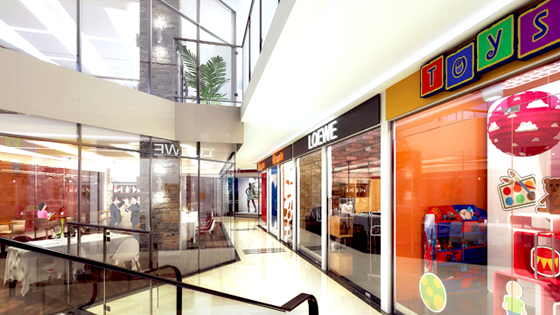
Another salient feature of the project is the drive-in super market, a novelty in a mall, which makes shopping convenient and pleasurable, unlike the present set up in most malls which makes it a tedious process. The entire 1st, 2nd and 3rd floor is set aside for branded and semi- branded shops in varied categories of products. Having taken care of the shopping needs of both the travellers and domestic customers the promoters have also given utmost priority to the visitors gastronomic needs. Because in this age where eating out become fashionable, one cannot think of modern malls without food courts. Promoters of malls usually consider fine-dining restaurants as a quintessential factor to their overall tenant mix and they have been proved right. This is largely because these restaurants help give the exclusivity factor to the malls and also due to the fact that food is a major footfall driver towards malls attracting horde of families to savour variegated and choicest of cuisine available here. So much so, today malls are becoming repository of cost effective multi-cuisine food and entertainment destinations.

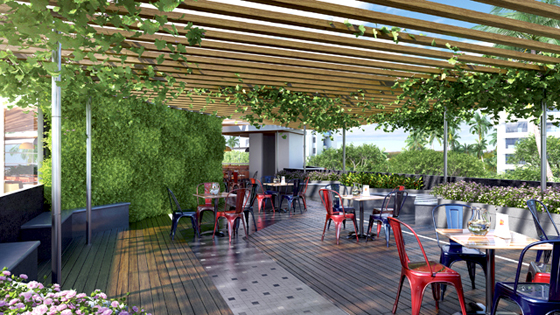
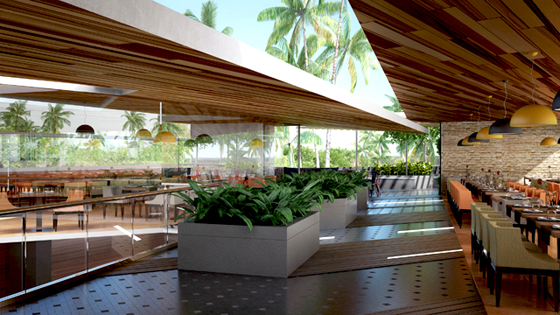
It is therefore, natural that the promoters of Transit One have given top priority to eating-out to allure customers. This mall will boast of food courts - a 3 star restaurant, a landscaped terrace roof top club and a multi-cuisine restaurant to cater to the cosmopolitan crowd of the surrounding area.

"Transit One" is conceived as a one-stop-shop mall wherein customers don't have to go anywhere else scouting for other shops to buy anything and everything they require. "We want this mall to cater to the needs of all segments of the society. Even if a woman wants to buy a bindi or a ribbon or a student wants to buy a book or pencil they don't have to look for another shop. We believe and endorse the idea of Small world of large Happiness", the promoters point out.

The promoters have sourced the services of the best names in the real estate field, to come out with this theme-based destination mall appealing in its design, eye-catching with its structure, attractive in its overall appearance and spacious and comfortable to stroll around with its theme-designed spaces. The services of leading Mangaluru based Architects 2PKM have been sought for this project. The combined effort of all trusted professionals in the project team is sure to give the true value for money to the investors.

Transit One has everything that is going to make it the most eagerly awaited mall of Mangaluru. True to its name the promoters want the travellers and the local crowd to experience the on-going journey of life via Transit One. With this mall going to become a reality soon, the young, educated and yuppie crowd of the academic hub of Mangaluru and people of Mangaluru can certainly look forward to for a place that is sure to come close to their dream destination.
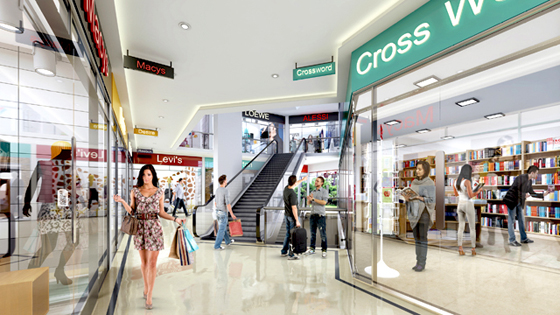
transit2

Branded and semi-branded shops

transit3

Mini vanilla shops

transit4

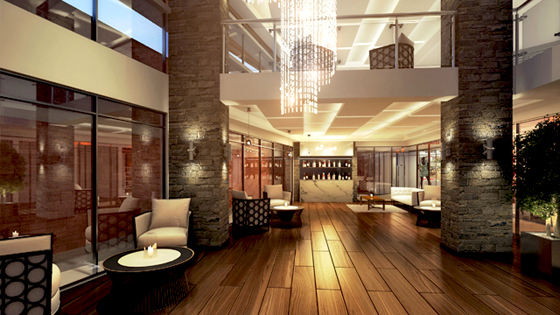
Three-star restaurant

transit5

Landscaped food court

transit6

Open terrace restaurant

transit7

Exclusive supermarket


To book your space or for more details contact

Ecologic Habitats

Crystal Arc, 3rd Floor, Balmatta Road,

KMC Mercara Trunk Rd,

Hampankatta, Mangaluru, Karnataka 575002

Ph: 91 97410 70000 / 91 93420 71729

91 824 6066 666

Email : [email protected]

Website:http://www.ecologichabitats.com/commercialspace.html

Comments

Embee
 - 
Friday, 19 Feb 2016

Its all one thing to make things look good... mangalore real estate is just slumping... doesnt look like a great investment

Saleem Khan
 - 
Friday, 19 Feb 2016

Small Theatre should be there, Anyways good try all the best for your future endeavors.inshallah

Sameer Mohammed
 - 
Friday, 19 Feb 2016

will this beat Moideen Bava's Forum Fiza Mall ? Looks like this will be greenery Mall of Mangalore.

Farooq
 - 
Friday, 19 Feb 2016

wow wonderful themes based mall, i want to visit once, Tell me when its gone a complete.

Add new comment

  • Coastaldigest.com reserves the right to delete or block any comments.
  • Coastaldigset.com is not responsible for its readers’ comments.
  • Comments that are abusive, incendiary or irrelevant are strictly prohibited.
  • Please use a genuine email ID and provide your name to avoid reject.
News Network
May 7,2020

Bengaluru, May 7: Karnataka has revised its standard operating procedure (SOP) for international passengers. The first group of passengers will arrive in the state on May 8.

The number of categories has been reduced to two from three. Category A includes passengers symptomatic on arrival while Category B passengers are those asymptomatic on arrival. These are passengers who are either healthy or those having co-morbidities.

As per the revised SOP, the passenger will be released on the seventh day, if tested negative, to strict home quarantine for another seven days with stamping.

This norm is in contradiction to the Ministry of Home Affairs’ SOP for international passengers. As per the MHA’s SOP, the passengers (asymptomatic) will be under institutional quarantine for 14 days. Testing negative after 14 days, they will be allowed to go home and will undertake self-monitoring of their health for 14 more days.

On the contradiction, Pandey said, "We don't take chances as we rely on tests instead of just quarantining. Other states may be depending on just 14-day institutional quarantine."

"GOI SOP doesn't talk about Covid tests on international passengers. We have put an additional safety layer of three Covid tests on returnees -- one on arrival, second from 5-7 days and last on 12th day. This will ensure definite identification of positive cases even if they are asymptomatic and their subsequent treatment. We should look at the spirit behind the order," he added.

On the 14-day additional reporting period for category B, he said, "It is implied as category B patients should report to us for 14 days after their first 14-day quarantine period is over."

Medical Education Minister Dr K Sudhakar said that the State would follow the Centre’s norms.

Till Tuesday, Karnataka’s SOP had three categories. Under Category A (symptomatic), 14-day institutional quarantine at COVID-19 Health Care Centre was mandatory followed by 14-day reporting period. Under Category B (asymptomatic above 60 years with co-morbidities), seven-day institutional quarantine at hotel/hostel followed by seven-day home quarantine and 14-day reporting period had been recommended. The 14-day home quarantine and 14-day reporting period was mandatory for Category C (asymptomatic).

Comments

Add new comment

  • Coastaldigest.com reserves the right to delete or block any comments.
  • Coastaldigset.com is not responsible for its readers’ comments.
  • Comments that are abusive, incendiary or irrelevant are strictly prohibited.
  • Please use a genuine email ID and provide your name to avoid reject.
News Network
April 14,2020

Bengaluru, Apr 14: The Karnataka government has decided to adopt “remote monitoring” of COVID-19 positive patients in order to ensure the safety of healthcare professionals - the frontline warriors against the pandemic.

Two doctors treating COVID-19 patients tested positive recently and in to check such instances in future, the Department of Medical Education is planning remote monitoring, which reduces doctors’ exposure to patients.

Medical Education Minister Dr K Sudhakar has consulted some of the doctors in the United States who are already using this technology to treat the COVID-19 positive cases. The minister is also having a meeting with representatives of some of the companies which provide such technology.

“I spoke to a team of epidemiologists and heads of certain departments at the United States to know about the remote monitoring technology they are using. I am also meeting the representatives of a few such companies which can provide us with the technology at our hospitals,”  Dr Sudhakar said.

Track state-wise coronavirus cases here

The minister added, “We have heard reports of many doctors and other health professionals succumbing to COVID-19. We don’t want to take risk.” Explaining the technology, Dr Sachidanand, Vice Chancellor of Rajiv Gandhi University of Health Sciences said that remote monitoring uses a software with which specialist doctors can monitor health condition of patients and treat them by not getting exposed directly.

The presence of all the doctors in COVID-19 is not necessary when patients are monitored remotely. 

Comments

Add new comment

  • Coastaldigest.com reserves the right to delete or block any comments.
  • Coastaldigset.com is not responsible for its readers’ comments.
  • Comments that are abusive, incendiary or irrelevant are strictly prohibited.
  • Please use a genuine email ID and provide your name to avoid reject.
Wafa Sultana
April 4,2020

Over the last couple of days when the world was occupied with unifying efforts to fight the deadly Covid19 pandemic, sections of Indian media provided viewers a familiar scapegoat – the Indian Muslims – who are often stereotyped as a community being constantly at loggerheads with the citizenry and the State. Biased media channels were quick to resort to blaming the entire Muslim community for the spread of the disease in the country, thanks to an ill-timed Tablighi Jamaat gathering at its international headquarters in Delhi’s Nizamuddin. Unsurprisingly, the opprobrium was also marked by a sudden spike in WhatsApp forwards of videos with people wearing skullcaps licking spoons and performing Sufi breathing rituals, suggesting some sort of wild conspiracy on the part of the community to spread the virus.  Some media channels were quick to formulate, hypothesize and provide loose definitions of a newly discovered form of Jihad i.e. ‘Corona Jihad ’ thereby vilifying the Islamic faith and its followers.

While the investigation on the culpability of the organizers of the Nizamuddin event is still ongoing, there is enough information to suggest that the meeting was held before any lockdown was in force, and the problem began when there was no way of getting people out once the curfew was announced. Be that as it may, there is little doubt that organizing a meet of such a scale when there is a global pandemic smacks of gross misjudgment, and definitely the organizers should be held accountable if laws or public orders were defied. Attendees who attempt to defy quarantine measures must be dealt with strictly. However, what is alarming is that the focus and narrative have now shifted from the unfortunate event at Nizamuddin to the Tablighi Jamaat itself.

For those not familiar with the Tablighi Jamaat, the organization was founded in 1926 in Mewat by scholar Maulana Mohammad Ilyas. The Jamaat’s main objective was to get Muslim youth to learn and practice pristine Islam shorn of external influences. This is achieved through individuals dedicating time for moral and spiritual upliftment secluded from the rest of the world for a brief period of time. There is no formal membership process. More senior and experienced participants typically travel from one mosque to other delivering talks on religious topics, inviting local youth to attend and then volunteer for a spiritual retreat for a fixed number of days to a mosque in a nearby town or village to present the message to their co-religionists. Contrary to ongoing Islamophobic rhetoric, the movement does not actively proselytize. The focus is rather on getting Muslims to learn the teachings and practices of Islam.  This grassroots India-based movement has now grown to almost all countries with substantial Muslim populations. Its annual meets, or ‘ijtemas’ are among the largest Islamic congregations in the world after the annual Haj. One of the reasons for its popularity and wide network in the subcontinent and wordwide is the fact that it has eschewed the need for scholarly intervention, focusing on peer learning of fundamental beliefs and practice rather than high-falutin ideological debates. The Tablighi Jamaat also distinguishes itself from other Islamic movements through its strictly apolitical nature, with a focus on individual self-improvement rather than political mobilization. Hardships and difficulty in the world are expected to be face through ‘sabr’ (patience) and ‘dua’ (supplication),  than through quest for political power or influence. In terms of ideology, it is very much based on mainstream Sunni Islamic principles derived from the Deobandi school.

So, why is all this background important in the current context? While biased media entities have expectedly brought out their Islamophobic paraphernalia out for full display, more neutral commentators have tried to paint the Tablighi Jamaat as a fringe group and have tried to distance it from 'mainstream Muslims'. While the intent is no doubt innocent, this is a trap we must not fall into. This narrative, unfortunately, is also gaining ground due to apathy some Muslims have for the group, accusing it of being “disconnected from the realities of the world”. Unlike other Muslim organizations and movements, the Tablighi Jamat, by virtue of its political indifference, does not boast of high-profile advocates and savvy spokespersons who can defend it in mainstream or social media.  The use of adjectives such as 'outdated' and 'orthodox' by liberal columnists to describe the Jamaat feeds into the malignant attempt to change the narrative from the control of the spread of the pandemic due to the Nizamuddin gathering to 'raison d'etre' of the organization itself.

A large mainstream religious group like the Tablighi Jamaat with nearly a hundred-year history, normally considered to be peaceful, apolitical and minding its own business is now suddenly being villainized owing to unfortunate circumstances. Biased media reactions filled with disgust and hate seem to feed the Indian public conscience with a danngerous misconception - to be a nominal Muslim is okay but being a practicing one is not.  For those committed to the truth and fighting the spread of Islamophobia, the temptation to throw the entire Tablighi Jamaat under the bus must be resisted.

The writer is a lawyer and research scholar at Qatar University. Her research interests include Islamic law and politics.

Comments

zahoorahmed
 - 
Saturday, 4 Apr 2020

great article! provides a great perspective on tableeg jamat

Add new comment

  • Coastaldigest.com reserves the right to delete or block any comments.
  • Coastaldigset.com is not responsible for its readers’ comments.
  • Comments that are abusive, incendiary or irrelevant are strictly prohibited.
  • Please use a genuine email ID and provide your name to avoid reject.