Veiled attack on Team Rahul by section of Cong leaders

May 22, 2014

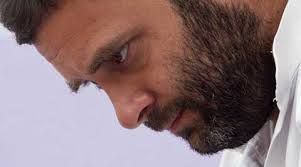
New Delhi, May 22: In a veiled attack on 'Team Rahul' over Congress' poll debacle, a section of party leaders today said only those having experience of field work should be given "leadership posts" and wanted a "ruthless introspection" to help it bounce back.RaGa

Congress leader Milind Deora, who had yesterday said that Rahul Gandhi's advisers did not have their "ears to the ground" and those with "no electoral experience" were "calling the shots", today stuck to his stand, saying his comments are borne out of deep loyalty to the party and pain due to its performance in the polls.

"My comments are out of emotions of deep loyalty to the party, pain of our performance & a sincere desire to see us bounce back. Nothing more," Deora said on Twitter.

In comments that stoked a blame game within the party and appearing to question 'Team Rahul', he said, "Field party work & electoral battles are key to comprehend ground realities. This should form the basis for leadership posts in Congress."

Senior party leader Satyavrat Chaturvedi appeared to be in agreement with the views expressed by Deora and hoped that an "honest and ruthless introspection" is carried out to rectify the problems.

Chaturvedi said while whatever Deora stated might not be fully correct but "large portion of what he said is correct".

The remarks are considered significant in the wake of a growing perception in the party that a number of people with no electoral experience and novices in politics were given key roles in shaping up the decisions of the leadership on issues like campaigning and alliances.

AICC Secretary Priya Dutt, who met Congress President Sonia Gandhi today, also talked of a "disconnect" of the party leaders with the people.

"We need to bridge that gap. We need to bring that right upto the leadership. There is a lot of criticism. We have to look at where we have gone wrong in the past ten years," she said.

Both Deora and Dutt lost the elections in Mumbai.

They are considered to be part of Rahul's team and it may be mentioned that Deora's assertions in the past on some issues were also followed up by action taken by the Congress Vice President.

Senior Congress leader Capt Amarinder Singh, however, said the Congress should take "collective responsibility" for the rout in which the party got just 44 seats.

NCP leader Majid Memom said Deora's remarks signify that he has indirectly commented on Rahul also.

Comments

Add new comment

  • Coastaldigest.com reserves the right to delete or block any comments.
  • Coastaldigset.com is not responsible for its readers’ comments.
  • Comments that are abusive, incendiary or irrelevant are strictly prohibited.
  • Please use a genuine email ID and provide your name to avoid reject.
News Network
March 7,2020

New Delhi, Mar 7: Prime Minister Narendra Modi turned emotional on Saturday when a woman beneficiary of his government's generic medicine programme told him that she had seen God in him.

Dehradun-resident Deepa Shah, who suffered paralysis in 2011, was interacting with the prime minister through video-conference on the occasion of Jan Aushadhi Diwas.

"I have not seen god, but I have seen God in you," she said, tears rolling down her eyes.

Modi was visibly emotional as the woman repeated her remark.

She also thanked the Uttarakhand chief minister and others who had helped her all along and said doctors had once told her that she cannot be cured.

"But on hearing your voice I have become better," she told Modi while profusely thanking the prime minister for his efforts to reduce the cost of medicines.

An emotional prime minister paused for a moment before telling her that it was her courage that had won over her disease and that she must carry on with the spirit.

Shah was expressing her plight and how she had suffered due to high cost of medicines after she suffered from paralysis in 2011 and has now started saving Rs 3,500 every month after benefitting from the government's low-cost generic medicines programme.

Soon after Shah rose to express her views, Modi asked her to sit and speak as he said she was uncomfortable while standing.

"You have defeated disease with your own will power. Your courage is your god and that same courage has given you the strength to emerge from such a big crisis. You should carry on this confidence in you," Modi told her.

He said some people still keep spreading rumours about generic medicines, going by their past experience, wondering how can medicines be available so cheap and that there must be something wrong with the medicine.

"But, by seeing you countrymen would gain confidence that there is nothing wrong in generic medicines. These medicines are not at all of inferior quality than any other medicine. These medicines have been certified by the best laboratories. These medicines are made in India and is 'Make in India' and are cheap," the prime minister said.

He said there is demand for generic medicines from India across the world and the government has made it mandatory for doctors to prescribe generic medicines to patients, unless necessary.

Comments

Sameeksha
 - 
Monday, 9 Mar 2020

Wowww so emotional... Lol .really god in you??? Drama king and queen

angry indian
 - 
Sunday, 8 Mar 2020

in 2002 riot we have seen shaitan in you..how come shaitan become GOD...


did he put atleat one tear for his mother, did he feel sad when pregnant muslim woman brutally murdered..

this guy is 21st century dajjal..

Suresh SS
 - 
Sunday, 8 Mar 2020

Big Nautanki, Dramebaz

Add new comment

  • Coastaldigest.com reserves the right to delete or block any comments.
  • Coastaldigset.com is not responsible for its readers’ comments.
  • Comments that are abusive, incendiary or irrelevant are strictly prohibited.
  • Please use a genuine email ID and provide your name to avoid reject.
News Network
June 20,2020

Jun 20: Congress leader Rahul Gandhi on Saturday attacked Prime Minister Narendra Modi over his remark that neither is anyone inside India's territory nor has any of its posts been captured, alleging that the PM has "surrendered" Indian territory to Chinese aggression.

In a statement on the all-party meeting called by Modi on Friday to discuss the situation at the India-China border, the government said, "At the outset, prime minister clarified that neither is anyone inside our territory nor is any of our post captured."

Tagging PM's remarks with his tweet, Gandhi said, "PM has surrendered Indian territory to Chinese aggression."

"If the land was Chinese: 1. Why were our soldiers killed? 2. Where were they killed?" Gandhi said.

The categorical statement by the prime minister came in the wake of reports that Chinese military has transgressed into the Indian side of the Line of Actual Control, the de-facto border, in several areas of eastern Ladakh including Pangong Tso and Galwan Valley.

Soon after Gandhi's tweet, Union Home Minister Amit Shah posted video of father of a soldier, who was injured in Galwan face-off, and hit out at the Congress leader, accusing him of indulging in "petty politics".

"A brave armyman’s father speaks and he has a very clear message for Mr. Rahul Gandhi. At a time when the entire nation is united, Mr. Rahul Gandhi should also rise above petty politics and stand in solidarity with national interest," Shah wrote.

The prime minister's assertion came even as Congress president Sonia Gandhi, at the all-party meet, questioned the government's handling of the situation, asking if there was any intelligence failure, and seeking assurance that China will "revert" to its original position.

Rahul Gandhi on Friday accused senior ministers in the government of "lying" to protect the prime minister and that the Centre was "fast asleep" while martyred jawans paid the price in Ladakh.

The former Congress chief also tagged a one-minute video of a jawan's father saying the Indian soldiers were unarmed when they were attacked by Chinese troops.

He has been questioning the government on the LAC standoff and asking how the Chinese occupied Indian territory and why Indian soldiers were sent "unarmed to martyrdom" in Ladakh.

Twenty Indian Army personnel, including a colonel, were killed in a clash with Chinese troops in the Galwan Valley in eastern Ladakh on Monday night, the biggest military confrontation in over five decades that has significantly escalated the already volatile border standoff in the region.

Comments

Add new comment

  • Coastaldigest.com reserves the right to delete or block any comments.
  • Coastaldigset.com is not responsible for its readers’ comments.
  • Comments that are abusive, incendiary or irrelevant are strictly prohibited.
  • Please use a genuine email ID and provide your name to avoid reject.
News Network
January 13,2020

Jan 13: For the first time in years, the government of India’s Prime Minister Narendra Modi is playing defense. Protests have sprung up across the country against an amendment to India’s laws — which came into effect on Friday — that makes it easier for members of some religions to become citizens of India. The government claims this is simply an attempt to protect religious minorities in the Muslim-majority countries that border India; but protesters see it as the first step toward a formal repudiation of India’s constitutionally guaranteed secularism — and one that must be resisted.

Modi was re-elected prime minister last year with an enhanced majority; his hold over the country’s politics is absolute. The formal opposition is weak, discredited and disorganized. Yet, somehow, the anti-Citizenship Act protests have taken hold. No political party is behind them; they are generally arranged by student unions, neighborhood associations and the like.

Yet this aspect of their character is precisely what will worry Modi and his right-hand man, Home Minister Amit Shah. They know how to mock and delegitimize opposition parties with ruthless efficiency. Yet creating a narrative that paints large, flag-waving crowds as traitors is not quite that easy.

For that is how these protests look: large groups of young people, many carrying witty signs and the national flag. They meet and read the preamble to India’s Constitution, into which the promise of secularism was written in the 1970’s.

They carry photographs of the Constitution’s drafter, the Columbia University-trained economist and lawyer B. R. Ambedkar. These are not the mobs the government wanted. They hoped for angry Muslims rampaging through the streets of India’s cities, whom they could point to and say: “See? We must protect you from them.” But, in spite of sometimes brutal repression, the protests have largely been nonviolent.

One, in Shaheen Bagh in a Muslim-dominated sector of New Delhi, began simply as a set of local women in a square, armed with hot tea and blankets against the chill Delhi winter. It has now become the focal point of a very different sort of resistance than what the government expected. Nothing could cure the delusions of India’s Hindu middle class, trained to see India’s Muslims as dangerous threats, as effectively as a group of otherwise clearly apolitical women sipping sweet tea and sharing their fears and food with anyone who will listen.

Modi was re-elected less than a year ago; what could have changed in India since then? Not much, I suspect, in most places that voted for him and his party — particularly the vast rural hinterland of northern India. But urban India was also possibly never quite as content as electoral results suggested. India’s growth dipped below 5% in recent quarters; demand has crashed, and uncertainty about the future is widespread. Worse, the government’s response to the protests was clearly ill-judged. University campuses were attacked, in one case by the police and later by masked men almost certainly connected to the ruling party.

Protesters were harassed and detained with little cause. The courts seemed uninterested. And, slowly, anger began to grow on social media — not just on Twitter, but also on Instagram, previously the preserve of pretty bowls of salad. Instagram is the one social medium over which Modi’s party does not have a stranglehold; and it is where these protests, with their photogenic signs and flags, have found a natural home. As a result, people across urban India who would never previously have gone to a demonstration or a political rally have been slowly politicized.

India is, in fact, becoming more like a normal democracy. “Normal,” that is, for the 2020’s. Liberal democracies across the world are politically divided, often between more liberal urban centers and coasts, and angrier, “left-behind” hinterlands. Modi’s political secret was that he was that rare populist who could unite both the hopeful cities and the resentful countryside. Yet this once magic formula seems to have become ineffective. Five of India’s six largest cities are not ruled by Modi’s Bharatiya Janata Party in any case — the financial hub of Mumbai changed hands recently. The BJP has set its sights on winning state elections in Delhi in a few weeks. Which way the capital’s voters will go is uncertain. But that itself is revealing — last year, Modi swept all seven parliamentary seats in Delhi.

In the end, the Citizenship Amendment Act is now law, the BJP might manage to win Delhi, and the protests might die down as the days get unmanageably hot and state repression increases. But urban India has put Modi on notice. His days of being India’s unifier are over: From now on, like all the other populists, he will have to keep one eye on the streets of his country’s cities.


Comments

Add new comment

  • Coastaldigest.com reserves the right to delete or block any comments.
  • Coastaldigset.com is not responsible for its readers’ comments.
  • Comments that are abusive, incendiary or irrelevant are strictly prohibited.
  • Please use a genuine email ID and provide your name to avoid reject.