



Want to come to India but passport suspended: Mallya to Court

September 9, 2016

New Delhi, Sep 9: Liquor baron Vijay Mallya today informed a Delhi court that he wants to come to India but is unable to travel back as his passport has been suspended by Indian authorities.
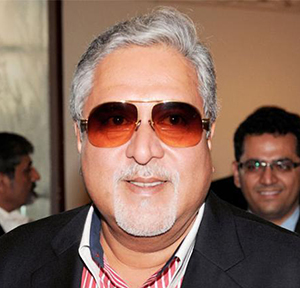
mallyaMallya made the submission through his counsel before Chief Metropolitan Magistrate Sumit Dass in a case lodged for allegedly evading summons in connection with a FERA violation matter.

On July 9, the court had cancelled the exemption from personal appearance granted to him and had directed him to appear before it. In his application moved through senior advocate Ramesh Gupta, Mallya requested the court that some time be given so that his appearance can be secured.

The counsel submitted the copy of an email sent by Mallya, stating that his passport was suspended on April 23, 2016 without giving him any opportunity of being heard.

Enforcement Directorate (ED), however, told the court that Mallya is already evading proceedings in several other cases and sought time to reply to the plea moved by him today. The court has now put up the matter for further hearing on October 4.

The exemption from personal appearance to Mallya was granted in December 2000 on ED's complaint for evading summons issued to him by it. The agency had issued summons to the businessman in connection with alleged payment of 200,000 dollars to a British firm for displaying Kingfisher logo in Formula One World Championships in London and some European countries in 1996, 1997 and 1998.

It had claimed that the money was allegedly paid without prior approval from RBI in violation of FERA norms. In its plea against Mallya filed through prosecutor N K Matta, ED had also sought issuance of non-bailable warrant against the Chairman of the now-defunct Kingfisher Airlines to secure his presence in the ongoing trial of the case, which is at its final stage.

The agency's plea had said Mallya was reported to be in the United Kingdom and his presence in the trial was essential and had sought court's direction to him to remain personally present in every hearing.

Matta had argued that the court should recall its December 2000 exemption order as a PMLA court in Mumbai has recently issued an open-ended warrant against him in connection with a money laundering case.

According to ED, Mallya was summoned on four occasions for questioning in connection with a contract signed in December 1995 with London-based firm Benetton Formula Ltd for promotion of the Kingfisher brand abroad.

When Mallya failed to appear before ED in response to the summons, a complaint was filed on March 8, 2000 before a court here and later on charges were framed against him under FERA.

Comments

Mahesh
 - 
Friday, 9 Sep 2016

wov thelike marre ninna...

TRUE INDIAN
 - 
Friday, 9 Sep 2016

Passport cancellation ensures his continued stay in United kingdom. What is said is a statement .he has not requested for revoking the cancellation and issue of a Passport. Why no action against the Bankers who are alleged for having intentionally failed to do due diligence before releasing money to Kingfisher Airlines. The question which comes to ones mind again and again is the loan was for an airline company and not the individual.Why only the individual is being targeted .even a high school child will know that such huge amounts are not given just at the asking for it. Who were the other politicians,Babus,Bankers being protected by ensuring Vijay Mallya staying at London. Is there a bigger Drama happening?

TRUE INDIAN
 - 
Friday, 9 Sep 2016

forget modi's black money. the white money which we had in india. mallya took and ran away.

Add new comment

  • Coastaldigest.com reserves the right to delete or block any comments.
  • Coastaldigset.com is not responsible for its readers’ comments.
  • Comments that are abusive, incendiary or irrelevant are strictly prohibited.
  • Please use a genuine email ID and provide your name to avoid reject.
News Network
April 26,2020

Mangaluru, Apr 26: Yet another covid-19 positive case has been reported from Bantwal taluk of Dakshina Kannada district. 

Health and Family Welfare Department's latest bulletin revealed that a 47-year-old woman from Panemangaluru in Bantwal was tested positive for the coronavirus. 

With this the total number of covid-19 infected people in Dakshina Kannada rose to 19 out of which 7 are from Bantwal taluk. 

According to sources, this woman was working as a sweeper in a private hospital in the city where a coronavirus victim from Bantwal was being treated before she was shifted to covid-19 hospital.

Comments

Add new comment

  • Coastaldigest.com reserves the right to delete or block any comments.
  • Coastaldigset.com is not responsible for its readers’ comments.
  • Comments that are abusive, incendiary or irrelevant are strictly prohibited.
  • Please use a genuine email ID and provide your name to avoid reject.
Dr Parinitha
January 17,2020

We came on foot, we came on boats, shouting slogans of Azadi.

We stood on roof tops and sat on walls under the burning midday sun,

Listening to the words that we had longed to hear for so long.

Words that had been scripted through the lonely fears of our hearts.

Words that were spoken now with the clarity of courage.

Words that were spoken now with the suppressed strength of pent up anger.

Words that were spoken now with the certainty of belonging to the soil 

Which had become one with the dust of our ancestors.

We stood there in the waves of heat

Feeling the surge and press  of countless bodies around us.

Bodies meshed through the odour of sweat 

And the shared fear of a common persecution.

And hanging from the roof tops,

And tied to the poles,

And clutched in hands slippery with sweat,

And wrapped round the pillars,

And spreading into our blood,

Were three strips of colour with a wheel of spokes,

Sewn together into the shape of our being.

Woven into the folds of our future and the creases of our past. 

Stitched to the seams of the earth, the water, the air and the sky 

That belonged to us and to which we belonged. 

And we stood there from noon to evening,

We the people of India.

Raising our clenched fists like signposts to the future.

Chanting slogans like a new anthem.

Kin to each other through the ties of community.

Born to live and die 

In a nation that was ours to hold on to

And ours to belong to.

Dr Parinitha is a professor of English in Mangalore University. She penned the poem soon after participating in the historic protest against CAA, NPR and NRC at Shah Garden, Adyar, Mangaluru on 15th January, 2020.

Also Read: 

‘The more you try to divide us, the stronger and united we’ll be’: Record turnout in Mangaluru’s anti-NRC protest

Anti-NRC protest in Mangaluru brings ‘media bias’ to the fore

Comments

Abdullah
 - 
Wednesday, 29 Jan 2020

Salute to you siter for your meaningful poem.  This is reality.  However, the enmy is blind/deaf/dumb.   May God give right way of thinking to enmy and in case he is unlucky, let God finish him and let him beg for death.  

Indian
 - 
Thursday, 23 Jan 2020

Waav..What a Heart Touching poetry...


Hats off to you ma'am....


Love from all Indians...


Add new comment

  • Coastaldigest.com reserves the right to delete or block any comments.
  • Coastaldigset.com is not responsible for its readers’ comments.
  • Comments that are abusive, incendiary or irrelevant are strictly prohibited.
  • Please use a genuine email ID and provide your name to avoid reject.
Agencies
May 8,2020

Washington D.C., May 8: The prime time for brain development in a child's life is the first year, where the infant spends most of the time asleep. It is the time when neural connections form and sensory memories are encoded.

However, when sleep is disrupted, as occurs more often among children with autism, brain development may be affected, too.

New research led by the University of Washington finds that sleep problems in a baby's first 12 months may not only precede an autism diagnosis but also may be associated with altered growth trajectory in a key part of the brain, the hippocampus.

The study, which was published in the American Journal of Psychiatry, researchers report that in a sample of more than 400 taken of 6- to 12-month-old infants, those who were later diagnosed with autism were more likely to have had difficulty falling asleep.

It also states that this sleep difficulty was associated with altered growth trajectories in the hippocampus.

"The hippocampus is critical for learning and memory, and changes in the size of the hippocampus have been associated with poor sleep in adults and older children.

As many as 80 per cent of the children with autism spectrum disorder have sleep problems," said Annette Estes, director of the UW Autism Center and senior author of the study.

"In our clinical experience, parents have a lot of concerns about their children's sleep, and in our work on early autism intervention, we observed that sleep problems were holding children and families back," added Estes, who is also a UW professor of speech and hearing sciences.

"It could be that altered sleep is part-and-parcel of autism for some children. One clue is that behavioural interventions to improve sleep don't work for all children with autism, even when their parents are doing everything just right. This suggests that there may be a biological component to sleep problems for some children with autism," said Estes.

To consider links among sleep, brain development, and autism, researchers at the IBIS Network looked at MRI scans of 432 infants, surveyed parents about sleep patterns, and measured cognitive functioning using a standardized assessment.

At the outset of the study, infants were classified according to their risk for developing autism: Those who were at higher risk of developing autism -- about two-thirds of the study sample -- had an older sibling who had already been diagnosed.

Infant siblings of children with autism have a 20 per cent chance of developing autism spectrum disorder -- a much higher risk than children in the general population.

In the current study, 127 of the 432 infants were identified as "low risk" at the time the MRI scans were taken because they had no family history of autism.

They later evaluated all the participants at 24 months of age to determine whether they had developed autism. Of the roughly 300 children originally considered "high familial risk," 71 were diagnosed with autism spectrum disorder at that age.

Problems with sleep were more common among the infants later diagnosed with an autism spectrum disorder, as were larger hippocampi. No other subcortical brain structures were affected, including the amygdala, which is responsible for certain emotions and aspects of memory, or the thalamus, a signal transmitter from the spinal cord to the cerebral cortex.

The authors note that while parents reported more sleep difficulties among infants who developed autism compared to those who did not, the differences were very subtle and only observed when looking at group averages across hundreds of infants.

Sleep patterns in the first years of life change rapidly as infants transition from sleeping around the clock to a more adult-like sleep/wake cycle. Until further research is completed, Estes said, it is not possible to interpret challenges with sleep as an early sign of increased risk for autism.

Comments

Add new comment

  • Coastaldigest.com reserves the right to delete or block any comments.
  • Coastaldigset.com is not responsible for its readers’ comments.
  • Comments that are abusive, incendiary or irrelevant are strictly prohibited.
  • Please use a genuine email ID and provide your name to avoid reject.