


200 Million Indians Suffer From High Blood Pressure: Global Study

November 17, 2016

London, Nov 17: The number of people with high blood pressure has almost doubled in 40 years to over 1.1 billion worldwide, scientists said, with the burden of the condition shifting from the rich to the poor.BP-696x428
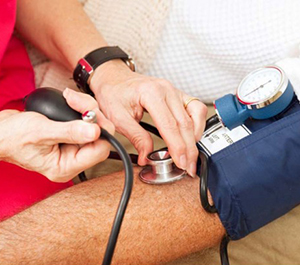
In the largest study of its kind analyzing blood pressure in every nation between 1975 and 2015, the scientists said that it has dropped sharply in wealthy countries – possibly due to healthier diets and lifestyles – but risen in poorer ones.

The increases are especially significant in Africa and South Asia, the researchers said, and could be partly due to poor nutrition in childhood.

High blood pressure, also known as hypertension, puts extra strain on the blood vessels and major organs such as the heart, brain and kidneys. It is the world’s top cause of cardiovascular disease, which leads to strokes and heart attacks, and is estimated to cause 7.5 million deaths a year worldwide.

Led by World Health Organisation researchers working with hundreds of scientists internationally, this study covered blood pressure measurements from nearly 20 million people and was published in The Lancet medical journal.

In Europe, Britain had the lowest proportion of people with high blood pressure in 2015. South Korea, the United States and Canada had the lowest hypertension rates in the world.

More than half the world’s adults with high blood pressure in 2015 lived in Asia, the study estimated. Some 226 million people in China have high blood pressure, it said, as do 200 million in India.

“High blood pressure is no longer related to affluence – as it was in 1975 – but is now a major health issue linked with poverty,” said Majid Ezzati, a professor at Imperial College London’s school of public health.

He said that while he could not be sure of why the data showed high blood pressure as more of a problem in poorer countries, it may be partly due to overall better health and more consumption of fruit and vegetables in wealthy societies.

In rich countries, the condition is also caught more frequently and earlier, and managed more effectively with medicines, Ezzati said.

Blood pressure is defined by two numbers – systolic pressure, which represents the force with which the heart pumps blood into the blood vessels, and diastolic pressure, a measure of the resistance to the blood flow in the body’s blood vessels.

Both numbers are measured in millimetres of mercury (mmHg). High blood pressure is defined as 140/90 mmHg or higher.

The condition is caused by a number of factors including having a diet high in salt and low in fruit and vegetables, and not taking enough exercise.

Comments

Add new comment

  • Coastaldigest.com reserves the right to delete or block any comments.
  • Coastaldigset.com is not responsible for its readers’ comments.
  • Comments that are abusive, incendiary or irrelevant are strictly prohibited.
  • Please use a genuine email ID and provide your name to avoid reject.
Agencies
February 26,2020

Feb 26: While too much stress can be toxic to your health, a new study suggests that despite its negative side effects, it may also lead to a surprising social benefit.

The research, published in the journal Stress & Health, found that experiencing stress made people both more likely to give and receive emotional support from another person.

This was true on the day they experienced the stressor as well as the following day.

"Our findings suggest that just because we have a bad day, that doesn't mean it has to be completely unhealthy," said study researcher David Almeida from Penn State University in the US.

"If stress can actually connect us with other people, which I think is absolutely vital to the human experience, I think that's a benefit. Stress could potentially help people deal with negative situations by driving them to be with other people," Almeida added.

For the study, the researchers interviewed 1,622 participants every night for eight nights. They asked the participants about their stressors and whether they gave or received emotional support on that day.

Stressors included arguments, stressful events at work or school, and stressful events at home.

The researchers found that on average, participants were more than twice as likely to either give or receive emotional support on days they experienced a stressor.

Additionally, they were 26 per cent more likely to give or receive support the following day.

The researchers said that while this effect, on average, was found across the participants, it differed slightly between men and women.

"Women tended to engage in more giving and receiving emotional support than men," said study researcher Hye Won Chai.

"In our study, men were also more likely to engage in emotional support on days they were stressed, but to a lesser extent than women," Chai added.

The researchers said they were surprised that stress was linked to people not just receiving emotional support, but giving it, as well.

"We saw that someone experiencing a stressor today actually predicted them giving emotional support the next day," Almeida said.

"This made me think that it's actually possible that stress helps to drive you to other people and allows it to be ok to talk about problems -- your problems, my problems," Almeida added.

Comments

Add new comment

  • Coastaldigest.com reserves the right to delete or block any comments.
  • Coastaldigset.com is not responsible for its readers’ comments.
  • Comments that are abusive, incendiary or irrelevant are strictly prohibited.
  • Please use a genuine email ID and provide your name to avoid reject.
Agencies
June 19,2020

While coughing, fever and difficulty in breathing are common symptoms of COVID-19, a new case study has found that pink eye is also a reason to be tested for the disease.

The study, published in the Canadian Journal of Ophthalmology, determined that conjunctivitis and keratoconjunctivitis can also be primary symptoms of COVID-19.

The researchers noted that in March, a 29-year-old woman arrived at the Royal Alexandra Hospital's Eye Institute of Alberta with a severe case of conjunctivitis and minimal respiratory symptoms.

After the patient had undergone several days of treatment with little improvement -- and after it had been determined that the woman had recently returned home from Asia -- a resident ordered a COVID-19 test.

The test came back positive, according to the researchers.

"What is interesting in this case, and perhaps very different to how it had been recognised at that specific time, was that the main presentation of the illness was not a respiratory symptom. It was the eye," said Carlos Solarte, an assistant professor at the University of Alberta in Canada.

"There was no fever and no cough, so we weren't led to suspect COVID-19 at the beginning. We didn't know it could present primarily with the eye and not with the lungs," Solarte said.

Academic studies at the outset of the pandemic identified conjunctivitis as a secondary symptoms in about 10 to 15 per cent of COVID-19 cases, he said.

Since then, scientists have gained greater knowledge of how the virus can transmit through and affect the body's mucous membrane system, of which the conjunctiva -- the clear, thin membrane that covers the front surface of the eye -- is an extension.

While the finding provides important new health information for the public, it also makes eye exams more complicated for ophthalmologists and staff, the researchers noted.

"The patient in this case eventually recovered well without any issues. But several of the residents and staff who were in close contact with the patient had to be under quarantine," said Solarte.

"Fortunately, none who were involved in her care also tested positive," he said.

Patients coming into an eye clinic with conjunctivitis and keratoconjunctivitis are now treated as potential cases of COVID-19 and extra precautions are taken by staff, according to the researchers.

Comments

Add new comment

  • Coastaldigest.com reserves the right to delete or block any comments.
  • Coastaldigset.com is not responsible for its readers’ comments.
  • Comments that are abusive, incendiary or irrelevant are strictly prohibited.
  • Please use a genuine email ID and provide your name to avoid reject.
Agencies
May 6,2020

Washington D.C., May 5: Working from home has become the new normal ever since the outbreak of coronavirus and in today's time the work duties can be easily dealt with by means of mobile devices at home.

However, this easy use of technology, mobile devices for that matter, has the potential to blur the fine line between work and the other daily life routines.

But, contrary to the belief, a study at the University of Jyvaskyla reveals that the mixing of work and other daily life routines may have more benefits than previously assumed, and points to the importance of boundary-spanning communication.

A smartphone enables phone calls, email, and file transfers from the comfort of home. The study shows that there may be more effective ways to maximise the benefits of smartphone use, without diminishing employees' flexibility and the use of these technologies.

"People often forget to talk about positive effects, such as autonomy and freedom the employees gain when they have the flexibility to schedule their work," said Postdoctoral Researcher Ward van Zoonen from JYU, who with his colleagues examined the use of smartphones for work matters outside working hours.

The study paid special attention to the benefits of talking about domestic matters with the immediate supervisor outside the working hours given to an employee.

"This reduces the conflict between work and other life," van Zoonen said.

"If people in an organisation strive for more dialogue between employees' different life domains, it is possible to create a functional environment where people can talk about different matters."

The research findings show that when employees communicate across boundaries and talk at work about their life in other respects, they can receive new kinds of support and understanding from their immediate supervisor.

"This kind of communication creates a low threshold for contacting one's supervisor, which helps employees build a balance between the different domains of their lives and strengthens their organisational identification," said Professor Anu Sivunen describing the findings.

This means that tight working time restrictions to protect employees might not be beneficial after all, if they hinder reaching the positive results indicated in this research.

For the study, a survey was taken of 367 employees who were asked questions such as -- how much they talk about their work with their family, and how much they talk about their family with their immediate supervisor.

"Both supervisors and their employees answered the surveys, and the study actually focused on their mutual communication," Sivunen said.

"Usually people at workplaces are interested in how communication within the work community is succeeding. It is often forgotten how an immediate supervisor can take an employer's other life into account and thereby help the employee gain work-related benefits."

"Communication with one's immediate supervisor during flexible working hours, also on matters other than work, could ease the daily lives of many employees if they could share the possible challenges of their family life or free time with their supervisor in these settings," Sivunen added.

According to the study, such a practice could make the supervisor aware of the employee's situation as he/she works from home and the related impacts on their work performances.

Comments

Add new comment

  • Coastaldigest.com reserves the right to delete or block any comments.
  • Coastaldigset.com is not responsible for its readers’ comments.
  • Comments that are abusive, incendiary or irrelevant are strictly prohibited.
  • Please use a genuine email ID and provide your name to avoid reject.