


Centre looking at Gorkhaland model for Telangana?

[email protected] (J. Balaji, The Hindu)
January 22, 2013

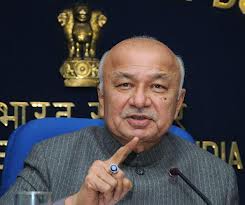
shindeNew Delhi, Jan 22: Fearful that the splitting of Andhra Pradesh could create a cascading effect on other states, the UPA-II government is considering the creation of a Telangana Territorial Administration on the lines of Gorkhaland.

Informed sources pointed out that if that was the case, the Centre had to further amend Article 371 (D), which has already provided a special status for 10 backward districts of the Telangana region, and this could be done with the approval of two-thirds of Parliament strength.

The Centre may announce its decision on Telangana earlier than the January 28 deadline set by Union Home Minister Sushilkumar Shinde as he is scheduled to leave on a tour of Bangladesh on January 27. Without saying yes or no for Telangana, a middle path, such as the Gorkhaland model, might help the Centre as well as the Andhra Pradesh government buy peace in both the Telangana and Seemandhra regions of the State, and the Union government could qualify the decision stating that it would be on an experimental basis, the sources added.

Like Gorkhaland, the Telangana Territorial Administration, which could be formed without bifurcating Andhra Pradesh, might be an autonomous body with more financial and administrative powers and will be administered by an elected chief executive and members of the council.

By considering the Gorkhaland model for Andhra Pradesh, the Centre may unwittingly be able to douse the Gorkhaland demand. The Gorkhaland Territorial Administration in West Bengal has already warned the Centre of renewing its stir for a separate State. And the Centre believes that a separate state for Telangana may only add strength to the Gorkhaland agitation.

It may be recalled that the committee set up by the Centre to examine the demand for Telangana, headed by the former Supreme Court judge, Justice B.N. Srikrishna, had in its recommendations suggested that its sixth option “stands out as the best way forward” keeping the national perspective in mind.

The sixth option talks about keeping the State (Andhra Pradesh) united by simultaneously providing certain definite constitutional/statutory measures for the socio-economic development and political empowerment of the Telangana region — creation of a statutorily-empowered Telangana Regional Council.

“The united Andhra option is being suggested for continuing the development momentum of the three regions and keeping in mind the national perspective. With firm political and administrative management it should be possible to convey conviction to the people that this option would be in the best interest of all and would provide satisfaction to the maximum number of the people in the State.”

“It would also take care of the uncertainty over the future of Hyderabad as a bustling, educational, industrial and IT hub/destination. For management of water and irrigation resources on an equitable basis, a technical body, i.e., Water Management Board and an Irrigation Project Development Corporation in expanded role have been recommended. The above course of action should meet all the issues raised by Telangana people satisfactorily,” the Committee said in its report.

Of the 294 Assembly segments in Andhra Pradesh, 119 are located in the 10 districts of the Telangana region. Of the 42 Lok Sabha seats in the State, 17 are in the T-region.

Meanwhile, talking to The Hindu, Overseas Affairs Minister Vayalar Ravi, additional in charge of the Congress in Andhra Pradesh, said nothing on the separate State issue had been decided so far. “I told this clearly to a delegation of Congress Ministers, MPs and MLAs from the Seemandhra region when they met me demanding continuation of a united Andhra Pradesh. Similarly I am willing to meet the group from the Telangana regions too on Tuesday,” he said.

Seemandhra leaders led by Minister Shailajanath also called on senior Congress leader Digvijay Singh and Home Minister Sushil Kumar Shinde asking them not to divide A.P. at any cost.

Comments

Add new comment

  • Coastaldigest.com reserves the right to delete or block any comments.
  • Coastaldigset.com is not responsible for its readers’ comments.
  • Comments that are abusive, incendiary or irrelevant are strictly prohibited.
  • Please use a genuine email ID and provide your name to avoid reject.
News Network
April 28,2020

Los Angeles, Apr 28: People who experience loss of smell as one of the COVID-19 symptoms are likely to have a mild to moderate clinical course of the disease, according to a study which may help health care providers determine which patients require hospitalisation.

The findings, published in the journal International Forum of Allergy & Rhinology, follows an earlier study that validated the loss of smell and taste as indicators of infection with the novel coronavirus, SARS-CoV-2.

According to the scientists from the University of California (UC) San Diego Health in the US, patients who reported loss of smell were 10 times less likely to be hospitalised for COVID-19 compared to those without the symptom.

"One of the immediate challenges for health care providers is to determine how to best treat persons infected by the novel coronavirus," said Carol Yan, first author of the current study and rhinologist from the UC San Diego Health.

"If they display no or mild symptoms, can they return home to self-quarantine or will they likely require hospitalisation? These are crucial questions for hospitals trying to efficiently and effectively allocate finite medical resources," Yan said.

The findings, according to the researchers, suggest that loss of smell may be predictive of a milder clinical course of COVID-19.

"What's notable in the new findings is that it appears that loss of smell may be a predictor that a SARS-CoV-2 infection will not be as severe, and less likely to require hospitalisation," Yan said.

"If an infected person loses that sense, it seems more likely they will experience milder symptoms, barring other underlying risk factors," she added.

Risk factors for COVID-19 previously reported by other studies include age, and underlying medical conditions, such as chronic lung disease, serious heart conditions, diabetes, and obesity.

In the current study, the scientists made a retrospective analysis between March 3 and April 8 including 169 patients who tested positive for COVID-19 at UC San Diego Health.

They assessed olfactory and gustatory data for 128 of the 169 patients, 26 of whom required hospitalisation.

According to the researchers, patients who were hospitalised for COVID-19 treatment were significantly less likely to report anosmia or loss of smell -- 26.9 per cent compared to 66.7 per cent for COVID-19-infected persons treated as outpatients.

Similar percentages were found for loss of taste, known as dysgeusia, they said.

"Patients who reported loss of smell were 10 times less likely to be admitted for COVID-19 compared to those without loss of smell," said study co-author Adam S. DeConde.

"Moreover, anosmia was not associated with any other measures typically related to the decision to admit, suggesting that it's truly an independent factor and may serve as a marker for milder manifestations of Covid-19," DeConde said.

The researchers suspect that the findings hint at some of the physiological characteristics of the infection.

"The site and dosage of the initial viral burden, along with the effectiveness of the host immune response, are all potentially important variables in determining the spread of the virus within a person and, ultimately, the clinical course of the infection," DeConde said.

If the SARS-CoV-2 virus initially concentrates in the nose and upper airway, where it impacts olfactory function, that may result in an infection that is less severe and sudden in onset, decreasing the risk of overwhelming the host immune response, respiratory failure, and hospitalisation, the scientists added.

"This is a hypothesis, but it's also similar to the concept underlying live vaccinations," DeConde explained.

"At low dosage and at a distant site of inoculation, the host can generate an immune response without severe infection," he added.

Loss of smell, according to the study, might also indicate a robust immune response which has been localised to the nasal passages, limiting effects elsewhere in the body.

Citing the limitations of the study, the scientists said they relied upon self-reporting of anosmia from participants, which posed a greater chance of recall bias among patients once they had been diagnosed with COVID-19.

They added that patients with more severe respiratory disease requiring hospitalisation may not be as likely to recognise or recall the loss of smell.

So the researchers said more expansive studies are needed for validating the results.

Comments

Add new comment

  • Coastaldigest.com reserves the right to delete or block any comments.
  • Coastaldigset.com is not responsible for its readers’ comments.
  • Comments that are abusive, incendiary or irrelevant are strictly prohibited.
  • Please use a genuine email ID and provide your name to avoid reject.
News Network
January 27,2020

Mumbai, Jan 27: The country's largest car maker Maruti Suzuki India (MSI) on Monday said it has increased prices of select models by up to Rs 10,000 with immediate effect to offset the impact of rising input costs.

The price change varies across models and ranges up to 4.7 per cent (ex-showroom Delhi) and are effective from January, 27 2020, MSI said in a statement.

The price of entry level model Alto range has gone up in the range of Rs 9,000-6,000, S-Presso between Rs 1,500 to 8,000, WagonR between Rs 1,500 and Rs 4,000.

The company has also increased the price of its multi purpose vehicle Ertiga between Rs 4,000-10,000, Baleno by Rs 3,000 to 8,000 and XL6 by up to Rs 5,000 (all prices ex-showroom Delhi).

Currently, the company sells a range of vehicles starting from entry-level small car Alto to premium multi purpose vehicle XL6 with price ranging from Rs 2.89 lakh to Rs 11.47 lakh (ex-showroom Delhi).

Comments

Add new comment

  • Coastaldigest.com reserves the right to delete or block any comments.
  • Coastaldigset.com is not responsible for its readers’ comments.
  • Comments that are abusive, incendiary or irrelevant are strictly prohibited.
  • Please use a genuine email ID and provide your name to avoid reject.
News Network
January 17,2020

New Delhi, Jan 17: E-commerce major Amazon on Friday said it plans to create one million new jobs in India over the next five years through investments in technology, infrastructure and its logistics network.

These jobs are in addition to the seven lakh jobs Amazon's investments have enabled over the last six years in the country.

"Amazon plans to create one million new jobs in India by 2025," the company said in a statement, adding that the jobs - created both directly and indirectly - will be across industries, including information technology, skill development, content creation, retail, logistics, and manufacturing.

Amazon.com Inc chief Jeff Bezos had on Wednesday announced USD 1 billion (over Rs 7,000 crore) investment in India to help bring small and medium businesses online and committed to exporting USD 10 billion worth of India-made goods by 2025.

"We are investing to create a million new jobs here in India over the next five years," Bezos said.

"We’ve seen huge contributions from our employees, extraordinary creativity from the small businesses we've partnered with, and great enthusiasm from the customers who shop with us—and we’re excited about what lies ahead," Bezos added.

India has prioritised job creation and skilling initiatives – including the training of more than 400 million people by 2022 – in rural and urban areas.

"Amazon’s job creation commitment and investment in traders and micro, small and medium enterprises (MSMEs) complement this social inclusion and social mobility efforts by creating more opportunities for people in India to find employment, build skills, and expand entrepreneurship opportunities," the statement said.

The new investments will help to hire talent to fill roles across Amazon in India, including software development engineering, cloud computing, content creation, and customer support.

Since 2014, Amazon has grown its employee base more than four times, and last year inaugurated its new campus building in Hyderabad – Amazon’s first fully-owned campus outside the United States and the largest building globally in terms of employees (15,000) and space (9.5 acres).

The investments will also help in expanding growth opportunities for the more than 5,50,000 traders and micro, small, and medium-sized businesses – including local shops – through programs like Saheli, Karigar, and “I Have Space”.

Comments

Add new comment

  • Coastaldigest.com reserves the right to delete or block any comments.
  • Coastaldigset.com is not responsible for its readers’ comments.
  • Comments that are abusive, incendiary or irrelevant are strictly prohibited.
  • Please use a genuine email ID and provide your name to avoid reject.