



Govt mandates new requirements for Saudi-expat marriage

October 16, 2016

Jeddah, Oct 16: The Kingdom has mandated new requirements for the marriage of Saudi men and women to non-Saudis.
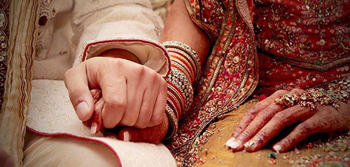
marriageThe new regulations require that the income of a Saudi man be at least SR3,000, his age be between 40 and 65, and that appropriate housing be secured.

The age of a non-Saudi woman must be at least 25 years, and there cannot be an age difference greater than 30 years between the spouses in all cases, according to the new regulation.

For those men who have been previously married to a Saudi or non-Saudi woman, at least two years must have passed since the date of divorce.

However, if the Saudi woman is still married to the man at the time of the request, a medical report from a government or private hospital, approved by the Ministry of Health, must be attached proving the wife is unable to carry out marital duties or is infertile.

The requirements also stipulate that the owner of the request must sign all modules and adopted decisions by the competent authority, including that the approval of marriage to a non-Saudi wife does not grant her the right to obtain Saudi nationality.

Fingerprints of the applicants must be taken after their information is linked electronically to the competent authority at the Ministry of Interior, authorizing authorities at the ministry to review all civil records and data through the Bayanati service.

In cases of Saudi women marrying a non-Saudi man, the age of the woman seeking marriage must be between 30 and 55 years at the time of the request, and there must be no age difference greater than 10 years between the spouses to ensure she is not being exploited.

The age requirement is lowered to 27 years for those with disabilities or illnesses that have made her unacceptable to Saudis, or for those with special circumstances, such as orphans, provided an official document is provided by the Ministry of Labor and Social Development proving this.

Non-Saudi males must not have a Saudi or non-Saudi wife, not be previously married to a Saudi woman, and proof must be submitted that he has no

criminal record or past in his home country or in the Kingdom. Medical documentation must also be submitted proving absence of infectious or genetic diseases, in addition to documentation that he has not previously worked for a foreign army or was included on the black list for entry to the Kingdom.

The monthly salary must be at least SR5,000, and appropriate housing must be available. He must also have a valid iqama, while the Saudi spouse must attach documentation that she acknowledges marrying a non-Saudi man which does not mean his eligibility or the eligibility of her children to obtain Saudi nationality.

The applicant must not be a national of one of the countries whose nationals are prevented or forbidden from marrying Saudi nationals. The non-Saudi must be of a certain nationality and have documents proving this, while their passport must be valid without restrictions with a remaining validity period of at least 12 months. The non-Saudi must also have a valid residency permit, and both parties must pass a security check by concerned authorities.

The requirements also stipulate that there must be underlying social reasons prompting a Saudi to marry a non-Saudi, and that the marriage visa of the spouse be valid for only one year. In the case of not benefiting from the visa, at least four years must pass before making another request in this regard, with the approval of the spouse.

According to legal adviser Abdulaziz Al-Harthy, court cases involving Saudi and non-Saudi spouses are numerous, mostly related to custody or inheritance issues.

Last week the Ministry of Justice issued a decision giving judges the right to rule that a non-Saudi wife or non-Saudi husband can stay in the Kingdom until completion of the litigation period, and that citizens cannot abuse Absher to issue final exit visas.

Al-Harthy said the decision has contributed tremendously to protecting the rights of non-Saudi spouses, and ensuring they do not leave the Kingdom until after completion of trials and realizing their full rights, as well as minimizing the abuse of regulations by citizens to harm others.

Comments

Wonder Kotian
 - 
Sunday, 16 Oct 2016

Bap ray Bap where are you my friend?? are you hanging around Snake land, surprise you met SAUDI, are you looking for visa to go Saudi?? many of your brother awaiting in this desert land, you do not go for Chumma then you have to have special training not like your snake land training, why cant you come our gods own country?? you looks like Moodiji, both are wife less, why cant you start WIFE LESS GROUP UNION (WLGP) looks better than Terrorist.
then you can start your real GANGASARA business.

Well Wisher
 - 
Sunday, 16 Oct 2016

Hihihi. Koopa mandooka Naren!!! Mandooka thinks that Koopa is everything. Just ask your Chaddi brothers in KSA. These are the rules set by KSA. You may be enjoying prostitution in Singapore or Thailand. Feel sorry for you.

Naren kotian
 - 
Sunday, 16 Oct 2016

Aprushyathe ...Saudi consider them as purest ...and others are fit for toilet cleaning. ..that's too I met a Saudi in Singapore ..he said. ..non Saudis are fit for toilet cleaning ,meat cutting and car and dish washing only ....they said they won't allow their sisters to give chummah to non Saudis in the name of ummah ...haha

Add new comment

  • Coastaldigest.com reserves the right to delete or block any comments.
  • Coastaldigset.com is not responsible for its readers’ comments.
  • Comments that are abusive, incendiary or irrelevant are strictly prohibited.
  • Please use a genuine email ID and provide your name to avoid reject.
Agencies
March 1,2020

Paris, Mar 1: Most of the riders and teams taking part in the abandoned UAE Tour, and who had been quarantined in their Abu Dhabi hotels since Thursday after a coronavirus scare, were cleared to leave the country, sources said.

"The pleasure of going home after several days spent at the hotel," tweeted 2018 world champion Alejandro Valverde, one of the top stars of the race along with Chris Froome, the four-time winner of the Tour de France.

"We are doing well and soon we will fly to Spain."

However, there was confusion over how many competitors and officials will be allowed to leave.

All 133 cyclists who were still in contention as well as team members were tested after it was announced by organisers Thursday that two Italian staff members on the race had tested positive for the COVID-19 virus.

Earlier Saturday, the UAE Tour, quoting health officials, said that 167 people had been tested and all were negative.

The Department of Health-Abu Dhabi were "still monitoring the condition of the remaining cases of contacts, whose lab testing findings will be available in the next few hours."

The UAE Tour cancelled its last two stages on Thursday after the coronavirus cases were confirmed.

Danish cyclist Michael Morkov of the Deceuninck-Quick-Step team, who took part in the first four stages, was placed in isolation in his hotel room after arriving in Berlin to take part in the world track championships.

However, on Saturday, he too was cleared to take part.

"The rider present in Berlin is currently in excellent health, with no suspicious clinical signs, and we are also guaranteed that he has not contacted the two members of the management of a team participating in the UAE Tour, originally suspected of coronavirus," governing body UCI said in a statement.

Comments

Add new comment

  • Coastaldigest.com reserves the right to delete or block any comments.
  • Coastaldigset.com is not responsible for its readers’ comments.
  • Comments that are abusive, incendiary or irrelevant are strictly prohibited.
  • Please use a genuine email ID and provide your name to avoid reject.
News Network
May 11,2020

May 11: Saudi Arabia will triple its value-added tax rate and suspend a cost of living allowance for state workers, it said on Monday, seeking to shield finances hit by low oil prices and a slump in demand for its lifeline export worsened by the new coronavirus.

Historic oil output cuts agreed by Riyadh and other major producers have given only limited support to prices after they sank on oversupply caused by a war for petroleum market share between the kingdom and its fellow oil titan Russia.

Saudi Arabia, the world's largest oil exporter, is also being hit hard by measures to fight the new coronavirus, which are likely to curb the pace and scale of economic reforms launched by Crown Prince Mohammed bin Salman.

"The cost of living allowance will be suspended as of June 1, and the value added tax will be increased to 15% from 5% as of July 1," Finance Minister Mohammed al-Jadaan said in a statement reported by the state news agency. "These measures are painful but necessary to maintain financial and economic stability over the medium to long term...and to overcome the unprecedented coronavirus crisis with the least damage possible."

The austerity measures come after the kingdom posted a $9 billion budget deficit in the first quarter.

The minister said non-oil revenues were affected by the suspension and decline in economic activity, while spending had risen due to unplanned strains on the healthcare sector and the initiatives taken to support the economy.

"All these challenges have cut state revenues, pressured public finances to a level that is hard to deal with going forward without affecting the overall economy in the medium to long term, which requires more spending cuts and measures to support non-oil revenues stability," he added.

The government has cancelled and put on hold some operating and capital expenditures for some government agencies, and cut allocations for some reform initiatives and projects worth a total 100 billion riyals ($26.6 billion), the statement said.

Central bank foreign reserves fell in March at their fastest rate in at least 20 years and to their lowest since 2011, while oil revenues in the first three months of the year fell 24% from a year earlier to $34 billion, pulling total revenues down 22%.

"The reforms are positive from a fiscal side as greater adjustment is essential. However, the tripling of VAT is unlikely to help that much in 2020 revenue wise with the expected fall in consumption," said Monica Malik, chief economist at Abu Dhabi Commercial Bank.

She said she kept unchanged her deficit forecast of 16.3% of GDP for this year, which already factors in a greater than previously announced spending cut.

About 1.5 million Saudis are employed in the government sector, according to official figures released in December.

In 2018, Saudi Arabia's King Salman ordered a monthly payment of 1,000 riyals ($267) to every state employee to compensate them for the rising living costs after the government hiked domestic gas prices and introduced value-added tax.

DIFFICULT TIMES

A committee has been formed to study all financial benefits paid to public sector employees and contractors, and will submit recommendations within 30 days, the statement said.

In late 2015, when oil prices fell from record highs, the kingdom slashed lavish bonuses, overtime payments and other benefits once considered routine perks in the public sector.

In a country without elections and with political legitimacy resting partly on distribution of oil revenue, the ability of citizens to adapt to such reforms is crucial for stability.

"Tripling the VAT will test the limits of the balance between revenues and consumption as the economy dives into a deep recession. The move will impact consumption and could also lower the expected revenues," said John Sfakianakis, a Gulf expert at the University of Cambridge.

"These are pro-austerity and pro-revenue moves rather than pro-growth ones," he said.

Hasnain Malik, head of equity strategy at Tellimer, said the VAT rise could bring about $24-$26.5 billion in additional non-oil fiscal revenue. The rise would hit consumer spending further but was a needed step towards fiscal sustainability, he said.

Comments

Add new comment

  • Coastaldigest.com reserves the right to delete or block any comments.
  • Coastaldigset.com is not responsible for its readers’ comments.
  • Comments that are abusive, incendiary or irrelevant are strictly prohibited.
  • Please use a genuine email ID and provide your name to avoid reject.
Agencies
June 28,2020

Kuwait, Jun 28: Measures imposed to curb the spread of the novel coronavirus in Kuwait are believed to have increased suicide cases in the country, according to a media report.

Forty suicide cases and 15 failed attempts, mainly among Asian expatriates, have been recorded in Kuwait since late February, Gulf News quoted the Al Qabas newspaper report, citing sources as saying on Saturday.

Investigations into the majority of cases have revealed that those who committed suicide had experienced psychological and economic troubles due to dire financial circumstances after their employers stopped to pay them as a result of economic fallout from the coronavirus-related measures.

In one case, an expat livestreamed his suicide while chatting with his fiancee on a social networking platform, the newspaper report said.

Suicide cases have increased by around 40 per cent since the start of the COVID-19 crisis, according to the sources.

Some 70 to 80 suicide cases are recorded annually in Kuwait. Last year, they reached 80 suicides against 77 in 2018.

"Suicide cases have started to go up in Kuwait during the coronavirus pandemic due to fear, anxiety, isolation and instability experienced by people and absence of daily aims that could help the person to spend time regularly as before," the newspaper quoted social psychology consultant Samira Al Dosari as saying.

Uncertainty for some expatriates, whose countries have refused to take them in, is another motive for attempting suicide, according to Jamil Al Muri, a sociology professor at the Kuwait University.

"This is in addition to greed of the iqamat traders, who have brought into the country workers in names of phantom companies and abandoned them on the streets," he added.

Starting from Tuesday, Kuwait will embark on the second phase of a stepwise plan to bring life to normal, Gulf News reportd.

According to Phase 2, a nationwide night-time curfew will be reduced by one hour to run daily from 8 p.m. until 5 a.m. for three weeks.

Kuwait has so far reported 44,391 COVID-19 cases, with 344 deaths.

Comments

Angry indian
 - 
Tuesday, 30 Jun 2020

YA ALLah save all dispressed people in the earth..

Add new comment

  • Coastaldigest.com reserves the right to delete or block any comments.
  • Coastaldigset.com is not responsible for its readers’ comments.
  • Comments that are abusive, incendiary or irrelevant are strictly prohibited.
  • Please use a genuine email ID and provide your name to avoid reject.