



Dubai's jewellers see better value in 18K push

January 2, 2013

HL

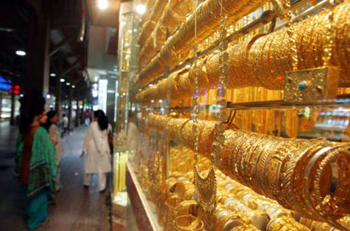
Dubai, Jan 2: Seeking to put the sparkle back into the gold trade after a less than stellar showing in the second half of 2012, Dubai’s jewellers are set to put their marketing muscle behind 18-carat jewellery for the first time. They believe such a move would help considerably improve offtake of jewellery among Western and Chinese shoppers, particularly tourists during the peak holiday season and during DSF.

It also signals a not so subtle shift on the part of Dubai’s jewellery trade which has until now focussed exclusively on 22-carat jewellery and demand from Indian and Pakistani residents and those on visit.

“18K is the most popular caratage in jewellery internationally, especially in Europe; hence it will be appealing to tourists from there,” said Abdul Salam KP, group executive director at Malabar Gold and Diamonds. “It obviously has the advantage of a lower price compared to 22K and offers more design variety as it is acceptable internationally and easier to make in complicated designs.”

On pricing, there is a fairly significant gap between the carats. Yesterday, a gram of 22K was going for Dh180.94 ($49.26) in Dubai, while its 18K counterpart had a less sheen in value terms at Dh147.99 ($40.29) a gram. Moreover, the making charges on 18K are said to be considerably lower.

Apart from the Western tourist, jewellery chains are keeping an equally keen look out for Chinese shoppers. They were quite conspicuous jewellery buyers during DSF 2011, but less so last year. Retailers are hoping for a marked improvement in the upcoming one and expect the 18K push will win them over.

“The Chinese tourist prefer 18K gold jewellery as well as 24K gold bars,” said John Paul Joy Alukkas, executive director, Joyalukkas Group. “The preference for the former is because they can use it more as a day to day rather than special occasion jewellery. The gold bars are with an investment perspective.”

Dubai’s gold trade definitely needs a volume boost and if 18K can provide that, retailers will not mind much. Demand had taken a dent last year after the steady upturn in gold prices through 2011 stalled and went through a bit of volatility.

But a key factor for the subdued demand had to do with events in India, where customs authorities dusted off a long dormant 1967 gold import duty and started applying it vigorously since the second quarter of 2012. This effectively meant that the price differential buying gold jewellery in Dubai as opposed to doing the same in India came down significantly. It also meant that any Indian expat here taking gold back to India would be hit with steep duties. As a case in point, a woman passenger wearing a gold chain weighing 40-gram would have to shell out Rs4,100 as duty on arrival at an Indian airport.

“Implementation of the recent revision in customs duty for gold and the related hassles for passengers has affected the mindset of NRI passengers in a big way,” said Sunny Chittilappilly, chairman of Dubai Gold and Jewellery Group. “As a result gold buying in the Gulf reduced to an extent and demand for 22K Indian jewellery was affected during the high purchase season close to summer.”

Several depositions, both individual and at the industry level, have been made to the Indian authorities for a repeal or a relook at the 1967 provisions. Dubai’s jewellers believe something will come out of the collective action.

In the meantime, they hope the 18K push and DSF 2013 — in which 13 kilos of gold can be won daily - will cut them some slack.

Comments

Add new comment

  • Coastaldigest.com reserves the right to delete or block any comments.
  • Coastaldigset.com is not responsible for its readers’ comments.
  • Comments that are abusive, incendiary or irrelevant are strictly prohibited.
  • Please use a genuine email ID and provide your name to avoid reject.
News Network
March 5,2020

Bergen, Mar 5: Divorce of parents may impact the academics of children negatively, suggests a new study.

According to the study, parental divorce is associated with a lower grade point average (GPA) among adolescents, with a stronger association seen in teens with more educated mothers.

The study was published in the journal PLOS ONE.

Children and adolescents with divorced or separated parents are known to do less well in school than adolescents with nondivorced parents and to be less well-adjusted, on average, across a spectrum of physical and mental health outcomes.

In the new study, researchers used data from the youth@hordaland study, a population-based survey of adolescents aged 16-19 conducted in the spring of 2012 in Hordaland County, Norway.

19,439 adolescents were invited to participate and 10,257 agreed; of those, 9,166 are included in the current study.

Overall, adolescents with divorced parents had a 0.3 point lower GPA (standard error 0.022, p<0.01) than their peers.

Controlling for parental education reduced the effect by 0.06 points to 0.240 (SE 0.021, p<0.01). This heterogeneity was predominantly driven by maternal education levels, the researchers found.

After controlling for paternal education and income measures, divorce was associated with a 0.120 point decrease in GPA among adolescents whose mothers had a secondary school education level; a 0.175 point decrease when mothers had a Bachelor's level education; and a 0.209 point decrease when mothers had a Master's or PhD level education (all estimates relative to adolescents with a mother who had a basic level of education, such as ISCED 0-2).

Due to the cross-sectional structure of the study, researchers could not investigate specific changes between pre- and post-divorce family life, and future studies are needed to investigate potential mechanisms (such as reduced parental monitoring or school-involvement) which might drive this finding.

Nonetheless, this study provides new evidence that the negative association between divorce and teens' GPA is especially strong in families with more educated mothers.

"Among Norwegian adolescents, parental divorce was hardly associated with GPA among youth whose parents have low educational qualifications. In contrast, among adolescents with educated or highly educated mothers, divorce was significantly associated with lower GPA," said the authors.

Comments

Add new comment

  • Coastaldigest.com reserves the right to delete or block any comments.
  • Coastaldigset.com is not responsible for its readers’ comments.
  • Comments that are abusive, incendiary or irrelevant are strictly prohibited.
  • Please use a genuine email ID and provide your name to avoid reject.
Agencies
April 21,2020

The Lockdown is not a cure but a critical strategy to prevent the geographical spread of COVID-19.

While pandemics at this level involves actual life threatening situations for individual's or significant others in one's immediate circle, it envisages a marked disruption in routine life. Even after the pandemic has been contained and will come to pass; it's aftermath will leave a trailblazer which demands planning and implementation of a post pandemic reconstruction of society with potentially traumatic experiences varying in intensity, multiplicity and duration.

Degree of Trauma

It would do well for each one of us to realise that the pandemic is "potentially traumatic", since not everyone will experience COVID -19 as a traumatic event in their lives. Yet, there will be those who may develop post pandemic stress reactions, depression and related dysfunction and pathological reactions while still other exhibit healthy reactions to the same set of circumstances.

"Psychological reactions to the pandemic can be distilled into four distinct prototypical patterns, namely, Resilience, Recovery, Chronic and Delayed patterns which may vary in intensity, multiplicity, and duration. Resilient individual have an ability to bounce back from adversity and experience modest or little disruption in normal functioning and are able to maintain a relatively stable, healthy levels of psychological functioning even after enduring the pandemic. Recovery pattern is characterised by relatively rapid reduction in symptoms and return to normal functioning whereas chronic pattern is characterised by symptoms and dysfunction of a long duration," says Pune-based military psychologist Lt Col Dr Samir Rawat.

Challenges at the Individual and Community Levels

From a psychological perspective, post pandemic reconstruction would entail catering to the problems, concerns and needs of those adversely impacted by the COVID -19 with stress symptoms typically characterised by individual's experiencing an overwhelming trauma of the pandemic (for example, recurring nightmares/ breaking into a cold sweat, flashback of stressful events, increasing irritability, low frustration tolerance or emotional numbing).

It could also manifest in depressive symptoms which may result in lack of interest or diminished pleasure in activities and things which you earlier liked to do, feelings of worthlessness or even survivor guilt in case of a loss of a loved one due to COVID-19, fleeting thoughts of death and suicidal ideation. Physical symptoms, on the other hand could be a decrease in appetite, weight and sleep problems, inability to focus and lack of concentration.

Undoubtedly, the pandemic will cause a financial loss of varying magnitude to many, especially the marginalised and economically disadvantaged strata of daily wage earners; it will also lead to loss of jobs (already beginning to show), homelessness, occupational difficulties and new challenges in interpersonal relations at work and on the home front, besides physical health problems and psychological barriers with new norms of accepted social behaviour (social distancing, handshakes, an obsession for cleanliness to name a few).

Emotional battles

Many factors may influence whether individuals come out stronger and more resilient or surrender to the pandemic. Emotion Regulation is one such long term critical factor that can play an important role in contributing to varying degrees of adaptation with negative or positive outcomes. While we know that primary emotions are fear, anger, disgust, joy, anticipation, acceptance, sadness and surprise, other basic emotions include wonder, love, desire, joy, hatred, sadness, attachment, disgust, rage and even expectancy .

To be able to regulate these emotions and avoid negativity , especially on social media platforms is likely to increase efforts in emotion regulation which involves initiating, increasing or maintaining an emotional response.

This means by regulating or on the other hand by stopping, decreasing or avoiding an emotional response, that is, by down-regulating, depending on the individual's objectives and goals or his /her ability to regulate emotions in the valued and given direction.

"One of the best ways to regulate emotions is through cognitive restructuring wherein we change the way we think; after all it is not the event but the interpretation of the event which is perceived as stressful and finding meaning promotes resilience and reduces risk and vulnerability to stress," advises Dr Rawat.

Adding, "Clearly, we need to have a psychological plan to prevent, mitigate and minimise negative outcomes by post pandemic reconstruction of society at an individual and community level all over the country; this has to be integrated by all leaders across verticals in diverse domains."

Comments

Add new comment

  • Coastaldigest.com reserves the right to delete or block any comments.
  • Coastaldigset.com is not responsible for its readers’ comments.
  • Comments that are abusive, incendiary or irrelevant are strictly prohibited.
  • Please use a genuine email ID and provide your name to avoid reject.
Agencies
June 28,2020

As the COVID-19 wave sweeps strongly across the country, including in Tamil Nadu, mental health experts say the pandemic has triggered panic attacks among those who tested positive for the virus, causing bouts of depression and even driving some to the brink of suicide.

According to experts, nervousness, fear of contamination, panic attacks, constant reassurance seeking behaviour, sleep disturbance, excessive worry, feelings of helplessness and probability of an economic slowdown are the major factors leading to depression and anxiety among the people.

Potential job losses, financial burden, uncertainty about the future and fears of running out of food and necessities add to the worries.

Online platforms too have seen a growing number of people seeking help for mental health issues, ranging from anxiety and loneliness to concerns over productivity and job loss since the outbreak of COVID-19.

Director of Institute of Mental Health here, Dr R Purna Chandrika said towards April end about 3,632 calls were received and psychiatric counselling was provided to 2,603 callers.

"We have dedicated services at our centres in the districts and the calls meant for government medical college hospitals are routed to the respective institutions," she said.

Due to heavy virus caseloads, making this city the major contributor to the state's tally, the Greater Chennai Corporation too started a free helpline to help residents cope up with stress during the pandemic.

"From the psychological perspective, we don't find a single human being who is not feeling some degree of stress or anxiety due to coronavirus. The intensity and impact varies from person to person," said Lt Col N T Rajan, director of Chennai-based Mastermind Foundation.

The organisation is involved in free counselling throughout India ever since the first case of the deadly virus was reported in the country.

The foundation's recommendation on not to deploy the vulnerable in the police force, especially those above 50 years and women personnel with children below five years for COVID-19 related duty, was accepted and implemented by the Punjab government.

Psychiatrists feel that further worsening situations could lead to severe mental health issues, even triggering suicidal tendencies.

"Further worsening depression may lead to severe mental health issues and suicidal tendencies," said Dr S Senthil Kumar, a psychiatrist.

However, not all of them require medicines, he added.

"The situation is serious. There should be counselling at three stages--on coping with the virus, how to face it if tested positive and how to face life once treated and discharged from the hospital," Rajan said.

Awareness was of paramount importance, he said and warned the pandemic could cause panic attacks while in hospital or drive them to the brink of suicide.

Tamil Nadu, one of the worst affected states with a virus count in excess of 74,000 as of Friday, has witnessed a few instances of suicides allegedly related to COVID-19.

Hari Singh, owner of popular 'Iruttu Kadai' halwa shop in Tirunelveli, allegedly died by committing suicide on Thursday after being tested positive for COVID-19. He was 80.

Earlier in May, two COVID-19 patients in their 50s allegedly committed suicide in separate instances, at the government hospitals they were admitted to for treatment.

In the city corporation limits, a three-member team comprising a psychiatrist, counsellor and a social worker work for the respective zones.

"We direct certain sections of people like those with withdrawal symptoms and people requiring pills, to visit the doctor at their corporation zonal at a specific time, for medicines," a health worker of the civic body said.

Health platform, Lybrate reported an increase of 180 per cent in online patient consultations related to mental health on its platform between March 1 and June 20 across the country.

The largest increase came from Mumbai and Delhi, followed by Pune, Ahmedabad, Chennai and Bengaluru.

The biggest jump was witnessed in the age group of 25 and 45 years.

Comments

Add new comment

  • Coastaldigest.com reserves the right to delete or block any comments.
  • Coastaldigset.com is not responsible for its readers’ comments.
  • Comments that are abusive, incendiary or irrelevant are strictly prohibited.
  • Please use a genuine email ID and provide your name to avoid reject.