



The kilogram has put on weight

January 8, 2013

kilogram

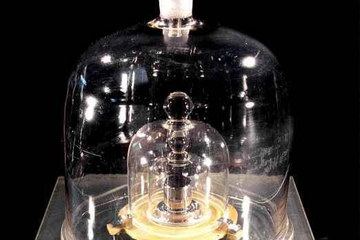
London:Jan 8: The official kilogram - a cylinder-shaped hunk of metal - that defines the fundamental unit of mass, has itself gained weight, scientists say.

Scientists at Newscastle University have found that due to surface contamination the original kilogram is likely to be tens of microgrammes heavier than it was when the first standard was set in 1875.

As a result, each country that has one of these standard masses has a slightly different definition of the kilogram, which could throw off science experiments that require very precise weight measurements or international trade in highly restricted items that are restricted by weight, such as radioactive materials.

The original kilogram - known as the International Prototype Kilogram or the IPK - is the standard against which all other measurements of mass are set.

Stored in the International Bureau of Weights and Measures in Paris, 40 official replicas of the IPK were made in 1884 and distributed around the world in order to standardise mass.

Now Professor Peter Cumpson and Dr Naoko Sano have used cutting-edge X-ray Photoelectron Spectroscopy to analyse surfaces similar to the standard kilogram to assess the build-up of hydrocarbons – and how to remove them.

Ozone and ultraviolet light could be used to clean the kilograms without damaging them, LiveScience reported.

“Statute decrees the IPK is the kilogram,” explained research lead Peter Cumpson, Professor of MicroElectroMechanical Systems at Newcastle University.

“It doesn’t really matter what it weighs as long as we are all working to the same exact standard. The problem is there are slight differences. Around the world, the IPK and its 40 replicas are all growing at different rates, diverging from the original,” Cumpson said.

“We’re only talking about a very small change – less than 100 microgrammes – so, unfortunately, we can’t all take a couple of kilograms off our weight and pretend the Christmas over-indulgence never happened,” Cumpson added.

“But mass is such a fundamental unit that even this very small change is significant and the impact of a slight variation on a global scale is absolutely huge. There are cases of international trade in high-value materials or waste where every last microgramme must be accounted for,” he said.

“What we have done at Newcastle is effectively give these surfaces a suntan. By exposing the surface to a mixture of UV and ozone we can remove the carbonaceous contamination and potentially bring prototype kilograms back to their ideal weight,” he added.

Work is underway internationally in several national measurement institutes to find an alternative to the IPK — a standardised value for the kilogram that is not based on a matchbox—sized piece of metal.

The study was published in the journal of Metrologia.

Comments

Add new comment

  • Coastaldigest.com reserves the right to delete or block any comments.
  • Coastaldigset.com is not responsible for its readers’ comments.
  • Comments that are abusive, incendiary or irrelevant are strictly prohibited.
  • Please use a genuine email ID and provide your name to avoid reject.
Agencies
July 2,2020

London, Jul 2: The World Health Organisation says smoking is linked to a higher risk of severe illness and death from the coronavirus in hospitalised patients, although it was unable to specify exactly how much greater those risks might be.

In a scientific brief published this week, the U.N. health agency reviewed 34 published studies on the association between smoking and Covid-19, including the probability of infection, hospitalisation, severity of disease and death.

WHO noted that smokers represent up to 18% of hospitalised coronavirus patients and that there appeared to be a significant link between whether or not patients smoked and the severity of disease they suffered, the type of hospital interventions required and patients' risk of dying.

In April, French researchers released a small study suggesting smokers were at less risk of catching Covid-19 and planned to test nicotine patches on patients and health workers — but their findings were questioned by many scientists at the time who cited the lack of definitive data.

WHO says "the available evidence suggests that smoking is associated with increased severity of disease and death in hospitalized Covid-19 patients. It recommends that smokers quit.

Comments

Add new comment

  • Coastaldigest.com reserves the right to delete or block any comments.
  • Coastaldigset.com is not responsible for its readers’ comments.
  • Comments that are abusive, incendiary or irrelevant are strictly prohibited.
  • Please use a genuine email ID and provide your name to avoid reject.
Agencies
January 5,2020

Washington D.C., Jan 5: After a woman filed a lawsuit against a diet soda company, the California court has declared that the beverage does not promise to help buyers in losing weight.

The woman had gulped down the drink for over a decade but did not lose inches as a result.

The three-judge panel declared during the hearing: "The prevalent understanding of the term in (the marketplace) is that the 'diet' version of a soft drink has fewer calories than its 'regular' counterpart."

However, the members of the US 9th circuit court have felt that the consumers tend to make out something of their own that is unreasonable and eventually hamper the reputation of brands through a deceptive allegation, reports Fox News.

The response was due to a misleading case filed against Diet Dr Pepper by Shana Becerra from Santa Rosa, California. Shana claimed that she has been addictively purchasing the low-calorie beverage for the past 13 years hoping for losing some fat but failed to lose even a single inch.

The woman also stated that the attractive and fit models misled her into believing that drink will help her in perfecting her body like them.

However, the court's decision was that advertisements are for representational purposes only. "Cannot be reasonably understood to convey any specific meaning at all," as written by Judge Jay Bybee.

Shana had last week made such allegation against Diet coke as well where the court came to a similar verdict. She claimed that she had found various studies where it is evident that the artificial sweetener aspartame used in diet beverages actually boosts weight gain.

But the artificial sweetener is approved in by the concerned administrative department and thus is used in most American drinks.

Comments

Add new comment

  • Coastaldigest.com reserves the right to delete or block any comments.
  • Coastaldigset.com is not responsible for its readers’ comments.
  • Comments that are abusive, incendiary or irrelevant are strictly prohibited.
  • Please use a genuine email ID and provide your name to avoid reject.
Agencies
June 10,2020

Early treatment with the antiviral drug remdesivir has been found to reduce viral load and prevent lung disease in macaques infected with SARS-CoV-2 that causes COVID-19, according to a study.

The findings, published in the journal Nature on Tuesday, support the early use of remdesivir treatment in patients with COVID-19 to prevent progression to pneumonia.

Researchers from the National Institutes of Health in the US noted that remdesivir has broad antiviral activity and has been shown to be effective against infections with SARS-CoV and MERS-CoV in animal models.

The drug is being tested in human clinical trials for the treatment of COVID-19, they said.

Researcher Emmie de Wit and colleagues investigated the effects of remdesivir treatment in rhesus macaques, a recently established model of SARS-CoV-2 infection.

Two sets of six macaques were inoculated with SARS-CoV-2.

One group was treated with remdesivir 12 hours later -- close to the peak of virus reproduction in the lungs -- and these macaques received treatment every 24 hours until six days after inoculation.

In contrast to the control group, the researchers found that macaques that received remdesivir did not show signs of respiratory disease, and had reduced damage to the lungs.

Viral loads in the lower respiratory tract were also reduced in the treated animals; viral levels were around 100 times lower in the lower-respiratory tract of remdesivir-treated macaques 12 hours after the first dose, they said.

The researchers said that infectious virus could no longer be detected in the treatment group three days after initial infection, but was still detectable in four out of six control animals.

Despite this virus reduction in the lower respiratory tract, no reduction in virus shedding was observed, which indicates that clinical improvement may not equate to a lack of infectiousness, they said.

Dosing of remdesivir in the rhesus macaques is equivalent to that used in humans, the researchers noted.

They cautioned that it is difficult to directly translate the timing of treatment used in corresponding disease stages in humans, because rhesus macaques normally develop only mild disease.

However, researchers said the results indicate that remdesivir treatment of COVID-19 should be initiated as early as possible to achieve the maximum treatment effect.

Comments

Add new comment

  • Coastaldigest.com reserves the right to delete or block any comments.
  • Coastaldigset.com is not responsible for its readers’ comments.
  • Comments that are abusive, incendiary or irrelevant are strictly prohibited.
  • Please use a genuine email ID and provide your name to avoid reject.