


The kilogram has put on weight

January 8, 2013

kilogram

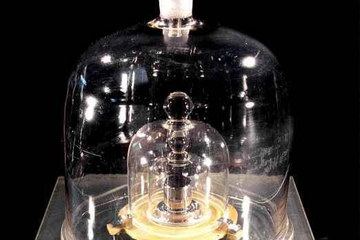
London:Jan 8: The official kilogram - a cylinder-shaped hunk of metal - that defines the fundamental unit of mass, has itself gained weight, scientists say.

Scientists at Newscastle University have found that due to surface contamination the original kilogram is likely to be tens of microgrammes heavier than it was when the first standard was set in 1875.

As a result, each country that has one of these standard masses has a slightly different definition of the kilogram, which could throw off science experiments that require very precise weight measurements or international trade in highly restricted items that are restricted by weight, such as radioactive materials.

The original kilogram - known as the International Prototype Kilogram or the IPK - is the standard against which all other measurements of mass are set.

Stored in the International Bureau of Weights and Measures in Paris, 40 official replicas of the IPK were made in 1884 and distributed around the world in order to standardise mass.

Now Professor Peter Cumpson and Dr Naoko Sano have used cutting-edge X-ray Photoelectron Spectroscopy to analyse surfaces similar to the standard kilogram to assess the build-up of hydrocarbons – and how to remove them.

Ozone and ultraviolet light could be used to clean the kilograms without damaging them, LiveScience reported.

“Statute decrees the IPK is the kilogram,” explained research lead Peter Cumpson, Professor of MicroElectroMechanical Systems at Newcastle University.

“It doesn’t really matter what it weighs as long as we are all working to the same exact standard. The problem is there are slight differences. Around the world, the IPK and its 40 replicas are all growing at different rates, diverging from the original,” Cumpson said.

“We’re only talking about a very small change – less than 100 microgrammes – so, unfortunately, we can’t all take a couple of kilograms off our weight and pretend the Christmas over-indulgence never happened,” Cumpson added.

“But mass is such a fundamental unit that even this very small change is significant and the impact of a slight variation on a global scale is absolutely huge. There are cases of international trade in high-value materials or waste where every last microgramme must be accounted for,” he said.

“What we have done at Newcastle is effectively give these surfaces a suntan. By exposing the surface to a mixture of UV and ozone we can remove the carbonaceous contamination and potentially bring prototype kilograms back to their ideal weight,” he added.

Work is underway internationally in several national measurement institutes to find an alternative to the IPK — a standardised value for the kilogram that is not based on a matchbox—sized piece of metal.

The study was published in the journal of Metrologia.

Comments

Add new comment

  • Coastaldigest.com reserves the right to delete or block any comments.
  • Coastaldigset.com is not responsible for its readers’ comments.
  • Comments that are abusive, incendiary or irrelevant are strictly prohibited.
  • Please use a genuine email ID and provide your name to avoid reject.
Agencies
May 10,2020

Washington D.C., May 9: Do the middle age feel much stressful now, and seems to have changed over time, if compared to the life in the 90s? Well, this recent study indicates that it might be true.

The study has signalled to the fact that life may become more stressful majorly for middle-aged people than it was in the 1990s. The researchers reached this analysis even before the novel coronavirus started sweeping the globe.

A team of researchers led by Penn State found that across all ages, there was a slight increase in daily stress in the 2010s compared to the 1990s. But when researchers restricted the sample to people between the ages of 45 and 64, there was a sharp increase in daily stress.

"On average, people reported about 2 percent more stressors in the 2010s compared to people in the past," said David M. Almeida, professor of human development and family studies at Penn State.

"That's around an additional week of stress a year. But what really surprised us is that people at mid-life reported a lot more stressors, about 19 percent more stress in 2010 than in 1990. And that translates to 64 more days of stress a year."

Almeida said the findings were part of a larger project aiming to discover whether health during the middle of Americans' lives has been changing over time.

"Certainly, when you talk to people, they seem to think that daily life is more hectic and less certain these days," Almeida said.

For the study, the researchers collected data from 1,499 adults in 1995 and 782 different adults in 2012.

Almeida said the goal was to study two cohorts of people who were the same age at the time the data was collected but born in different decades. All study participants were interviewed daily for eight consecutive days.

During each daily interview, the researchers asked the participants about their stressful experiences throughout the previous 24 hours.

They asked questions related to arguments with family or friends or feeling overwhelmed at home or work, so and so. The participants were also asked how severe their stress was and whether those stressors were likely to impact other areas of their lives.

"We were able to estimate not only how frequently people experienced stress, but also what those stressors mean to them," Almeida said.

"For example, did this stress affect their finances or their plans for the future. And by having these two cohorts of people, we were able to compare daily stress processes in 1990 with daily stress processes in 2010," Almeida added.

After analyzing the data, the researchers found that participants reported significantly more daily stress and lower well-being in the 2010s compared to the 1990s.

Additionally, participants reported a 27 percent increase in the belief that stress would affect their finances and a 17 percent increase in the belief that stress would affect their future plans.

Almeida said he was surprised not that people were more stressed now than in the 90s, but at the age group that was mainly affected.

"We thought that with economic uncertainty, life might be more stressful for younger adults. But we didn't see that. We saw more stress for people at mid-life," Almeida said.

"And maybe that's because they have children who are facing an uncertain job market while also responsible for their own parents. So it's this generational squeeze that's making stress more prevalent for people at mid-life," he concluded.

Comments

Add new comment

  • Coastaldigest.com reserves the right to delete or block any comments.
  • Coastaldigset.com is not responsible for its readers’ comments.
  • Comments that are abusive, incendiary or irrelevant are strictly prohibited.
  • Please use a genuine email ID and provide your name to avoid reject.
Agencies
June 22,2020

A team of scientists has produced first open source all-atom models of full-length COVID-19 Spike protein that facilitates viral entry into host cells – a discovery that can facilitate a faster vaccine and antiviral drug development.

The group from Seoul National University in South Korea, University of Cambridge in the UK and Lehigh University in the US produced the first open-source all-atom models of a full-length S protein.

The researchers say this is of particular importance because the S protein plays a central role in viral entry into cells, making it a main target for vaccine and antiviral drug development.

"Our models are the first full-length SARS-CoV-2 spike (S) protein models that are available to other scientists," said Wonpil Im, a professor in Lehigh University.

"Our team spent days and nights to build these models very carefully from the known cryo-EM structure portions. Modeling was very challenging because there were many regions where simple modeling failed to provide high-quality models," he wrote in a paper published in The Journal of Physical Chemistry B.

Scientists can use the models to conduct innovative and novel simulation research for the prevention and treatment of Covid-19.

Though the coronavirus uses many different proteins to replicate and invade cells, the Spike protein is the major surface protein that it uses to bind to a receptor.

The total number of global COVID-19 cases was nearing 9 million, while the deaths have increased to over 467,000, according to the Johns Hopkins University.

With 2,279,306 cases and 119,967 deaths, the US continues with the world's highest number of COVID-19 infections and fatalities, according to the CSSE.

Brazil comes in the second place with 1,083,341 infections and 50,591 deaths.

Comments

Add new comment

  • Coastaldigest.com reserves the right to delete or block any comments.
  • Coastaldigset.com is not responsible for its readers’ comments.
  • Comments that are abusive, incendiary or irrelevant are strictly prohibited.
  • Please use a genuine email ID and provide your name to avoid reject.
News Network
March 5,2020

Bergen, Mar 5: Divorce of parents may impact the academics of children negatively, suggests a new study.

According to the study, parental divorce is associated with a lower grade point average (GPA) among adolescents, with a stronger association seen in teens with more educated mothers.

The study was published in the journal PLOS ONE.

Children and adolescents with divorced or separated parents are known to do less well in school than adolescents with nondivorced parents and to be less well-adjusted, on average, across a spectrum of physical and mental health outcomes.

In the new study, researchers used data from the youth@hordaland study, a population-based survey of adolescents aged 16-19 conducted in the spring of 2012 in Hordaland County, Norway.

19,439 adolescents were invited to participate and 10,257 agreed; of those, 9,166 are included in the current study.

Overall, adolescents with divorced parents had a 0.3 point lower GPA (standard error 0.022, p<0.01) than their peers.

Controlling for parental education reduced the effect by 0.06 points to 0.240 (SE 0.021, p<0.01). This heterogeneity was predominantly driven by maternal education levels, the researchers found.

After controlling for paternal education and income measures, divorce was associated with a 0.120 point decrease in GPA among adolescents whose mothers had a secondary school education level; a 0.175 point decrease when mothers had a Bachelor's level education; and a 0.209 point decrease when mothers had a Master's or PhD level education (all estimates relative to adolescents with a mother who had a basic level of education, such as ISCED 0-2).

Due to the cross-sectional structure of the study, researchers could not investigate specific changes between pre- and post-divorce family life, and future studies are needed to investigate potential mechanisms (such as reduced parental monitoring or school-involvement) which might drive this finding.

Nonetheless, this study provides new evidence that the negative association between divorce and teens' GPA is especially strong in families with more educated mothers.

"Among Norwegian adolescents, parental divorce was hardly associated with GPA among youth whose parents have low educational qualifications. In contrast, among adolescents with educated or highly educated mothers, divorce was significantly associated with lower GPA," said the authors.

Comments

Add new comment

  • Coastaldigest.com reserves the right to delete or block any comments.
  • Coastaldigset.com is not responsible for its readers’ comments.
  • Comments that are abusive, incendiary or irrelevant are strictly prohibited.
  • Please use a genuine email ID and provide your name to avoid reject.