


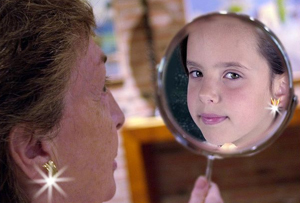
Better to act young than to look young

[email protected] (New York Times )
October 7, 2013

Young_than_to_look_youngJane E Brody, Oct 7: At a party I recently attended, a woman in her 60s proudly announced that her periodic facial treatments “have made me look 10 years younger.” A man of similar vintage said he was considering “facial tucks” to raise his sagging jowls.

Some days it seems everyone I meet is afraid of getting old - or at least of looking as old as they are. Occasionally, I see women who have had so many face lifts that they can barely move their lips when they talk, let alone smile.

Business is booming in the anti-aging market. Plastic surgeons who specialise in lifts, tucks and fillers barely noticed the recent recession. Cosmetics with anti-ageing properties fly off the shelf, and new concoctions appear almost weekly.

I admit to supporting the multi-billion dollar skin care industry with my long use of night creams, as well as a slew of daytime lotions that purport to “smooth out” aging skin while protecting it with sunscreen. I also colour my hair, which in its natural state is now about 80 per cent gray.

But I draw the line at injectable fillers and muscle relaxants, face lifts and tummy tucks. I’ll do everything I can to stay out of an operating room. My anti-aging measures, if and when they are needed, will be limited to cataract removal, a hearing aid and glasses for driving.

I wear clothes that suit my personality and activities, not necessarily my age. Shorts and tank tops anchor my summer wardrobe. And I wear colours near my face that are right for my skin tone, avoiding those (like yellow) that are unflattering. Still, cosmetic fixes go only so far to counter the effects of time.

True youthfulness - or, I should say, appearing younger than your age - is much more than skin-deep. Research has shown that youthfulness must come from within.

In one study, a team at Case Western Reserve University in Cleveland analyzed the facial photographs of 186 pairs of identical twins, determining which sibling looked older and why. Factors that contributed to looking older included smoking, sun exposure, stress and depression (or the use of antidepressants), the researchers reported. Other studies have linked depression to higher levels of inflammatory markers and oxidative stress, which can accelerate aging.

The team also found that among those younger than 40, a woman with a heavier body looked older than her leaner twin, but in subjects older than 40, a higher body mass index was associated with a more youthful appearance. Fat fills out wrinkles and makes the face - and presumably other parts of the body - look younger. But there’s a limit to its benefits: obesity is associated with more rapid biological aging.

Another study published last year by researchers at Brigham and Women’s Hospital in Boston found a biological link between stress and accelerated aging. Dr. Olivia I. Okereke and colleagues examined the chromosomes of 5,243 women ages 42 to 69 participating in the Nurses’ Health Study. They found that women with phobic anxiety - irrational fears of anything from social situations to spiders - had shorter telomeres on their chromosomes.

Telomeres are DNA-protein complexes on the ends of chromosomes that are considered biological markers of aging. Shortened telomeres are thought to underlie many of the adverse health effects of aging, and perhaps even to contribute to looking older than one’s years.

Lifestyle changes

A pilot study published online by The Lancet Oncology last month underscored the benefits of limiting stress. Dr. Dean Ornish and colleagues at the Preventive Medicine Research Institute and the University of California, San Francisco, tested the effects of lifestyle changes on the length of telomeres.

Ten men were asked to make changes that included adopting a whole-foods plant-based diet, moderate exercise, stress management techniques (like yoga and meditation), and seeking greater intimacy and social support. After five years, changes in the length of their telomeres were compared with those among 25 men who were not asked to make such changes.

In the men who made lifestyle changes, telomere length increased by an average of 10 per cent; the more changes the men made, the greater the increase in length. But telomere length decreased in the control group by an average of 3 per cent.

Still, youthfulness is not just a question of biology. People are perceived to be younger than their years if they smile and laugh a lot (be proud of those laugh lines!) and are generally cheerful and upbeat, the kind of people who smile at strangers and wish them a good day.

I occasionally pass an older couple who walk together three times a week. With their dour expressions and grudging acknowledgment of my “good morning,” I thought they were in their mid-90s. So one day I asked, only to learn that she was 80 and he was 83.

It also helps to pursue personal and professional activities you enjoy as you get older. My role models include the actress Estelle Parsons, who continues to perform on stage (and can do yoga headstands) at 85, and Dame Judi Dench, 78, who stars in movies despite having to learn her lines orally because macular degeneration has caused her vision to deteriorate.

My dear friend Margaret Shryer, 86, starred in a documentary about age discrimination and performed a one-woman show she wrote at a theater festival in Minneapolis this summer. Another friend, the award-winning broadcaster Lucy Jarvis, cane in hand at 96, still travels abroad to make television documentaries.

To my mind, it is far better to act young than to look young. Of course, it helps to be physically fit.

Too often, those who spend liberally to counter the superficial signs of age neglect their bodies below the neck and become physically old before their time. Muscle tissue inevitably declines with age, but much can be done to minimize and even reverse a loss of strength.

Try using free weights or resistance machines. If these don’t appeal, lift cans of soup (better for lifting than consuming) and continue to do chores that require strength, like digging in the garden or carrying groceries.

Comments

Add new comment

  • Coastaldigest.com reserves the right to delete or block any comments.
  • Coastaldigset.com is not responsible for its readers’ comments.
  • Comments that are abusive, incendiary or irrelevant are strictly prohibited.
  • Please use a genuine email ID and provide your name to avoid reject.
Agencies
July 24,2020

Colorado, Jul 24: A new study has found that physical stress in one's job may be associated with faster brain ageing and poorer memory.

Aga Burzynska, an assistant professor in the Department of Human Development and Family Studies, and her research team connected occupational survey responses with brain-imaging data from 99 cognitively normal older adults, age 60 to 79. They found that those who reported high levels of physical stress in their most recent job had smaller volumes in the hippocampus and performed poorer on memory tasks. The hippocampus is the part of the brain that is critical for memory and is affected in both normal ageing and in dementia.

Their findings were published this summer in Frontiers in Human Neuroscience under the research topic 'Work and Brain Health Across the Lifespan.'

"We know that stress can accelerate physical ageing and is the risk factor for many chronic illnesses," Burzynska said. "But this is the first evidence that occupational stress can accelerate brain and cognitive ageing."

She added that it is important to understand how occupational exposures affect the ageing of our brains.

"An average American worker spends more than eight hours at work per weekday, and most people remain in the workforce for over 40 years," Burzynska said. "By pure volume, occupational exposures outweigh the time we spend on leisure social, cognitive and physical activities, which protect our ageing minds and brains."

Physical demands at work

Burzynska explained that the association between "physical stress" and brain/memory were driven by physical demands at work. These included excessive reaching, or lifting boxes onto shelves, not necessarily aerobic activity. This is important because earlier work by Burzynska and her colleagues showed that leisure aerobic exercise is beneficial for brain health and cognition, from children to very old adults. Therefore, the researchers controlled for the effects of leisure physical activity and exercise.

As expected, leisure physical activity was associated with greater hippocampal volume, but the negative association with physical demands at work persisted.

"This finding suggests that physical demands at work may have parallel yet opposing associations with brain health," Burzynska explained. "Most interventions for postponing cognitive decline focus on leisure, not on your job. It's kind of unknown territory, but maybe future research can help us make some tweaks to our work environment for long-term cognitive health."

She added that the results could have important implications for society.

"Caring for people with cognitive impairment is so costly, on economic, emotional and societal levels," Burzynska said. "If we can support brain health earlier, in middle-aged workers, it could have an enormous impact."

The researchers considered and corrected for several other factors that could be related to work environment, memory and hippocampus, such as age, gender, brain size, educational level, job title, years in the occupation and general psychological stress.

One piece of the puzzle

"The research on this topic is so fragmented," Burzynska said. "One previous study linked mid-life managerial experience with greater hippocampus volume in older age. Another showed that taxi drivers had larger hippocampi than a city's bus drivers, presumably due to the need to navigate. In our study, job complexity and psychological stress at work were not related to hippocampal volume and cognition. Clearly, our study is just one piece of the puzzle, and further research is needed."

The magnetic resonance imaging (MRI) data used for the study was collected at the University of Illinois Urbana-Champaign between 2011 and 2014.

CSU researchers now can collect MRI data with the new 3T scanner at the University's Translational Medicine Institute.

With this new capability, Burzynska, along with Michael Thomas and Lorann Stallones of CSU's Department of Psychology, is launching a new project, "Impact of Occupational Exposures and Hazards on Brain and Cognitive Health Among Aging Agricultural Workers," which will involve collecting MRI brain scans and identifying risk and protective factors that could help the agricultural community age successfully. The project recently obtained funding as an Emerging Issues Short-Term Project from the High Plains Intermountain Center for Agricultural Health and Safety.

The Department of Human Development and Family Studies is part of CSU's College of Health and Human Sciences.

Comments

Add new comment

  • Coastaldigest.com reserves the right to delete or block any comments.
  • Coastaldigset.com is not responsible for its readers’ comments.
  • Comments that are abusive, incendiary or irrelevant are strictly prohibited.
  • Please use a genuine email ID and provide your name to avoid reject.
News Network
February 21,2020

Washington, Feb 21: The fat around arteries may play an important role in keeping the blood vessels healthy, according to a study in rats that may affect how researchers test for treatments related to plaque buildup, as seen in conditions leading to heart attack.

The study, published in the journal Scientific Reports, noted that the fat, known as perivascular adipose tissue, or PVAT, helps arteries let go of muscular tension while under constant strain.

According to the researchers, including Stephanie W. Watts from the Michigan State University in the US, this feature is similar to how the bladder expands to accommodate more liquid, while at the same time keeping it from spilling out.

"In our study, PVAT reduced the tension that blood vessels experience when stretched," Watts said.

"And that's a good thing, because the vessel then expends less energy. It's not under as much stress," she added.

According to Watts and her team, PVAT has largely been ignored by researchers believing its main job was to store lipids and do little more.

Until now, she said, scientists only divided blood vessels into three parts, the innermost layer called the tunica intima, the middle layer called the tunica media, and the outermost layer called the tunica adventitia.

Watts believes PVAT is the fourth layer, which others have called tunica adiposa.

Tunica, she said, meant a membranous sheath enveloping or lining an organ, and adiposa is a synonym for fat.

"For years, we ignored this layer -- in the lab it was thrown out. In the clinic it wasn't imaged. But now we're discovering it may be integral to our blood vessels," Watts said.

"Our finding redefines what the functional blood vessels are, and is part of what can be dysfunctional in diseases that afflict us, including hypertension. We need to pay attention to this layer of a blood vessel because it does far more than we originally thought," she added.

Earlier studies, Watts said, had shown that PVAT plays a role in the functioning of blood vessels, finding that it secretes substances that can cause blood vessels to relax as well as substances that can cause it to contract.

In the current study, the researchers decided to test whether PVAT provides a structural benefit to arteries by assisting the function of stress relaxation.

They tested the thoracic aorta in rats, and found those with intact PVAT had more stress relaxation than those without.

The study revealed that the pieces of artery with surrounding fat had measurably relaxed more than those without.

Watts and her colleagues then tested other arteries, and were able to duplicate the same response.

"It's not something you see only in this particular vessel or this particular species or this particular strain. But that maybe it's a general phenomenon," she said.

Comments

Add new comment

  • Coastaldigest.com reserves the right to delete or block any comments.
  • Coastaldigset.com is not responsible for its readers’ comments.
  • Comments that are abusive, incendiary or irrelevant are strictly prohibited.
  • Please use a genuine email ID and provide your name to avoid reject.
Agencies
February 7,2020

Birmingham, Feb 7: According to a new study, social media users are more likely to eat healthy or junk food after getting influenced by their peer group.

The research published in the scientific journal 'Appetite' found that study participants ate an extra fifth of a portion of fruit and vegetables themselves for every portion they thought their social media peers ate. So, if they believed their friends got their 'five a day' of fruit and veg, they were likely to eat an extra portion themselves.

On the other hand, Facebook users were found to consume an extra portion of unhealthy snack foods and sugary drinks for every three portions they believed their online social circles did.
The findings suggested that people eat around a third more junk food if they think their friends also indulge in the same.

The Aston University researchers said the findings provide the first evidence to suggest our online social circles could be implicitly influencing our eating habits, with important implications for using 'nudge' techniques on social media to encourage healthy eating.

Researchers asked 369 university students to estimate the amount of fruit, vegetables, 'energy-dense snacks' and sugary drinks their Facebook peers consumed on a daily basis.

The information was cross-referenced with the participants' own actual eating habits and showed that those who felt their social circles 'approved' of eating junk food consumed significantly more themselves. Meanwhile, those who thought their friends ate a healthy diet ate more portions of fruit and veg. Their perceptions could have come from seeing friends' posts about the food and drink they consumed, or simply a general impression of their overall health.

There was no significant link between the participants' eating habits and their Body Mass Index (BMI), a standard measure of healthy weight, however. The researchers said the next stage of their work would track a participant group over time to see whether the influence of social media on eating habits had a longer-term impact on weight.

The most recent figures from the NHS's Health Survey for England showed that in 2018 only 28 percent of adults were eating the recommended five portions of fruit and vegetables per day. In Wales, this was 24 percent, in Scotland 22 percent and in Northern Ireland around 20 percent. Children and young people across the UK had even lower levels of fruit and veg consumption.

Aston University health psychology Ph.D. student Lily Hawkins, who led the study alongside supervisor Dr. Jason Thomas, said: "This study suggests we may be influenced by our social peers more than we realize when choosing certain foods. We seem to be subconsciously accounting for how others behave when making our own food choices. So if we believe our friends are eating plenty of fruit and veg we're more likely to eat fruit and veg ourselves. On the other hand, if we feel they're happy to consume lots of snacks and sugary drinks, it can give us a license to overeat foods that are bad for our health. The implication is that we can use social media as a tool to 'nudge' each other's eating behavior within friendship groups, and potentially use this knowledge as a tool for public health interventions."

"With children and young people spending a huge amount of time interacting with peers and influencers via social media, the important new findings from this study could help shape how we deliver interventions that help them adopt healthy eating habits from a young age and stick with them for life," said professor Claire Farrow.

A dietitian called Aisling Pigott further mentioned that "Research such as this demonstrates how we are influenced by online perceptions about how others eat. The promotion of positive health messages across social media, which are focused on promoting healthy choices and non-restrictive relationships with food and body, could nudge people into making positive decisions around the food they eat."

"We do have to be mindful of the importance of 'nudging' positive behaviors and not 'shaming' food choices on social media as a health intervention. We know that generating guilt around food is not particularly helpful when it comes to lifestyle change and maintenance," Aisling added.

Comments

Add new comment

  • Coastaldigest.com reserves the right to delete or block any comments.
  • Coastaldigset.com is not responsible for its readers’ comments.
  • Comments that are abusive, incendiary or irrelevant are strictly prohibited.
  • Please use a genuine email ID and provide your name to avoid reject.