


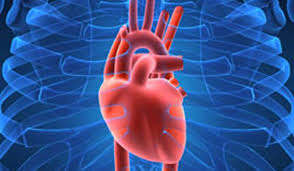
Indian-origin doctor in US implants first leadless pacemaker inside patient's heart

February 9, 2014

Pacemaker_inside_patients_heartNew York, Feb 9: An Indian-origin doctor in the US has implanted the first miniature-sized, leadless cardiac pacemaker directly inside a patient's heart without surgery.

The leads-free pacemaker is implanted directly inside the heart during a catheter-guided procedure through the groin via the femoral artery.

The device implanted by Vivek Reddy from The Mount Sinai Hospital, resembles a small metal silver tube, and is only a few centimetres in length, making it less than ten per cent the size of a traditional pacemaker.

The Nanostim device, made by St Jude Medical, is being tested for safety and efficacy in an international, multicentre clinical trial called LEADLESS II, which is planning to enroll 670 patients at 50 centres across the US, Canada, and Europe.

"This clinical research trial will be testing the latest innovative, non-surgical pacemaker option for patients experiencing a slowed heart beat," said Reddy, the study's co-investigator.

"This new-age, tiny pacemaker may ultimately be safer for patients because it doesn't have leads or have to be inserted under the skin of a patient's chest, like a traditional cardiac pacemaker," Reddy said.

Similar to other cardiac pacemakers, the Nanostim device treats a heart rate that is too slow called bradycardia.

It works by closely monitoring the heart's electrical rhythms and if the heart beat is too slow it provides electrical stimulation therapy to regulate it.

More than 4 million patients globally have a pacemaker, and 700,000 new patients receive one each year, researchers said.

The possible advantages of the leadless pacemaker include the elimination of a surgical pocket and no visible pacemaker device under a patient's chest skin, no incision scar on the chest, no connector wires or leads, and no restrictions on a patient's activities.

The device's benefits may also allow for less patient discomfort, infections, and device complications and dysfunction.

In addition, the free-standing, battery-operated pacemaker device is designed to be fully retrievable from the heart.

"The same cardiac pacing results for patients may be available with this smaller leads-free device with the added benefits of a non-surgical procedure and less complication risks," said Srinivas Dukkipati, who is the study's principal investigator.

Comments

Add new comment

  • Coastaldigest.com reserves the right to delete or block any comments.
  • Coastaldigset.com is not responsible for its readers’ comments.
  • Comments that are abusive, incendiary or irrelevant are strictly prohibited.
  • Please use a genuine email ID and provide your name to avoid reject.
News Network
May 11,2020

Panaji, May 11: Amid the COVID-19 outbreak, most of the people are more concerned about the health of their near and dear ones than their own well-being, says a study conducted by a leading business school in Goa.

People are now more conscious about any bodily changes, and even mild cold, cough and sneezing, it says.

The study, on public's reaction towards COVID-19 outbreak by gauging their psychological response in terms of anxiety and their coping behaviour, was conducted by the Goa Institute of Management's Dr Divya Singhal and Prof Padhmanabhan Vijayaraghavan.

It took into account inputs from 231 respondents residing in various parts of the country.

"Nearly 82.25 per cent of the respondents were more worried about the health of their loved ones than their own well-being," Singhal said.

"Majority of the respondents have become conscious of any bodily changes, sensations, a mild cold, cough, sneezing and experience concern, and attribute those changes to the symptoms of COVID-19," she said.

Besides, more than 50 per cent of the respondents said their social media usage has gone up as well as their time spent on watching movies and shows through online medium, the official said.

The respondents agreed that their technology usage to connect with friends and relatives has gone up, she said.

The study also indicated that a large group of respondents found it "depressing" to read forwarded messages on the deadly disease.

"An overwhelming majority of the respondentsagreed that they discourage unverified forwarded messages about COVID-19 on social media," says the study.

It also found that 41 per centof the respondents were not doing any physical activity, like yoga, during the lockown period, while another 19 per cent were not sure about engaging themselves in physical activities.

Besides, 57 per cent of the respondents were not engaged in any mind-calming practices like meditation, and 18 per cent were not sure about taking up meditative practices, the study said.

The respondents included 145 men and 86 women, aged 18 and above, with nearly 60 per cent of them residing in non- metro cities and rest from metros.

About 47.62 per cent of the respondents were employed in private or government sectors, and the remaining included students, retired persons and homemakers.

Comments

Add new comment

  • Coastaldigest.com reserves the right to delete or block any comments.
  • Coastaldigset.com is not responsible for its readers’ comments.
  • Comments that are abusive, incendiary or irrelevant are strictly prohibited.
  • Please use a genuine email ID and provide your name to avoid reject.
Agencies
January 11,2020

Europe, Jan 11: Researchers have revealed the people who drink tea at least three times a week have healthy years of life and longer life expectancy.

The research was published in the European Journal of Preventive Cardiology, a journal of the European Society of Cardiology (ESC).

Dr Xinyan Wang, who is the author of the study, said: "Habitual tea consumption is associated with lower risks of cardiovascular disease and all-cause death. The favourable health effects are the most robust for green tea and for long-term habitual tea drinkers."
The analysis that was conducted included about 100,902 participants of the China-PAR project2 with no history of heart attack, stroke, or cancer.

Participants were classified into two groups: Habitual tea drinkers and never or non-habitual tea drinkers and followed-up for a median of 7.3 years.

The analyses estimated that 50-year-old habitual tea drinkers would develop coronary heart disease and stroke 1.41 years later and live 1.26 years longer than those who never or seldom drank tea. Compared with never or non-habitual tea drinkers, the habitual tea consumers had a 20 per cent lower risk of incident heart disease and stroke, 22 per cent lower risk of fatal heart disease and stroke, and 15 per cent decreased risk of all-cause death.

The potential influence of changes in tea drinking behaviour was suspected in a subset of 14,081 participants with assessments at two-time points. The average duration between the two surveys was 8.2 years, and the median follow-up after the second survey was 5.3 years.

Habitual tea drinkers who maintained their habit in both surveys had a 39 per cent lower risk of incident heart disease and stroke, 56 per cent lower risk of fatal heart disease and stroke, and 29 per cent decreased risk of all-cause death compared to consistent never or non-habitual tea drinkers.

Senior author Dr Dongfeng Gu said: "The protective effects of tea were most pronounced among the consistent habitual tea drinking group. Mechanism studies have suggested that the main bioactive compounds in tea, namely polyphenols, are not stored in the body long-term. Thus, frequent tea intake over an extended period may be necessary for the cardioprotective effect."

In a subanalysis by type of tea, drinking green tea was linked with approximately 25 per cent lower risks for incident heart disease and stroke, fatal heart disease and stroke, and all-cause death. However, no significant associations were observed for black tea.
Dr Gu noted that a preference for green tea is unique to East Asia.

Two factors may be at play. First, green tea is a rich source of polyphenols which protect against cardiovascular disease and its risk factors including high blood pressure and dyslipidaemia. Black tea is fully fermented and during this process, polyphenols are oxidised into pigments and may lose their antioxidant effects. Second, black tea is often served with milk, which previous research has shown may counteract the favourable health effects of tea on vascular function.

Gender-specific analyses showed that the protective effects of habitual tea consumption were pronounced and robust across different outcomes for men, but only modest for women. Dr Wang said: "One reason might be that 48 per cent of men were habitual tea consumers compared to just 20 per cent of women. Secondly, women had a much lower incidence of, and mortality from, heart disease and stroke. These differences made it more likely to find statistically significant results among men."

She said: "The China-PAR project is ongoing, and with more person-years of follow-up among women the associations may become more pronounced."

In conclusion, the authors have found that randomised trials are required to validate the results and to illustrate nutritional guidelines and advice for lifestyle.

Comments

Add new comment

  • Coastaldigest.com reserves the right to delete or block any comments.
  • Coastaldigset.com is not responsible for its readers’ comments.
  • Comments that are abusive, incendiary or irrelevant are strictly prohibited.
  • Please use a genuine email ID and provide your name to avoid reject.
Agencies
February 26,2020

Feb 26: While too much stress can be toxic to your health, a new study suggests that despite its negative side effects, it may also lead to a surprising social benefit.

The research, published in the journal Stress & Health, found that experiencing stress made people both more likely to give and receive emotional support from another person.

This was true on the day they experienced the stressor as well as the following day.

"Our findings suggest that just because we have a bad day, that doesn't mean it has to be completely unhealthy," said study researcher David Almeida from Penn State University in the US.

"If stress can actually connect us with other people, which I think is absolutely vital to the human experience, I think that's a benefit. Stress could potentially help people deal with negative situations by driving them to be with other people," Almeida added.

For the study, the researchers interviewed 1,622 participants every night for eight nights. They asked the participants about their stressors and whether they gave or received emotional support on that day.

Stressors included arguments, stressful events at work or school, and stressful events at home.

The researchers found that on average, participants were more than twice as likely to either give or receive emotional support on days they experienced a stressor.

Additionally, they were 26 per cent more likely to give or receive support the following day.

The researchers said that while this effect, on average, was found across the participants, it differed slightly between men and women.

"Women tended to engage in more giving and receiving emotional support than men," said study researcher Hye Won Chai.

"In our study, men were also more likely to engage in emotional support on days they were stressed, but to a lesser extent than women," Chai added.

The researchers said they were surprised that stress was linked to people not just receiving emotional support, but giving it, as well.

"We saw that someone experiencing a stressor today actually predicted them giving emotional support the next day," Almeida said.

"This made me think that it's actually possible that stress helps to drive you to other people and allows it to be ok to talk about problems -- your problems, my problems," Almeida added.

Comments

Add new comment

  • Coastaldigest.com reserves the right to delete or block any comments.
  • Coastaldigset.com is not responsible for its readers’ comments.
  • Comments that are abusive, incendiary or irrelevant are strictly prohibited.
  • Please use a genuine email ID and provide your name to avoid reject.