



Iranian deal offers no relief to India on oil imports

November 24, 2013

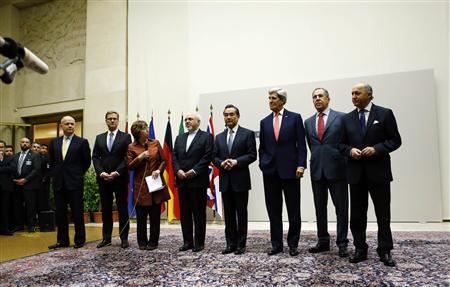
Nuclear_dealWashington, Nov 24: Countries like India would have to continue reducing oil imports from Iran despite a deal with the world powers over its controversial nuclear programme, according to a US fact sheet which also said Tehran would get a relief of USD 7 billion under the agreement.

Under the agreement reached in Geneva, Iran has committed to halt enrichment above five per cent, neutralise its stockpile of near-20 per cent uranium and halt progress on its enrichment capacity, to halt progress on the growth of its 3.5 per cent stockpile and committed to no further advances of its activities at Arak and to halt progress on its plutonium track.

In response, the US and five other major world powers have agreed to provide limited, temporary, targeted, and reversible relief while maintaining the vast bulk of the sanctions, including the oil, finance, and banking sanctions architecture. "If Iran fails to meet its commitments, we will revoke the relief," the US fact sheet said.

"Sanctions affecting crude oil sales will continue to impose pressure on Iran's government. Working with our international partners, we have cut Iran's oil sales from 2.5 million barrels per day (bpd) in early 2012 to 1 million bpd today, denying Iran the ability to sell almost 1.5 million bpd," the fact sheet said.

"That's a loss of more than USD 80 billion since the beginning of 2012 that Iran will never be able to recoup. Under this first step, the EU crude oil ban will remain in effect and Iran will be held to approximately 1 million bpd in sales, resulting in continuing lost sales worth an additional USD 4 billion per month, every month, going forward," it said.

India has slashed import of crude oil from Iran by over 26.5 per cent in the financial year ended March 31 as US and European sanctions made it difficult to ship oil from the Persian Gulf nation.

India imported about 13.3 million tonnes of crude oil from Iran in 2012-13 fiscal, down from 18.1 million tonnes shipped in the previous financial year.

Oil sanctions alone will result in approximately USD 30 billion in lost revenues to Iran – or roughly USD 5 billion per month – compared to what Iran earned in a six month period in 2011, before these sanctions took effect.

Iran used to be India's second-largest supplier, but is now fifth or sixth. The US said the approximately USD 7 billion in relief is a fraction of the costs that Iran will continue to incur during this first phase under the sanctions that will remain in place.

The vast majority of Iran's approximately USD 100 billion in foreign exchange holdings are inaccessible or restricted by sanctions.

In the next six months, Iran's crude oil sales cannot increase.

While Iran will be allowed access to USD 4.2 billion of its oil sales, nearly USD 15 billion of its revenues during this period will go into restricted overseas accounts.

"In summary, we expect the balance of Iran's money in restricted accounts overseas will actually increase, not decrease, under the terms of this deal," the US said.

Further sanctions affecting petroleum product exports to Iran, which result in billions of dollars of lost revenue, will remain in effect.

The vast majority of Iran's approximately USD 100 billion in foreign exchange holdings remain inaccessible or restricted by the sanctions.

The P5+1 countries have committed not impose new nuclear-related sanctions for six months, if Iran abides by its commitments under this deal, to the extent permissible within their political systems; and suspend certain sanctions on gold and precious metals, Iran's auto sector, and Iran's petrochemical exports, potentially providing Iran approximately USD 1.5 billion in revenue.

It also agreed to license safety-related repairs and inspections inside Iran for certain Iranian airlines and allow purchases of Iranian oil to remain at their currently significantly reduced levels – levels that are 60 per cent less than two years ago. USD 4.2 billion from these sales will be allowed to be transferred in installments if, and as, Iran fulfills its commitments.

"The concessions Iran has committed to make as part of this first step will also provide us with increased transparency and intrusive monitoring of its nuclear programme. In the past, the concern has been expressed that Iran will use negotiations to buy time to advance their program," the US said.

Comments

Add new comment

  • Coastaldigest.com reserves the right to delete or block any comments.
  • Coastaldigset.com is not responsible for its readers’ comments.
  • Comments that are abusive, incendiary or irrelevant are strictly prohibited.
  • Please use a genuine email ID and provide your name to avoid reject.
News Network
April 26,2020

Apr 26: The remarkable story of an airman who overcame prejudice to become one of only a handful of Indian fighter pilots in the First World War has emerged in newly-released archive files by the UK's Commonwealth War Graves Commission (CWGC).

Lieutenant Shri Krishna Chanda Welinkar is one of the thousands of moving stories from the war preserved in family correspondence and being brought alive as part of a digitisation project.

The never-before-published files contain thousands of letters, pictures and other papers sent between the Commission and the next of the kin of First World War dead.

Among them is the story of Welinkar, who hailed from Bombay in colonial India. After much hardship and discrimination, he eventually became a pilot and went missing while on patrol over the skies above the Western Front in June 1918.

His family had to wait nearly three years before they finally knew for certain that he had died, and his grave was located.

“For everyone who died in the First World War, there was inevitably a partner, parent or child back home who had questions. The heartbreaking letters in CWGC's archive give us an insight into what it was like for those families trying to come to terms with their loss,” said Andrew Fetherston, chief archivist for CWGC.

“They are stories that show desperate searches for closure, former enemies uniting and, on many occasions, the sad realisation that a missing loved one would always remain so. We are pleased to be able to make this invaluable piece of World War history accessible to a new generation and help deepen our understanding of how the First World War impacted those who were left behind,” he said.

Welinkar was one of the 1.3 million Indians who answered the call to fight for the British Empire. Nearly 74,000 never saw their homeland again and are remembered today in cemeteries and memorials throughout the world, including France, Belgium, the Middle East and Africa.

Welinkar was a well-educated man studying at Cambridge University. He trained to become an aviator in Middlesex and wished to join the Royal Flying Corps, later known as the Royal Air Force.

Upon attempting to enlist, Welinkar encountered the same prejudices as his other fellow Indian airmen and was encouraged to become an air mechanic instead.

He was eventually given a commission in the Royal Flying Corps as an Officer. In 1918, he was posted to France and patrolled the skies above the Western Front.

In June 1918, Lieutenant Welinkar embarked on what would be his final patrol; he did not return and was reported missing. His fate remained unknown for many months afterwards.

The newly-released e-files chronicle the remarkable discovery of Welinkar and his final resting place long after the war had ended. Colonel Barton, who knew Welinkar, acted on behalf of his mother and helped find her missing son. They spoke to former enemies and honed their search to the grave of an unidentified man, buried by the Germans as “Oberleutnant S.C. Wumkar” in a grave in Rouvroy, Belgium.

The body was later moved and reinterred in Hangard Communal Cemetery Extension but it wasn't until the vital clue, found in the original German burial records in February 1921, that it was confirmed beyond doubt this grave was of Welinkar's.

In May 1921, Colonel Barton, on behalf of Welinkar's mother, requested that a Commission headstone be placed on the grave with the following personal inscription: “To the Honoured Memory of One of the Empire's Bravest Sons”.

This records – known as Enquiry Files – are part of a collection of nearly 3,000 files which have never been made available to the public before. Nearly half have been digitised so far, alongside a previously unreleased collection of more than 16,000 photographs held in negatives in the Commission's archive.

The files, internally referred to simply as E-Files, contain correspondence between the CWGC and the next of kin of the war dead. They often contain letters, typed memos between Commission staff and on occasion photos, maps and diagrams.

CWGC only holds an enquiry file for a small proportion of the 1.7 million people it commemorates from the Commonwealth. Today it is only possible to release those surviving records from the First World War because correspondence with families of Second World War casualties often involves people still alive today and cannot be made public for many years, due to the UK's data protection rules.

To date, more than 1,300 of the surviving 3,000 First World War enquiry files have been digitised.

The CWGC commemorates the 1.7 million Commonwealth servicemen and women who died during the two World Wars. It also holds and updates an extensive and accessible records archive, while operating over 23,000 locations in more than 150 countries and territories.

Comments

Add new comment

  • Coastaldigest.com reserves the right to delete or block any comments.
  • Coastaldigset.com is not responsible for its readers’ comments.
  • Comments that are abusive, incendiary or irrelevant are strictly prohibited.
  • Please use a genuine email ID and provide your name to avoid reject.
News Network
February 12,2020

Feb 12: China on Wednesday reported another drop in the number of new cases of a viral infection and 97 more deaths, pushing the total dead past 1,100 as postal services worldwide said delivery was being affected by the cancellation of many flights to China.

The National Health Commission said 2,015 new cases had been reported over the last 24 hours, declining for a second day. The total number of cases in mainland China reached 44,653, although many experts say a large number of others infected have gone uncounted.

The additional deaths raised the mainland toll to 1,113. Two people have died elsewhere, one in Hong Kong and one in the Philippines.

In the port city of Tianjin, just southeast of Beijing, a cluster of cases has been traced to a department store in Baodi district. One-third of Tianjin’s 104 confirmed cases are in Baodi, the Xinhua state news agency reported.

A salesperson working in the store’s small home appliance section became the first individual in the cluster to be diagnosed on Jan. 31, Xinhua said. The store was already closed at that point, then disinfected on Feb. 1. Nevertheless, several more diagnoses soon followed.

The next to have their infections confirmed were also salespeople at the store. They had not visited Wuhan recently and, with the exception of one married couple, the patients worked in different sections of the store and did not know one another, according to Xinhua.

Japan’s Health Ministry said that 39 new cases have been confirmed on a cruise ship quarantined at Yokohama, bringing the total to 174 on the Diamond Princess.

The U.S. Postal Service said that it was “experiencing significant difficulties” in dispatching letters, parcels and express mail to China, including Hong Kong and Macau.

Both the U.S. and Singapore Post said in notes to their global counterparts that they are no longer accepting items destined for China, “until sufficient transport capacity becomes available.”

The Chinese mail service, China Post, said it was disinfecting postal offices, processing centers and vehicles to ensure the virus doesn’t spread via the mail and to protect staff.

It said the crisis is also impacting mail that transits China to other destinations including North Korea, Kazakhstan, Kyrgyzstan, Mongolia, Tajikistan, Turkmenistan, Uzbekistan and Vietnam.

The World Health Organization has named the disease caused by the virus as COVID-19, avoiding any animal or geographic designation to avoid stigmatization and to show the illness comes from a new coronavirus discovered in 2019.

The illness was first reported in December and connected to a food market in the central Chinese city of Wuhan, where the outbreak has largely been concentrated.

Zhong Nanshan, a leading Chinese epidemiologist, said that while the virus outbreak in China may peak this month, the situation at the center of the crisis remains more challenging.

“We still need more time of hard working in Wuhan,” he said, describing the isolation of infected patients there a priority.

“We have to stop more people from being infected,” he said. “The problem of human-to-human transmission has not yet been resolved.”

Without enough facilities to handle the number of cases, Wuhan has been building prefabricated hospitals and converting a gym and other large spaces to house patients and try to isolate them from others.

China’s official media reported Tuesday that the top health officials in Hubei province, of which Wuhan is the capital, have been relieved of their duties. No reasons were given, although the province’s initial response was deemed slow and ineffective. Speculation that higher-level officials could be sacked has simmered, but doing so could spark political infighting and be a tacit admission of responsibility.

The virus outbreak has become the latest political challenge for the party and its leader, Xi Jinping, who despite accruing more political power than any Chinese leader since Mao Zedong, has struggled to handle crises on multiple fronts. These include a sharply slowing domestic economy, the trade war with the U.S. and pushback on China’s increasingly aggressive foreign policies.

China is struggling to restart its economy after the annual Lunar New Year holiday was extended to try to curb the spread of the virus. About 60 million people are under virtual quarantine and many others are still working at home.

In Hong Kong, the diagnosis of four people living in an apartment building prompted worried comparisons with the deadly SARS pandemic of 17 years ago.

More than 100 people were evacuated from the building after a 62-year-old woman diagnosed with the virus was found living 10 floors directly below a man who was earlier confirmed with the virus.

Health officials called it a precautionary measure and sought to assuage fears of an epidemic, dismissing similarities to the SARS community outbreak at the Amoy Gardens housing estate in 2003.

Comments

Add new comment

  • Coastaldigest.com reserves the right to delete or block any comments.
  • Coastaldigset.com is not responsible for its readers’ comments.
  • Comments that are abusive, incendiary or irrelevant are strictly prohibited.
  • Please use a genuine email ID and provide your name to avoid reject.
Agencies
February 4,2020

As the deadly coronavirus has spread worldwide, it has carried with it xenophobia -- and Asian communities around the world are finding themselves subject to suspicion and fear.

When a patient on Australia's Gold Coast refused to shake the hand of her surgeon Rhea Liang, citing the virus that has killed hundreds, the medic's first response was shock.

But after tweeting about the incident and receiving a flood of responses, the respected doctor learned her experience was all too common.

There has been a spike in reports of anti-Chinese rhetoric directed at people of Asian origin, regardless of whether they have ever visited the centre of the epidemic or been in contact with the virus.

Chinese tourists have reportedly been spat at in the Italian city of Venice, a family in Turin was accused of carrying the disease, and mothers in Milan have used social media to call for children to be kept away from Chinese classmates.

In Canada, a white man was filmed telling a Chinese-Canadian woman "you dropped your coronavirus" in the parking lot of a local mall.

In Malaysia, a petition to "bar Chinese people from entering our beloved country" received almost 500,000 signatures in one week.

The incidents are part of what the Australasian College for Emergency Medicine has described as "misinformation" which it says is fuelling "racial profiling" where "deeply distressing assumptions are being made about 'Chinese' or 'Asian-looking' people." Disease has long been accompanied by suspicions of foreigners -- from Irish immigrants being targeted in the Typhoid Mary panic of 1900s America to Nepali peacekeepers being accused of bringing cholera to earthquake-struck Haiti in the last decade.

"It's a common phenomenon," said Rob Grenfell, director of health and biosecurity for Australia's science and research agency CSIRO.

"With outbreaks and epidemics along human history, we've always tried to vilify certain subsets of the population," he said, comparing the behaviour to 1300s plague-ridden medieval Europe, where foreigners and religious groups were often blamed.

"Sure it emerged in China," he said of the coronavirus, "but that's no reason to actually vilify Chinese people." In a commentary for the British Medical Journal, doctor Abraar Karan warned this behaviour could discourage people with symptoms from coming forward.

Claire Hooker, a health lecturer at the University of Sydney, said the responses from governments may have compounded prejudice.

The World Health Organisation has warned against "measures that unnecessarily interfere with international travel and trade", but this has not stopped scores of countries from introducing travel bans.

The tiny Pacific nation of Micronesia has banned its citizens from visiting mainland China altogether.

"Travel bans respond largely to people's fears," said Hooker, and while sometimes warranted, they often "have the effect of cementing an association between Chinese people and scary viruses".

Abbey Shi, a Shanghai-born student in Sydney, said the attitude shown by some of her peers has "become almost an attack on students who are Chinese".

While Australia's conservative government has banished its citizens returning from Wuhan -- the central Chinese city at the epicentre of the virus -- to a remote island for quarantine, thousands of students still stuck in China risk their studies being torpedoed.

"Right now it looks like they have to miss the semester's start and potentially the whole year, because of the way the courses are set up," Shi said.

According to Hooker, studies in Toronto on the impact of Severe Acute Respiratory Syndrome, or SARS -- another global coronavirus outbreak in 2002 -- showed the impact of xenophobic sentiment often lasted much longer than the public health scare.

"While there may be a cessation of direct forms of racism as news about the disease dies down, it takes quite a bit of time for economic recovery and people continue to feel unsafe," she said.

People may not rush back to Chinese businesses or restaurants, and may even heed some of the more outlandish viral social media disinformation -- such as one popular post imploring people to avoid eating noodles for their own safety.

"In one sense you might think the effects lasted from the last coronavirus to this one because the representation as China being a place where diseases come from has been persistent," Hooker said.

Comments

Add new comment

  • Coastaldigest.com reserves the right to delete or block any comments.
  • Coastaldigset.com is not responsible for its readers’ comments.
  • Comments that are abusive, incendiary or irrelevant are strictly prohibited.
  • Please use a genuine email ID and provide your name to avoid reject.