



Killing a Rationalist: Silencing Reason

[email protected] (Ram Puniyani)
September 10, 2015

The killing of Professor Maleeshappa Madhivallapa Kalburgi on 30th August 2015 came as a severe jolt to all those who are for an open, liberal society, who uphold the values of reason and are against blind faith. Prof. Kalburgi was a renowned scholar with over 100 books to his credit. He had brought to fore the ideology of Basavanna; the 12th Century poet saint of Kannada; and had supported the idea that Lingyats, the followers of Basavanna be given the status of religious minorities as they do not belong to the Vedic tradition. His study of Vachanas, the teachings contained in the verses of Basavanna, was a profound contribution to the rational though.Kalburgi
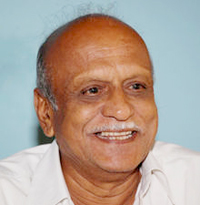
It was his forthright reminder of Basavanna’s teachings, criticism of idol worship and Brahmanical rituals, which earned him the wrath of Hindutva groups like Bajrang Dal. As there are many traditions within the broad pantheon of Hinduism, the atheist tradition has its own existence from centuries, Charvak being the one from ancient times. Even opposition of idol worship is not new to Hindu traditions as Swami Dayanand Sarswati, founder of Arya Samaj, had given the call to stop the idol worship.

Incidentally as we are receiving the news of this killing, the neighboring Bangla Desh has witnessed the murder of three young secular bloggers in recent times (2015). In Syria a Scholar Khaled al-Assad has been put to death by ISIS fanatics. Maharashtra was shaken by the murder of a rationalist of repute Dr. Narendra Dabholkar nearly two years ago. He was instrumental in getting the law against black magic and practices related to blind faith passed in Maharashtra. Another well respected activist, Comrade Govind Pansare was killed just a year ago. Pansare was working on many issues; anti-blind faith campaign being one of them. He is also the author of well known tract on Maharashtra’s revered king Shivaji. Contrary to the communal presentation of Shivaji as anti Muslim king, Pansare shows that Shivaji was the king who was very sympathetic to the farmers (rayyat) and that he was respecting all religions. This interpretation of Shivaji is a great eyesore to the Hindutva politics.

On the back of the murders of these two rationalists, comes the murder of Dr. M.M. Kalburgi on 30th August 2015 in his home in Dharwad. Prof Kalburgi was a very well accomplished man, ex Vice Chancellor of Kannada University in Hapmi, and recipient of National and Karnataka Sahitya Academy Awards for his writings. The learned professor had deep study of Virshaiva, Basavanna tradition amongst others. The opposition to him was due to his criticism of idol worship, Brahmanical rituals and ritualization of Basavanna tradition by Lingyats. Controversies followed him and so did the threats from conservative forces. The first one of which, was the publication of Marga treatise on Kannada folklore including articles on Virshaiva, Basavanna. Due to the death threats to him time and over again police protection was given. This police protection was withdrawn on his request recently. He supported U.R. Anathmurthy on the issue of stopping idol worship. When he invited VHP leaders and the pontiff of Vishveshra Tirtha Swami for a public debate; another controversy followed. His support to Karnataka bill against practices of superstition invited anger of Bajarang Dal and associate organizations and he had to face protest; where his effigy was burnt.

There is a pattern in the murders of Dabholkar, Pansare and Kalburgi. Though there are some differences in the broad range of field of their social engagement, the similarity is very striking. They were rational, they made their voice abundantly clear and many threats were received by them. Another stark similarity is that all these three murders took place in early mornings by those who came on motor cycles, one person driving the bike and the second one pumping bullets. Strangely despite a long lapse of time the killers of Dabholkar and Pansare have not been nabbed so far.

After the murder of Kalburgi one Bajrang Dal activist Bhuvith Shetty tweeted, ***"Then it was UR Ananthamurthy and now MM Kalburgi. Mock Hinduism and die dogs (sic.) death. And dear KS Bhagwan you are next" .*** This tweet was later withdrawn. Also many a person’s related to Hindu right wing organizations started saying that Kalburgi had insulted Hindu gods, so anger among Hindus and so such murders. This is a subtle justification of the intolerance which our society is being gripped with. As such the attitude of communal elements in different religions is very similar. One recalls the threat to Salman Rushdie, the type of intolerance shown to Taslima Nasreen and the murder of bloggers in Bangla Desh and also murder of Salman Taseer in Pakistan. Taseer had stood in defense of a Christian woman who was accused of blasphemy.

The opposition to the voices of reason has been going on in History all through. One can as well begin with Charvak, who opposed the Brahmanical understanding about the world, divine nature of Vedas in particular. Charvak said Vedas are manmade, social in nature, and was persecuted. Gradually with the power of clergy the imposition of faith on society became more institutionalized. Even teachings of Gautam Buddha, who was agnostic, and talked about the social nature of human problems, were attacked. This had led to the wiping out of Buddhism from India. The medieval Bhakti saints were also more for rational thinking, critical of the imposition of various social practices-rituals in the name of faith. Many saints like Tukaram in Maharashtra had to face persecution at the hands of those who were close to social power, the clergy.

Globally one can see the same pattern in Europe. In Europe the scientists, rational thinking had to face the opposition from organized Church, which condemned Galileo to hell for stating that the Earth is round etc. Similar was the fate of many scientists who had to face inquisitions and punishments of various types. Clergy hid behind the façade of ‘divine authority’: faith, and tried to stall the process of social change and halt the scientific thinking. The society over a period of time overcame the opposition to the rational thinking and so we saw the rooting of science and scientific inquiry. Clergy had maintained that they are the repository of whole knowledge; as knowledge is already there in our ‘Holy books’. This is a part generalization and it manifested in different cultures and religions in diverse ways. In Pakistan, some Maulanas asserted that the problems related to power can be solved by doing research on djinns, who are power houses of infinite energy; this was presented as part of the religious knowledge.

In India with freedom movement, those standing for social change and transformation did stand for rational thinking and critiqued the scriptures from that angle. The traditionalists, who wanted to retain the old social equations; resorted to ‘our glorious heritage of knowledge’. Faith based understanding was counterpoised against the spirit of scientific inquiry. With independence, with Nehru being at the helm of affairs, the notion of ‘scientific temper’ came up in a big way paving the way for establishment of institution of higher learning and research; leading to the national growth and transformation towards democratic structures. This was the time when the nation was looking forward to all round progress and rational thinking was duly promoted. The national science resolution; based on reason and logic was passed unanimously in 1958.

Things start changing in the decades of 1980s. The politics in the name of religion came up in a very assertive manner and faith not only continued to be the emotional support system in the times of social anxiety but some political forces started asserting identity politics, faith based politics. Identity issues and faith based politics started getting more legitimacy. The social conservatism and undermining of rational thought went hand in hand. Incidentally it is around this time also when the groups promoting rational thought, scientific temper, groups to oppose blind faith, came up. The most prominent of these groups was Kerala Sastra Sahitya Parishad. Later in Maharashtra Narendra Dabholkar took the lead to establish Andhshraddha Nirmulan Samiti (Committee to oppose Blind faith).

This took the Maharashtra conservative elements by storm as the volunteers of this organization started going from village to village and started demonstrating the science behind the magic tricks which were being practiced by hoards of God men and other of their tribe, who were taking full advantage of the social insecurity of poor villagers and exploiting them. Pansare, in addition to opposing blind faith was also disseminating the values of Shivaji, presenting him as a person respecting all religions, which Shivaji was. The right wingers could not stomach it; neither could they oppose the logical formulations presented by him. In Karnataka individual like U.R. Ananthmurthy articulated against idol worship and blind faith. Kalburgi not only supported U R Anathmurthy; he also went on the support the bill against the practices promoting blind faith. He did author papers/books to disseminate his ideas.

Slightly back in time when the first NDA Government came to power with Dr. Murli Manohar Joshi as the MHRD minister, he introduced the courses like ritualism (paurohitya) and astrology (jyotish shastra) in the universities. This gave a big boost to the ‘faith’ based groups who were politically close to the politics in the name of Hindu religion. With the new Government coming to power (2014) again now the mythology is being promoted as history, the Pushpak viman, ‘plastic surgery in ancient India’ etc. is being promoted; at the same time so called fringe elements, which as such are part of the Hindutva politics, are becoming more assertive. The liberal open space is shrinking and the place of debate is being taken by physical violence. The liberal values which accept the validity of differences is being eliminated by force, intimidation and even partly by state support. The murder of these ‘saintly’ figures , Dabholkar, Pansare and Klaburgi, just goes to show that we are landing in a situation where those entrenched in the conservative values are becoming dominant and do not want the rational thinking to exist in our society.

The aggressive stance by the Hindutva right wing on those who are putting forward the rational thought, criticizing the ills of caste system, idol worship etc. is ideological supplement to the politics of Hindu right wing. The march of this politics in recent years has been built around identity issues like Ram temple or cow slaughter. Their whole assertion is built around the Brahmanical Hinduism, which upholds the caste hierarchy. The ideology being propounded by the likes of Dabholkar, Pansare and Kalburgi stands closer to the ideology for liberation from the caste hierarchy, which is the root of HIndutva politics. This politics does target the religious minorities, while ironically Hinduism is so diverse with contradictory tendencies within same religious umbrella. Kalburgi’s murder is part of the larger scheme of things where the ideologies opposed to the present status quo are being hounded along with persecution of those who are struggling to uphold these values.

On the other hand there has been a tremendous opposition to these brutal acts. The social groups upholding pluralism and rationalism have been agitating against these murders and the ideology of those involved in these killings. Opposition of sections of society to the murders of Daholkar, Pansare and Kalburgi shows that there are still large numbers of people who are willing to uphold rational values and that gives a ray of hope for the times to come. In last couple of years after the murder of Dabholkar, various social groups have been coming together with a determination not only to oppose the intolerant conservative aggressive right wing politics, but also to take up the unfinished task of these slain pioneers committed to social change.

Comments

Add new comment

  • Coastaldigest.com reserves the right to delete or block any comments.
  • Coastaldigset.com is not responsible for its readers’ comments.
  • Comments that are abusive, incendiary or irrelevant are strictly prohibited.
  • Please use a genuine email ID and provide your name to avoid reject.
Wafa Sultana
April 4,2020

Over the last couple of days when the world was occupied with unifying efforts to fight the deadly Covid19 pandemic, sections of Indian media provided viewers a familiar scapegoat – the Indian Muslims – who are often stereotyped as a community being constantly at loggerheads with the citizenry and the State. Biased media channels were quick to resort to blaming the entire Muslim community for the spread of the disease in the country, thanks to an ill-timed Tablighi Jamaat gathering at its international headquarters in Delhi’s Nizamuddin. Unsurprisingly, the opprobrium was also marked by a sudden spike in WhatsApp forwards of videos with people wearing skullcaps licking spoons and performing Sufi breathing rituals, suggesting some sort of wild conspiracy on the part of the community to spread the virus.  Some media channels were quick to formulate, hypothesize and provide loose definitions of a newly discovered form of Jihad i.e. ‘Corona Jihad ’ thereby vilifying the Islamic faith and its followers.

While the investigation on the culpability of the organizers of the Nizamuddin event is still ongoing, there is enough information to suggest that the meeting was held before any lockdown was in force, and the problem began when there was no way of getting people out once the curfew was announced. Be that as it may, there is little doubt that organizing a meet of such a scale when there is a global pandemic smacks of gross misjudgment, and definitely the organizers should be held accountable if laws or public orders were defied. Attendees who attempt to defy quarantine measures must be dealt with strictly. However, what is alarming is that the focus and narrative have now shifted from the unfortunate event at Nizamuddin to the Tablighi Jamaat itself.

For those not familiar with the Tablighi Jamaat, the organization was founded in 1926 in Mewat by scholar Maulana Mohammad Ilyas. The Jamaat’s main objective was to get Muslim youth to learn and practice pristine Islam shorn of external influences. This is achieved through individuals dedicating time for moral and spiritual upliftment secluded from the rest of the world for a brief period of time. There is no formal membership process. More senior and experienced participants typically travel from one mosque to other delivering talks on religious topics, inviting local youth to attend and then volunteer for a spiritual retreat for a fixed number of days to a mosque in a nearby town or village to present the message to their co-religionists. Contrary to ongoing Islamophobic rhetoric, the movement does not actively proselytize. The focus is rather on getting Muslims to learn the teachings and practices of Islam.  This grassroots India-based movement has now grown to almost all countries with substantial Muslim populations. Its annual meets, or ‘ijtemas’ are among the largest Islamic congregations in the world after the annual Haj. One of the reasons for its popularity and wide network in the subcontinent and wordwide is the fact that it has eschewed the need for scholarly intervention, focusing on peer learning of fundamental beliefs and practice rather than high-falutin ideological debates. The Tablighi Jamaat also distinguishes itself from other Islamic movements through its strictly apolitical nature, with a focus on individual self-improvement rather than political mobilization. Hardships and difficulty in the world are expected to be face through ‘sabr’ (patience) and ‘dua’ (supplication),  than through quest for political power or influence. In terms of ideology, it is very much based on mainstream Sunni Islamic principles derived from the Deobandi school.

So, why is all this background important in the current context? While biased media entities have expectedly brought out their Islamophobic paraphernalia out for full display, more neutral commentators have tried to paint the Tablighi Jamaat as a fringe group and have tried to distance it from 'mainstream Muslims'. While the intent is no doubt innocent, this is a trap we must not fall into. This narrative, unfortunately, is also gaining ground due to apathy some Muslims have for the group, accusing it of being “disconnected from the realities of the world”. Unlike other Muslim organizations and movements, the Tablighi Jamat, by virtue of its political indifference, does not boast of high-profile advocates and savvy spokespersons who can defend it in mainstream or social media.  The use of adjectives such as 'outdated' and 'orthodox' by liberal columnists to describe the Jamaat feeds into the malignant attempt to change the narrative from the control of the spread of the pandemic due to the Nizamuddin gathering to 'raison d'etre' of the organization itself.

A large mainstream religious group like the Tablighi Jamaat with nearly a hundred-year history, normally considered to be peaceful, apolitical and minding its own business is now suddenly being villainized owing to unfortunate circumstances. Biased media reactions filled with disgust and hate seem to feed the Indian public conscience with a danngerous misconception - to be a nominal Muslim is okay but being a practicing one is not.  For those committed to the truth and fighting the spread of Islamophobia, the temptation to throw the entire Tablighi Jamaat under the bus must be resisted.

The writer is a lawyer and research scholar at Qatar University. Her research interests include Islamic law and politics.

Comments

zahoorahmed
 - 
Saturday, 4 Apr 2020

great article! provides a great perspective on tableeg jamat

Add new comment

  • Coastaldigest.com reserves the right to delete or block any comments.
  • Coastaldigset.com is not responsible for its readers’ comments.
  • Comments that are abusive, incendiary or irrelevant are strictly prohibited.
  • Please use a genuine email ID and provide your name to avoid reject.
Ram Puniyani
August 9,2020

Contrary to present impression that Muslims are separatists due to whom the partition of India took place, the truth is that Muslims contributed to freedom movement and upheld India’s composite culture in equal measure. The partition process, mainly due to British policy of ‘divide and rule’ well assisted by Hindu and Muslim communalists is being hidden from the popular vision in India and Muslims in general are held responsible for the same. Not only that the communal historiography introduced by British to pursue their policies has become the bedrock of communal politics and worsening of the perceptions about Muslims is in progress in India.

Yet another example of this has been a series of tweets by the bureaucrat, who is close to retirement, K. Nageshwar Rao. Contrary to the service rules he has made statements, through his tweets which are appreciative of RSS-BJP and demonise the stalwarts Muslim leaders who not only contributed to the freedom movement but also later gave valuable service in laying the foundation of Independent India. As per Rao, his tweets he accuses Maulana Azad and the other Muslim Education ministers of “deracination of Hindus”. After naming “Maulana Abul Kalam Azad — 11 years (1947-58)”; “Humayun Kabir, M C Chagla & Fakruddin Ali Ahmed — 4 years (1963-67)”; and, “Nurul Hassan — 5 years (1972-77)”, he posts: “Remaining 10 years other Leftists like VKRV Rao.”

He points out that their policies were meant to “1. Deny Hindus their knowledge, 2. Vilify Hinduism as collection of superstitions, 3. Abrahamise Education, 4. Abrahamise Media & Entertainment, 5. Shame Hindus about their identity!  and 6. Bereft of the glue of Hinduism Hindu society dies.”

Then he goes on to praise RSS-BJP for bringing the glory back to Hindus. These statements of his on one hand promote the Hate and on the other tantamount to political statement, which civil servants should not by making. CPM politburo member Brinda Karat has written a letter to Home Minister Amit Shah to take suitable action against the erring bureaucrat.

Rao begins with Maulana Abul kalam Azad. Surely Azad was one of the major leaders of freedom movement, who was also the youngest President of INC, in 1923 and later between 1940 to 1945. He opposed the partition process tooth and nail till the very last. As the Congress President in 1923 he wrote a remarkable Para, symbolizing the urge for Hindu Muslim unity, “If an angel descends from heaven and offers me Swaraj in 24 hours on condition that I give up Hindu Muslim Unity, I will refuse. Swaraj we will get sooner or later; its delay will be a loss for India, but loss of Hindu Muslim unity will be a loss for human kind”. His biographer Syeda Hamid points out “He spoke without an iota of doubt about how debacle of Indian Muslims has been the result of the colossal mistakes committed by Muslim League’s misguided leadership. He exhorted Muslims to make common cause with their Hindu, Sikh, Christian fellow countrymen.” He was the one who promoted the translation of Hindu scriptures Ramayan and Mahabharat in to Persian.

Surely Mr. Rao, neither has read Azad or read about him nor knows his contributions to making of Modern India. While today, the ideological formation to which Mr. Rao seems to be pledging his commitment is critical of all that happened during Nehru era, it was during this period when as education minister Azad was shepherding the formations of IITs, Academies of Science, Lalit kala Academies. It was during this period that the efforts to promote Indian composite culture were undertaken through various steps.

The other stalwarts who are under the hammer have been outstanding scholars and giants in their own field of education. Humayun Kabir, Nurul Hasan, Dr.Zakir Husssain gave matchless ideas and practical contributions in different fields of education. One can say that contrary to the accusations, India could match up to the Computer era, software and associate things, due to creation of large manpower in these areas mainly due to these foundations which were laid down particularly in the field of education during this period.

The charge that these ‘Muslim’ education ministers white washed the bloody Islamic rule is a blind repetition of the offshoot of communal historiography introduced by British. While Kings were ruling for power and wealth, their courts had Hindus and Muslim both officers. The jaundiced vision sees this as a bloody Islamic rule but as a matter of fact the syncretic culture and traditions developed precisely this period. It was during this period that Bhakti Traidtion with Kabir, Tukaram, Namdeo, Tulsidas flourished. It was during this period that humane values of Sufi saints reached far and wide. It was during this period that poets like Rahim and Raskhan produced their classic literature n praise of Hindu Gods.

We also need to remind ourselves that large number of Muslims participated in the freedom Movement. Two scholars Shamsul Islam and Nasir Ahmad have come out with books on the myriad such freedom fighters, to recall just a few names. Khan Abdul Gaffar Khan, Zakir Hussain, Syed Mohammad Sharfuddin Kadri, Bakht Khan, Muzzafar Ahmad, Mohammad Abdir Rahman,, Abbas Ali, Asaf Ali, Yusuf Mehrali, Maulana Mazahrul Hague.

These are just a few of the names. The movement, led by Gandhi, definitely laid the foundations where composite Indian culture and respect for all religions, others’ religion was paramount and this is what created Indian fraternity, one of the values which finds its place in the preamble of Indian Constitution.

This blaming of Education ministers who were Muslims is an add-on to the process of Islamophobia in India. So for there have been many actions of Muslim kings which are selectively presented as being bloody, now the post Independent History, where glorious contributions have been made by Muslim leaders are being used to further deepen the divisive process. We need to pay respects to builders of modern India, irrespective of their religion.

Comments

Add new comment

  • Coastaldigest.com reserves the right to delete or block any comments.
  • Coastaldigset.com is not responsible for its readers’ comments.
  • Comments that are abusive, incendiary or irrelevant are strictly prohibited.
  • Please use a genuine email ID and provide your name to avoid reject.
Ram Puniyani
February 4,2020

As democracy is seeping in slowly all over the world, there is an organization which is monitoring the degree of democracy in the individual countries, The Economist Intelligence Unit. As such in each country there are diverse factors which on one hand work to deepen it, while others weaken it. Overall there is a march from theoretical democracy to substantive one. The substantive democracy will herald not just the formal equality, freedom and community feeling in the country but will be founded on the substantive quality of these values. In India while the introduction of modern education, transport, communication laid the backdrop of beginning of the process, the direction towards deepening of the process begins with Mahatma Gandhi when he led the non-cooperation movement in 1920, in which average people participated. The movement of freedom for India went on to become the ‘greatest ever mass movement’ in the World.

The approval and standards for democracy were enshrined in Indian Constitution, which begins ‘We the people of India’, and was adopted on 26th January 1950. With this Constitution and the policies adopted by Nehru the process of democratization started seeping further, the dreaded Emergency in 1975, which was lifted later restored democratic freedoms in some degree. This process of democratisation is facing an opposition since the decade of 1990s after the launch of Ram Temple agitation, and has seen the further erosion with BJP led Government coming to power in 2014. The state has been proactively attacking civil liberties, pluralism and participative political culture with democracy becoming flawed in a serious way. And this is what got reflected in the slipping of India by ten places, to 51st, in 2019. On the index of democracy India slipped down from the score of 7.23 to 6.90. The impact of sectarian BJP politics is writ on the state of the nation, country.

Ironically this lowering of score has come at a time when the popular protests, the deepening of democracy has been given a boost and is picking up with the Shaheen Bagh protests. The protest which began in Shaheen Bagh, Delhi in the backdrop of this Government getting the Citizenship amendment Bill getting converted into an act and mercilessly attacking the students of Jamia Milia Islamia, Aligarh Muslim University along with high handed approach in Jamia Nagar and neighbouring areas.  From 15th December 2019, the laudable protest is on.

It is interesting to note that the lead in this protest has been taken by the Muslim women, from the Burqa-Hijab clad to ‘not looking Muslim’ women and was joined by students and youth from all the communities, and later by the people from all the communities. Interestingly this time around this Muslim women initiated protest has contrast from all the protests which earlier had begun by Muslims. The protests opposing Shah Bano Judgment, the protests opposing entry of women in Haji Ali, the protests opposing the Government move to abolish triple Talaq. So far the maulanas from top were initiating the protests, with beard and skull cap dominating the marches and protests. The protests were by and large for protecting Sharia, Islam and were restricted to Muslim community participating.

This time around while Narendra Modi pronounced that ‘protesters can be identified by their clothes’, those who can be identified by their external appearance are greatly outnumbered by all those identified or not identified by their appearance.

The protests are not to save Islam or any other religion but to protect Indian Constitution. The slogans are structured around ‘Defence of democracy and Indian Constitution’. The theme slogans are not Allahu Akbar’ or Nara-E-Tadbeer’ but around preamble of Indian Constitution. The lead songs have come to be Faiz Ahmad Faiz’s ‘Hum Dekhenge’, a protest against Zia Ul Haq’s attempts to crush democracy in the name of religion. Another leading protest song is from Varun Grover, ‘Tanashah Aayenge…Hum Kagaz nahin Dikhayenge’, a call to civil disobedience against the CAA-NRC exercise and characterising the dictatorial nature of the current ruling regime.

While BJP was telling us that primary problem of Muslim women is Triple talaq, the Muslim women led movements has articulated that primary problem is the very threat to Muslim community. All other communities, cutting across religious lines, those below poverty line, those landless and shelter less people also see that if the citizenship of Muslims can be threatened because of lack of some papers, they will be not far behind in the victimization process being unleashed by this Government.

While CAA-NRC has acted as the precipitating factor, the policies of Modi regime, starting from failure to fulfil the tall promises of bringing back black money, the cruel impact of demonetisation, the rising process of commodities, the rising unemployment, the divisive policies of the ruling dispensation are the base on which these protest movements are standing. The spread of the protest movement, spontaneous but having similar message is remarkable. Shaheen Bagh is no more just a physical space; it’s a symbol of resistance against the divisive policies, against the policies which are increasing the sufferings of poor workers, the farmers and the average sections of society.

What is clear is that as identity issues, emotive issues like Ram Temple, Cow Beef, Love Jihad and Ghar Wapasi aimed to divide the society, Shaheen Bagh is uniting the society like never before. The democratisation process which faced erosion is getting a boost through people coming together around the Preamble of Indian Constitution, singing of Jan Gan Man, waving of tricolour and upholding the national icons like Gandhi, Bhagat Singh, Ambedkar and Maulana Azad. One can feel the sentiments which built India; one can see the courage of people to protect what India’s freedom movement and Indian Constitution gave them.

Surely the communal forces are spreading canards and falsehood against the protests. As such these protests which is a solid foundation of our democracy. The spontaneity of the movement is a strength which needs to be channelized to uphold Indian Constitution and democratic ethos of our beloved country.

Comments

Add new comment

  • Coastaldigest.com reserves the right to delete or block any comments.
  • Coastaldigset.com is not responsible for its readers’ comments.
  • Comments that are abusive, incendiary or irrelevant are strictly prohibited.
  • Please use a genuine email ID and provide your name to avoid reject.