Killing a Rationalist: Silencing Reason

[email protected] (Ram Puniyani)
September 10, 2015

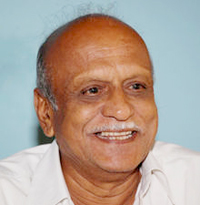
The killing of Professor Maleeshappa Madhivallapa Kalburgi on 30th August 2015 came as a severe jolt to all those who are for an open, liberal society, who uphold the values of reason and are against blind faith. Prof. Kalburgi was a renowned scholar with over 100 books to his credit. He had brought to fore the ideology of Basavanna; the 12th Century poet saint of Kannada; and had supported the idea that Lingyats, the followers of Basavanna be given the status of religious minorities as they do not belong to the Vedic tradition. His study of Vachanas, the teachings contained in the verses of Basavanna, was a profound contribution to the rational though.Kalburgi
It was his forthright reminder of Basavanna’s teachings, criticism of idol worship and Brahmanical rituals, which earned him the wrath of Hindutva groups like Bajrang Dal. As there are many traditions within the broad pantheon of Hinduism, the atheist tradition has its own existence from centuries, Charvak being the one from ancient times. Even opposition of idol worship is not new to Hindu traditions as Swami Dayanand Sarswati, founder of Arya Samaj, had given the call to stop the idol worship.

Incidentally as we are receiving the news of this killing, the neighboring Bangla Desh has witnessed the murder of three young secular bloggers in recent times (2015). In Syria a Scholar Khaled al-Assad has been put to death by ISIS fanatics. Maharashtra was shaken by the murder of a rationalist of repute Dr. Narendra Dabholkar nearly two years ago. He was instrumental in getting the law against black magic and practices related to blind faith passed in Maharashtra. Another well respected activist, Comrade Govind Pansare was killed just a year ago. Pansare was working on many issues; anti-blind faith campaign being one of them. He is also the author of well known tract on Maharashtra’s revered king Shivaji. Contrary to the communal presentation of Shivaji as anti Muslim king, Pansare shows that Shivaji was the king who was very sympathetic to the farmers (rayyat) and that he was respecting all religions. This interpretation of Shivaji is a great eyesore to the Hindutva politics.

On the back of the murders of these two rationalists, comes the murder of Dr. M.M. Kalburgi on 30th August 2015 in his home in Dharwad. Prof Kalburgi was a very well accomplished man, ex Vice Chancellor of Kannada University in Hapmi, and recipient of National and Karnataka Sahitya Academy Awards for his writings. The learned professor had deep study of Virshaiva, Basavanna tradition amongst others. The opposition to him was due to his criticism of idol worship, Brahmanical rituals and ritualization of Basavanna tradition by Lingyats. Controversies followed him and so did the threats from conservative forces. The first one of which, was the publication of Marga treatise on Kannada folklore including articles on Virshaiva, Basavanna. Due to the death threats to him time and over again police protection was given. This police protection was withdrawn on his request recently. He supported U.R. Anathmurthy on the issue of stopping idol worship. When he invited VHP leaders and the pontiff of Vishveshra Tirtha Swami for a public debate; another controversy followed. His support to Karnataka bill against practices of superstition invited anger of Bajarang Dal and associate organizations and he had to face protest; where his effigy was burnt.

There is a pattern in the murders of Dabholkar, Pansare and Kalburgi. Though there are some differences in the broad range of field of their social engagement, the similarity is very striking. They were rational, they made their voice abundantly clear and many threats were received by them. Another stark similarity is that all these three murders took place in early mornings by those who came on motor cycles, one person driving the bike and the second one pumping bullets. Strangely despite a long lapse of time the killers of Dabholkar and Pansare have not been nabbed so far.

After the murder of Kalburgi one Bajrang Dal activist Bhuvith Shetty tweeted, ***"Then it was UR Ananthamurthy and now MM Kalburgi. Mock Hinduism and die dogs (sic.) death. And dear KS Bhagwan you are next" .*** This tweet was later withdrawn. Also many a person’s related to Hindu right wing organizations started saying that Kalburgi had insulted Hindu gods, so anger among Hindus and so such murders. This is a subtle justification of the intolerance which our society is being gripped with. As such the attitude of communal elements in different religions is very similar. One recalls the threat to Salman Rushdie, the type of intolerance shown to Taslima Nasreen and the murder of bloggers in Bangla Desh and also murder of Salman Taseer in Pakistan. Taseer had stood in defense of a Christian woman who was accused of blasphemy.

The opposition to the voices of reason has been going on in History all through. One can as well begin with Charvak, who opposed the Brahmanical understanding about the world, divine nature of Vedas in particular. Charvak said Vedas are manmade, social in nature, and was persecuted. Gradually with the power of clergy the imposition of faith on society became more institutionalized. Even teachings of Gautam Buddha, who was agnostic, and talked about the social nature of human problems, were attacked. This had led to the wiping out of Buddhism from India. The medieval Bhakti saints were also more for rational thinking, critical of the imposition of various social practices-rituals in the name of faith. Many saints like Tukaram in Maharashtra had to face persecution at the hands of those who were close to social power, the clergy.

Globally one can see the same pattern in Europe. In Europe the scientists, rational thinking had to face the opposition from organized Church, which condemned Galileo to hell for stating that the Earth is round etc. Similar was the fate of many scientists who had to face inquisitions and punishments of various types. Clergy hid behind the façade of ‘divine authority’: faith, and tried to stall the process of social change and halt the scientific thinking. The society over a period of time overcame the opposition to the rational thinking and so we saw the rooting of science and scientific inquiry. Clergy had maintained that they are the repository of whole knowledge; as knowledge is already there in our ‘Holy books’. This is a part generalization and it manifested in different cultures and religions in diverse ways. In Pakistan, some Maulanas asserted that the problems related to power can be solved by doing research on djinns, who are power houses of infinite energy; this was presented as part of the religious knowledge.

In India with freedom movement, those standing for social change and transformation did stand for rational thinking and critiqued the scriptures from that angle. The traditionalists, who wanted to retain the old social equations; resorted to ‘our glorious heritage of knowledge’. Faith based understanding was counterpoised against the spirit of scientific inquiry. With independence, with Nehru being at the helm of affairs, the notion of ‘scientific temper’ came up in a big way paving the way for establishment of institution of higher learning and research; leading to the national growth and transformation towards democratic structures. This was the time when the nation was looking forward to all round progress and rational thinking was duly promoted. The national science resolution; based on reason and logic was passed unanimously in 1958.

Things start changing in the decades of 1980s. The politics in the name of religion came up in a very assertive manner and faith not only continued to be the emotional support system in the times of social anxiety but some political forces started asserting identity politics, faith based politics. Identity issues and faith based politics started getting more legitimacy. The social conservatism and undermining of rational thought went hand in hand. Incidentally it is around this time also when the groups promoting rational thought, scientific temper, groups to oppose blind faith, came up. The most prominent of these groups was Kerala Sastra Sahitya Parishad. Later in Maharashtra Narendra Dabholkar took the lead to establish Andhshraddha Nirmulan Samiti (Committee to oppose Blind faith).

This took the Maharashtra conservative elements by storm as the volunteers of this organization started going from village to village and started demonstrating the science behind the magic tricks which were being practiced by hoards of God men and other of their tribe, who were taking full advantage of the social insecurity of poor villagers and exploiting them. Pansare, in addition to opposing blind faith was also disseminating the values of Shivaji, presenting him as a person respecting all religions, which Shivaji was. The right wingers could not stomach it; neither could they oppose the logical formulations presented by him. In Karnataka individual like U.R. Ananthmurthy articulated against idol worship and blind faith. Kalburgi not only supported U R Anathmurthy; he also went on the support the bill against the practices promoting blind faith. He did author papers/books to disseminate his ideas.

Slightly back in time when the first NDA Government came to power with Dr. Murli Manohar Joshi as the MHRD minister, he introduced the courses like ritualism (paurohitya) and astrology (jyotish shastra) in the universities. This gave a big boost to the ‘faith’ based groups who were politically close to the politics in the name of Hindu religion. With the new Government coming to power (2014) again now the mythology is being promoted as history, the Pushpak viman, ‘plastic surgery in ancient India’ etc. is being promoted; at the same time so called fringe elements, which as such are part of the Hindutva politics, are becoming more assertive. The liberal open space is shrinking and the place of debate is being taken by physical violence. The liberal values which accept the validity of differences is being eliminated by force, intimidation and even partly by state support. The murder of these ‘saintly’ figures , Dabholkar, Pansare and Klaburgi, just goes to show that we are landing in a situation where those entrenched in the conservative values are becoming dominant and do not want the rational thinking to exist in our society.

The aggressive stance by the Hindutva right wing on those who are putting forward the rational thought, criticizing the ills of caste system, idol worship etc. is ideological supplement to the politics of Hindu right wing. The march of this politics in recent years has been built around identity issues like Ram temple or cow slaughter. Their whole assertion is built around the Brahmanical Hinduism, which upholds the caste hierarchy. The ideology being propounded by the likes of Dabholkar, Pansare and Kalburgi stands closer to the ideology for liberation from the caste hierarchy, which is the root of HIndutva politics. This politics does target the religious minorities, while ironically Hinduism is so diverse with contradictory tendencies within same religious umbrella. Kalburgi’s murder is part of the larger scheme of things where the ideologies opposed to the present status quo are being hounded along with persecution of those who are struggling to uphold these values.

On the other hand there has been a tremendous opposition to these brutal acts. The social groups upholding pluralism and rationalism have been agitating against these murders and the ideology of those involved in these killings. Opposition of sections of society to the murders of Daholkar, Pansare and Kalburgi shows that there are still large numbers of people who are willing to uphold rational values and that gives a ray of hope for the times to come. In last couple of years after the murder of Dabholkar, various social groups have been coming together with a determination not only to oppose the intolerant conservative aggressive right wing politics, but also to take up the unfinished task of these slain pioneers committed to social change.

Comments

Add new comment

  • Coastaldigest.com reserves the right to delete or block any comments.
  • Coastaldigset.com is not responsible for its readers’ comments.
  • Comments that are abusive, incendiary or irrelevant are strictly prohibited.
  • Please use a genuine email ID and provide your name to avoid reject.
Ram Puniyani
February 29,2020

Like most of the political phenomenon, even the practice of Nationalism is not a static one. It changes with the changing political equations of the political forces and assumes the expressions which are very diverse. As such the phenomenon of Nationalism has a long journey and various state policies in particular have used it for purposes which relate more to the power of the state ‘vis a vis’ its people, power of the state ‘vis a vis’ the neighboring countries among others.

In India there has been a certain change in the practices of the state which have transformed the meaning of Nationalism during last few years. Particularly with BJP, the Hindu Nationalist outfit gaining simple majority, it has unfolded the policies where one can discern the drastic change in the meaning and application of Nationalism in regard to its citizens, particularly those belonging to minority community, with regard to those who are liberal, and with those who stand with the concept of Human rights.

Our former Prime Minister of Dr. Manmohan Singh hit the nail on the head when he said that “Nationalism and the "Bharat Mata Ki Jai" slogan are being misused to construct a "militant and purely emotional" idea of India that excludes millions of residents and citizens. Former Prime Minister recently stated this in an apparent attack on the BJP.” The occasion was the release of a book, ‘Who is Bharat Mata’, edited by Purushottam Agarwal and Radhakrishna. This is a compilation of significant extracts from writings of Nehru, and important assessments of and contributions of Nehru by prominent personalities.

Dr. Singh went on to add "With an inimitable style…Nehru laid the foundation of the universities, academies and cultural institutions of Modern India. But for Nehru's leadership, independent India would not have become what it is today," This statement of Dr. Singh has great importance in contemporary times, as Nehru is being denigrated by Hindu nationalists for all the problems which India is facing today and attempts are on to undermine his role and glorifying Sardar Vallabh Bhai Patel. This is also significant as it gives us the glimpses of what Nationalism meant for Nehru.

As Singh’s statement captures the present nationalism being practiced by BJP and company, the Hindu nationalists, immediately shot back saying that Dr. Singh is supporting the anti India activities at JNU and Jamia and his party is supporting the anti India nationalists. They asked whether Singh likes the nationalism of the likes of Shashi Tharoor or Manishankar Ayer who are provoking the Shaheen Bagh protest rather than making the protestors quiet. Whether he likes the anti national protests which go on at JNU or Jamia? As per them there is no Nationalism in Congress. One more example being cited is the private visit of Shatrughan Sinha who talked to Pakistani President during his visit there recently!

Most of the arguments being used to oppose Dr. Singh are very superficial. What is being referred to; is not opposition to Indian nationalism and its central values which were the core of anti colonial struggles. While ‘Bharat Mata Ki Jai’ may not be acceptable to a section of population, even the book he was releasing has the title ‘Who is Bharat Mata’. What is being stated by Singh is the twist which slogan ‘Bharat Mata ki Jai’ has been used by Hindu nationalists to frighten the religious minorities.

Indian nation came into being on the values, which later were the foundation of Indian Constitution. Indian Constitution carefully picked up the terminology which was away from the concepts of Hindu or Muslim nationalism. That’s how the country came to be called as ‘India that is Bharat’. The freedom of expression which was the hallmark of freedom movement and it was given a pride of place in our Constitution. It respected the diversity and formulated rules where the nation was not based on particular culture, as Hindu nationalists will like us to believe, but cultural diversity was centrally recognized in the Constitution. In addition promoting good relations with neighbors and other countries of the World was also part of our principles.

JNU, Jamia and AMU are being demonized as most institutions so far regard the freedom of expression as a core part of Indian democracy. These institutions have been thriving on discussions and debates which have base in liberalism. Deliberately some slogans have been constructed to defame these institutions. While Constitution mandates good relations with neighbors, creation of ‘Anti Pakistan hysteria’ is the prime motive of many a channels and sections of other media, which are servile to the ideology of ruling Government. They also violate most of the norms of ethical journalism, where the criticism of the ruling party is an important factor to keep the ruling dispensation in toes.

A stifling atmosphere has been created during last six years. In this the Prime Minster can take a detour, land in Pakistan to have a cup of tea with Pakistan PM, but a Congress leader talking to Pakistani President is a sign of being anti National. Students taking out a march while reading the preamble of Indian Constitution are labeled as anti-national; and are stopped while those openly wielding guns near Jamia or Shaheen Bagh roam freely.

Nationalism should promote amity and love of the people; it should pave the way for growth and development. Currently the nationalism which is dominant and stalking the streets has weakened the very fraternity, which is one of the pillars of our democracy. Nehru did explain that Bharat Mata is not just our mountains, rivers and land but primarily the people who inhabit the land. Which nationalism to follow was settled during the freedom movement when Muslim nationalism and Hindu nationalism were rejected by the majority of people of India in favor of the Nationalism of Gandhi, Nehru, Patel and Maulana Azad, where minorities are equal citizens, deserving affirmative action. In today’s scenario the Hindu nationalists cannot accept any criticism of their policies.

Comments

Add new comment

  • Coastaldigest.com reserves the right to delete or block any comments.
  • Coastaldigset.com is not responsible for its readers’ comments.
  • Comments that are abusive, incendiary or irrelevant are strictly prohibited.
  • Please use a genuine email ID and provide your name to avoid reject.
Ram Puniyani
January 14,2020

In the beginning of January 2020 two very disturbing events were reported from Pakistan. One was the attack on Nankana Sahib, the holy shrine where Sant Guru Nanak was born. While one report said that the place has been desecrated, the other stated that it was a fight between two Muslim groups. Prime Minister of Pakistan Imran Khan condemned the incident and the main accused Imran Chisti was arrested. The matter related to abduction and conversion of a Sikh girl Jagjit Kaur, daughter of Pathi (One who reads Holy Guru Granth Sahib in Gurudwara) of the Gurudwara. In another incident one Sikh youth Ravinder Singh, who was out on shopping for his marriage, was shot dead in Peshawar.

While these condemnable attacks took place on the Sikh minority in Pakistan, BJP was quick enough to jump to state that it is events like this which justify the Citizenship Amendment Act (CAA). Incidentally CAA is the Act which is discriminatory and relates to citizenship with Religion, which is not as per the norms of Indian constitution. There are constant debates and propaganda that population of Hindus has come down drastically in Pakistan and Bangla Desh. Amit Shah, the Home minister stated that in Pakistan the population of Hindus has come down from 23% at the time of partition to 3.7% at present. And in Bangla Desh it has come down from 22% to present 8%.

While not denying the fact that the religious minorities are getting a rough deal in both these countries, the figures which are presented are totally off the mark. These figures don’t take into consideration the painful migrations, which took place at the time of partition and formation of Bangla Desh later. Pakistan census figures tell a different tale. Their first census was held in 1951. As per this census the overall percentage of Non Muslim in Pakistan (East and West together) was 14.2%, of this in West Pakistan (Now Pakistan) it was 3.44 and in Eat Pakistan it was 23.2. In the census held in Pakistan 1998 it became 3.72%. As far as Bangla Desh is concerned the share of Non Muslims has gone down from 23.2 (1951) to 9.6% in 2011.

The largest minority of Pakistan is Ahmadis, (https://minorityrights.org/country/pakistan/) who are close to 4 Million and are not recognised as Muslims in Pakistan. In Bangla Desh the major migrations of Hindus from Bangla Desh took place in the backdrop of Pakistan army’s atrocities in the then East Pakistan.

As far as UN data on refugees in India it went up by 17% between 2016-2019 and largest numbers were from Tibet and Sri Lanka.  (https://www.un.org/en/development/desa/population/migration/publication…)

The state of minorities is in a way the index of strength of democracy. Most South Asian Countries have not been able to sustain democratic values properly. In Pakistan, the Republic began with Jinnah’s classic speech where secularism was to be central credo of Pakistan. This 11th August speech was in a way what the state policy should be, as per which people of all faiths are free to practice their religion. Soon enough the logic of ‘Two Nation theory” and formation of Pakistan, a separate state for Muslim took over. Army stepped in and dictatorship was to reign there intermittently. Democratic elements were suppressed and the worst came when Zia Ul Haq Islamized the state in collusion with Maulanas. The army was already a strong presence in Pakistan. The popular formulation for Pakistan was that it is ruled by three A’s, Army, America and Allah (Mullah).

Bangla Desh had a different trajectory. Its very formation was a nail in the coffin of ‘two nation theory’; that religion can be the basis of a state. Bangla Desh did begin as a secular republic but communal forces and secular forces kept struggling for their dominance and in 1988 it also became Islamic republic. At another level Myanmar, in the grip of military dictatorship, with democratic elements trying to retain their presence is also seeing a hard battle. Democracy or not, the army and Sanghas (Buddhist Sang has) are strong, in Myanmar as well. The most visible result is persecution of Rohingya Muslims.

Similar phenomenon is dominating in Sri Lanka also where Budhhist Sanghas and army have strong say in the political affairs, irrespective of which Government is ruling. Muslim and Christian minorities are a big victim there, while Tamils (Hindus, Christians etc.) suffered the biggest damage as ethnic and religious minorities. India had the best prospect of democracy, pluralism and secularism flourishing here. The secular constitution, the outcome of India’s freedom struggle, the leadership of Gandhi and Nehru did ensure the rooting of democracy and secularism in a strong way.

India so far had best democratic credentials amongst all the south Asian countries. Despite that though the population of minorities rose mainly due to poverty and illiteracy, their overall marginalisation was order of the day, it went on worsening with the rise of communal forces, with communal forces resorting to identity issues, and indulging in propaganda against minorities.

While other South Asian countries should had followed India to focus more on infrastructure and political culture of liberalism, today India is following the footsteps of Pakistan. The retrograde march of India is most visible in the issues which have dominated the political space during last few years. Issues like Ram Temple, Ghar Wapasi, Love Jihad, Beef-Cow are now finding their peak in CAA.

India’s reversal towards a polity with religion’s identity dominating the political scene was nicely presented by the late Pakistani poetess Fahmida Riaz in her poem, Tum bhi Hum Jaise Nikle (You also turned out to be like us). While trying to resist communal forces has been an arduous task, it is becoming more difficult by the day. This phenomenon has been variously called, Fundamentalism, Communalism or religious nationalism among others. Surely it has nothing to do with the religion as practiced by the great Saint and Sufi traditions of India; it resorts mainly to political mobilization by using religion as a tool.

Comments

Ashi
 - 
Tuesday, 14 Jan 2020

If Malaysia implement similar NRC/CAA, India and China are the loser.

Add new comment

  • Coastaldigest.com reserves the right to delete or block any comments.
  • Coastaldigset.com is not responsible for its readers’ comments.
  • Comments that are abusive, incendiary or irrelevant are strictly prohibited.
  • Please use a genuine email ID and provide your name to avoid reject.
Ram Puniyani
June 29,2020

In Minneapolis, US an African American, George Floyd lost his life as the white policeman, Derek Chauvin, caught hold of him and put his knee on his neck. This is a technique developed by Israel police. For nine long minutes the knee of the while policeman was on the neck of George, who kept shouting, I can’t breathe.

Following this gruesome murder America erupted with protests, ‘Black lives matter’. The protestors were not just African Americans but also a large section of whites. Within US one police Chief apologized for the act of this. In a touching gesture of apology the police force came on its knees. This had reverberations in different parts of the World.

The act was the outcome of the remnants of the racial hatred against blacks by the whites. It is the hatred and the perceptions which are the roots of such acts of violence. What was also touching that the state of democracy in US is so deep that even the police apologized, the nation, whites and blacks, stood up as a sensitive collective against this violence.

US is not the only country where the brutal acts of violence torment the marginalized sections of society. In India there is a list of dalits, minorities and adivasis who are regularly subjected to such acts. But the reaction is very different. We have witnessed the case of Tabrez Ansari, who was tied to the pole by the mob and beaten ruthlessly. When he was taken to police station, police took enough time to take him to hospital and Tabrez died.

Mohsin Sheikh, a Pune techie was murdered by Hindu Rashtra Sena mob, the day Modi came to power in 2014. Afrazul was killed by Shambhulal Regar, videotaped the act released on social media. Regar believed that Muslims are indulging in love Jihad, so deserve such a fate. Mohammad Akhlaq is one among many names who were mob lynched on the issue of beef cow. The list can fill pages after pages.

Recently a young dalit boy was shot dead for the crime of entering a temple. In Una four dalits were stripped above waste and beaten mercilessly. Commenting on this act the Union Minister Ramvilas Paswan commented that it is a minor incident. Again the list of atrocities against dalits is long enough. The question is what Paswan is saying is the typical response to such gruesome murders and tortures. In US loss of one black life, created the democratic and humane response. In India there is a general silence in response to these atrocities. Some times after a good lapse of time, the Prime Minister will utter, ‘Mother Bharati has lost a son’. Most of the time victim is blamed. Some social groups raise their voice in some fora but by and large the deafening silence from the country is the norm.

India is regarded as the largest democracy. Democracy is the rule of law, and the ground on which the injustices are opposed. In America though the present President is insensitive person, but its institutions and processes of democratic articulations are strong. The institutions have deepened their roots and though prejudices may be guiding the actions of some of the officers like the killer of George, there are also police officers who can tell their President to shut up if he has nothing meaningful to say on the issue. The prejudices against Blacks may be prevalent and deep in character, still there are large average sections of society, who on the principles of ‘Black lives matter’. There are large sections of vocal population who can protest the violation of basic norms of democracy and humanism.

In India by contrast there are multiple reasons as to why the lives of Tabrez Ansari, Mohammad Akhlaq, Una dalit victims and their likes don’t matter. Though we claim that we are a democracy, insensitivity to injustices is on the rise. The strong propaganda against the people from margins has become so vicious during last few decades that any violence against them has become sort of a new normal. The large populace, though disturbed by such brutalities, is also fed the strong dose of biases against the victims. The communal forces have a great command over effective section of media and large section of social media, which generates Hate against these disadvantaged groups, thereby the response is muted, if at all.

As such also the process of deepening of our democracy has been weak. Democracy is a dynamic process; it’s not a fixed entity. Decades ago workers and dalits could protest for their rights. Now even if peasants make strong protests, dominant media presents it as blocking of traffic! How the roots of democracy are eroded and are visible in the form where the criticism of the ruling dispensation is labelled as anti National..

Our institutions have been eroded over a period of time, and these institutions coming to the rescue of the marginalized sections have been now become unthinkable. The outreach of communal, divisive ideology, the ideology which looks down on minorities, dalits and Adivasis has risen by leaps and bounds.

The democracy in India is gradually being turned in to a hollow shell, the rule of law being converted in to rule of an ideology, which does not have faith in Indian Constitution, which looks down upon pluralism and diversity of this country, which is more concerned for the privileges of the upper caste, rich and affluent. The crux of the matter is the weak nature of democracy, which was on way to become strong, but from decades of 1980s, as emotive issues took over, the strength of democracy started dwindling, and that’s when the murders of the types of George Floyd, become passé. One does complement the deeper roots of American democracy and its ability to protect the democratic institutions, which is not the case in India, where protests of the type, which were witnessed after George Floyd’s murder may be unthinkable, at least in the present times. 

Comments

Add new comment

  • Coastaldigest.com reserves the right to delete or block any comments.
  • Coastaldigset.com is not responsible for its readers’ comments.
  • Comments that are abusive, incendiary or irrelevant are strictly prohibited.
  • Please use a genuine email ID and provide your name to avoid reject.