Limits on expat bank transfers ‘under study’

May 3, 2013

Bank_transfers

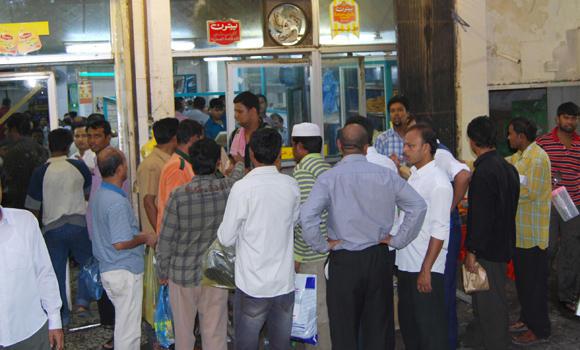
Jeddah, May 3: Saudi banks are considering limiting the amount of money expatriates send home, a bank official told Arab News. This is to comply with Ministry of Labor regulations being phased in as part of the Nitaqat program.

These regulations would see banks prevent expatriate workers from transferring sums more than their monthly income and freezing the accounts of workers who have not rectified their status.

However, Talat Hafiz, secretary-general of media and education for Saudi banks, told Arab News that banks have no intention to freeze accounts. “The banks cannot take such action. It is not their business to decide on these matters. The only party authorized to take such action is Saudi Arabian Monetary Agency,” he said.

“Saudi banks report to SAMA. So far we have not blocked anyone from opening an account, even those not licensed to work in the Kingdom.”

Adel Al-Hawwar, senior executive vice-chairman of retail banking at the National Commercial Bank, told Arab News that “it's unlikely that the banks will take this step at present. There is a system to protect wages, and it is meant to protect the rights of workers. It is also meant to ensure companies pay the salaries of workers as stated in their contracts.”

Hattab Al-Enezi, spokesman for the Ministry of Labor, told Arab News that the system of wage protection will start with large companies employing 3,000 employees and more. “Then we'll gradually move to companies that employ fewer people. Each company will be given two months to comply with the decision,” he said. “There is ongoing coordination between the Ministry of Labor and SAMA to keep checking on whether or not employers are complying with the regulations regarding worker payment and wage protection and other matters,” he added.

Comments

Add new comment

  • Coastaldigest.com reserves the right to delete or block any comments.
  • Coastaldigset.com is not responsible for its readers’ comments.
  • Comments that are abusive, incendiary or irrelevant are strictly prohibited.
  • Please use a genuine email ID and provide your name to avoid reject.
News Network
March 9,2020

Riyadh, Mar 9: Schools and universities will be closed in Saudi Arabia from Monday to control the spread of coronavirus.

The Saudi Ministry of Education said the “preventive and precautionary” measures were recommended by the health authorities and are designed to protect students and staff.

The decision covers all educational institutions, including public and private schools, and technical and vocational training institutions.

“The Minister of Education directed that virtual schools and distance education be activated while the schools are closed to ensure that the educational process continues in an effective and quality manner,” the ministry said.

The Kingdom's Education Minister, Hamad bin Mohammed Al-Asheikh, confirmed that the decision was a precautionary step and said that they are conducting daily and weekly evaluations before returning to school.

Meanwhile, the Minister of Health, Tawfiq Al-Rabiah, confirmed that there have been no coronavirus cases in any educational facility in the Kingdom.

“Thank God, the situation is reassuring, and there has been no case in any educational facility. However, the increasing cases in countries have made us keen to enhance the safety of our sons and daughters. So we coordinated with the Ministry of Education to close the schools temporarily,” he said in a tweet on Sunday.

The education ministry has set up supervision offices to help coordinate the distance learning, and respond to parents’ inquiries.

A new committee set up by the ministry will also ensure the virtual schools are functioning through the distance learning methods provided by the ministry.

These include the virtual school platform (Vschool.sa) and mwterials available from the Apple and Android stores.

It will also provide lessons through the “Ain” TV channeland as well as on YouTube via this link: www.youtube.com/dorosien.

The General Presidency for the Affairs of the Grand Mosque and the Prophet’s Mosque also said on Sunday that it will suspend the visitation programs in its external facilities as part of recommended precautions to prevent the spread of the coronavirus and ensure the safety of visitors.

The facilities include the King Abdulaziz Complex for the Covering of the Holy Kaaba, the Gallery of the Two Holy Mosques, and the Library of the Holy Mosque of Makkah.

“The presidency has taken a series of precautionary measures to prevent the spread of the virus, by intensifying sterilization work that is taking place around the clock, and has been keen on coordination and joint cooperation with all relevant government sectors,” it said in a statement issued on SPA.

It added that these preventive efforts come within the procedures that are being implemented by the Saudi government seeking to combat the spread of the new virus, to protect the people of the Two Holy Mosques in particular, and citizens and residents in the Kingdom in general.

Comments

Add new comment

  • Coastaldigest.com reserves the right to delete or block any comments.
  • Coastaldigset.com is not responsible for its readers’ comments.
  • Comments that are abusive, incendiary or irrelevant are strictly prohibited.
  • Please use a genuine email ID and provide your name to avoid reject.
Arab News
March 21,2020

Jeddah, Mar 21: Saudi government ministers on Friday announced a war chest of more than SR120 billion ($32 billion) to fight the “unprecedented” health and economic challenges facing the country as a result of the killer coronavirus pandemic.

During a press conference in Riyadh, finance minister and acting minister of economy and planning, Mohammed Al-Jadaan, unveiled a SR70 billion stimulus package to support the private sector, especially small- and medium-sized enterprises (SMEs) and businesses worst-hit by the virus outbreak.

And the Saudi Arabian Monetary Authority (SAMA) has also sidelined SR50 billion to help the Kingdom’s banking sector, financial institutions and SMEs.

Al-Jadaan said the government had introduced tough measures to protect the country’s citizens while immediately putting in place a financial safety net. He added that the Kingdom was moving decisively to address the global COVID-19 disease crisis and cushion the financial and economic impact of the outbreak on the country.

The SR70 billion package of initiatives revealed by the minister will include exemptions and postponement of some government dues to help provide liquidity for private-sector companies.

Minister of Health Dr. Tawfig Al-Rabiah noted the raft of precautionary measures that had been introduced by the Kingdom in cooperation with the private sector and government agencies to combat the spread of the coronavirus, highlighting the important contribution of the data communication services sector.

He reassured the Saudi public that the Kingdom would continue to do whatever was required to tackle the crisis.

“This pandemic has a lot of challenges. It’s difficult to make presumptions at this moment as we’ve seen; many developed countries did not expect the rate of transmission of this virus.

“We see that the reality of the situation is different from what many expected. The virus is still being studied and though we know the means of transmission, it is transmitted at a very fast rate, having spread to many countries faster than expected.

“We see that many countries have not taken the strong precautionary measures from the beginning of the crisis which led to the vast spread of the virus in these countries,” Al-Rabiah said.

He pointed out that social distancing would help slow the spread.

Al-Jadaan said the Saudi government had the financial and economic capacity to deal with the situation. “We have large reserves and large investments, but we do not want to withdraw from the reserves more than what was already announced in the budget. We do not want to liquidate any of the government’s investments so we will borrow.

“We have approval from the government after the finance committee raised its recommendations to increase the proportion of the domestic product borrowing from 30 percent to 50 percent. We do not expect to exceed 50 percent from now until the end of 2022,” he added.

The government would use all the tools available to it to finance the private sector, especially SMEs, and ensure its ongoing stability.

The finance minister said that at this stage it was difficult to predict the economic impact of the pandemic on the private sector, but he emphasized that international coordination, most notably through G20 countries and health organizations, was ongoing.

On recorded cases of the COVID-19 disease in the Kingdom, Al-Rabiah said: “Many of the confirmed cases are without symptoms, this is due to the precautionary measures being considered.

“As soon as a case is confirmed, we contact and examine anyone who was in direct contact with the patient. This epidemiological investigation, is conducted on a large scale to investigate any case that was in contact with the patient.”

Al-Jadaan also announced the formation of a committee made up of the ministers of finance, economy and planning, commerce, and industry and mineral resources, along with the vice chairman of the board of the Saudi National Development Fund, and its governor.

The committee will be responsible for identifying and reviewing incentives, facilities, and other initiatives led by the fund.

Committees had also been established, said Al-Jadaan, to study the impact and repercussions of the coronavirus crisis on all sectors and regions, and look at ways of overcoming them through subsidies or stimulus packages.


Comments

Add new comment

  • Coastaldigest.com reserves the right to delete or block any comments.
  • Coastaldigset.com is not responsible for its readers’ comments.
  • Comments that are abusive, incendiary or irrelevant are strictly prohibited.
  • Please use a genuine email ID and provide your name to avoid reject.
News Network
May 21,2020

Dubai, May 21: Around 10,000 Iranian health workers have been infected with the new coronavirus, the semi-official ILNA news agency quoted a deputy health minister as saying on Thursday.

Health services are stretched thin in Iran, the Middle East country hardest hit by the respiratory pandemic, with 7,249 deaths and a total of 129,341 infections. The Health Ministry said in April that over 100 health workers had died of COVID-19.

No more details on infections among health workers were immediately available.

Earlier on Thursday, Health Minister Saeed Namaki appealed to Iranians to avoid travelling during the Eid al-Fitr religious holiday later this month to avoid the risk of a new surge of coronavirus infections, state TV reported.

Iranians often travel to different cities around the country to mark the end of the Muslim holy fasting month of Ramadan, something Namaki said could lead to a disregard of social distancing rules and a fresh outbreak of COVID-19.

"I am urging you not to travel during the Eid. Definitely, such trips mean new cases of infection...People should not travel to and from those high-risk red areas," Namaki was quoted by state television as saying.

"Some 90% of the population in many areas has not yet contracted the disease. In the case of a new outbreak, it will be very difficult for me and my colleagues to control it."

A report by parliament's research centre suggested that the actual tally of infections and deaths in Iran might be almost twice that announced by the health ministry.

However, worried that measures to limit public activities could wreck an economy which has already been battered by U.S. sanctions, the government has been easing most restrictions on normal life in late April.

Infected cases have been on a rising trajectory for the past two weeks. However, President Hassan Rouhani said on Wednesday that Iran was close to curbing the outbreak.

Comments

Add new comment

  • Coastaldigest.com reserves the right to delete or block any comments.
  • Coastaldigset.com is not responsible for its readers’ comments.
  • Comments that are abusive, incendiary or irrelevant are strictly prohibited.
  • Please use a genuine email ID and provide your name to avoid reject.