



Material with highest conductivity developed for faster, powerful electronic device functioning

May 8, 2017

Washington, May 8: Scientists, including those of Indian origin, have discovered a new material with highest- ever conductivity in its class, which could lead to smaller, faster and more powerful electronic devices.
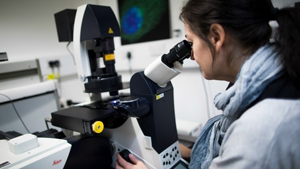
researchWhat makes this nano-scale thin film material so unique is that it has a high conductivity, which helps electronics conduct more electricity and become more powerful, said researchers led by the University of Minnesota in the US.

The material also has a wide bandgap, which means light can easily pass through the material making it optically transparent, they said.

In most cases, materials with wide bandgap, usually have either low conductivity or poor transparency.

"The high conductivity and wide bandgap make this an ideal material for making optically transparent conducting films which could be used in a wide variety of electronic devices," said Bharat Jalan, professor at University of Minnesota and the lead researcher on the study.

This includes "high power electronics, electronic displays, touchscreens and even solar cells in which light needs to pass through the device," Jalan said.

Currently, most of the transparent conductors in electronics use a chemical element called indium.

The price of indium has gone up tremendously in the past few years significantly adding to the cost of current display technology, researchers said.

As a result, there has been tremendous effort to find alternative materials that work as well, or even better, than indium-based transparent conductors.

In the new study, researchers developed a transparent conducting thin film using a novel synthesis method, in which they grew a BaSnO3 thin film (a combination of barium, tin and oxygen, called barium stannate), but replaced elemental tin source with a chemical precursor of tin.

The chemical precursor of tin has unique, radical properties that enhanced the chemical reactivity and greatly improved the metal oxide formation process.

Both barium and tin are significantly cheaper than indium and are abundantly available.

"We were quite surprised at how well this unconventional approach worked the very first time we used the tin chemical precursor," said Abhinav Prakash, graduate student at University of Minnesota.

"It was a big risk, but it was quite a big breakthrough for us," said Prakash, the first author of the paper published in the journal Nature Communications.

Comments

Add new comment

  • Coastaldigest.com reserves the right to delete or block any comments.
  • Coastaldigset.com is not responsible for its readers’ comments.
  • Comments that are abusive, incendiary or irrelevant are strictly prohibited.
  • Please use a genuine email ID and provide your name to avoid reject.
Agencies
July 4,2020

The Union health ministry on Friday revised the dosage of anti-viral drug remdesivir to be administered to coronavirus patients in the moderate stage of illness from the earlier six days to five days as it issued an updated 'Clinical Management Protocols for COVID-19'.

The drug, administered in the form of injection, should be given at a dose of 200 mg on day one followed by 100 mg daily for four days (total five days), the new treatment protocols stated.

The Health Ministry on June 13 had allowed the use of remdesivir for restricted emergency use in moderate cases under "investigational therapies".

"Under emergency use authorisation, remdesivir may be considered for patients in moderate stage requiring oxygen support," the document stated.

It is not recommended for those with severe renal impairment and high level of liver enzymes, pregnant and lactating women, and those below 12 years, it said.

The ministry also okayed off-label application of tocilizumab, a drug that modifies the immune system or its functioning, and convalescent plasma for treating COVID-19 patients in the moderate stage of illness as "investigational therapies".

It also recommended hydroxychloroquine for patients during the early course of the disease and not for critically-ill patients.

On June 27, the ministry had included an inexpensive, widely used steroid dexamethasone in treatment protocols for COVID-19 patients in the moderate to severe stages of their illness among other therapeutic measures.

The ministry advised use of dexamethasone, which is already used in a wide range of conditions for its anti-inflammatory and immunosuppressant effects, as an alternative choice to methylprednisolone for managing moderate to severe cases of coronavirus infection.

India's COVID-19 cases soared by over 20,000 in a day for the first time taking the country's total tally to 6,25,544 on Friday while the death toll climbed to 18,213 with 379 new fatalities, according to the Union Health Ministry data updated at 8 am.

Comments

Add new comment

  • Coastaldigest.com reserves the right to delete or block any comments.
  • Coastaldigset.com is not responsible for its readers’ comments.
  • Comments that are abusive, incendiary or irrelevant are strictly prohibited.
  • Please use a genuine email ID and provide your name to avoid reject.
Agencies
June 4,2020

The World Health Organisation on Wednesday said that anti-malarial drug hydroxychloroquine (HCQ) will return to the solidarity trial for the potential treatment of coronavirus disease.

At a press conference in the WHO headquarters in Geneva, Director General Tedros Adhanom Ghebreyesus said: "On the basis of the available mortality data, the members of the committee recommended that there are no reasons to modify the trial protocol. The Executive Group received this recommendation and endorsed continuation of all arms of the solidarity trial, including hydroxychloroquine."

The world health body had temporarily suspended the usage of HCQ from the solidarity trial for coronavirus treatment on May 25 soon after a study published in one of the most reliable medical journals, which had suggested that the drug could cause more fatalities among COVID-19 patients.

However, the WHO chief said that the decision was taken as a precaution while the safety data was reviewed.

Ghebreyesus also said that the Data Safety and Monitoring Committee will continue to closely monitor the safety of all therapeutics being tested in the solidarity trial.

"So far, more than 3,500 patients have been recruited in 35 countries. WHO is committed to accelerating the development of effective therapeutics, vaccines and diagnostics as part of our commitment to serving the world with science, solutions and solidarity," he said.

Soon after HCQ was suspended from the trial, the Indian government had said that the antimalarial drug has been known for its benefits for a long time and its usage will be continued on the frontline workers, including police and healthcare professionals, as prophylaxis. The government had also said that studies were being conducted and the drug would be included in the clinical trial also for the treatment of coronavirus disease.

US President Donald Trump also had strongly advocated the use of HCQ and called it a "game-changer". He went to the extent of saying that he had taken the medicine.

Launched by WHO and partners, solidarity trial is an international clinical trial to find an effective treatment for COVID-19, including drugs to slow the progression of the disease or improve survival. The trial, which enrols patients from different countries, "will compare four treatment options against standard of care to assess their relative effectiveness against COVID-19", said WHO. 

Comments

Add new comment

  • Coastaldigest.com reserves the right to delete or block any comments.
  • Coastaldigset.com is not responsible for its readers’ comments.
  • Comments that are abusive, incendiary or irrelevant are strictly prohibited.
  • Please use a genuine email ID and provide your name to avoid reject.
News Network
February 4,2020

Toronto, Feb 4: People who text while walking face a higher risk of an accident than those listening to music or talking on the phone, a study has found.

The study, published in the journal Injury Prevention, found that smartphone texting is linked to compromised pedestrian safety, with higher rates of 'near misses', and failure to look left and right before crossing a road.

Researchers from the University of Calgary in Canada call for a more thorough approach to exploring the impact of distracted pedestrian behaviours on crash risk.

Worldwide, around 270,000 pedestrians die every year, accounting for around a fifth of all road traffic deaths, according to the researchers.

'Pedestrian distraction' has become a recognised safety issue as more and more people use their smartphones or hand held devices while walking on the pavement and crossing roads, they said.

The researchers looked for published evidence to gauge the potential impact on road safety of hand-held or hands-free device activities.

This included talking on the phone, text messaging, browsing and listening to music.

From among 33 relevant studies, they pooled the data from 14 -- involving 872 people -- and systematically reviewed the data from another eight.

The analysis showed that listening to music wasn't associated with any heightened risk of potentially harmful pedestrian behaviours.

Talking on the phone was associated with a small increase in the time taken to start crossing the road, and slightly more missed opportunities to cross the road safely.

The researchers found that text messaging emerged as the potentially most harmful behaviour.

It was associated with significantly lower rates of looking left and right before or while crossing the road, and with moderately increased rates of collisions, and close calls with other pedestrians or vehicles, they said.

Texting also affected the time taken to cross a road, and missed opportunities to cross safely, but to a lesser extent, according to the researchers.

The review of the eight observational studies revealed that the percentage of pedestrians who were distracted ranged from 12 to 45 per cent, they said.

It also found behaviours were influenced by several factors, including gender, time of day, solo or group crossing, and walking speed.

The researchers acknowledge "a variety of study quality issues" which limit the generalisability of the findings.

"Given the ubiquity of smartphones, social media, apps, digital video and streaming music, which has infiltrated most aspects of daily life, distracted walking and street cross will be a road safety issue for the foreseeable future," the researchers noted.

"And as signage and public awareness campaigns don't seem to alter pedestrian behaviour, establishing the relationship between distracted walking behaviour and crash risk is an essential research need," they said.

Comments

Add new comment

  • Coastaldigest.com reserves the right to delete or block any comments.
  • Coastaldigset.com is not responsible for its readers’ comments.
  • Comments that are abusive, incendiary or irrelevant are strictly prohibited.
  • Please use a genuine email ID and provide your name to avoid reject.