



Native Bapa: A hip-hop song from Kerala challenges narrative on terrorism

[email protected] (Abdul Basith, TwoCircles)
January 7, 2013

Okulam

Kozhikode, Jan 7: The first hip-hop song of the band Mappila Lahala – Native Bapa - launched online on the New Year eve has been listed among the popular videos of Youtube with more than 100,000 views in just six days. The album quite effectively questions the global trend of branding anything and everything related to Muslim names to terror and vehemently criticises the media culture forming such a public consciousness.

It was in October 2008 four Muslim youths from Kerala were allegedly gunned down by security forces in Kupwara district of Jammu and Kashmir. It was soon after this that one among the mothers of these youths from the Kannur district of Kerala stated that - 'she doesn't want to see her son's body as he is a traitor'. The statement was since then widely celebrated by media and political parties in Kerala and in no time she turned into an icon of Kerala Muslim mothers.

It was years after that she expressed her inner pain before a few media sections in Kerala saying that, she had to make that statement under those testing circumstances, where police broke into her home late nights and even neighbours and relatives having an eye of suspicion over her. The grievous mother went on to state that no mother could have objected to having a final glance at her dear son and what she did was out of desperation.

The team Mappila Lahala, a Kozhikode based music movement formed out of the evening coffee discussions of a few friends; having set the dreams of doing music with a purpose and visuals with a vision decided to go ahead with their first project –a musical video album titled Native Bapa, by taking a revisit into this 2008 incident through the eyes of a father.

We are a musical movement engaging in multiple genres of music upholding collective self respect of the oppressed, says the team comprising academician, students and professionals. The work though has its cultural background in Malabar, is multi lingual with English lyrics and lyrics in Malayalam made special with the local Kozhikodan slang associated with the Mappilas of Malabar.

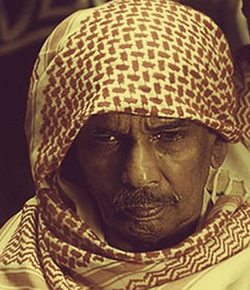
Mamu Koya well renowned in the Malayalam film industry for his genuine usage of the local Kozhikodan slangs plays the father's role in the album. The lyrics featuring him mock at the state machinery, media attempt to demonize anything and everything related to Islam. The album moves forward with the monologues of this poor father – the 'Native Bapa' ['Bapa' – a deglamorised way of addressing a father among the Mappila Muslims]. 'Native Bapa' played by Mamu Koya gets introduced into the album as a reluctant secularist and his words convey immense grief and anger against the stereotyping of Muslim lives with terror and he narrates it sarcastically through the story of his personal life.

He expresses his painful concerns and elements of doubt which forces him to think otherwise on the stories fed through media and police with regards to his son, Kunju, branded as a terrorist. Despite all these justifications in favour of his son, he too towards the end of the album quite unwillingly and filled with pain agrees to the general perceptions with regards to his son, saying that 'he too don't want to see his son's body as he is a traitor'. The actor Mamu Koya quite successfully brings to screen the mental and physical tortures meted up on the family by the state and the media, and ends the narratives registering his disagreement to the stereotypes by again sarcastically referring to the term 'bomb'.

The rap portion of the song is in English and so the team Mappila Lahala prefers to call their work by the name Mappila Hip hop. The whole song has its English sub titles and is the first of its kind in Kerala.

Hip hop has a history of resistance and so bringing in these rap elements in to the Mappila narratives, the team succeeds in putting up a formidable resistance against such stereotypes. So the album is not all about the narratives of the grievous father and instead features the voice of the youth, who believes that the 'Rebel is the only loyal'. The rap portion of the video album, with its immense energy and revolutionary content responds to the very same issues addressed by the father from the angle of a rebellious youth, who wants the peace to prevail.

The youth who hops with the rap portion of the music rejects terrorism saying that Islam is peace in the definition and asks us to take away all our prejudices based on what media feeds us. As the lines says,

Bombing innocents, I'll call you a terrorist

I don't care if you are an Al-Qaeda militant

or if the world calls you the US president…

The rap portion of the album is performed by a medical student Harris; part of the Kozhikode based 'Street Academics', whom with the Team Mappila Lahala collaborated to produce its first project Native Bapa.

The Album is directed by Muhsin Parari a graduate in English and Islamic Jurisprudence and he says, "Majority in the community meekly stomachs the police version because they fear any attempt to question the official story will land them in trouble. We want to assert that only a rebel is the real loyal”.

It was Muhsin who penned the poem titled “Native Bapa” which later grew into this song.

Muhsin told TwoCircles.net that the team Mappila Lahala's next project will be a rock version of K Satchithanandan's poem Kozhipanku and thoughts are on progress with regards to giving a hip hop treatment to Kambalathu Govindan Nair's Mappila song on the historical 1921 Malabar riots against the British invasion.

We are used to the Hip hop versions of films songs in languages like Hindi, Malayalam and Tamil and never in the history have they made use of the political possibilities of hip-hop. Native Bapa stands apart as the first of its kind on that regard.

Comments

Add new comment

  • Coastaldigest.com reserves the right to delete or block any comments.
  • Coastaldigset.com is not responsible for its readers’ comments.
  • Comments that are abusive, incendiary or irrelevant are strictly prohibited.
  • Please use a genuine email ID and provide your name to avoid reject.
Agencies
January 3,2020

Giving each and every app access to personal information stored on Android smartphones such as your contacts, call history, SMS and photos may put you in trouble as bad actors can easily use these access to spy on you, send spam messages and make calls anywhere at your expense or even sign you up for a premium "service", researchers from cybersecurity firm Kaspersky have warned.

But one can restrict access to such information as Android lets you configure app permissions. 

Giving an app any of these permissions generally means that from now on it can obtain information of this type and upload it to the Cloud without asking your explicit consent for whatever it intends to do with your data.

Therefore, security researchers recommend one should think twice before granting permissions to apps, especially if they are not needed for the app to work. 

For example, most games have no need to access your contacts or camera, messengers do not really need to know your location, and some trendy filter for the camera can probably survive without your call history, Kaspersky said. 

While decision to give permission is yours, the fewer access you hand out, the more intact your data will be.

Here's what you should know to protect your data.

SMS: An app with permission to send and receive SMS, MMS, and WAP (Wireless Application Protocol) push messages, as well as view messages in the smartphone memory will be able to read all of your SMS correspondence, including messages with one-time codes for online banking and confirming transactions.

Using this permission, the app can also send spam messages in your name (and at your expense) to all your friends. Or sign you up for a premium "service." You can see and conrol which apps have these rights by going to the settings of your phone.

Calendar: With permission to view, delete, modify, and add events in the calendar, prying eyes can find out what you have done and what you are doing today and in the future. Spyware loves this permission.

Camera: Permission to access the camera is necessary for the app to take photos and record video. But apps with this permission can take a photo or record a video at any moment and without warning. Attackers armed with embarrassing images and other dirt on you can make life a misery, according to Kaspersky.

Contacts: With permission to read, change, and add contacts in your address book, and access the list of accounts registered in the smartphone, an app can send your entire address book to its server. Even legitimate services have been found to abuse this permission, never mind scammers and spammers, for whom it is a windfall.

This permission also grants access to the list of app accounts on the device, including Google, Facebook, and many other services.

Phone: Giving access to your phone means permission to view and modify call history, obtain your phone number, cellular network data, and the status of outgoing calls, add voicemail, access IP telephony services, view numbers being called with the ability to end the call or redirect it to another number and call any number.

This permission basically lets the app do anything it likes with voice communication. It can find out who you called and when or prevent you from making calls (to a particular number or in general) by constantly terminating calls. 

It can eavesdrop on your conversations or, of course, make calls anywhere at your expense, including to pay-through-the-nose numbers, Kaspersky warned.

Comments

Add new comment

  • Coastaldigest.com reserves the right to delete or block any comments.
  • Coastaldigset.com is not responsible for its readers’ comments.
  • Comments that are abusive, incendiary or irrelevant are strictly prohibited.
  • Please use a genuine email ID and provide your name to avoid reject.
Agencies
March 10,2020

New Delhi, Mar 10: Crisis-hit Yes Bank on Tuesday said that it has enabled inward IMPS and NEFT services.

The move allows people to send money from other bank accounts to their Yes Bank account through IMPS (Immediate Payment Service) and NEFT (National Electronic Funds Transfer) mode.

In a tweet, the bank also said that Yes Bank customers can pay their credit card dues and loan obligations from other bank accounts.

"Inward IMPS/NEFT services have now been enabled. You can make payments towards YES BANK Credit Card dues and loan obligations from other bank accounts. Thank you for your co-operation. @RBIA @FinMinIndia," said tweet.

Last week Yes Bank was placed under moratorium and a withdrawal cap of Rs 50,000 was imposed till April 3.

The administrator of Yes Bank, Prashant Kumar and Rajnish Kumar, the Chairman of the State Bank of India are hopeful that moratorium would be lifted within a week.

As per the Reserve Bank of India (RBI) draft reconstruction scheme for the crisis-hit private lender, the SBI will take up 49 per cent in the bank by investing Rs 2,450 crore.

The new board of directors will stand constituted from the appointed date. It will comprise a CEO and MD, non-executive chairman and non-executive directors. The SBI will have nominee directors appointed on the board of the reconstructed bank.

The RBI may appoint additional directors to the board, who shall continue in office for one year, or until an alternate board is constituted by Yes Bank.

The SBI will not reduce its holding below 26 per cent before completion of three years from the date of infusion of the capital.

Comments

Add new comment

  • Coastaldigest.com reserves the right to delete or block any comments.
  • Coastaldigset.com is not responsible for its readers’ comments.
  • Comments that are abusive, incendiary or irrelevant are strictly prohibited.
  • Please use a genuine email ID and provide your name to avoid reject.
Agencies
February 26,2020

Unnao, Feb 26: Ever heard of someone wishing a 'bright future' for the dead? In a bizarre incident in Uttar Pradesh's Unnao district, a village head issued a death certificate with the wish for an elderly man who had died last month.

The incident took place in the Sirwariya village in Asoha block where an elderly person Laxmi Shankar died after a prolonged illness on January 22.

His son went to the village head Babulal and requested him to issue a death certificate that he needed for some financial transactions.

Babulal not only issued the death certificate, but also 'wished' 'a bright future for the deceased' on the document.

The village head wrote in the death certificate -- "Main inke ujjwal bhavishya ki kaamna karta hoon (I wish him a bright future)."

The letter went viral on the social media on Monday after which the village head apologised for the error and issued a new death certificate.

Comments

Add new comment

  • Coastaldigest.com reserves the right to delete or block any comments.
  • Coastaldigset.com is not responsible for its readers’ comments.
  • Comments that are abusive, incendiary or irrelevant are strictly prohibited.
  • Please use a genuine email ID and provide your name to avoid reject.