



Money was transferred online to bribe voters during polls: EC

June 8, 2014

New Delhi, Jun 8: Innovative methods like transfer of funds through the RTGS banking system and concealment of currency wads inside car bonnets were detected by Election Commission (EC) as it took steps to curb the use of black money during the just-concluded Lok Sabha polls.

The poll panel's election expenditure monitoring wing, under its Director General (Expenditure) PK Dash, seized total cash of Rs 313 crore and 2.25 crore litres of liquor along with other illegal inducements for bribing voters during the recently held parliamentary and Assembly polls.

"As a fear was created among miscreants, they were constantly changing methods. For example, since vehicles were being checked, it was noticed that some carried cash in the bonnet of the vehicle and, when it was recovered, the currency notes were burnt and the teams seized half-burnt notes.
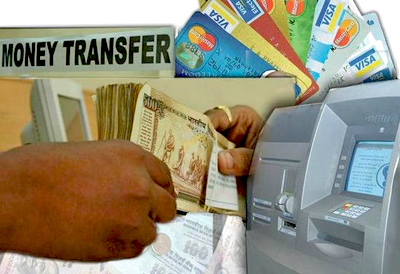
Money online"Similarly, Rs 8.31 crore in cash being carried on the roofs of buses in five bags was also seized. Cash was being transferred through Real Time Gross Settlement (RTGS) to accounts of voters. Several innovative methods were being adopted to avoid being caught by the checking teams," Dash said.

Under RBI rules, the minimum amount that can be sent through the RTGS system is Rs 2 lakh.

Dash said that notwithstanding the innovative means, EC and its teams were able to effectively contain black money use in the polls.

Talking about the recent raising of the ceiling of expenditure for candidates for Lok Sabha and Assembly polls, Dash said the current limit of Rs 70 lakh for Lok Sabha candidates and Rs 28 lakh for Assembly poll contestants was "adequate".

Dash said EC's evaluation was that 80 per cent of the candidates show less than 90 per cent of the ceiling amount in their election expense statements after the polls are over.

"During the all-party meeting held just before Lok Sabha polls, it was demanded that the existing ceiling of 40 lakh be revised. Hence, the Commission recommended that it be raised to Rs 70 lakh. This was done keeping in view the inflation rate, increase in number of voters and, consequently, the number of polling stations and also changes in method of campaigning due to changes in information, communication and technology techniques.

"Some argue that the current ceiling of Rs 70 lakh is not sufficient, while others say that the limit is too high and will lead to corrupt practices as many cannot afford (to spend) Rs 70 lakh in view of the low average income of people. The question arises here what should be the ceiling? The reality is quite different. Eighty per cent of the candidates show less than 90 per cent of the ceiling in their election expense account," he said.

He said the candidates have a good sum which they are allowed to spend under the ceiling as the expenditure incurred by parties during campaigning is not added to their contestants' accounts. The ceiling for candidates is applicable only for expenses incurred by them from the date of filing of their nominations.

Dash, who has headed the exclusive EC wing since its inception in 2010, said that raising the expenditure ceiling for candidates would not serve any purpose.

"Parties can spend any amount as, under existing laws, there is no ceiling on their expenses. In view of this, I consider the existing ceiling is adequate for the candidates who campaign by just means.

"On the contrary, even if the ceiling is raised, it will not be sufficient for those who indulge in distribution of cash, liquor and bribes.

"I raise a question for those who demand a higher ceiling. Will those who indulge in distribution of bribe and liquor at all show such expenses in their accounts? The answer is obviously no as these are corrupt practises and they use black money for such illegal activities," he said.

The DG said it was a "tough challenge" to control the use of money power in elections as India has a "cash economy".

He added that EC's maiden step of creating a pool of various intelligence and enforcement agencies to curb black money use during polls had paid off.

"It was the first time that such a step was taken. It was very effective as they (agencies) shared real-time information and took prompt action. It helped in coordination among the departments. The seizure figure shows effectiveness of the measures," he said.

Dash said the counter action against black money was meticulously planned.

"More than 11,000 flying squads were formed (covering) all constituencies to attend to the complaints of bribery along with a similar number of static surveillance teams to check transport of cash, liquor and (inducements). The entire checking was done in the presence of an executive magistrate and was also video-graphed, which can be made available to any member of the public," he said.

CCTVs were installed at all liquor distilleries and warehouses for close monitoring. Sale of liquor and storage was monitored on a day-to-day basis and if there was any increase in sale or stocks at any outlet on any day compared to last day and last year, it was kept under strict watch, he said.

Chartered aircrafts were also kept under surveillance, the top EC officer said, adding that video teams were deployed to record all major expenses like big public rallies in case of candidates who had the potential to spend more.

"Income Tax department kept close watch on the movement of black money in the constituencies. Banks were asked to send cash withdrawal reports every day to election officials," he said.

Comments

Add new comment

  • Coastaldigest.com reserves the right to delete or block any comments.
  • Coastaldigset.com is not responsible for its readers’ comments.
  • Comments that are abusive, incendiary or irrelevant are strictly prohibited.
  • Please use a genuine email ID and provide your name to avoid reject.
News Network
April 16,2020

United Nations, Apr 16: WHO chief Tedros Adhanom Ghebreyesus has welcomed the world health body's cooperation with India to leverage strategies that helped the country win its war against polio into the response to COVID-19 outbreak, saying such joint efforts will help defeat the pandemic.

The World Health Organization (WHO) has said it will work with India's Ministry of Health and Family Welfare to leverage the strategies that helped the country eradicate polio to fight the pandemic.

Migrants who returned to UP and Bihar were hurriedly housed in schools and panchayat buildings, which were turned into quarantine centres. However, unhygienic conditions and people running away have proved to be a problem

The WHO's national polio surveillance network will be engaged to strengthen COVID-19 surveillance and its field staff will continue to support immunization and elimination of tuberculosis and other diseases.

“Great news: @MoHFW_INDIA & @WHOSEARO initiated a systematic engagement of @WHO's national polio surveillance network, and other field staff, for India's #COVID19 response, tapping into the best practices & resources that helped win its war against polio,” the WHO director-general tweeted, referring to India's Ministry of Health and Family Welfare and World Health Organization Regional Office for South-East Asia.

According to the Johns Hopkins University data, over 2 million people are infected by the virus and more than 136,000 people have died of the disease globally.

Ghebreyesus expressed gratitude to Health and Family Welfare Minister Harsh Vardhan “for his leadership and collaboration” with WHO. “Through these joint efforts we can defeat the #coronavirus and save lives. Together!”

India eliminated polio in 2014.
According to a WHO press release, Vardhan said in New Delhi that “time and again the Government of India and WHO together have shown our ability, competence and prowess to the whole world. With our combined meticulous work, done with full sincerity and dedication, we were able to get rid of polio.”

“All of you in the field – IDSP (Integrated Disease Surveillance Project), state rapid response teams and WHO - are our ‘surveillance corona warriors'. With your joint efforts we can defeat the coronavirus and save lives,” Vardhan added.

WHO South-East Asia Regional Director Poonam Khetrapal Singh said the National Polio Surveillance Project (WHO-NPSP) played a critical role in strengthening surveillance for polio that generated useful, timely and accurate data to guide policies, strategies and interventions until transmission of the poliovirus was interrupted in the country,” adding that the other WHO field staff involved with elimination of tuberculosis and neglected tropical diseases and hypertension control initiative were also significant resources.

Singh added that “it is now time to use all your experience, knowledge and skills, with the same rigor and discipline that you showed while monitoring polio activities, to support districts with surveillance, contact tracing and containment activities.”

The WHO release said strengths of the NPSP team – surveillance, data management, monitoring and supervision, and responding to local situations and challenges – will be utilized to supplement efforts of National Centre for Disease Control, IDSP and Indian Council of Medical Research to strengthen COVID-19 surveillance.

The NPSP team will also support in sharing information and best practices and help states and districts calibrate their response based on transmission scenarios and local capacities.

The WHO field staff will continue to support immunization and surveillance and elimination of Tuberculosis and Neglected Tropical Diseases, Singh said, adding, “disease outbreaks can negatively impact progress in a range of areas, from maternal and child mortality to vaccine-preventable diseases and other treatable conditions. India had been making stupendous progress in these areas and we cannot afford for India's remarkable progress to be set back or reversed.”

Comments

Add new comment

  • Coastaldigest.com reserves the right to delete or block any comments.
  • Coastaldigset.com is not responsible for its readers’ comments.
  • Comments that are abusive, incendiary or irrelevant are strictly prohibited.
  • Please use a genuine email ID and provide your name to avoid reject.
News Network
June 13,2020

New Delhi, Jun 13: India's COVID-19 tally on Saturday witnessed its highest-ever spike of 11,458 cases, according to the Union Ministry of Health and Family Welfare (MoHFW).

A total of 386 deaths have been reported due to the infection during the last 24 hours.

The total number of coronavirus cases in the country now stands at 3,08,993 including 1,45,779 active cases 1,54,330 cured/discharged/migrated and 8,884 deaths.

COVID-19 cases in Maharashtra continue to soar with the number reaching 101141. Tamil Nadu's coronavirus count stands at 40,698 while cases in Delhi reached 36,824.

Comments

Add new comment

  • Coastaldigest.com reserves the right to delete or block any comments.
  • Coastaldigset.com is not responsible for its readers’ comments.
  • Comments that are abusive, incendiary or irrelevant are strictly prohibited.
  • Please use a genuine email ID and provide your name to avoid reject.
Agencies
January 5,2020

New Delhi, Jan 5: Senior Congress leader P Chidambaram on Sunday sàid it was "shameful" that Sadaf Jafar, SR Darapuri and Pavan Rao were arrested by the Uttar Pradesh Police for violence without any evidence against them.

He also said that it was a shocking admission by the police that there is no evidence of their involvement.

"Sadaf Jafar, S R Darapuri and Pavan Rao Ambedkar released on bail after police ADMITTED no evidence of their involvement in violence. Shocking admission," he said on Twitter.

"If that were so, why did the police arrest them in the first place? And how did the Magistrate remand them to custody without looking at the evidence," he asked.
"The law says 'find evidence, then arrest'. The reality is 'first arrest, then search for evidence'. Shameful," Chidambaram tweeted.

Comments

Add new comment

  • Coastaldigest.com reserves the right to delete or block any comments.
  • Coastaldigset.com is not responsible for its readers’ comments.
  • Comments that are abusive, incendiary or irrelevant are strictly prohibited.
  • Please use a genuine email ID and provide your name to avoid reject.