



Money was transferred online to bribe voters during polls: EC

June 8, 2014

New Delhi, Jun 8: Innovative methods like transfer of funds through the RTGS banking system and concealment of currency wads inside car bonnets were detected by Election Commission (EC) as it took steps to curb the use of black money during the just-concluded Lok Sabha polls.

The poll panel's election expenditure monitoring wing, under its Director General (Expenditure) PK Dash, seized total cash of Rs 313 crore and 2.25 crore litres of liquor along with other illegal inducements for bribing voters during the recently held parliamentary and Assembly polls.

"As a fear was created among miscreants, they were constantly changing methods. For example, since vehicles were being checked, it was noticed that some carried cash in the bonnet of the vehicle and, when it was recovered, the currency notes were burnt and the teams seized half-burnt notes.
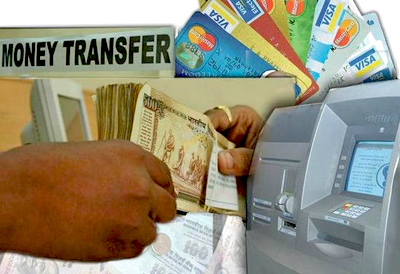
Money online"Similarly, Rs 8.31 crore in cash being carried on the roofs of buses in five bags was also seized. Cash was being transferred through Real Time Gross Settlement (RTGS) to accounts of voters. Several innovative methods were being adopted to avoid being caught by the checking teams," Dash said.

Under RBI rules, the minimum amount that can be sent through the RTGS system is Rs 2 lakh.

Dash said that notwithstanding the innovative means, EC and its teams were able to effectively contain black money use in the polls.

Talking about the recent raising of the ceiling of expenditure for candidates for Lok Sabha and Assembly polls, Dash said the current limit of Rs 70 lakh for Lok Sabha candidates and Rs 28 lakh for Assembly poll contestants was "adequate".

Dash said EC's evaluation was that 80 per cent of the candidates show less than 90 per cent of the ceiling amount in their election expense statements after the polls are over.

"During the all-party meeting held just before Lok Sabha polls, it was demanded that the existing ceiling of 40 lakh be revised. Hence, the Commission recommended that it be raised to Rs 70 lakh. This was done keeping in view the inflation rate, increase in number of voters and, consequently, the number of polling stations and also changes in method of campaigning due to changes in information, communication and technology techniques.

"Some argue that the current ceiling of Rs 70 lakh is not sufficient, while others say that the limit is too high and will lead to corrupt practices as many cannot afford (to spend) Rs 70 lakh in view of the low average income of people. The question arises here what should be the ceiling? The reality is quite different. Eighty per cent of the candidates show less than 90 per cent of the ceiling in their election expense account," he said.

He said the candidates have a good sum which they are allowed to spend under the ceiling as the expenditure incurred by parties during campaigning is not added to their contestants' accounts. The ceiling for candidates is applicable only for expenses incurred by them from the date of filing of their nominations.

Dash, who has headed the exclusive EC wing since its inception in 2010, said that raising the expenditure ceiling for candidates would not serve any purpose.

"Parties can spend any amount as, under existing laws, there is no ceiling on their expenses. In view of this, I consider the existing ceiling is adequate for the candidates who campaign by just means.

"On the contrary, even if the ceiling is raised, it will not be sufficient for those who indulge in distribution of cash, liquor and bribes.

"I raise a question for those who demand a higher ceiling. Will those who indulge in distribution of bribe and liquor at all show such expenses in their accounts? The answer is obviously no as these are corrupt practises and they use black money for such illegal activities," he said.

The DG said it was a "tough challenge" to control the use of money power in elections as India has a "cash economy".

He added that EC's maiden step of creating a pool of various intelligence and enforcement agencies to curb black money use during polls had paid off.

"It was the first time that such a step was taken. It was very effective as they (agencies) shared real-time information and took prompt action. It helped in coordination among the departments. The seizure figure shows effectiveness of the measures," he said.

Dash said the counter action against black money was meticulously planned.

"More than 11,000 flying squads were formed (covering) all constituencies to attend to the complaints of bribery along with a similar number of static surveillance teams to check transport of cash, liquor and (inducements). The entire checking was done in the presence of an executive magistrate and was also video-graphed, which can be made available to any member of the public," he said.

CCTVs were installed at all liquor distilleries and warehouses for close monitoring. Sale of liquor and storage was monitored on a day-to-day basis and if there was any increase in sale or stocks at any outlet on any day compared to last day and last year, it was kept under strict watch, he said.

Chartered aircrafts were also kept under surveillance, the top EC officer said, adding that video teams were deployed to record all major expenses like big public rallies in case of candidates who had the potential to spend more.

"Income Tax department kept close watch on the movement of black money in the constituencies. Banks were asked to send cash withdrawal reports every day to election officials," he said.

Comments

Add new comment

  • Coastaldigest.com reserves the right to delete or block any comments.
  • Coastaldigset.com is not responsible for its readers’ comments.
  • Comments that are abusive, incendiary or irrelevant are strictly prohibited.
  • Please use a genuine email ID and provide your name to avoid reject.
Agencies
July 8,2020

New Delhi, Jul 8: India has reported a spike of 22,752 COVID-19 cases in the last 24 hours, taking the country's coronavirus tally to 7,42,417 on Wednesday, informed the Union Ministry of Health and Family Welfare.

Out of the total cases reported, 4,56,830 patients have been cured/discharged from the disease while one patient has been migrated, the Health Ministry informed.

It added that there are 2,64,944 active cases in the country.

482 deaths reported in the last 24 hours due to COVID-19 in the country, taking India's death toll to 20,642.

According to the Union Health Ministry, Maharashtra continues to be the worst affected state reporting 2,17,121 coronavirus cases and 9,250 fatalities.

Tamil Nadu -- the second worst-affected state from COVID-19 -- has a total of 1,18,594 cases and 1,636 deaths due to coronavirus.

While Delhi has a total of 1,02,831 COVID-19 cases including 3,165 deaths.

The Indian Council of Medical Research on Wednesday informed that a total of 1,04,73,771 samples tested for COVID-19 up to July 7. Of these, 2,62,679 samples were tested on Tuesday.

Comments

Add new comment

  • Coastaldigest.com reserves the right to delete or block any comments.
  • Coastaldigset.com is not responsible for its readers’ comments.
  • Comments that are abusive, incendiary or irrelevant are strictly prohibited.
  • Please use a genuine email ID and provide your name to avoid reject.
News Network
April 7,2020

New Delhi, April 7: The government continued to take steps to contain the spread of coronavirus including a strategy of cluster containment as the cases continued to rise and Tuesday saw single-day largest jump of 722 positive cases.

The total number of positive cases reached 4,789 on Tuesday, the 14th day of lockdown.

According to the latest update of the Health Ministry, there are 4,312 active cases, 352 persons have been cured or discharged (one migrated) and 124 have died.

Maharashtra has the largest number of positive cases at 868 and also accounts for the largest number of deaths at 48. Tamil Nadu has 621 confirmed cases.

Thirteen persons have died in Madhya Pradesh and the same number in Gujarat.
The 21-day lockdown was announced on March 24 by Prime Minister Narendra Modi.

At the regular media briefing at 4 pm, Lav Aggarwal, Joint Secretary in the Health Ministry, said that the government is adopting a strategy for cluster containment.

"This strategy is producing positive results, especially in Agra, Gautam Buddh Nagar, Pathanamthitta, Bhilwara and East Delhi," he said.

Aggarwal said that a recent study by the Indian Council of Medical Research (ICMR) has shown that a person infected with coronavirus can infect 406 others in just 30 days if he does not follow the lockdown and social distancing norms.

He said no decision has been taken on extending the lockdown and urged against any speculation.

He said latest technology was being used for management of COVID-19 and there was real-time tracking of ambulances.

The official said the dedicated facilities for COVID-19 are divided into three parts -- COVID Care Centre, Dedicated COVID Health Centre and Dedicated COVID Hospitals.

He said that COVID Care Centres were for treating mild, very mild and likely to be COVID-19 patients. Hostels, hotels, school, and stadium can be used for this. "We have asked states to map it with COVID Care Hospitals and COVID Health Centre so that patients can be shifted if needed," he said.

The official said that COVID Health Centres were for treating COVID-19 patients of clinically moderate level of seriousness. "For this, fully functional hospitals will be used. A dedicated block of a fully functional hospital can also be used for this. The hospitals must have beds with oxygen support," he said.

Aggarwal said that dedicated COVID Hospitals were meant for severe and critical cases and these must be fully-equipped with ICUs and ventilators.
New coronavirus cases were reported on Tuesday from several states including Maharashtra, Madhya Pradesh, West Bengal, and Tamil Nadu.

The Ministry of Environment, Forest and Climate Change has issued an advisory about containing coronavirus in national parks, sanctuaries and tiger reserves in view of the spread of COVID-19 and a report about tiger being infected in New York. The Central Zoo Authority has also advised zoos in India to remain on high alert.

Here's a quick read on the COVID-19 related updates

1. The Indian Railways has prepared 40,000 isolation beds in 2,500 coaches and this work is ongoing in 133 locations across the country.

2. Madhya Pradesh Chief Minister Shivraj Singh Chouhan said he was willing to extend the lockdown in the state after the completion of 21-day period to save lives.

3. The government is monitoring the movement of pharmaceuticals closely and the movement of pharmaceuticals through trucks has stabilised in the country.

4. Under the 'Lifeline Udan' initiative, 152 flights have transported over 200 tonnes of cargo till April 6.

5. According to ICMR, testing of 1,07,006 people has been carried out till date and 136 government labs and 59 private labs are conducting tests in the country.

6. The Home Ministry said that the status of essential goods and services was by and large satisfactory in the country. Home Minister Amit Shah has issued directives to the states to ensure there is no hoarding or black marketing in any corner of the country.

7. The number of corona positive cases in Uttar Pradesh has reached 314. Of these, 168 patients are connected to Tablighi Jamaat, state Chief Minister Yogi Adityanath said on Tuesday.

8. The government has lifted restrictions on export of 24 pharmaceutical ingredients and medicines made from them.

9. Union Defence Minister Rajnath Singh said the Group of Ministers had "an extensive discussion on the prevailing situation post the lockdown" in the country. They also appreciated the Cabinet's decision to cut MP's salary for a year.

10. Central Zoo Authority has advised zoos in the country to remain on highest alertness, watch animals on 24X7 basis, using CCTV for any abnormal behavior or symptoms.

Comments

Add new comment

  • Coastaldigest.com reserves the right to delete or block any comments.
  • Coastaldigset.com is not responsible for its readers’ comments.
  • Comments that are abusive, incendiary or irrelevant are strictly prohibited.
  • Please use a genuine email ID and provide your name to avoid reject.
News Network
April 24,2020

Kochi, Apr 24: The central government on Thursday submitted a statement in the Kerala High Court on the three petitions challenging the contract between Kerala government and US-based data analytics company Sprinklr.

Assistant Solicitor General P Vijayakumar filed the statement on behalf of the central government, which is the second respondent in the case.

The statement said that the contract between the Kerala government and Sprinklr dilutes the rights of the people. It stated the contract does not specify the amount of compensation that individuals should receive in case of breach of privacy or misuse of information.

It also said that it was not clear whether the information was collected and handed over to the data analytics firm with full consent of the patients (suspected and otherwise).

''It is always preferable to utilise the services available in the government sector for sharing sensitive data required for analytical purposes.

The Government of India has introduced the 'Aarogya Setu' application for collection of health data and about seven crore Indian citizens have already downloaded the same. All the state governments are advised to promote the said application for fighting the pandemic," the statement said.

It was further submitted that the "Government of India with the support of NIC is capable of providing all the requirements relating to data storage, processing and application which are being offered the third respondent, if a request to that effect comes from the state government."

Kerala Congress leader Ramesh Chennithala and BJP state president K Surendran had earlier approached the Kerala High Court seeking cancellation of the state government's agreement with Sprinklr for processing of data related to COVID-19 patients.

Comments

Add new comment

  • Coastaldigest.com reserves the right to delete or block any comments.
  • Coastaldigset.com is not responsible for its readers’ comments.
  • Comments that are abusive, incendiary or irrelevant are strictly prohibited.
  • Please use a genuine email ID and provide your name to avoid reject.