



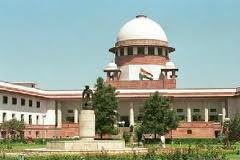
New norms for schools as SC backs Right to Education

April 13, 2012

SC

New Delhi, April 13: With the Supreme Court throwing its full weight behind the Right of Children to Free and Compulsory Education Act, 2009, (better known as the Right to Education Act or RTE Act) on Thursday, the composition of students in schools as well as the economics of running schools will undergo dramatic changes.

The apex court upheld the constitutional validity of the Act and directed all schools, including privately-run schools, irrespective of the board they are affiliated to, to admit from this academic year (2012-13) at least 25% students from socially and economically backward families. These students will be guaranteed free education from class I till they reach the age of 14.

This means the nature of the classroom will change. Until now, several schools were holding a separate shift for students from poor families after the main school was over. Under the RTE Act, they will have to induct these students in the main class - in other words, 25% of every class will have students from socially and economically disadvantaged families.

While many educationists feel the resultant social integration will make education more meaningful, the reaction of some expensive schools as well as of some parents hasn't been positive. Also, the need to give free education to 25% students is expected to increase the expenditure of schools, which is likely to lead to another round of fee hikes.

The schools will get a subsidy from the government for giving free education (65% of the subsidy will come from the Centre and 35% from states), but the subsidy is not expected to meet the full cost. The government subsidy will be based on the expenditure per student in government schools or Kendriya Vidyalayas, while many private schools spend (or at least, charge as fee) much more.

According to estimates, the government spends Rs 3,000 per child per year for primary education. The Centre has given states the freedom to implement its own grants and aids, but many states are financially broke and the grants vary from state to state. For instance, Delhi gives about Rs 1,200 per child per month, while Haryana doesn't give any aid to schools. Some educationists said that now private schools would have to hike fees as 75% of the class would have to pay for the 25% students admitted under the RTE Act.

Reacting to the Supreme Court order, HRD minister Kapil Sibal said, "I am very happy that the court has set all controversies at rest. One of the biggest controversies was on whether the 25% reservation applies to private schools or not... that controversy has been set to rest."

The court has, however, sought a clarification from the government on applicability of RTE Act to boarding schools and orphanages as the legislation applied only to day scholars. "To put the matter beyond doubt, we recommend that appropriate guidelines be issued under Section 35 of the 2009 Act clarifying the above position," the bench headed by Chief Justice S H Kapadia said.

According to 2007-08 statistics quoted by the Supreme Court, out of the 12,50,755 schools imparting elementary education in India, 80.2% were government run, 5.8% private aided and 13.1% private unaided. Of these, 87.2% of the schools were located in rural areas.

According to RTE activist Kiran Bhatty, former national coordinator for the monitoring of the RTE, several violations had cropped up recently, including non-compliance of the 25% quota for economically weaker sections. Other violations included running two shifts instead of integrating students in the class and conducting admission tests.

While National University of Planning and Administration's vice chancellor R Govinda did not rule out initial "turmoil", he said some "restructuring" on the part of government and private schools was necessary. He added that there was an increasing "ghettoisation of schools" that will now be discouraged. "The full impact will be seen in 7-8 years when the composition of the student community will change," he said.

Madarsas and institutions of vedic learning will continue to be outside the ambit of the Act as the HRD ministry has declared them as institutions of religious instruction rather than educational institutions as described under the RTE.

WILL FEES RISE?

What is RTE?

Free school education up to age of 14 for students from socially & economically backward families

Does RTE apply to all schools?

Yes, even private, convent schools, irrespective of the board. Only madrasas & Vedic schools exempt

What age group does RTE apply to?

To children from age 6 to 14, or from Class 1 to 8

Will there be a fee hike?

Most probably as govt subsidy won't meet full cost of providing free education to 25% students

Will students from poor families be in same classroom?

Yes. RTE says these students must be integrated in the main classroom

Can teachers hold private tuitions?

RTE says that no teacher can take private tuitions

Comments

Add new comment

  • Coastaldigest.com reserves the right to delete or block any comments.
  • Coastaldigset.com is not responsible for its readers’ comments.
  • Comments that are abusive, incendiary or irrelevant are strictly prohibited.
  • Please use a genuine email ID and provide your name to avoid reject.
News Network
April 17,2020

New Delhi, Apr 17: A total of 3,336 Indians tested positive for coronavirus in 53 countries while 25 others died of the infection, government sources said on Thursday.

They said the Indians stranded abroad will have to be patient as the government is not evacuating them as part of a larger policy decision to check the spread of the coronavirus in the country.

"They need to be patient and stay where they are. Our missions have been told to extend all possible help to the stranded Indians," said a source.

According to the sources, evacuation of around 35,000 foreign nationals from 48 countries has been facilitated so far from India.

The sources said the majority of Indians who tested positive for the coronavirus infection are living in the Gulf region. A sizeable number of Indians staying in France and the US have also tested positive.

They said that Indian missions in the Gulf region have been told to extend all possible assistance to the Indians in distress.

Around eight million Indians are living in the Gulf countries and there has been growing anxiety among them over their livelihood in view of the pandemic as it has majorly impacted the oil-driven economy of the region.

Almost all Gulf countries have taken a series of drastic measures including imposing total lockdown, travel restrictions and even closing borders to stem the spread of the coronavirus infection.

The United Arab Emirates has already warned of possible action against countries refusing to allow their citizens to return.

Around 3.3 million Indians are living in the UAE and they constitute roughly 30 per cent of the country's population. Among the Indian states, Kerala is the most represented followed by Tamil Nadu and Andhra Pradesh.

A large number of Indians are working in the construction sector in Qatar which is hosting the FIFA World Cup in 2022.

As a matter of policy, India has decided not to bring back the stranded Indians from abroad till the nationwide lockdown ends.

The issue of Indians in Gulf region figured prominently during Prime Minister Narendra Modi's video conference with heads of Indian missions abroad on March 30.

Welfare of Indians in the Gulf was the major focus area in the discussions Modi had with leaders of countries in the region over the last few weeks, officials said.

Comments

Add new comment

  • Coastaldigest.com reserves the right to delete or block any comments.
  • Coastaldigset.com is not responsible for its readers’ comments.
  • Comments that are abusive, incendiary or irrelevant are strictly prohibited.
  • Please use a genuine email ID and provide your name to avoid reject.
News Network
March 26,2020

Jaipur, Mar 26: Two new COVID-19 positive cases were registered in Rajasthan taking the total number of coronavirus cases to 38 in the state.
The Union Health Ministry had on Wednesday reported 606 positive COVID-19 cases in India including 43 foreign nationals.

Comments

Add new comment

  • Coastaldigest.com reserves the right to delete or block any comments.
  • Coastaldigset.com is not responsible for its readers’ comments.
  • Comments that are abusive, incendiary or irrelevant are strictly prohibited.
  • Please use a genuine email ID and provide your name to avoid reject.
News Network
January 20,2020

New Delhi, Jan 20: Surging inflation and slowing growth are raising serious concerns about the future growth prospects of the economy and as a remedial measure the government should resolve supply-side hurdles and ensure more stringent governance norms, a report said on Monday.

According to the Dun and Bradstreet Economy forecast, even though the Index of Industrial Production (IIP) turned positive in November 2019, it is likely to remain subdued.

"Slowdown in consumption and investment along with high inflationary pressures, geopolitical issues and uncertainty over the recovery of the economic growth are likely to keep IIP subdued," the report noted.

Dun and Bradstreet expect IIP to remain around 1.5-2.0 percent during December 2019.

As per government data, industrial output grew 1.8 percent in November, turning positive after three months of contraction, on account of growth in the manufacturing sector.

On the price front, uneven rainfall along with floods in many states and geopolitical issues have led to a surge in headline inflation even as demand remains muted.

The Consumer Price Index (CPI) in December rose to about five-and-half year high of 7.35 percent from 5.54 percent in November, mainly driven by high vegetable prices.

"The sharp rise in inflation has constrained monetary policy stimulus while revenue shortfall has placed limits on the government expenditure," Dun & Bradstreet India Chief Economist Arun Singh said.

According to Singh, growth-supporting measures and deceleration in growth are likely to cause slippage in fiscal deficit target by a wider margin.

"The government should focus on taking small steps to address the slowdown; in particular, resolve the supply-side hurdles and ensure more stringent governance norms," Singh said.

Unless these concerns are addressed through a comprehensive policy framework, it will not be easy for India to clock a sustainable growth rate to become a USD 5 trillion economy, he added.

Comments

Add new comment

  • Coastaldigest.com reserves the right to delete or block any comments.
  • Coastaldigset.com is not responsible for its readers’ comments.
  • Comments that are abusive, incendiary or irrelevant are strictly prohibited.
  • Please use a genuine email ID and provide your name to avoid reject.