



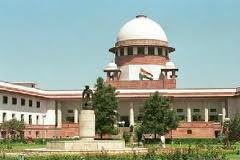
New norms for schools as SC backs Right to Education

April 13, 2012

SC

New Delhi, April 13: With the Supreme Court throwing its full weight behind the Right of Children to Free and Compulsory Education Act, 2009, (better known as the Right to Education Act or RTE Act) on Thursday, the composition of students in schools as well as the economics of running schools will undergo dramatic changes.

The apex court upheld the constitutional validity of the Act and directed all schools, including privately-run schools, irrespective of the board they are affiliated to, to admit from this academic year (2012-13) at least 25% students from socially and economically backward families. These students will be guaranteed free education from class I till they reach the age of 14.

This means the nature of the classroom will change. Until now, several schools were holding a separate shift for students from poor families after the main school was over. Under the RTE Act, they will have to induct these students in the main class - in other words, 25% of every class will have students from socially and economically disadvantaged families.

While many educationists feel the resultant social integration will make education more meaningful, the reaction of some expensive schools as well as of some parents hasn't been positive. Also, the need to give free education to 25% students is expected to increase the expenditure of schools, which is likely to lead to another round of fee hikes.

The schools will get a subsidy from the government for giving free education (65% of the subsidy will come from the Centre and 35% from states), but the subsidy is not expected to meet the full cost. The government subsidy will be based on the expenditure per student in government schools or Kendriya Vidyalayas, while many private schools spend (or at least, charge as fee) much more.

According to estimates, the government spends Rs 3,000 per child per year for primary education. The Centre has given states the freedom to implement its own grants and aids, but many states are financially broke and the grants vary from state to state. For instance, Delhi gives about Rs 1,200 per child per month, while Haryana doesn't give any aid to schools. Some educationists said that now private schools would have to hike fees as 75% of the class would have to pay for the 25% students admitted under the RTE Act.

Reacting to the Supreme Court order, HRD minister Kapil Sibal said, "I am very happy that the court has set all controversies at rest. One of the biggest controversies was on whether the 25% reservation applies to private schools or not... that controversy has been set to rest."

The court has, however, sought a clarification from the government on applicability of RTE Act to boarding schools and orphanages as the legislation applied only to day scholars. "To put the matter beyond doubt, we recommend that appropriate guidelines be issued under Section 35 of the 2009 Act clarifying the above position," the bench headed by Chief Justice S H Kapadia said.

According to 2007-08 statistics quoted by the Supreme Court, out of the 12,50,755 schools imparting elementary education in India, 80.2% were government run, 5.8% private aided and 13.1% private unaided. Of these, 87.2% of the schools were located in rural areas.

According to RTE activist Kiran Bhatty, former national coordinator for the monitoring of the RTE, several violations had cropped up recently, including non-compliance of the 25% quota for economically weaker sections. Other violations included running two shifts instead of integrating students in the class and conducting admission tests.

While National University of Planning and Administration's vice chancellor R Govinda did not rule out initial "turmoil", he said some "restructuring" on the part of government and private schools was necessary. He added that there was an increasing "ghettoisation of schools" that will now be discouraged. "The full impact will be seen in 7-8 years when the composition of the student community will change," he said.

Madarsas and institutions of vedic learning will continue to be outside the ambit of the Act as the HRD ministry has declared them as institutions of religious instruction rather than educational institutions as described under the RTE.

WILL FEES RISE?

What is RTE?

Free school education up to age of 14 for students from socially & economically backward families

Does RTE apply to all schools?

Yes, even private, convent schools, irrespective of the board. Only madrasas & Vedic schools exempt

What age group does RTE apply to?

To children from age 6 to 14, or from Class 1 to 8

Will there be a fee hike?

Most probably as govt subsidy won't meet full cost of providing free education to 25% students

Will students from poor families be in same classroom?

Yes. RTE says these students must be integrated in the main classroom

Can teachers hold private tuitions?

RTE says that no teacher can take private tuitions

Comments

Add new comment

  • Coastaldigest.com reserves the right to delete or block any comments.
  • Coastaldigset.com is not responsible for its readers’ comments.
  • Comments that are abusive, incendiary or irrelevant are strictly prohibited.
  • Please use a genuine email ID and provide your name to avoid reject.
News Network
February 19,2020

New Delhi, Feb 19: India will switch to the world's cleanest petrol and diesel from April 1 as it leapfrogs straight to Euro-VI emission compliant fuels from Euro-IV grades now - a feat achieved in just three years and not seen in any of the large economies around the globe.

India will join the select league of nations using petrol and diesel containing just 10 parts per million of sulphur as it looks to cut vehicular emissions that are said to be one of the reasons for the choking pollution in major cities.

Sanjiv Singh, Chairman of Indian Oil Corp (IOC) - the firm that controls roughly half of the country's fuel market, said almost all refineries began producing ultra-low sulphur BS-VI (equivalent to Euro-VI grade) petrol and diesel by the end of 2019 and oil companies have now undertaken the tedious task of replacing every drop of fuel in the country with the new one.

"We are absolutely on track for supplying BS-VI fuel from April 1. Almost all refineries have begun supplying BS-VI fuel and the same has reached storage depots across the country," he said.

From storage depots, the fuel has started travelling to petrol pumps and in the next few weeks all of them will only have BS-VI grade petrol and diesel, he said. "We are 100 per cent confident that fuel that will flow from nozzles at all the petrol pumps in the country on April 1 will be BS-VI emission compliant fuel."

India adopted Euro-III equivalent (or Bharat Stage-III) fuel with a sulphur content of 350 ppm in 2010 and then took seven years to move to BS-IV that had a sulphur content of 50 ppm. From BS-IV to BS-VI it took just three years.

"It was a conscious decision to leapfrog to BS-VI as first upgrading to BS-V and then shifting to BS-VI would have prolonged the journey to 4 to 6 years. Besides, oil refineries, as well as automobile manufacturers, would have had to make investments twice - first to producing BS-V grade fuel and engines and then BS-VI ones," he said.

State-owned oil refineries spent about Rs 35,000 crore to upgrade plants that could produce ultra-low sulphur fuel. This investment is on top of Rs 60,000 crore they spent on refinery upgrades in the previous switchovers.

BS-VI has a sulphur content of just 10 ppm and emission standards are as good as CNG.

Originally, Delhi and its adjoining towns were to have BS-VI fuel supplies by April 2019 and the rest of the country was to get same supplies from April 2020.

But oil marketing companies switched over to supply of BS-VI grade fuels in the national capital territory of Delhi on April 1, 2018.

The supply of BS-VI fuels was further extended to four contiguous districts of Rajasthan and eight of Uttar Pradesh in the National Capital Region (NCR) on April 1, 2019, together with the city of Agra.

BS-VI grade fuels were made available in 7 districts of Haryana from October 1, 2019.

Singh said the new fuel will result in a reduction in NOx in BS-VI compliant vehicles by 25 per cent in petrol cars and by 70 per cent in diesel cars.

The switchover, he said, is a tedious task as every drop of old, higher-sulphur content fuel has to be flushed out in depots, pipelines and tanks before being replaced by BS-VI.

"We are confident of disruption-free switchover to BS-VI supplies across the country," he said. "What we will be supplying is the best quality available anywhere in the world. You don't have any better fuel that is supplied in any part of the world. Perhaps our BS-VI fuel will be better than equivalent fuel in some parts of the US and Europe."

India adopted a fuel upgradation programme in the early 1990s. Low lead gasoline (petrol) was introduced in 1994 in Delhi, Mumbai, Kolkata and Chennai. On February 1, 2000, unleaded gasoline was mandated nationwide.

Similarly, BS-2000 (Euro-I equivalent, BS-1) vehicle emission norms were introduced for new vehicles from April 2000. BS-II (Euro-II equivalent) emission norms for new cars were introduced in Delhi from 2000 and extended to the other metro cities in 2001.

Benzene limits have been reduced progressively from 5 per cent in 2000 to 1 per cent nationwide. Lead content in gasoline was removed in phases and only unleaded gasoline is being produced and sold from February 1, 2000.

The octane number of gasoline signifies the improved performance of the engine. Loss in octane number due to phasing out of lead was made up by installing new facilities in the refinery and changes in refinery operation. RON (Research Octane Number) of gasoline for BS-2000 spec was increased to 88. This has over time been increased to 91.

Singh said sulphur reduction will reduce Particulate Matter (PM) emissions even in the in-use older generation diesel vehicles.

Comments

Add new comment

  • Coastaldigest.com reserves the right to delete or block any comments.
  • Coastaldigset.com is not responsible for its readers’ comments.
  • Comments that are abusive, incendiary or irrelevant are strictly prohibited.
  • Please use a genuine email ID and provide your name to avoid reject.
News Network
February 27,2020

New Delhi, Feb 27: An Indian Air Force aircraft on Thursday evacuated 76 Indians and 36 foreign nationals from the coronavirus-hit Chinese city of Wuhan.

The C-17 Globemaster III transport aircraft was sent to Wuhan on Wednesday and it carried 15 tonnes of medical supplies for coronavirus-affected people in China.

On its return, the aircraft brought back 112 people, including 23 citizens from Bangladesh, six from China, two each from Myanmar and the Maldives and one each from South Africa, the US and Madagascar.

Earlier, India had evacuated around 650 Indians from Wuhan in two Air India flights.

“In all 723 Indian nationals and 43 foreign nationals have been evacuated from Wuhan, China, in these three flights,” the Ministry of External Affairs (MEA) said.

On the medical supplies delivered by India to China, the MEA said they would help augment the country’s efforts to control the coronavirus outbreak which had been declared as a public health emergency by the World Health Organisation.

“The assistance is also a mark of friendship and solidarity from the people of India towards the people of China as the two countries also celebrate 70th anniversary of establishment of diplomatic relations this year,” it said.

Comments

Add new comment

  • Coastaldigest.com reserves the right to delete or block any comments.
  • Coastaldigset.com is not responsible for its readers’ comments.
  • Comments that are abusive, incendiary or irrelevant are strictly prohibited.
  • Please use a genuine email ID and provide your name to avoid reject.
News Network
February 27,2020

New Delhi, Feb 27: The death toll in the communal violence in northeast Delhi over the amended citizenship law reached 32 on Thursday, senior officials said.

It was at 27 till Wednesday night.

"Five more deaths recorded at GTB Hospital, so death toll at that hospital has gone up to 30, taking total toll to 32," a senior Delhi Health Department official told news agency.

The Lok Nayak Jai Prakash Narayan Hospital had reported two fatalities on Wednesday.

Comments

Add new comment

  • Coastaldigest.com reserves the right to delete or block any comments.
  • Coastaldigset.com is not responsible for its readers’ comments.
  • Comments that are abusive, incendiary or irrelevant are strictly prohibited.
  • Please use a genuine email ID and provide your name to avoid reject.