



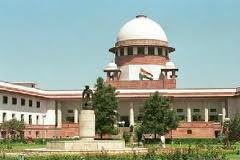
New norms for schools as SC backs Right to Education

April 13, 2012

SC

New Delhi, April 13: With the Supreme Court throwing its full weight behind the Right of Children to Free and Compulsory Education Act, 2009, (better known as the Right to Education Act or RTE Act) on Thursday, the composition of students in schools as well as the economics of running schools will undergo dramatic changes.

The apex court upheld the constitutional validity of the Act and directed all schools, including privately-run schools, irrespective of the board they are affiliated to, to admit from this academic year (2012-13) at least 25% students from socially and economically backward families. These students will be guaranteed free education from class I till they reach the age of 14.

This means the nature of the classroom will change. Until now, several schools were holding a separate shift for students from poor families after the main school was over. Under the RTE Act, they will have to induct these students in the main class - in other words, 25% of every class will have students from socially and economically disadvantaged families.

While many educationists feel the resultant social integration will make education more meaningful, the reaction of some expensive schools as well as of some parents hasn't been positive. Also, the need to give free education to 25% students is expected to increase the expenditure of schools, which is likely to lead to another round of fee hikes.

The schools will get a subsidy from the government for giving free education (65% of the subsidy will come from the Centre and 35% from states), but the subsidy is not expected to meet the full cost. The government subsidy will be based on the expenditure per student in government schools or Kendriya Vidyalayas, while many private schools spend (or at least, charge as fee) much more.

According to estimates, the government spends Rs 3,000 per child per year for primary education. The Centre has given states the freedom to implement its own grants and aids, but many states are financially broke and the grants vary from state to state. For instance, Delhi gives about Rs 1,200 per child per month, while Haryana doesn't give any aid to schools. Some educationists said that now private schools would have to hike fees as 75% of the class would have to pay for the 25% students admitted under the RTE Act.

Reacting to the Supreme Court order, HRD minister Kapil Sibal said, "I am very happy that the court has set all controversies at rest. One of the biggest controversies was on whether the 25% reservation applies to private schools or not... that controversy has been set to rest."

The court has, however, sought a clarification from the government on applicability of RTE Act to boarding schools and orphanages as the legislation applied only to day scholars. "To put the matter beyond doubt, we recommend that appropriate guidelines be issued under Section 35 of the 2009 Act clarifying the above position," the bench headed by Chief Justice S H Kapadia said.

According to 2007-08 statistics quoted by the Supreme Court, out of the 12,50,755 schools imparting elementary education in India, 80.2% were government run, 5.8% private aided and 13.1% private unaided. Of these, 87.2% of the schools were located in rural areas.

According to RTE activist Kiran Bhatty, former national coordinator for the monitoring of the RTE, several violations had cropped up recently, including non-compliance of the 25% quota for economically weaker sections. Other violations included running two shifts instead of integrating students in the class and conducting admission tests.

While National University of Planning and Administration's vice chancellor R Govinda did not rule out initial "turmoil", he said some "restructuring" on the part of government and private schools was necessary. He added that there was an increasing "ghettoisation of schools" that will now be discouraged. "The full impact will be seen in 7-8 years when the composition of the student community will change," he said.

Madarsas and institutions of vedic learning will continue to be outside the ambit of the Act as the HRD ministry has declared them as institutions of religious instruction rather than educational institutions as described under the RTE.

WILL FEES RISE?

What is RTE?

Free school education up to age of 14 for students from socially & economically backward families

Does RTE apply to all schools?

Yes, even private, convent schools, irrespective of the board. Only madrasas & Vedic schools exempt

What age group does RTE apply to?

To children from age 6 to 14, or from Class 1 to 8

Will there be a fee hike?

Most probably as govt subsidy won't meet full cost of providing free education to 25% students

Will students from poor families be in same classroom?

Yes. RTE says these students must be integrated in the main classroom

Can teachers hold private tuitions?

RTE says that no teacher can take private tuitions

Comments

Add new comment

  • Coastaldigest.com reserves the right to delete or block any comments.
  • Coastaldigset.com is not responsible for its readers’ comments.
  • Comments that are abusive, incendiary or irrelevant are strictly prohibited.
  • Please use a genuine email ID and provide your name to avoid reject.
News Network
March 4,2020

New Delhi, Mar 4: A court in Delhi on Wednesday convicted expelled BJP MLA Kuldeep Singh Sengar of culpable homicide not amounting to murder in the death of the Unnao rape victim's father.

District judge Dharmesh Sharma said Sengar had no intention of killing the victim's father. “He was beaten in a brutal manner that led to his death,” the judge said.

The court had sent Sengar to jail on December 20 for the “remainder of his natural biological life” for raping the woman in 2017, when she was a minor.

The Central Bureau of Investigation (CBI) had examined 55 witnesses in support of the case and the defence examined nine witnesses.

The court had recorded the statements of the rape survivor's uncle, mother, sister and one of her father's colleague who claimed to be an eyewitness to the incident.

Charges were framed against Sengar, his brother Atul, Bhadauria, sub-inspector Kamta Prasad, constable Amir Khan and six others in the case.

The case was transferred to Delhi from a trial court in Uttar Pradesh on the directions of the Supreme Court on August 1 last year.

In July, 2019 a truck rammed into the car the rape victim was travelling in with some family members and her lawyer.

Two of her aunts died in the incident. She was airlifted from a hospital in Lucknow and to AIIMS in Delhi.

The victim has been provided accommodation in Delhi and is under CRPF protection.

Comments

Add new comment

  • Coastaldigest.com reserves the right to delete or block any comments.
  • Coastaldigset.com is not responsible for its readers’ comments.
  • Comments that are abusive, incendiary or irrelevant are strictly prohibited.
  • Please use a genuine email ID and provide your name to avoid reject.
News Network
April 22,2020

New Delhi, Apr 22: Prime Minister Narendra Modi on Wednesday said that The Epidemic Diseases (Amendment) Ordinance, 2020, manifests his government's commitment to protecting healthcare workers braving COVID-19 on the frontline.
"The Epidemic Diseases (Amendment) Ordinance, 2020, manifests our commitment to protect each and every healthcare worker, who is bravely battling COVID-19 on the frontline. It will ensure the safety of our professionals. There can be no compromise on their safety!," Prime Minister Modi tweeted.
The Central government on Wednesday brought an ordinance to end the violence against health workers, making it a cognizable, non-bailable offence with the imprisonment of up to seven years for those found guilty.

"We have brought an ordinance under which any attack on health workers will be a cognizable, non-bailable offence. In the case of grievous injuries, the accused can be sentenced from 6 months to 7 years. They can be penalised from Rs 1 lakh to Rs 5 lakh," Union Minister Prakash Javadekar briefed media after the meeting of the Cabinet.

"Such crime will now be cognisable and non-bailable. An investigation will be done within 30 days. Accused can be sentenced from three months to five years, and penalised from Rs 50,000 up to Rs 2 lakh," said Javadekar.

Moreover, if the damage is done to vehicles or clinics of healthcare workers, then a compensation amounting to twice the market value of the damaged property will be taken from the accused, said Javadekar.

Comments

Add new comment

  • Coastaldigest.com reserves the right to delete or block any comments.
  • Coastaldigset.com is not responsible for its readers’ comments.
  • Comments that are abusive, incendiary or irrelevant are strictly prohibited.
  • Please use a genuine email ID and provide your name to avoid reject.
News Network
April 19,2020

New Delhi, Apr 19: The government on Sunday prohibited the sale of non-essential items through e-commerce platforms during the ongoing lockdown, four days after allowing such companies to sale mobile phones, refrigerators and ready-made garments.

Union Home Secretary Ajay Bhalla issued an order excluding the non-essential items from sale by the e-commerce companies from the consolidated revised guidelines, which listed the exemption given to the services and people from the purview of the lockdown.

The order said the following clause "E-commerce companies. Vehicles used by e-commerce operators will be allowed to ply with necessary permissions" is excluded from the guidelines.

The previous order had said such items were allowed for sale through e-commerce platforms from April 20.

However, the reason for reversing the order is not known immediately.

Comments

Add new comment

  • Coastaldigest.com reserves the right to delete or block any comments.
  • Coastaldigset.com is not responsible for its readers’ comments.
  • Comments that are abusive, incendiary or irrelevant are strictly prohibited.
  • Please use a genuine email ID and provide your name to avoid reject.