


Charges against PM on Coalgate baseless, people around Anna anti-nationals: PMO

June 10, 2012

Anna_Anti_National

New Delhi/ Chennai, June 10: Setting the stage for fresh hostilities, the Prime Minister's office on Saturday aggressively dismissed corruption allegations levelled by Team Anna against Prime Minister Manmohan Singh over coal block allegations for being devoid of evidence.

Minister of state for PMO V Narayanasamy followed up a curt letter to Hazare with a fusillade against the Gandhian leader's associates Arvind Kejriwal and Kiran Bedi, calling them "anti-nationals" and alleging their financial dealings are not above board.

"As regards allegations made against the Prime Minister, they seem to be based on a leaked draft of the CAG on coal block allocations and on media stories. You have provided no evidence to back up these allegations," said Narayanasamy in his letter to Anna Hazare.

Speaking to the media in Chennai, Narayanasamy lashed out at Team Anna, saying Kejirwal needed to explain what had happened to large funds collected by the campaign for a Lokpal and said Bedi has also faced questions over the accounts relating to her travel bills.

Team Anna members Manish Sisodia and Bedi rejected the PMO letter, reiterating plans for a protest from July 25 for passage of the Lokpal Bill around the time Parliament is due to meet for its monsoon session. "Use of hollow words like progressive laws" are not convincing, said Sisodia. "Our protest from July 25 will go on as planned," said Sisodia while Bedi said the letter was 'wishy-washy'.

The sharp exchange is an indicator that the government, already under attack for corruption and glacial governance, is feeling the heat and is likely to increasingly lash out at the activists. The government's efforts to pass the Lokpal Bill have been stymied in the Rajya Sabha where it lacks a majority and where the opposition has supported clauses the Centre is loathe to concede.

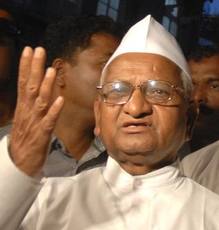
Caught between the political opposition in Parliament and Team Anna outside, the government is readying for renewed confrontation with the activists. After the PMO letter rejected the demand for a special investigation team to probe charges leveled by the Hazare group against the PM and 14 ministers, Narayanasamy said, "Anna is a simple man, but he is surrounded by anti-national elements and people who have been supported by foreign forces."

The letter and the remarks make it evident that the row can get uglier. "The government is also determined to ensure baseless and uninformed allegations made against public servants are not allowed to create fear that can lead to paralysis in decision-making and slow down growth and development," the letter said.

Comments

Add new comment

  • Coastaldigest.com reserves the right to delete or block any comments.
  • Coastaldigset.com is not responsible for its readers’ comments.
  • Comments that are abusive, incendiary or irrelevant are strictly prohibited.
  • Please use a genuine email ID and provide your name to avoid reject.
News Network
March 12,2020

New Delhi, Mar 12: The coronavirus pandemic could deal a crippling blow to the Indian travel and tourism industry, specially with the government suspending all visas, with the economic impact being assessed to run into thousands of crores of rupees. According to industry chamber CII, this is the one of the worst crises ever to hit the Indian tourism industry impacting all its geographical segments - inbound, outbound and domestic, almost all tourism verticals - leisure , adventure, heritage, MICE, cruise, corporate and niche segments.

The whole tourism value chain across hotels, travel agents, tour operations, destinations, restaurants, family entertainment venues and air, land and sea transportation have been hit.

In an impact assessment of the coronavirus pandemic, CII Tourism Committee said inbound foreign tourism of over USD 28 billion in value terms accounts for an average 60-65 per cent between October to March.

"As the news of the virus started picking up from November, the percentage of cancellations started going up in this segment exponentially and is reaching a peak of almost 80 per cent now in March in many Indian locations. The value at risk from this segment will be in multiples of tens of thousands of crores," the CII assessment report said.

With India cancelling all visas, the chamber said the impact "will be worse".

It further said,"The forward bookings for the inbound season of October 2020-March 2021 which should have started picking are all muted. These are showing highly discouraging signs with cancellations of important global travel marts which are marketplaces for contracting for the next season."

It further said there are reports of large scale forward cancellations from NRI segment from developed markets, which account for over 60 per cent during April to September inbound visits.

"Unless the progression of the virus stops, almost the entire value for the remainder of 2020 season is at risk," the report added.

ANAROCK Property Consultants Chairman Anuj Puri said India's hospitality sector will definitely be impacted by the announcement of a global pandemic, and the mounting numbers of confirmed coronavirus cases in the country.

"The cancellation of visas for foreigners as well as the strong advice issued to Indians to refrain from unnecessary travel will have a marked effect. This is the most unsettling healthcare crisis in recent times and hotel bookings will go south," he added.

On Indians being advised to refrain from unnecessary travel, as per the CII report almost 28 million plus Indians are estimated to have travelled outside in 2019 and there were almost 1.8 billion domestic tourist footfalls.

The holiday season of Indians -- those travelling within the country and outside -- is heavy in April-July, October and December.

"The December holiday season of 2019 took an estimated hit of almost 40-50 per cent, the holiday season of April to July 2020 is likely to take a humongous hit which could be as high as 80-100 per cent, unless there is positive news of the progression of virus decreasing," the CII assessment report said.

There are advanced cancellations and highly reduced forward booking pipelines for the holiday season. Only corporates are flying and that too only on highly essential same day travel. Most of the MNCs are advising work from home, stifling travel, it added.

On suspension of visas, MakeMyTrip Group CEO Rajesh Magow told ,"The period between February till the end of March is typically a lean period because of exam season but we are seeing a demand slowdown for the upcoming summer holiday season especially for international travel. The situation remains dynamic making it hard to quantify the actual impact on our business and industry at large."

He further said,"The decision by the government will have an impact on inbound and outbound international travel. So far there are no restrictions or advisories issued for domestic travel."

VFS Global Regional Group COO - South Asia, Middle East and North Africa, Americas Vinay Malhotra said,"While it is too early to comment on the impact of coronavirus on visa application trends, so far, our visa application processes in India continue on schedule as per the mandates of our client governments."

He also said the company is exploring steps to assuage concerns of people about visiting busy public areas due to the nature of the virus by considering discounted rates on courier return services for visa customers who want to avoid returning to the visa centres to pick up their passports.

Besides, he said,"We are also contemplating lower fees for our Visa at your doorstep service, for those customers who are requesting an alternative to visiting the centres to submit visa applications."

Comments

Add new comment

  • Coastaldigest.com reserves the right to delete or block any comments.
  • Coastaldigset.com is not responsible for its readers’ comments.
  • Comments that are abusive, incendiary or irrelevant are strictly prohibited.
  • Please use a genuine email ID and provide your name to avoid reject.
News Network
January 24,2020

New Delhi, Jan 24: Although India's Ujjwala programme encouraged adoption of liquefied petroleum gas (LPG) for cooking among the poor, households availing the scheme have not shifted away from using highly polluting fuels like firewood, a study reveals.

The researchers, including those from the University of British Columbia (UBC) in Canada, found that additional incentives to encourage regular use of cooking gas are necessary for a complete transition to clean cooking fuel among poor rural households.

They noted that about 2.9 billion people across Asia, Africa, and Latin America burn solid fuels like firewood to meet their cooking energy needs.

This has significant negative implications for public health, the environment, and societal development, according to the researchers.

Through the Pradhan Mantri Ujjwala Yojana (PMUY), India has provided capital cost subsidies to poor women to adopt a clean-burning cooking fuel or LPG.

The researchers explained that within the first 40 months of the scheme, more than 80 million households obtained LPG stoves.

However, the full benefits of LPG adoption depend on near complete replacement of polluting fuels with LPG, according to a research-based policy brief published in the journal Nature Energy.

The scientists said this cannot be assumed solely on the basis of LPG presence in the household.

"Our research shows that Ujjwala was able to attract new consumers rapidly, but those consumers did not start using LPG on a regular basis," Abhishek Kar, a postdoc at Columbia University in the US, told PTI.

The study analysed LPG sales data for over 25,000 consumers, including PMUY beneficiaries, as well as general rural LPG consumers in Koppal district of Karnataka.

The scientists employed data covering all LPG purchases of PMUY beneficiaries through their first year in the programme.

They also assessed the general rural population's purchases during their first five years as consumers to assess the effect of experience on use.

The findings estimate that an average rural family needs to purchase five 14.2 kilogramme-cylinders annually to meet half of their cooking needs.

However, the study said just seven per cent of PMUY beneficiaries in Koppal purchased five or more cylinders annually, suggesting that the beneficiaries seldom use LPG.

The general (nonPMUY) consumers in this region use on average two times more LPG cylinders than PMUY beneficiaries, the researchers noted.

Yet, only 45 per cent of nonPMUY consumers use five or more cylinders per year -- even after several years of experience with LPG, they said.

The team assessed price and seasonal factors affecting LPG use among the general population over a three-year period.

It found that LPG consumers are sensitive to price and seasonality -- LPG cylinder refill rates are lower in the summer when agricultural activity is limited, and cash is scarce.

"There was no scheme incentives to promote use, except general LPG subsidies which is available to all, including the urban middle class," said Kar, who was a Ph.D. scholar at UBC when the research was published.

"If there is no additional income, what cost would a poor family on an already tight budget cut to pay for an extra expense on a regular basis.

"Ujjwala has started the scheme of 5 kg-cylinder in response, but the impact of that on LPG sales is still publicly unknown," he said.

These findings, the researchers noted, suggest the need for additional measures to promote regular LPG use for all rural populations.

Although the finding come from a single district in Southern India, it may also apply to other areas with similar socio-economic conditions, they said.

A more expansive evaluation of PMUY would help design targeted incentives to transform infrequent users to regular users, according to the researchers.

Comments

Add new comment

  • Coastaldigest.com reserves the right to delete or block any comments.
  • Coastaldigset.com is not responsible for its readers’ comments.
  • Comments that are abusive, incendiary or irrelevant are strictly prohibited.
  • Please use a genuine email ID and provide your name to avoid reject.
Agencies
July 21,2020

The Retailers Association of India (RAI) has said that ad hoc lockdowns by state governments are impacting the businesses of already-stressed retailers, along with hurting the economic revival of the country.

In a statement, the body of the organised retail industry said that the long road to recovery for the Indian retail industry continues to meet stumbling blocks with numerous restrictions being imposed at the state and local levels.

"Total lockdowns in some places and limited operational hours and days in several others are creating setbacks for retailers as the already stressed retail businesses are getting further interrupted and in turn, dampening consumer sentiment," it said.

According to RAI, although the intentions are that of citizen safety and social distancing, the recent instances of local lockdowns and ad hoc restrictions being imposed in Uttar Pradesh, Maharashtra, Andhra Pradesh and Karnataka are having a distressing impact on retail businesses.

Retailers are already facing huge setbacks in terms of payment of wages and rentals due to very low sales of about 40 per cent as compared to last year, thanks to the extended lockdown, it said.

Contesting the restrictions on operating hours, Sandeep Kataria, CEO, Bata India said: "Restricted shopping time can lead to unnecessary overcrowding of stores, which is unfavourable towards the personal safety of both store staff and customers. Longer operational hours will support recovery for retailers as well as help adhering to social distancing norms."

Arvind Mediratta, MD and CEO, METRO Cash & Carry India said that these lockdowns will create severe inconvenience for all citizens as they also bar operations of food and grocery retail and wholesale stores.

Such hastily-implemented decisions by states undermine investor confidence and would come in the way of making the country "aatmanirbhar" or self-reliant, he said.

Voicing the concerns of retailers, the RAI has submitted representations to various state and local authorities that puts forth recommendations to get businesses and life of consumers on the track to recovery.

It has said that authorities should mandatorily allow essential shops including kiranas, general trade shops, supermarkets, hypermarkets and wholesalers to operate every day of the week until 9 p.m. to cater to the daily needs of the customers.

It has also sought ensuring uniform and regular opening of all categories of retail for full working hours while following stringent hygiene practices and adhering to social distancing norms. This will help avoid overcrowding outside stores as demand will get distributed over all days of the week, it said.

The industry body has also asked the local authorities to open malls in all states. Malls can ensure a safe shopping experience wherein safety measures are taken by both, the mall authorities and the retailers, it said.

Kumar Rajagopalan, CEO, RAI, said: "The need of the hour is concerted efforts by all stakeholders. While retailers are doing their bit by following stringent hygiene practices, the policymakers too need to support to ensure economic revival across the country. Consumption is important for the country and supports the business environment."

Comments

Add new comment

  • Coastaldigest.com reserves the right to delete or block any comments.
  • Coastaldigset.com is not responsible for its readers’ comments.
  • Comments that are abusive, incendiary or irrelevant are strictly prohibited.
  • Please use a genuine email ID and provide your name to avoid reject.