


TISS report points to anti-Muslim bias of police

June 26, 2012
prisoner

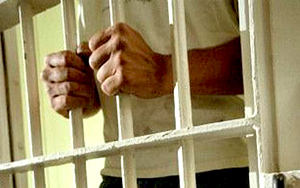
Mumbai, June 26: A report on Muslim prisoners in Maharashtra jails by the Tata Institute of Social Sciences (TISS) establishes that most of them do not have connections with criminal gangs, and points to an acute bias of the police for arresting them in some cases only because they belong to a particular community.

A Study of the Socio Economic Profile and Rehabilitation Needs of Muslim Community in Prisons in Maharashtra, 2011, by Dr. Vijay Raghavan and Roshni Nair from the Centre for Criminology and Justice School of Social Work, Tata Institute of Social Sciences (TISS), states that 96 per cent of the respondents have not been held under preventive detention charges, thus indicating that they are not viewed as a threat to law and order.

The study which surveyed 339 Muslims, mostly between 18 and 30 years of age, in 15 prisons says this implies that most respondents do not have connections with criminal gangs or have any record which may be a threat to law and order. About 25.4 per cent of those imprisoned don’t have lawyers to represent them in their cases.

The police’s bias against Muslims led to some of the arrests under the erstwhile Terrorist and Disruptive Activities (Prevention) Act (TADA), the Maharashtra Control of Organised Crimes Act (MCOCA) and even under the Official Secrets Act.

‘Two types of laws’

An agent in textile export, Murtuza, arrested under the Official Secrets Act on charges of spying, says in his interview to the research team: “There are two types of laws in this country. One is for Hindus and the other is for Muslims. The policeman is first a Hindu and then a policeman. The judge is first a Hindu and then a judge and the lawyer is first a Hindu then a lawyer. People who work against the State, indulge in rioting, kill thousands of innocent people, and harass women and children roam free in this country. They are not punished. I am suffering only because I am a Muslim.”

Murtuza strongly feels that the discriminatory attitude is one of the major reasons for his arrest. He says that the police do not have enough evidence against him and yet he remains in prison. Two years have passed and the case is dragging on in court. He misses his court dates because the escort to take him to court is often not available. He has applied for bail thrice, but it has been rejected each time. He also applied for transferring the case to a different judge, but nothing has happened yet.

Poor victimised

Another prisoner Moiz says that “every time he tries to start life afresh, the police arrest him in some false case. They also demand money from criminals and those who can pay are set free. The poor are victimised. The police are very powerful and can do anything.”

Some interviews reflect the deep despair and alienation of the people interviewed. Muneer feels that after the demolition of the Babri Masjid, the rift between Hindus and Muslims has widened. Due to the riots and bomb blasts in 1992-93, the police perception of Muslims has become negative. The police view them as criminal minded. Migrants from Uttar Pradesh and Bihar are viewed with prejudice by the police.

Shoaib expressed his fears about the breakdown of the social fabric if the bias against Muslims continues. “The police have a negative perception of the Muslim community and act with bias. Due to the actions of the police and fundamentalist politics, the perception of Muslims is negative in society. If the situation continues to be like this, the next generation may get into further crime and vested interests could use them. Society’s perception and the negative feelings of hatred have to be reduced. Only then there is hope for a better tomorrow. Otherwise the situation will get worse for individuals, their families and society.”

About 70 per cent of the 3,000 Muslims prisoners in 15 jails were under trials and 30 per cent were convicted prisoners. What is of concern is that 52.8 per cent are charged with violent crimes mainly murder, attempt to murder, rape, assault and kidnapping. Among the under trials interviewed charge sheets have only been filed in 47.4 per cent of the cases and a mere 3.8 per cent have reached judgement stage, indicating the slow pace of trials. Of those interviewed 75.5 per cent were arrested for the first time and 25.5 per cent are repeat offenders.

The percentage of Muslims in jails is also a high 36 per cent, says Dr. Raghavan, quoting recent official figures. Along with Gujarat and Kerala, Maharashtra is one of the States with the most disproportionate number of Muslims in prisons.

The Sachar Committee report says that in Maharashtra, Muslims account for 10.6 per cent of the general population; yet they comprise 32.4 per cent of the prison population. For those incarcerated on terms of less than a year, the figure rises: 42 per cent of prisoners on short-term sentences in the State are Muslims.

This study was done at the behest of the Maharashtra State Minorities Commission in response to the charge of a disproportionate number of Muslims in jail. It makes a slew of recommendations relating to rehabilitation and correctional programmes, and the need for steps to sensitise the police and prison administration.

Last month the findings were presented at a meeting with Arif Naseem Khan, State Minister for Minority Affairs.

The Minister accepted most of the recommendations, especially those relating to legal aid, adult education, vocational training, release on probation, and awareness and counselling centres in Muslim areas.

The Additional Chief Secretary of Minority Development will call a high-level inter-departmental meeting soon to work out ways to implement the recommendations.

Comments

Add new comment

  • Coastaldigest.com reserves the right to delete or block any comments.
  • Coastaldigset.com is not responsible for its readers’ comments.
  • Comments that are abusive, incendiary or irrelevant are strictly prohibited.
  • Please use a genuine email ID and provide your name to avoid reject.
Agencies
June 6,2020

Mumbai, Jun 6: Republic TV Editor-in-Chief Arnab Goswami faces a new complaint, this time under the Cable Televisions Network (Regulation) Act, 1995, for allegedly running the television channel "to create communal hatred, religious polarisation and threatening national integrity".

Social activist Nilesh Navlakha last month lodged a criminal complaint with the Commissioner of Police, Pune, through his lawyer Asim Sarode, under Section 2 of the Act.

"We have narrated six prominent, recent debate shows conducted by Goswami in which his arguments and words used were communal in nature which he kept repeating in his shows. The words and tonality are intended to promote communal attitudes and news is based on religious innuendos and half-truths," Sarode contended.

This leads to propaganda based on hatred, religious polarization and communal divide, said Navlakha in a statement.

He further said that the misuse of freedom of expression by Goswami and his channel posed a serious threat before the independent media as it violates the freedom of expression of the viewers, as it is the viewers' right to get correct, complete and true information.

Elaborating about Goswami's behaviour, Navlakha said that he has created what is termed 'Impulse Control Disorder' in psychiatry.
Sarode said: "Intermittent Explosive Disorder is a kind of 'impulse control disorder' which involves sudden episodes of impulsive, aggressive, violent behaviour or angry verbal outbursts in which you react grossly out of proportion to the situation."

They said that there are some more media persons displaying such tendencies in Hindi and English journalism, showing whatever is convenient and blow it out of proportion to give meanings which are out-of-context and disrupts the fabric of democracy while not fitting into journalism's ethics.

The complaint also alleged that Goswami and his channel are actually into "brainwashing" the viewers in a way that they will get converted into haters of some communities and terror for some religions.

"This is not less than running an organised crime syndicate of making the human minds to follow a fanatic terrorist thought process. When WhatsApp group admins are being booked under the law, then why the CTNRA provisions are not being invoked against such tendencies," Sarode asked.

In the complaint, it is pointed out how eminent persons have walked out of Goswami's shows because of his name-calling tactics, like labelling cricketer Sachin Tendulkar "anti-national" in one of his shows.

Navlakha and Sarode claimed that Goswami has violated the Programme Code under the CTNRA, the channel has indicated it is against sovereignty, integrity and security as also against public order, decency and morality, making it a serious issue and a cognizable offence.

It urged the Pune police chief to take suitable action against the wrongs committed to disturb the peace, law and order in society and book Goswami under the CTNRA Section's 16, which attracts a jail term of two years plus fine.

Comments

Add new comment

  • Coastaldigest.com reserves the right to delete or block any comments.
  • Coastaldigset.com is not responsible for its readers’ comments.
  • Comments that are abusive, incendiary or irrelevant are strictly prohibited.
  • Please use a genuine email ID and provide your name to avoid reject.
Agencies
August 6,2020

The Indian Defence Ministry, which had in its document that China intruded into the Indian territory in eastern Ladakh in early May, on August 6 took down the page which it had uploaded on its website.

According to a report by news channel NDTV, the ministry, in its document, had said the Chinese aggression has been "increasing along the Line of Actual Control (LAC) and more particularly in Galwan valley since May 5."

"The Chinese side has transgressed in the areas of Kungrang Nala, Gogra and north bank of Pangong Tso Lake on May 17-18," the document, titled 'Chinese Aggression on LAC' stated.

The document revealed that "... a violent face-off incident took place between the two sides on June 15, resulting in casualties on both sides."

After the clash, a second corps commander level meeting took place on June 22 to discuss the modalities of de-escalation. "While engagement and dialogue at military and diplomatic level is continuing to arrive at mutually acceptable consensus, the present standoff is likely to be prolonged," it said.

A defence ministry spokesperson told the news channel that the document "did not go through him".

The opposition Congress, meanwhile, asked the government why the report was taken down with party leader Rahul Gandhi alleging that removal of the document from websites would not change facts.

"Forget standing up to China, India's PM lacks the courage even to name them. Denying China is in our territory and removing documents from websites won't change the facts," Gandhi tweeted.

Comments

Add new comment

  • Coastaldigest.com reserves the right to delete or block any comments.
  • Coastaldigset.com is not responsible for its readers’ comments.
  • Comments that are abusive, incendiary or irrelevant are strictly prohibited.
  • Please use a genuine email ID and provide your name to avoid reject.
News Network
April 8,2020

New Delhi, Apr 8: The Supreme Court on Wednesday suggested that all tests to identify coronavirus positive patients should be conducted free of cost and asked the Central government to look into creating a mechanism for providing reimbursement for the same.

A bench headed by Justice Ashok Bhushan, while hearing a PIL via video-conferencing, suggested that the test should be conducted free of cost in the identified private laboratories and said that the court will pass appropriate order on the matter.

The apex court was hearing a PIL filed by lawyer and petitioner Shashank Deo Sudhi seeking direction to the Centre and other respective authorities to provide free of cost the testing facility for COVID-19 to all citizens in the country.

Solicitor General Tushar Mehta submitted that 118 laboratories were doing 15,000 test capacity per day and added that 47 private laboratory chains have also been involved for the same.

During the hearing, the court asked the Centre to ensure private labs don't charge a high amount for the test and suggested that the government can create an effective mechanism for reimbursement from the government for tests.

Mehta said that they will look into the suggestion and will try to devise what can be done best.

Sudhi, on the other hand, submitted that testing of coronavirus is very expensive and therefore the Central government should take all necessary steps to provide free of cost the testing facility for COVID-19 kits and others to all citizens in the country.

Comments

Add new comment

  • Coastaldigest.com reserves the right to delete or block any comments.
  • Coastaldigset.com is not responsible for its readers’ comments.
  • Comments that are abusive, incendiary or irrelevant are strictly prohibited.
  • Please use a genuine email ID and provide your name to avoid reject.