


TISS report points to anti-Muslim bias of police

June 26, 2012
prisoner

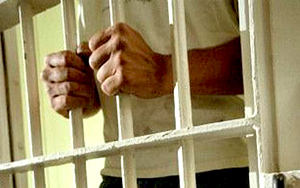
Mumbai, June 26: A report on Muslim prisoners in Maharashtra jails by the Tata Institute of Social Sciences (TISS) establishes that most of them do not have connections with criminal gangs, and points to an acute bias of the police for arresting them in some cases only because they belong to a particular community.

A Study of the Socio Economic Profile and Rehabilitation Needs of Muslim Community in Prisons in Maharashtra, 2011, by Dr. Vijay Raghavan and Roshni Nair from the Centre for Criminology and Justice School of Social Work, Tata Institute of Social Sciences (TISS), states that 96 per cent of the respondents have not been held under preventive detention charges, thus indicating that they are not viewed as a threat to law and order.

The study which surveyed 339 Muslims, mostly between 18 and 30 years of age, in 15 prisons says this implies that most respondents do not have connections with criminal gangs or have any record which may be a threat to law and order. About 25.4 per cent of those imprisoned don’t have lawyers to represent them in their cases.

The police’s bias against Muslims led to some of the arrests under the erstwhile Terrorist and Disruptive Activities (Prevention) Act (TADA), the Maharashtra Control of Organised Crimes Act (MCOCA) and even under the Official Secrets Act.

‘Two types of laws’

An agent in textile export, Murtuza, arrested under the Official Secrets Act on charges of spying, says in his interview to the research team: “There are two types of laws in this country. One is for Hindus and the other is for Muslims. The policeman is first a Hindu and then a policeman. The judge is first a Hindu and then a judge and the lawyer is first a Hindu then a lawyer. People who work against the State, indulge in rioting, kill thousands of innocent people, and harass women and children roam free in this country. They are not punished. I am suffering only because I am a Muslim.”

Murtuza strongly feels that the discriminatory attitude is one of the major reasons for his arrest. He says that the police do not have enough evidence against him and yet he remains in prison. Two years have passed and the case is dragging on in court. He misses his court dates because the escort to take him to court is often not available. He has applied for bail thrice, but it has been rejected each time. He also applied for transferring the case to a different judge, but nothing has happened yet.

Poor victimised

Another prisoner Moiz says that “every time he tries to start life afresh, the police arrest him in some false case. They also demand money from criminals and those who can pay are set free. The poor are victimised. The police are very powerful and can do anything.”

Some interviews reflect the deep despair and alienation of the people interviewed. Muneer feels that after the demolition of the Babri Masjid, the rift between Hindus and Muslims has widened. Due to the riots and bomb blasts in 1992-93, the police perception of Muslims has become negative. The police view them as criminal minded. Migrants from Uttar Pradesh and Bihar are viewed with prejudice by the police.

Shoaib expressed his fears about the breakdown of the social fabric if the bias against Muslims continues. “The police have a negative perception of the Muslim community and act with bias. Due to the actions of the police and fundamentalist politics, the perception of Muslims is negative in society. If the situation continues to be like this, the next generation may get into further crime and vested interests could use them. Society’s perception and the negative feelings of hatred have to be reduced. Only then there is hope for a better tomorrow. Otherwise the situation will get worse for individuals, their families and society.”

About 70 per cent of the 3,000 Muslims prisoners in 15 jails were under trials and 30 per cent were convicted prisoners. What is of concern is that 52.8 per cent are charged with violent crimes mainly murder, attempt to murder, rape, assault and kidnapping. Among the under trials interviewed charge sheets have only been filed in 47.4 per cent of the cases and a mere 3.8 per cent have reached judgement stage, indicating the slow pace of trials. Of those interviewed 75.5 per cent were arrested for the first time and 25.5 per cent are repeat offenders.

The percentage of Muslims in jails is also a high 36 per cent, says Dr. Raghavan, quoting recent official figures. Along with Gujarat and Kerala, Maharashtra is one of the States with the most disproportionate number of Muslims in prisons.

The Sachar Committee report says that in Maharashtra, Muslims account for 10.6 per cent of the general population; yet they comprise 32.4 per cent of the prison population. For those incarcerated on terms of less than a year, the figure rises: 42 per cent of prisoners on short-term sentences in the State are Muslims.

This study was done at the behest of the Maharashtra State Minorities Commission in response to the charge of a disproportionate number of Muslims in jail. It makes a slew of recommendations relating to rehabilitation and correctional programmes, and the need for steps to sensitise the police and prison administration.

Last month the findings were presented at a meeting with Arif Naseem Khan, State Minister for Minority Affairs.

The Minister accepted most of the recommendations, especially those relating to legal aid, adult education, vocational training, release on probation, and awareness and counselling centres in Muslim areas.

The Additional Chief Secretary of Minority Development will call a high-level inter-departmental meeting soon to work out ways to implement the recommendations.

Comments

Add new comment

  • Coastaldigest.com reserves the right to delete or block any comments.
  • Coastaldigset.com is not responsible for its readers’ comments.
  • Comments that are abusive, incendiary or irrelevant are strictly prohibited.
  • Please use a genuine email ID and provide your name to avoid reject.
News Network
January 6,2020

Jammu, Jan 6: Union Minister Jitendra Singh on Sunday said India is the only shelter for religiously persecuted Hindus, Sikhs and other minorities who come from Pakistan, Bangladesh or Afghanistan, for the safety of their life and honour.

"India owes responsibility towards the minorities living in these countries which proclaim Islam as their state religion," Singh said here while launching the BJP's countrywide 10-day mass contact drive to spread awareness about the Citizenship Amendment Act (CAA).

Accompanied by senior party colleagues, including former deputy chief minister Kavinder Gupta and former minister Sat Sharma, he began by visiting the house of veteran columnist, writer and Padmashri awardee K L Pandita, where he spent time with them discussing the Act.

Later, he visited prominent social activist Amjad Mirza, eminent Sikh religious leader Baba Swaranjit Singh, retired High Court judge Justice G D Sharma, veteran journalist and former bureau head of Hind Samachar group Gopal Sachar, retired principal of Jammu government medical college Subhash Gupta, social activist and president of Peoples' Forum Ramesh Sabharwal, among others.

During his interaction with them, the Minister of State in the Prime Minister's Office claimed that Congress leaders and their allies protesting against the Act are doing so without "conviction".

He opined that if a "survey" was conducted among the family members of these Congress leaders, then, even they would not support their "anti-CAA stand".

"The tragedy of Congress party and contemporary leaders of Congress is that either they do not read their own history or are blissfully ignorant of the statements made by their own party patriarchs and former prime ministers," he said.

The minister recalled that the Nehru-Liaquat Pact of 1950 was inspired by the realisation on the part of the then Congress government headed by prime minister Jawaharlal Nehru that minorities, particularly Hindus, were not getting a fair deal in Pakistan.

"In 1949, Nehru had written a letter expressing concern about people coming in from then East Pakistan, which is now Bangladesh, and while doing so, he had referred to Hindus coming from there as 'refugees' and Muslims arriving here as 'immigrants'," Singh said.

Further, Nehru had stated that India owed a "responsibility" to these refugees, the minister said.

Referring to the opposition of senior Congress leaders Rahul Gandhi and Priyanka Gandhi to the amended legislation, the minister said someone should show them records of proceedings of the winter session of Parliament in 1950 when their great-grandfather (Nehru) had himself said that they deserved to be given citizenship and if the law was inadequate for it, then, the law should be changed.

"PM Modi should actually be given credit for showing courage and conviction to carry forward the task, which the Congress government lacked, to accomplish this," the minister opined.

Singh reiterated that a false fear psychosis against Muslims is being sought to be manufactured when there is no place as safe and comfortable to live for the community as India.

Turning the tables on the opposition to the National Population Register(NPR) and proposed National Register of Citizens (NRC), Singh pointed out that PM Modi and Union Home Minister Amit Shah have been stating that the exercise on NRC is yet to begin.

He also said that it was then Union home minister P Chidambaram, who had stated in Parliament in 2010 that NPR could be a basis for NRC.

Comments

Add new comment

  • Coastaldigest.com reserves the right to delete or block any comments.
  • Coastaldigset.com is not responsible for its readers’ comments.
  • Comments that are abusive, incendiary or irrelevant are strictly prohibited.
  • Please use a genuine email ID and provide your name to avoid reject.
Agencies
July 7,2020

India's COVID-19 tally raced past the seven lakh-mark with 22,252 fresh infections on Tuesday, five days after crossing the six lakh post, while the death toll climbed to 20,160 as 467 more people succumbed to the disease, according to the Union health ministry.

With this, the country has recorded over 20,000 cases of the infection for the fifth consecutive day.

India's coronavirus infection caseload stands at 7,19,665, the ministry's data updated at 8 am showed.

With a steady rise, the number of recoveries stands at 4,39,947, while there are 2,59,557 active cases of coronavirus infection in the country.

"Thus, around 61.13 % of patients have recovered so far," an official said.

The total number of confirmed cases also includes foreigners.

Of the 467 deaths reported in the last 24 hours, 204 are from Maharashtra, 61 from Tamil Nadu, 48 from Delhi, 29 from Karnataka, 24 from Uttar Pradesh, 22 from West Bengal, 17 from Gujarat.

Telangana and Haryana reported 11 deaths each; Madhya Pradesh nine; Andhra Pradesh seven; Jammu and Kashmir six; Rajasthan and Punjab five each; Bihar, Kerala and Odisha two each; and Arunachal Pradesh and Jharkhand one each.

Comments

Add new comment

  • Coastaldigest.com reserves the right to delete or block any comments.
  • Coastaldigset.com is not responsible for its readers’ comments.
  • Comments that are abusive, incendiary or irrelevant are strictly prohibited.
  • Please use a genuine email ID and provide your name to avoid reject.
News Network
June 5,2020

New Delhi, Jun 5: India registered its highest spike in COVID-19 cases with 9,851 more cases and 273 deaths reported in the last 24 hours. The total number of cases in India reached 2,26,770 including 1,10,960 active cases, said the Union Ministry of Health and Family Welfare.

The Ministry informed that 1,09,462 persons have been cured/discharged/migrated while 6,348 people have succumbed to the disease so far.

Maharashtra has so far reported 77,793 cases, more than any other state in the country, while the total number of active cases in the state stands at 41,402.

In Tamil Nadu, 27,256 cases have been detected so far while Delhi has reported 25,004 coronavirus cases.

Comments

Add new comment

  • Coastaldigest.com reserves the right to delete or block any comments.
  • Coastaldigset.com is not responsible for its readers’ comments.
  • Comments that are abusive, incendiary or irrelevant are strictly prohibited.
  • Please use a genuine email ID and provide your name to avoid reject.