


PM to ‘clarify’ Pranab’s tax measures

June 29, 2012

28_pranab_1127824e

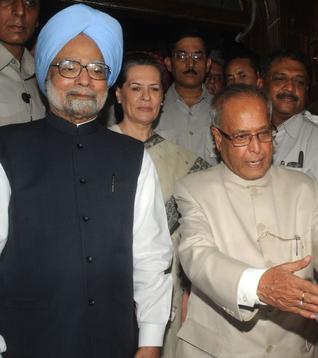
New Delhi, June 29: Taking charge of the Finance portfolio after the resignation of Pranab Mukherjee, Prime Minister Manmohan Singh has kindled hopes of a rethink on the controversial tax measures the departing Minister leaves behind.

While the Finance Ministry maintained on Thursday that there were no plans to defer the roll-out of the General Anti-Avoidance Rules (GAAR) beyond April 1, 2013, it said it was committed to providing “clarifications” to the PMO within two or three weeks on tax matters, which have raised the hackles of industry ever since the budget was presented.

Besides transfer pricing issues, the clarifications, in particular, would pertain to the retrospective amendment of Section 9 of the Income Tax Act — now popularly known as the Vodafone tax — which now forms apart of the Finance Act, 2012, on enactment of the Finance Bill.

Speaking to journalists, after another meeting with the Prime Minister a day after Dr. Singh in his review meeting with top Finance Ministry officials referred to “problems on the tax front which need to be addressed” as they were among the “many factors that have contributed to this general negative mood,” Finance Secretary R.S. Gujral said: “The Prime Minister’s Office sought clarifications on taxation issues and Section 9 of the Income Tax Act [related to tax on indirect transfer of assets]... We asked them to give us two-three weeks’ time.”

Under the amended provisions of Section 9 of the I-T Act, 1961, with retrospective effect, Vodafone would now be liable to pay about Rs. 20,000 crore (including interest), if and when a tax demand is raised by the authorities, though the British telecom major had won its case in the Supreme Court under the earlier legal framework.

While not giving any indication as to whether clarifications on the retrospective tax law were likely to result in any softening of the government’s stance, compared with what obtained when Mr. Mukherjee was Finance Minister, Mr. Gujral, who also heads the Revenue Department, sought to scotch speculation on deferment of the GAAR beyond April next year, as was indicated by the Finance Minister in his reply during the debate on the budget.

There is “no deferment... the GAAR is staying,” Mr. Gujral said, pointing out that the Finance Ministry would shortly issue draft explanatory guidelines on the GAAR for public comments. “We have finalised the GAAR draft rules after three meetings with the stakeholders. The draft will have examples for what would be deemed as permissible and impermissible arrangement.”

Late at night, the Central Board of Direct Taxes (CBDT) went into fast-forward mode to clear the confusion in the minds of foreign investors and issued a 23-page draft guidelines on the implementation of the GAAR in terms of Section 101 of the I-T Act with illustrative examples of cases, in which the provisions of the law would be invoked.

“The GAAR will be applicable for income arising from April 1, 2013. Certain grey areas have been highlighted. We need to clear the legislative intent of the proposal,” Mr. Gujral said. He pointed out that stakeholders would have 15 days to offer comments on the draft rules, after which the Finance Ministry would come out with the final guidelines.

Comments

Add new comment

  • Coastaldigest.com reserves the right to delete or block any comments.
  • Coastaldigset.com is not responsible for its readers’ comments.
  • Comments that are abusive, incendiary or irrelevant are strictly prohibited.
  • Please use a genuine email ID and provide your name to avoid reject.
News Network
May 18,2020

New Delhi, May 18: With the highest-ever spike of 5,242 new cases in last 24 hours, the total number of positive COVID-19 cases in India reached 96,169 on Monday, according to the Ministry of Health and Family Welfare.

With 157 deaths reported in the last 24 hours, the death toll has risen to 3,029, as per the latest update by the ministry.

Out of the total number of cases, 36,824 have been cured/discharged/migrated.

This comes a day after the nationwide lockdown, imposed as a precautionary measure to contain the spread of COVID-19, was extended till May 31.

Maharashtra remains the worst-affected state due to the virus with 33,053 cases, including 1,198 deaths. It is followed by Gujarat (11,379), Tamil Nadu (11,224) and Delhi (10,054).

Comments

Add new comment

  • Coastaldigest.com reserves the right to delete or block any comments.
  • Coastaldigset.com is not responsible for its readers’ comments.
  • Comments that are abusive, incendiary or irrelevant are strictly prohibited.
  • Please use a genuine email ID and provide your name to avoid reject.
News Network
February 22,2020

Feb 22: Prime Minister Narendra Modi is unlikely to accompany US President Donald Trump and his family members during their visit to the Taj Mahal in Agra on Monday, official sources said.

The US President will arrive in Ahmedabad at around noon on February 24 for a less that 36-hour visit to India. He will be accompanied by a high-level delegation including First Lady Melania Trump, the President's daughter Ivanka Trump, son-in-law Jared Kushner and a galaxy of top US officials.

After attending an event at Ahmedabad, the Trumps will travel to Agra on Monday afternoon to visit the Taj Mahal before arriving at the national capital for the main leg of the visit.

When asked about reports that Modi may accompany Trump to Agra, official sources said there was no such plan.

They said the visit to the Taj Mahal in Agra by the US President and his family members will afford them the opportunity to view the historical monument suitably. Therefore, no official engagements or presence of senior dignitaries from the Indian side is envisaged there, the sources said.

Comments

Add new comment

  • Coastaldigest.com reserves the right to delete or block any comments.
  • Coastaldigset.com is not responsible for its readers’ comments.
  • Comments that are abusive, incendiary or irrelevant are strictly prohibited.
  • Please use a genuine email ID and provide your name to avoid reject.
Agencies
July 30,2020

Mumbai, Jul 30: Counterfeiting incidents have increased 24 per cent in the country in 2019 over the previous year, creating an over Rs 1 lakh crore hole in the economy, according to a report.

The report also said counterfeiters are having a free run due to the pandemic-driven disruptions to organised supply chains and the resultant spike in consumer demand.

According to the report by ASPA, a self-regulated industry body of anti-counterfeiting and traceability solutions providers, counterfeiting has risen steadily in the last few years, and exploiting the pandemic as a cover for their activities.

Between February and April 2020, over 150 incidents of counterfeiting cases were reported, mostly about fake PPE kits, sanitisers and masks taking advantage of the high demand for these products, it noted.

"There was a 24 per cent increase in counterfeiting in 2019 over 2018, leading to the loss of more than Rs 1 lakh crore to the overall economy," said Nakul Pasricha, president of Authentication Solution Providers Association.

The association works with global authorities like the International Hologram Manufacturers Association, Counterfeit Intelligence Bureau of the Interpol, and domestic industry lobbies like Ficci, he said.

Counterfeiting is a universal issue and is 3.3 per cent of global trade, according to the OECD data, impacting social and economic development across the world.

The report lists the currency, FMCG, alcohol, pharma, documents, agriculture, infrastructure, automotive, tobacco, lifestyle and apparel, as the 10 sectors impacted most by counterfeiting.

Among these, currency, alcohol and FMCG continue to be the top three sectors with the highest counterfeiting in the last two years. The FMCG sector is most vulnerable, as counterfeit incidents rose 63 per cent between 2018 (79) and 2019 when the reported cases jumped to 129.

Within the states, the fakers have a free run in Uttar Pradesh, Bihar, Rajasthan, Madhya Pradesh, Bengal, Punjab, Jharkhand, Delhi, Gujarat, and Uttarakhand, calling for urgent actions to frame anti-counterfeiting policy measures.

According to the report, UP continues to be on top followed by Bihar, Rajasthan, and together these three states represent almost 45 per cent of all counterfeiting reported in the last two years.

What is more alarming is that counterfeiting is not limited to high-end luxury items today, as common everyday items as fake cumin seeds, mustard cooking oil, ghee, hair oils, soaps, baby care vaccines and medicines are aplenty in the markets.

"There is an urgent need for building and nurturing authentication ecosystems in the country with the active involvement and active participation of all stakeholders," said Pasricha.

Comments

Add new comment

  • Coastaldigest.com reserves the right to delete or block any comments.
  • Coastaldigset.com is not responsible for its readers’ comments.
  • Comments that are abusive, incendiary or irrelevant are strictly prohibited.
  • Please use a genuine email ID and provide your name to avoid reject.