India's street children bank on the future

July 6, 2012
street_child

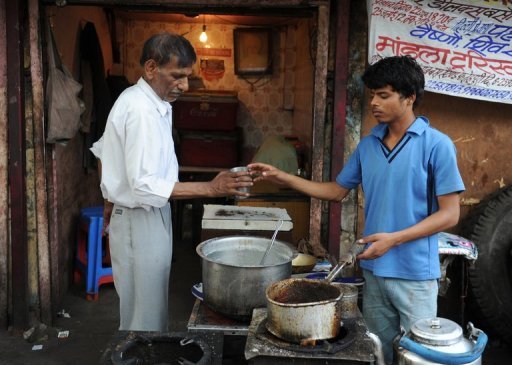
New Delhi, July 6: Ram Singh, 17, earns just one dollar from the 100 cups of tea he makes every day outside Delhi railway station, but each evening, after packing up, he goes to the bank and deposits nearly half of it.

Singh holds an account at a special bank, run for — and mostly by — Indian street children, that keeps what little money they have safe and seeks to instill the idea that savings, however meagre, are important.

Just one among millions of street children who rely on menial jobs for survival, Singh is determined to make his work pay some sort of future dividend.

“I’m smart, but that alone isn’t enough to start a business.

“I save money everyday, hoping to start something of my own. Someday soon,” he said as he served glasses of India’s ubiquitous, spicy milk tea in sweltering heat at a stall near the teeming train station.

The Children’s Development Khazana (treasure chest) opened its first office in New Delhi 2001 and has since spread across the country and overseas with 300 affiliated branches in India, Nepal, Bangladesh, Afghanistan, Sri Lanka and Kyrgyzstan.

Delhi counts 12 branches with around 1,000 child clients aged between nine and 17.

The brightly painted metal cubicles which serve as teller counters are located in shelters that provide children with free meals and sleeping mats, as well as school classes.

The branches are run almost entirely by and for the children, with account holders electing two volunteer managers from the group every six months.

“Children who make money by begging or selling drugs are not allowed to open an account. This bank is only for children who believe in hard work,” said Karan, a 14-year-old “manager”.

During the day, Karan earns a pittance washing up at wedding banquets or other events. In the evening, he sits at his desk to collect money from his friends, update their pass books and close the bank.

“Some account holders want to withdraw their money. I ask them why and give it to them if other children approve. Everyone earns five per cent interest on their savings.”

An adult staff member is always present to collect the takings at the end of each day, depositing the cash in a nationalised bank to earn the interest component.

Sharon Jacob, who works for the rights group Butterflies that set up the bank, said it aimed to give the children a genuine stake in their own future.

“They work in shops as hawkers or porters but they never had a safe place to keep their money. They were always cheated of it or somebody also stole their money,” Jacob said.

“So this is a place where they could keep their money safely and they are also taught life skills, how to manage their finances. They are taught budgeting, they are taught democratic participation,” Jacob said.

Child labour is officially illegal in India but millions of boys and girls have no choice but to earn a living to support themselves or help their families.

Many move to the cities from rural areas, seeking an escape from grinding poverty or abusive homes.

“I ran away from home at the age of 11 after my father beat me for stealing a kitchen appliance,” said Samir who works in a sweatshop.

“For days I slept on a railway platform. I was beaten by the police and even harassed by the drug peddlers. I wanted to go back home but was ashamed of myself.”

Now 14, Samir lives in the children’s shelter and holds an account in the bank.

“I have saved 4,000 rupees (Dh257) in the last seven months. It’s a good feeling to have some money. I will buy a shirt and a watch for my father and send it to him to seek his apology.”

“He might forgive me and ask me to be with him at home.”


Comments

Add new comment

  • Coastaldigest.com reserves the right to delete or block any comments.
  • Coastaldigset.com is not responsible for its readers’ comments.
  • Comments that are abusive, incendiary or irrelevant are strictly prohibited.
  • Please use a genuine email ID and provide your name to avoid reject.
Agencies
August 9,2020

Pathanamthitta, Aug 9 : An orange alert has been issued in Kerala's Pathanamthitta district as the water level in Pamba dam is now flowing at 983.05 metres and it is likely to reach 983.50 metres within an hour.

A red alert will be declared at 984.5 metres and dam will open when the water level reaches 985 metres.

"The water level in Pamba dam is 983.05 metres now and is likely to reach 983.50 metres within an hour. So, the second alert- orange alert has been issued. A red alert will be declared at 984.5 metres and dam will open when it reaches 985 metres," said Pathanamthitta District Collector.

Meanwhile, a portion of the Shiva Temple in Aluva continues to remain submerged. However, the water level in the Periyar River is receding gradually and more part of the temple is above the water level now. 

As Kerala has been receiving heavy rain for the past few days, severe waterlogging affects traffic movement at Mannuthy bypass in Thrissur on Saturday.

On Friday, the India Meteorological Department (IMD) had issued a red alert in Kozhikode district. It had also predicted rainfall in different parts of the state.

Due to heavy downpour, a massive landslide had occurred in Idukki district recently. The death toll in Idukki landslide has risen to 26, Kerala Chief Minister Pinarayi Vijayan said on Saturday.

The Chief Minister said that monsoon fury continues to be severe in the state.

Comments

Add new comment

  • Coastaldigest.com reserves the right to delete or block any comments.
  • Coastaldigset.com is not responsible for its readers’ comments.
  • Comments that are abusive, incendiary or irrelevant are strictly prohibited.
  • Please use a genuine email ID and provide your name to avoid reject.
News Network
April 7,2020

New Delhi, Apr 7: The death toll due to novel coronavirus rose to 114 and the number of cases in the country climbed to 4,421 on Tuesday, according to the Union Health Ministry.

While the number of active COVID-19 cases stood at 3,981, as many as 325 people were cured and discharged, and one had migrated, it stated. The total number of cases include 66 foreign nationals.

According to the ministry's data updated at 9 am, three new deaths were reported from Rajasthan, while Tripura recorded its first coronavirus case.

Maharashtra has reported the most coronavirus deaths at 45, followed by Gujarat at 12, Madhya Pradesh nine, Telangana and Delhi seven each, Punjab six and Tamil Nadu five fatalities.

Karnataka registered four deaths, while West Bengal, Uttar Pradesh, Andhra Pradesh and Rajasthan have recorded three fatalities each. Two deaths each have been reported from Jammu and Kashmir and Kerala. Bihar, Himachal Pradesh and Haryana have reported one fatality each, according to the health ministry data.

However, a PTI tally based on figures reported by states directly on Monday night showed at least 138 deaths across the country, while the confirmed cases reached 4,683. Of them, 359 have been cured and discharged.

There has been a lag in the Union Health Ministry figures, compared to the numbers announced by different states, which officials attribute to procedural delays in assigning the cases to individual states.

The highest number of confirmed cases are from Maharashtra at 748, followed by Tamil Nadu at 621 and Delhi with 523 cases. Kerala reported 327 COVID-19 cases, Telangana 321, Uttar Pradesh 305 and Rajasthan 288 cases. Andhra Pradesh reported 226 coronavirus cases.

Novel coronavirus cases have risen to 165 in Madhya Pradesh, 151 in Karnataka and 144 in Gujarat. Jammu and Kashmir has 109 cases, West Bengal has 91, Haryana 90 and Punjab 76 cases of the infection.

Thirty-two people were infected with the virus in Bihar while Uttarakhand has 31 patients and Assam 26. Odisha reported 21 coronavirus cases, Chandigarh 18, Ladakh 14 and Himachal Pradesh 13 cases.

Ten cases each have been reported from the Andaman and Nicobar Islands and Chhattisgarh. Goa has reported seven COVID-19 infections, followed by Puducherry with five cases. Jharkhand has reported four cases and Manipur two. Tripura, Mizoram and Arunachal Pradesh have reported one case of the infection each.

"State-wise distribution is subject to further verification and reconciliation," the ministry said on its website.

Comments

Add new comment

  • Coastaldigest.com reserves the right to delete or block any comments.
  • Coastaldigset.com is not responsible for its readers’ comments.
  • Comments that are abusive, incendiary or irrelevant are strictly prohibited.
  • Please use a genuine email ID and provide your name to avoid reject.
Agencies
May 26,2020

New Delhi, May 26: As India ranked 10th in the global infection list, overtaking Iran, which was an early hotspot of coronavirus, India's top medical body has said the human trials of COVID-19 vaccine may begin at least in six months.

Dr. Rajni Kant, Director Regional Medical Research Centre and Head at the Indian Council of Medical Research (ICMR) said, "The virus strain isolated at the National Institute of Virology (NIV) laboratory in Pune will be used to develop the vaccine, and this strain has been successfully transferred to the Bharat Biotech International Ltd. (BBIL). It is expected that the human trials of the vaccine will begin in at least six months."

Queried on the focus areas as India inches closer to 1.4 lakh COVID-19 cases, Kant said we should not get anxious about the rapid increase in numbers, especially in the past week, which saw 5,000 Covid-19 cases daily, instead focus on protecting the most vulnerable group.

"We should not fear from increasing Covid-19 cases. The elderly and people with comorbidities need protection. This is the highly vulnerable group, and we need to deploy resources and develop strategies to keep the mortality rate as low as possible in this group," said Kant.

Initially, it was assumed that the country would require thousands of ventilators, but last week, the health ministry said only 0.45 per cent of COVID-19 cases need ventilator support.

Kant insisted the focus should be on five per cent to 10 per cent serious patients. "We are testing more than one lakh daily and our case fatality rate is already one of the lowest in the world. In absence of vaccine, people should follow social distancing guidelines," he added

On the significance of the recovery rate, Kant said the increasing recovery rate of the COVID-19 patients, which is at 41 per cent, is a bright spot in India's fight against deadly viral infection.

Queried on large scale COVID-19 cases in Mumbai, Delhi and Ahmedabad, Kant said the population density in these regions is very high, which proves to be the just right environment for the viral infection.

He insisted on developing robust cluster management strategies in the hard-hit coronavirus spots, and the movement of people should be curtailed in these areas.

"Currently, a lot of people are moving around easily and avoiding social distancing norms. The first phase of the lockdown was very effective, but now things have changed," added Kant.

Comments

Add new comment

  • Coastaldigest.com reserves the right to delete or block any comments.
  • Coastaldigset.com is not responsible for its readers’ comments.
  • Comments that are abusive, incendiary or irrelevant are strictly prohibited.
  • Please use a genuine email ID and provide your name to avoid reject.