


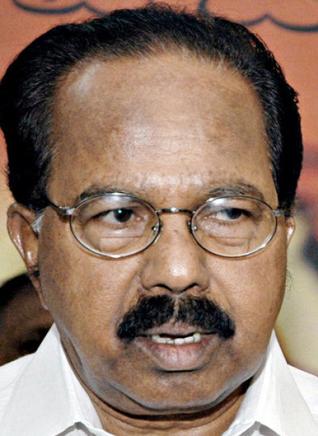
De-allocated coal blocks should be given to power projects: Moily

September 14, 2012

Moily

New Delhi, September 14: Coal blocks that are deallocated by the government after review of their status should be given to the upcoming power projects to meet the capacity addition target of 85,000 MW in the 12th Five Year Plan, Power Minister Veerappa Moily said on Friday.

“Yes, definitely. We are going to seek that (the de-allocated coal blocks),” Mr Moily told reporters here after releasing a report “Green Energy Corridors“.

He added, “We are always placing our priority because you know coal (which) is provided...that will contribute more to the power sector. That kind of capacity building (85,000 MW in 12th Plan) is in the offing,” he said.

On Thursday, the Coal Ministry had decided to deallocate 4 coal blocks — Bramhadih Block in Jharkhand, allocated to Castron Mining Ltd in 1996; Chinora and Warora (southern part) blocks in Maharashtra, given to Fieldmining and Ispat Ltd in 2003; Lalgarh (North) block in Jharkhand allotted to DOMCO Smokeless Fuels Pvt Ltd in 2005.

The decision to de-allocate the blocks was taken after recommendation by an Inter-Ministerial Group (IMG), headed by Additional Secretary (Coal) Zohra Chatterji.

The government decision came shortly after IMG’s recommendation to do so following the group’s evaluation of the performance of each of the cases considering factors like approval of mining plan, grant of environment clearance, status of forest clearance and land acquisition.

The IMG also recommended deduction of Bank Guarantee (BG) in case of Marki Mangli-II, III and IV Blocks in Maharashtra allocated to Shri Virangana Steels Ltd.

IMG had last week reviewed the status of 29 coal blocks allocated to private firms and it is likely to submit the final report on it next week.

“We can definitely produce 25,000 MW by the end of this financial year provided that other things are tied up because the capacity has been created. There are also capacities which have not been utilised... It is available around you, only thing is that a decision has to be taken,” Mr Moily said.

The Power Minister also said that he is meeting Finance Minister P Chidambaram later in the day “to ensure there is no blockade to capacity utilisation and also on creating new capacity for the power sector”.

The meeting will be attended by representatives of ministries of coal and environment and forests as well, he added.


Comments

Add new comment

  • Coastaldigest.com reserves the right to delete or block any comments.
  • Coastaldigset.com is not responsible for its readers’ comments.
  • Comments that are abusive, incendiary or irrelevant are strictly prohibited.
  • Please use a genuine email ID and provide your name to avoid reject.
Agencies
May 21,2020

More than 50 million people in India do not have access to effective handwashing, putting them at a greater risk of acquiring and transmitting the novel coronavirus, according to a study.

Researchers from the Institute for Health Metrics and Evaluation (IHME) at the University of Washington in the US found that without access to soap and clean water, over 2 billion people in low- and middle-income nations -- a quarter of the world's population -- have a greater likelihood of transmitting the coronavirus than those in wealthy countries.

According to the study, published in the journal Environmental Health Perspectives, more than 50 per cent of the people in sub-Saharan Africa and Oceania lacked access to effective handwashing.

"Handwashing is one of the key measures to prevent COVID transmission, yet it is distressing that access is unavailable in many countries that also have limited health care capacity," said Michael Brauer, a professor at IHME.

The study found that in 46 countries, more than half of people lacked access to soap and clean water.

In India, Pakistan, China, Bangladesh, Nigeria, Ethiopia, Democratic Republic of the Congo, and Indonesia, more than 50 million persons in each country were estimated to be without handwashing access, according to the study.

"Temporary fixes, such as hand sanitizer or water trucks, are just that -- temporary fixes," Brauer said.

"But implementing long-term solutions is needed to protect against COVID and the more than 700,000 deaths each year due to poor handwashing access," Brauer said.

He noted that even with 25 per cent of the world's population lacking access to effective handwashing facilities, there have been "substantial improvements in many countries" between 1990 and 2019.

Those countries include Saudi Arabia, Morocco, Nepal, and Tanzania, which have improved their nations' sanitation, the researchers said.

The study does not estimate access to handwashing facilities in non-household settings such as schools, workplaces, health care facilities, and other public locations such as markets.

Earlier this month, the World Health Organization predicted 190,000 people in Africa could die of COVID-19 in the first year of the pandemic, and that upward of 44 million of the continent's 1.3 billion people could be infected with the coronavirus, the researchers said. 

Comments

Add new comment

  • Coastaldigest.com reserves the right to delete or block any comments.
  • Coastaldigset.com is not responsible for its readers’ comments.
  • Comments that are abusive, incendiary or irrelevant are strictly prohibited.
  • Please use a genuine email ID and provide your name to avoid reject.
News Network
May 20,2020

United Nations, May 20: Highlighting India's long-standing history of promoting inclusive and peaceful societies, a top UN official on Tuesday voiced concern over incidents of "increased hate speech and discrimination" against minority communities in the country following the adoption of the Citizenship Amendment Act.

Under-Secretary-General and UN Special Adviser on the Prevention of Genocide Adama Dieng, however, welcomed Prime Minister Narendra Modi’s call for unity and brotherhood in the wake of the COVID19 pandemic.

Dieng said in a note to the media on Tuesday that he is "concerned over reports of increased hate speech and discrimination against minority communities in India" since the adoption of the Citizenship Amendment Act (CAA) in December 2019.

The Indian government has maintained that the CAA is an internal matter of the country and stressed that the goal is to protect the oppressed minorities of neighbouring countries.

The CAA, which was notified on January 10, grants Indian citizenship to non-Muslim minorities migrated to India from Afghanistan, Pakistan and Bangladesh till December 31, 2014, following persecution over their faith.

"While the objective of the act, to provide protection to minority communities is commendable, it is concerning that this protection is not extended to all groups, including Muslims. This is contrary to India’s obligations under international human rights law, in particular on non-discrimination,” Dieng said.

The Special Adviser recognised "India’s long standing and well recognised history of promoting inclusive and peaceful societies, with respect for equality and principles of non-discrimination.”

He also welcomed recent statements by Prime Minister Modi that the COVID-19 pandemic “does not see race, religion, colour, caste, creed, language or border before striking and that our response and conduct...should attach primacy to unity and brotherhood.”

Dieng encouraged the Government of India to "continue to abide by this guidance by ensuring that national laws and policies follow international standards related to non-discrimination and to address and counter the rise of hate speech through messages of inclusion, respect for diversity and unity.”

He further reiterated that he would continue to follow developments and expressed his readiness to support initiatives to counter and address hate speech.

The hate speech and the dehumanisation of others goes against international human rights norms and values, he added.

“In these extraordinary times brought about by the COVID-19 crisis it is more important than ever that we stand united as one humanity, demonstrating unity and solidarity rather than division and hate,” he said.

Dieng also expressed concern over reports of violence during demonstrations against CAA in some regions of India.

Comments

Add new comment

  • Coastaldigest.com reserves the right to delete or block any comments.
  • Coastaldigset.com is not responsible for its readers’ comments.
  • Comments that are abusive, incendiary or irrelevant are strictly prohibited.
  • Please use a genuine email ID and provide your name to avoid reject.
News Network
May 7,2020

New Delhi, May 7: Air India has opened bookings for eligible foreign nationals and valid visa holders of the UK, the USA and Singapore for outbound repatriation flights that will be operated between May 7 and May 14 under the Vande Bharat mission, officials said.

Foreign nationals or valid visa holders will be charged the same fare as Indian nationals who want a seat on the inbound repatriation flights, they said.

For all flights between India and the USA under the Vande Bharat mission, Air India is charging a fixed fare of Rs 1 lakh per passenger.

For flights between India and Singapore, the charge is Rs 18,000-20,000 per passenger, and it is Rs 50,000 per person for India-UK flights.

On Tuesday, the Ministry of Home Affairs had clarified that a person who has an Overseas Indian Citizenship (OCI) card, or citizenship of a foreign country, or a valid visa of more than one year of that country, or the green card of that country can travel on repatriation flights leaving India under the Vande Bharat mission.

Air India will be conducting 64 flights to 12 countries between May 7 and May 13 to bring back approximately 15,000 Indians stranded due to the coronavirus-induced lockdown, Civil Aviation Minister Hardeep Singh Puri had announced on Tuesday.

However, some flights have been delayed and therefore, this set of 64 flights will be operated between May 7 and May 14, the airline officials said.

On Wednesday, an Indian businessman and his cook landed at Delhi airport from Lusaka in Zambia in a plane that was supposed to come without any passengers, senior government officials said.

The private chartered aircraft was scheduled to come empty and take around 40 Zambian nationals to Lusaka in a repatriation flight, they added.

"We had not permitted any incoming passengers. We will seek explanation from the airline (private operator) as to how it happened. BOI (Bureau of Immigration) has a very stringent protocol for dealing with such deviations, which must have been acted upon," said a senior official of aviation regulator DGCA.

It is not clear if the businessman and his cook were deported or sent to a quarantine facility within India.

India has been under a lockdown since March 25 to curb the spread of the novel coronavirus. All scheduled commercial passenger flights have been suspended during the lockdown.

However, cargo flights, medical evacuation flights and special flights permitted by Directorate General of Civil Aviation (DGCA) have been allowed to operate during this time.

Comments

Add new comment

  • Coastaldigest.com reserves the right to delete or block any comments.
  • Coastaldigset.com is not responsible for its readers’ comments.
  • Comments that are abusive, incendiary or irrelevant are strictly prohibited.
  • Please use a genuine email ID and provide your name to avoid reject.