Non-Telangana ministers, MPs oppose AP division

July 27, 2013
New Delhi, Jul 27: As Congress and UPA government appear to be veering towards formation of a separate Telangana state, ministers and MPs from Andhra and Rayalaseema regions today met Prime Minister Manmohan Singh opposing any division of Andhra Pradesh.
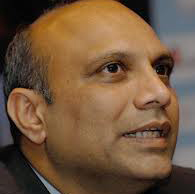
pallam_raju_copyUnion Ministers M M Pallam Raju, K S Rao, Chiranjeevi and D Purandeshwari (all hailing from coastal Andhra) and MPs Bapiraju and Anantarami Reddy met Singh in a delegation and favoured maintaining a united Andhra Pradesh.

Sources said the delegation conveyed to the prime minister that creation of a Telangana would not be in the interest of the state and the country.

Yesterday, there were high-level discussions between the Congress leadership and the state Congress leadership on the demand for creation of Telangana.

AICC General Secretary incharge of Andhra Pradesh Digivijay Singh and his predecessor Ghulam Nabi Azad held separate discussions with Chief Minister N Kiran Kumar Reddy, PCC chief Botsa Satyanarayana and Deputy Chief Minister Damodar Rajanarasimha.

The two leaders are understood to have conveyed to the state leadership that the party has made up its mind on creation of Telangana and it was only a matter of time before it is announced.

The discussions were followed by deliberations held in the Core Group meeting held at the residence of Prime Minister Manmohan Singh. Congress President Sonia Gandhi chaired the meeting which was also attended by senior Cabinet ministers A K Antony, P Chidambaram and Sushil Kumar Shinde.

Sources said the party and the UPA government was in favour of a division of the state, which could be decided after the completion of the local bodies elections this month end.

The decision could be announced in the first week of August and may be formalised at a meeting of the Congress Working Committee (CWC) after which the issue could go to Parliament for passage of a bill for the purpose.

Comments

Add new comment

  • Coastaldigest.com reserves the right to delete or block any comments.
  • Coastaldigset.com is not responsible for its readers’ comments.
  • Comments that are abusive, incendiary or irrelevant are strictly prohibited.
  • Please use a genuine email ID and provide your name to avoid reject.
Agencies
August 5,2020

Ayodhya, Aug 5: Prime Minister Narendra Modi on Wednesday recalled the significance of the path of 'maryada' associated with Lord Ram in the backdrop of the situation created by COVID-19 and emphasised the importance of social distancing and wearing face masks.

He said that the current situation demands 'maryada' should be 'do gaz ki doori, mask hai zaroori' and exhorted everyone to follow it.

In his speech after laying the foundation stone of the Ram Temple in Ayodhya, the Prime Minister said the temple of Lord Ram will inspire and guide humans for ages to come.

He said that the path of `maryada' followed by Lord Ram is all the more necessary today in the situation created by COVID-19.

"The `maryada' (need) today is do gaj ki doori, mask hai jaroori (keep distance of two yards, wear mask). The Almighty may keep all the citizens healthy and happy, this is my prayer. The blessings of Mother Sita and Shri Ram be always there on the citizens," he said.

The Prime Minister termed the occasion as historic and said that India is starting a glorious chapter when people across the country are excited and emotional to have finally achieved what they had been waiting for centuries.

Comments

Add new comment

  • Coastaldigest.com reserves the right to delete or block any comments.
  • Coastaldigset.com is not responsible for its readers’ comments.
  • Comments that are abusive, incendiary or irrelevant are strictly prohibited.
  • Please use a genuine email ID and provide your name to avoid reject.
News Network
March 21,2020

Mar 21: India’s economy, already in the grip of a slowdown, is in for more pain after Prime Minister Narendra Modi appealed to citizens to stay at and work from home to curb the coronavirus outbreak.

The services sector, which accounts for about 55% of India’s gross domestic product, is poised to be the worst hit after Modi, in a late evening address on Thursday, urged citizens to go on a self-imposed curfew for a day and private companies to allow employees to work from home for longer. In the country’s vast informal sector, social-distancing measures could mean a dent to productivity and consumption because of job or pay losses.

“The impact of a partial lock-down or social distancing will be significant,” said Rahul Bajoria, a senior economist at Barclays Plc in Mumbai. “If there’s a widespread community outbreak, GDP could fall as low as 3.5% in the year starting April 1.”

Shrinking output may limit growth in an economy that’s already set to expand at an 11-year low of 5% in the current year to March 31. Before the virus outbreak, India had forecast growth to recover to 6%-6.5% in the next fiscal year. S&P Global Ratings and Fitch Ratings have already slashed their growth forecast by 50 basis points.

“The current social-distancing measures will severely impact airlines, hotels, malls, multiplexes, restaurants and retailers,” according to analysts at Crisil Ltd., the local unit of S&P Global. “Lower footfalls and occupancies, decline in business volume and sub-optimal operating efficiencies will impact cash flows of companies in these sectors,” wrote the analysts led by Chief Economist Dharmakirti Joshi.

The government will try to announce a relief package for virus-affected sectors as early as possible, Finance Minister Nirmala Sitharaman said Friday.

In a televised address, Modi advised all citizens to stay at home for a day on March 22, as he sought to stem the spread of the coronavirus -- cases of which are relatively low in India at about 200, compared with more than 200,000 infected people globally. His government also barred incoming flights for a week from that day, joining a growing list of countries effectively sealing their borders.

What Bloomberg’s Economists Say

We had only earlier this week lowered our GDP outlook to consider the direct impact of the local outbreak as confirmed virus cases exceeded 100 as of March 15 and the federal and state governments announced social distancing measures that have already started to crimp economic activity. We are now revising down our GDP estimate for 4Q fiscal 2020 to 3.3%, from our 3.5%.

-- Abhishek Gupta, India economist

For more, click here

“Consumption being the biggest component of GDP, a lock-down is bound to have a big impact on the economy,” said Devendra Kumar Pant, chief economist at India Ratings and Research, the local unit of Fitch. “Modeling uncertainty in any system will be very difficult, but one can say the slowdown could deepen or prolong further.”

Work From Home

While companies, including billionaire Mukesh Ambani-controlled Reliance Industries Ltd., are asking employees to work from home, the option isn’t feasible in India’s vast informal sector.

“The option to work remotely simply won’t exist for most,” said Shilan Shah, an economist with Capital Economics Pte. in Singapore.

As many households don’t have savings buffers, the government would probably have to back this up with large-scale cash handouts that reach the poorest, he said.

Work from home is posing implementation challenges for the manufacturing sector where workers are required to be physically present at the production sites. The services sector, such as banking and information technology, also needs employees to be present in offices as confidential data is used, according to industry group Federation of Indian Chambers of Commerce and Industry.

Comments

Add new comment

  • Coastaldigest.com reserves the right to delete or block any comments.
  • Coastaldigset.com is not responsible for its readers’ comments.
  • Comments that are abusive, incendiary or irrelevant are strictly prohibited.
  • Please use a genuine email ID and provide your name to avoid reject.
News Network
March 6,2020

New Delhi, Mar 6: Shares of YES Bank and State Bank of India came under huge selling pressure on Friday as developments unfolded regarding SBI picking stake in the private lender. Shares of the lender hit record low of Rs 5.55, plunging 85 per cent, and were trading below its previous low of Rs 8.16 hit on March 9, 2009.

SBI, on the other hand, slumped 11 per cent to Rs 257.35 on the BSE. The benchmark S&P BSE Sensex was trading with a cut of over 3 per cent at 37,251.37 level.

In the past three months, share price of the private lender has plunged 41 per cent, while the state-owned lender has slipped 14 per cent. In comparison, the S&P BSE Sensex has dipped 5.6 per cent till Thursday.

On Thursday, the Reserve Bank of India superseded the board of troubled private sector lender YES Bank and imposed a 30-day moratorium on it “in the absence of a credible revival plan” amid a “serious deterioration” in its financial health.

During the moratorium, which came into effect from 6 pm on Thursday, YES Bank will not be allowed to grant or renew any loans, and “incur any liability”, except for payment towards employees’ salaries, rent, taxes and legal expenses, among others.

This is the first time that a bank of this size will be put under a moratorium by the RBI.

“The financial position of YES Bank had undergone a steady decline “largely due to inability of the bank to raise capital to address potential loan losses and resultant downgrades, triggering invocation of bond covenants by investors, and withdrawal of deposits,” RBI said in a statement.

“After the moratorium, the next step will be to infuse to money and keep the bank afloat. So from shareholders’ point of view, the future is certainly hazy as the capital requirement is huge. The good part, however, is that the RBI has stepped in and depositors don't have to worry,” says Siddharth Purohit, a research analyst at SMC Securities.

Meanwhile, analysts at Nomura believe that placing the Bank under moratorium implies that equity value in the bank would be negligible, and that the chances of private capital participating in future capital raising plan are near zero.

"Any resolution for Yes Bank is more proposed from the perspective of deposit holders and systemic stability, and not from the perspective of Yes Bank equity investors or even perpetual bond holders," they wrote in a note dated March 6.

In another development, SBI’s Board Thursday gave in-principle approval to consider an “investment opportunity” in YES Bank, even as it said “no decision had yet been taken to pick up stake in the bank”.

According to a  report, highly-placed sources indicated a rescue plan involving SBI and Life Insurance Corporation of India (LIC) was being discussed and an announcement in this regard might be made soon.

“While the finer details of the deal are being worked out, it is anticipated that both SBI and LIC together will take a 51 per cent stake in the bank, with a one-year lock-in period,” the report said.

Most analysts believe it is a positive step for the Indian financial sector as the government has tried to avoid a repeat of IL&FS-like crisis.

“The move is a positive step for the financial sector as a whole. By this, the government has tried to avoid a repeat of IL&FS-like crisis and has saved the depositors,” said AK Prabhakar, Head of Research at IDBI Capital. While we know that YES Bank has a huge pile of bad loans, SBI is the only bank that has the capacity to absorb it, he added.

However, the valuation at which YES bank would be taken over remains a cause of concern.

Global brokerage firm JP Morgan Thursday cut its target price for YES Bank on Thursday to Rs 1 per share, taking into account the potential fall in the lender’s net worth due to stressed assets.

“We believe forced bailout investors will likely want the bank to be acquired at near-zero value to account for risks associated with the stress book and likely loss of deposits. We think the bank will need to be recapitalised at nominal equity value and could test dilution of additional tier 1 (AT1) capital. We remain underweight and cut our target price to Rs 1 as we believe net worth is largely impaired,” JP Morgan said in a note.

Global brokerage firm Nomura estimates a need of Rs 25,000-44,000 crore and adjusted for Rs 7,400 crore of current coverage, if the current stress of Rs 65,000-70,000 crore faces 70 per cent loss given default (LGD).

"It implies Rs 18,000-37,000 crore needed for provisioning against the current net worth of Rs 25,700 crore Also, to run as going concern, the bank would require over Rs 20,000 crore of CET-1 capital as well," the note said.

YES Bank has registered slippages of Rs 12,000 crore so far in FY20, while it has placed Rs 30,000 crore of loan assets under the watch list. Its deposits stood at Rs 2.09 trillion on September 30, 2019, while its advances totalled Rs 2.24 trillion. The bank has delayed publishing its December quarter results by a month to March 14.


Comments

Add new comment

  • Coastaldigest.com reserves the right to delete or block any comments.
  • Coastaldigset.com is not responsible for its readers’ comments.
  • Comments that are abusive, incendiary or irrelevant are strictly prohibited.
  • Please use a genuine email ID and provide your name to avoid reject.