


Nuclear terrorism an international threat: Foreign secretary

February 8, 2017

New Delhi, Feb 8: Asserting that nuclear security remains a continuing concern, India today said terrorism, especially nuclear terrorism is an international threat that should not serve national strategy and pitched for a global response in this regard.
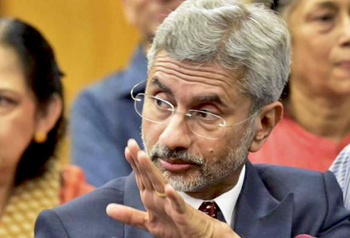
JaishankarForeign Secretary S Jaishankar, who was speaking at the Implementation and Assessment Group Meeting of Global Initiative to Combat Nuclear Terrorism, also hoped that the horrors of atomic power destruction would never be repeated as the negative consequences of atomic power cannot be overlooked.

"Events that have unfolded around us, more so in the past couple of decades, have highlighted that terrorism remains the most pervasive and serious challenge to international security. If access to nuclear technology changes State behaviour, it is only to be expected that it would also impact on non-state calculations.

"Nuclear security, therefore, will be a continuing concern, especially as terrorist groups and non-state actors strike deeper roots and explore different avenues to spread terror. Developing a comprehensive global response is the highest priority," he said.

Maintaining that nuclear energy will continue to play an important role in tackling challenges of inclusive growth and climate change, he said, "On the other hand, the negative consequences of atomic power also cannot be ignored. The world has witnessed the immense destructive power of the atom.

"We hope that such horrors will never be repeated and cannot overstate the importance of countries with nuclear weapons to be responsible."

Jaishankar also warned of the dangers of discriminating among terrorists -– good or bad or even yours and mine -- are increasingly recognised. "Terrorism is an international threat that should not serve national strategy. Nuclear terrorism even more so," he said.

During his address at the meeting, which is being attended by delegates from over 100 countries including the US, the UK, France and Pakistan, he also referred to the strong credentials of India, which is looking for a membership in Nuclear Suppliers Group (NSG), in promoting the peaceful use of nuclear energy.

Advocating a two-pronged strategy, Jaishankar said the first is to clamp down on terrorism in general and the second to restrict unauthorised access to nuclear technology and material.

"Responsible States provide political commitments to assure each other that they will protect nuclear material under their control from falling into the wrong hands... "However, political commitments alone cannot ensure the safety and security of nuclear material," the foreign secretary said while referring to several treaty instruments which provide a firm basis for translating broader political commitments into legally binding measures.

The treaties include the International Convention for the Suppression of Acts of Nuclear Terrorism (ICSANT) and the Convention on the Physical Protection of Nuclear Material (CPPNM) and its Amendment, he said.

Talking about history of nuclear technology, he said, "The power of the atom is wondrous. It has benefited mankind in myriad ways. The scientific community has played a vital role in harnessing nuclear energy and radiological sources for societal needs. The ancient Indian philosopher and sage, Kanada, propounded the concept of 'atom' in the sixth century.

"Today, two-and-a-half millennia later, as a country possessing advanced nuclear technologies, India is at the forefront in promoting the peaceful use of nuclear energy. We have actively associated with and contributed to the IAEA and other multilateral forums dealing with all aspects of nuclear material."

Talking about international obligations adhered to by India, he said every year at the First Committee of the UN General Assembly, India co-sponsors a resolution on "measures to prevent terrorists from acquiring weapons of mass destruction" that has been adopted by consensus since 2002.

As a State Party to these instruments, India has demonstrated its faith in these instruments and believes that their universalisation is a global good, he said, adding effective implementation of the obligations under UN Security Council Resolutions 1540 and 1373 is another important pillar in the fight against terrorism and proliferation of weapons of mass destruction (WMD).

Stressing that Indian experts have contributed positively and substantively to the drafting of various documents and playbooks of the GICNT, Jaishankar said India remains committed to furthering the objectives of the global initiative.

"We have been contributing to the Nuclear Security Fund of the IAEA. India's Global Centre for Nuclear Energy Partnership (GCNEP) is available to interested States for training courses and capacity building programmes in the field of nuclear and radiological security," he said.

Observing that there are 13 instruments that are widely accepted as benchmarks for a State's commitment to combat terrorism, Jaishankar said, "What is more important is that adhering parties display the required sincerity to implement their commitment.

"The existence of a number of conventions and treaties dealing with nuclear terrorism underscores the fact that there is no one instrument that can deal with this issue in a holistic manner.

"The march of globalisation means that combating nuclear terrorism in isolation or as part of a small group is unlikely to yield the desired results," he said, adding in this the GICNT plays an important role as it works towards building worldwide communities of experts and practitioners in order to have a consistent and coherent approach towards the issue of nuclear terrorism.

He further said given its impressive membership of 86 partner countries and five international organisations, the GICNT is expected to play an important role in providing an effective international platform for consolidating and disseminating the technical expertise and best practices to respond to malicious acts by terrorists.

The Implementation and Assessment Group (IAG) and the other working groups of the GICNT, namely, Nuclear Detection Working Group (NDWG), Response and Mitigation Working Group (RMWG) and Nuclear and Forensics Working Group (NFWG) have established themselves as the drivers for taking forward the important work of the Global Initiative, Jaishankar said.

The membership of these groups represent the entire spectrum of relevant stakeholders -- the scientific community, law enforcement agencies, first responders to nuclear security events, prosecutors and the judicial fraternity and of course, key decision-makers from the diplomatic community, he said. He also hoped the Comprehensive Convention on International Terrorism which was proposed by India in 1996, would be adopted soon.

Comments

Add new comment

  • Coastaldigest.com reserves the right to delete or block any comments.
  • Coastaldigset.com is not responsible for its readers’ comments.
  • Comments that are abusive, incendiary or irrelevant are strictly prohibited.
  • Please use a genuine email ID and provide your name to avoid reject.
News Network
February 2,2020

Feb 2: The Philippines on Sunday reported the first death from a new virus outside of China, where authorities delayed the opening of schools in the worst-hit province and tightened quarantine measures in a city that allow only one family member to venture out to buy supplies.

The Philippine Department of Health said a 44-year-old Chinese man from Wuhan was admitted on Jan. 25 after experiencing a fever, cough, and sore throat. He developed severe pneumonia, and in his last few days, “the patient was stable and showed signs of improvement, however, the condition of the patient deteriorated within his last 24 hours resulting in his demise.”

The man’s 38-year-old female companion, also from Wuhan, also tested positive for the virus and remains in hospital isolation in Manila.

President Rodrigo Duterte approved a temporary ban on all travelers, except Filipinos, from China and its autonomous regions. The U.S., Japan, Singapore and Australia have imposed similar restrictions despite criticism from China and an assessment from the World Health Organization that they were unnecessarily hurting trade and travel.

The death toll in China climbed by 45 to 304 and the number of cases by 2,590 to 14,380, according to the National Health Commission, well above the number of those infected in in the 2002-03 outbreak of SARS, or severe acute respiratory syndrome, which broke out in southern China and spread worldwide.

Meanwhile, six officials in the city of Huanggang, neighboring the epicenter of Wuhan in Hubei province, have been fired over “poor performance” in handling the outbreak, the official Xinhua News Agency reported.

It cited the mayor as saying the city’s “capabilities to treat the patients remained inadequate and there is a severe shortage in medical supplies such as protective suits and medical masks.”

After Huanggang, the trading center of Wenzhou in coastal Zhejiang province also confined people to homes, allowing only one family member to venture out every other day to buy necessary supplies.

With the outbreak showing little sign of abating, authorities in Hubei and elsewhere have extended the Lunar New Year holiday, due to end this week, well into February. The annual travel crunch of millions of people returning from their hometowns to the cities is thought to pose a major threat of secondary infection at a time when authorities are encouraging people to avoid public gatherings.

All Hubei schools will postpone the opening of the new semester until further notice and students from elsewhere who visited over the holiday will also be excused from classes.

Far away on China’s southeast coast, the manufacturing hub of Wenzhou put off the opening of government offices until Feb. 9, private businesses until Feb. 17 and schools until March 1.

With nearly 10 million people, Wenzhou has reported 241 confirmed cases of the virus, one of the highest levels outside Hubei. Similar measures have been announced in the provinces and cities of Heilongjiang, Shandong, Guizhou, Hebei and Hunan, while the major cities of Shanghai and Beijing were on indefinite leave pending developments.

Despite imposing drastic travel restrictions at home, China has chafed at those imposed by foreign governments, criticizing Washington’s order barring entry to most non-citizens who visited China in the past two weeks. Apart from dinging China’s international reputation, such steps could worsen a domestic economy already growing at its lowest rate in decades.

The crisis is the latest to confront Chinese leader Xi Jinping, who has been beset by months of anti-government protests in the semi-autonomous Chinese city of Hong Kong, the reelection of Taiwan’s pro-independence president and criticism over human rights violations in the traditionally Muslim northwestern territory of Xinjiang. Economically, Xi faces lagging demand and dramatically slower growth at home while the tariff war with the U.S. remains largely unresolved.

Among a growing number of airlines suspending flights to mainland China was Qatar Airways. The Doha-based carrier said on its website that its flights would stop Monday. It blamed “significant operational challenges caused by entry restrictions imposed by a number of countries” for the suspension of flights.

Oman also halted flights to China, as did Saudi Arabia’s flagship national carrier, Saudia.

Saudi Arabia’s state-run TV reported that 10 Saudi students were evacuated from Wuhan on a special flight. It said the students would be screened upon arrival, but did not say whether they would be quarantined for 14 days.

This weekend, South Korea and India flew hundreds of their citizens out of Wuhan. They went into a two-week quarantine.

On Sunday, South Korea reported three more cases for a total of 15. They include an evacuee, a Chinese relative of a man who tested positive and a man who returned from Wuhan. India reported a second case, also in southern Kerala state.

South Korea also barred foreigners who have stayed or traveled to Hubei province within the last 14 days from entering the country.

Indonesia flew back 241 nationals from Wuhan on Sunday and quarantined them on the remote Natuna Islands for two weeks. Several hundred residents protested the move, with one saying, “This is not because we do not have a sense of solidarity with fellow nationals. But because we fear they could infect us with the deadly virus from China.”

A Turkish military transport plane carrying 42 people arrived in Ankara from Wutan Saturday night. The 32 Turkish, six Azerbaijani, three Georgian nationals and an Albanian will remain under observation for 14 days, together with 20 personnel who participated in the evacuation, Health Minister Fahrettin Koca said.

Vietnam counted its seventh case, a Vietnamese-American man who had a two-hour layover in Wuhan on his way from the U.S. to Ho Chi Minh City.

The virus’ rapid spread in two months prompted the WHO on Thursday to declare it a global emergency.

That declaration “flipped the switch” from a cautious attitude to recommending governments prepare for the possibility the virus might spread, said the WHO representative in Beijing, Gauden Galea. Most cases reported so far have been people who visited China or their family members.

WHO said it was especially concerned that some cases abroad involved human-to-human transmission.

“Countries need to get ready for possible importation in order to identify cases as early as possible and in order to be ready for a domestic outbreak control, if that happens,” Galea told The Associated Press.

Both the new virus and SARS are from the coronavirus family, which also includes those that cause the common cold.

The death rate in China is falling, but the number of confirmed cases will keep growing because thousands of specimens from suspected cases have yet to be tested, Galea said.

“The case fatality ratio is settling out at a much lower level than we were reporting three, now four, weeks ago,” he said.

Although scientists expect to see limited transmission of the virus between people with family or other close contact, they are concerned about cases of infection spreading to people who might have less exposure.

Comments

Add new comment

  • Coastaldigest.com reserves the right to delete or block any comments.
  • Coastaldigset.com is not responsible for its readers’ comments.
  • Comments that are abusive, incendiary or irrelevant are strictly prohibited.
  • Please use a genuine email ID and provide your name to avoid reject.
News Network
March 13,2020

Mar 13: Canadian Prime Minister Justin Trudeau and his wife announced they were self-isolating Thursday as she undergoes tests for the new coronavirus after returning from a speaking engagement with "mild flu-like symptoms."

Sophie Gregoire-Trudeau's symptoms have subsided since she recently got back from Britain, but as a precaution the prime minister "will spend the day in briefings, phone calls and virtual meetings from home," according to a statement.

Trudeau also cancelled a meeting Thursday and Friday with Canada's provincial and territorial leaders in Ottawa, but still planned to speak with them and world leaders by phone about measures being taken to curb the spread of the virus in Canada.

Gregoire-Trudeau's symptoms had included "a low fever late last night." She immediately sought medical advice and testing.

Trudeau has exhibited no symptoms, and was advised by doctors "to continue daily activities while self-monitoring."

"However, out of an abundance of caution, the prime minister is opting to self-isolate and work from home until receiving Sophie's results," said his office.

Since the novel coronavirus first emerged in late December 2019, 127,070 cases have been recorded in 115 countries and territories, killing 4,687 people, according to an AFP tally compiled at 1200 GMT on Thursday based on official sources.

Canada has so far reported more than 100 cases in six provinces, and one death.

Also Thursday, the Canada's Juno music awards cancelled its upcoming gala show, planned for Sunday evening in Saskatoon, Saskatchewan.

"We are devastated to cancel this national celebration of music, but at this time of global uncertainty, the health, safety and well-being of all Canadians must stand at the forefront of any decisions that impact our communities," organisers said in a statement.

And in Quebec province, Premier Francois Legault unveiled a series of measures to prevent the spread of the coronavirus, including placing all travellers returning from overseas under quarantine for two weeks.

Quebec also banned indoor gatherings of more than 250 people.

Comments

Add new comment

  • Coastaldigest.com reserves the right to delete or block any comments.
  • Coastaldigset.com is not responsible for its readers’ comments.
  • Comments that are abusive, incendiary or irrelevant are strictly prohibited.
  • Please use a genuine email ID and provide your name to avoid reject.
News Network
March 25,2020

Wellington, Mar 25: New Zealand has declared a state of emergency as it prepares to go into an unprecedented lockdown late Wednesday for about a month.

The declaration temporarily gives police and the military extra powers. And Prime Minister Jacinda Ardern says any New Zealanders returning home from overseas who show symptoms of COVID-19 will be put in isolation at an approved facility.

“I have one simple message for New Zealanders today as we head into the next four weeks: ‘stay at home,’” Ardern said. “It will break the chain of transmission and it will save lives.”

Ardern said exceptions include people working crucial jobs, those leaving to pick up essentials like groceries, and those engaging in solitary exercise.

The country has 205 reported cases of the virus, although Ardern said that number could rise into the thousands before it begins to recede even with the strict measures being taken.

Comments

Add new comment

  • Coastaldigest.com reserves the right to delete or block any comments.
  • Coastaldigset.com is not responsible for its readers’ comments.
  • Comments that are abusive, incendiary or irrelevant are strictly prohibited.
  • Please use a genuine email ID and provide your name to avoid reject.