



Our Moon is much older than thought: study

January 14, 2017

Los Angeles, Jan 14: The Moon is at least 4.51 billion years old - up to 140 million years older than previously thought, according to a new study of minerals called zircons brought back from the lunar body to the Earth by the Apollo 14 mission in 1971.
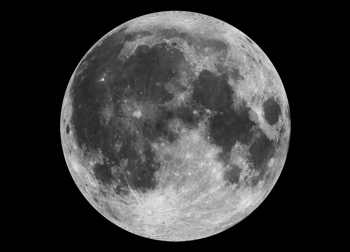
moonThe Moon's age has been a hotly debated topic, even though scientists have tried to settle the question over many years and using a wide range of scientific techniques.

"We have finally pinned down a minimum age for the Moon; it is time we knew its age and now we do," said Melanie Barboni, research geochemist at University of California, Los Angeles (UCLA) in the US.

The Moon was formed by a violent, head-on collision between the early Earth and a "planetary embryo" called Theia.

The new study would mean that Moon formed "only" about 60 million years after the birth of the solar system, providing critical information for astronomers and planetary scientists who seek to understand the early evolution of the Earth and our solar system, researchers said.

That has been a difficult task, Barboni said, because "whatever was there before the giant impact has been erased."

While scientists cannot know what occurred before the collision with Theia, these findings are important because they will help scientists continue to piece together major events that followed it.

It is usually difficult to determine the age of Moon rocks because most of them contain a patchwork of fragments of multiple other rocks. However, Barboni was able to analyse eight zircons in pristine condition.

She examined how the uranium they contained had decayed to lead and how the lutetium they contained had decayed to an element called hafnium.

The researchers analysed those elements together to determine the Moon's age.

"Zircons are nature's best clocks. They are the best mineral in preserving geological history and revealing where they originated," said Kevin McKeegan, a UCLA professor of geochemistry and cosmochemistry.

The Earth's collision with Theia created a liquefied Moon, which then solidified. Scientists believe most of the Moon's surface was covered with magma right after its formation.

The uranium–lead measurements reveal when the zircons first appeared in the Moon's initial magma ocean, which later cooled down and formed the Moon's mantle and crust; the lutetium–hafnium measurements reveal when its magma formed, which happened earlier.

Previous studies concluded the Moon's age based on Moon rocks that had been contaminated by multiple collisions. McKeegan said those rocks indicated the date of some other events, "but not the age of the Moon."

The study was published in the journal Science Advances.

Comments

Add new comment

  • Coastaldigest.com reserves the right to delete or block any comments.
  • Coastaldigset.com is not responsible for its readers’ comments.
  • Comments that are abusive, incendiary or irrelevant are strictly prohibited.
  • Please use a genuine email ID and provide your name to avoid reject.
Agencies
May 17,2020

As millions of people get hooked to online dating platforms, their proliferation has led to online romance scams becoming a modern form of fraud that have spread in several societies along with the development of social media like Facebook Dating, warn researchers.

For example, extra-marital dating app Gleeden has crossed 10 lakh users in India in COVID-19 times while dating apps like Tinder and Bumble have gained immense popularity.

According to researchers from University of Siena and Scotte University Hospital led by Dr Andrea Pozza, via a fictitious Internet profile, the scammer develops a romantic relationship with the victim for 6-8 months, building a deep emotional bond to extort economic resources in a manipulative dynamic.

"There are two notable features: on the one hand, the double trauma of losing money and a relationship, on the other, the victim's shame upon discovery of the scam, an aspect that might lead to underestimation of the number of cases," the authors wrote in a paper published in the journal Clinical Practice & Epidemiology in Mental Health.

Around 1,400 dating sites/chats have been created over the last decade in North America alone. In the UK, 23 per cent of Internet users have met someone online with whom they had a romantic relationship for a certain period and even 6 per cent of married couples met through the web.

"The online dating industry has given rise to new forms of pathologies and crime, said the authors.

The results showed that 63 per cent of social media users and 3 per cent of the general population reported having been a victim at least once.

Women, middle-aged people, and individuals with higher tendencies to anxiety, romantic idealization of affective relations, impulsiveness and susceptibility to relational addiction are at higher risk of being victims of the scam.

Online romance scams are, in other words, relationships constructed through websites for the purpose of deceiving unsuspecting victims in order to extort money from them.

The scammer always acts empathetically and attempts to create the impression in the victim that the two are perfectly synced in their shared view of life.

"The declarations of the scammer become increasingly affectionate and according to some authors, a declaration of love is made within two weeks from initial contact," the study elaborated.

After this hookup phase, the scammer starts talking about the possibility of actually meeting up, which will be postponed several times due to apparently urgent problems or desperate situations such as accidents, deaths, surgeries or sudden hospitalizations for which the unwitting victim will be manipulated into sending money to cover the momentary emergency.

Using the strategy of "testing-the-water", the scammer asks the victim for small gifts, usually to ensure the continuance of the relationship, such as a webcam, which, if successful, leads to increasingly expensive gifts up to large sums of money.

When the money arrives from the victim, the scammer proposes a new encounter.

The request for money can also be made to cover the travel costs involved in the illusory meeting. In this phase, the victim may start having second thoughts or showing doubt about the intentions of the partner and gradually decide to break off the relationship.

"In other cases, the fraudulent relationship continues or even reinforces itself as the victim, under the influence of ambivalent emotions of ardor and fear of abandonment and deception, denies or rationalizes doubts to manage their feelings," said the study.

In some cases, the scammer may ask the victim to send intimate body photos that will be used as a sort of implicit blackmail to further bind the victim to the scammer.

Once the scam is discovered, the emotional reaction of the victim may go through various phases: feelings of shock, anger or shame, the perception of having been emotionally violated (a kind of emotional rape), loss of trust in people, a sensation of disgust towards oneself or the perpetrator of the crime and a feeling of mourning.

"Understanding the psychological characteristics of victims and scammers will allow at-risk personality profiles to be identified and prevention strategies to be developed," the authors suggested.

Comments

Add new comment

  • Coastaldigest.com reserves the right to delete or block any comments.
  • Coastaldigset.com is not responsible for its readers’ comments.
  • Comments that are abusive, incendiary or irrelevant are strictly prohibited.
  • Please use a genuine email ID and provide your name to avoid reject.
News Network
July 24,2020

Melbourne, Jul 24: Home-made cloth face masks may need a minimum of two layers, and preferably three, to prevent the dispersal of viral droplets associated with Covid-19, according to a study.

Researchers, including those from the University of New South Wales in Australia, noted that viral droplets are generated by those infected with the novel coronavirus when they cough, sneeze, or speak.

As face masks have been proven to protect healthy people from inhaling infectious droplets as well as reducing the spread from those who are already infected, several types of material have been suggested for these, but based on little or no evidence of how well they work, the scientists said.

In the current study, published in the journal Thorax, the researchers compared the effectiveness of single and double-layer cloth face coverings with a surgical face mask (Bao Thach) at reducing droplet spread.

They said the single layer covering was made from a folded piece of cotton T shirt and hair ties, and the double layer covering was made using the sew method described by the US Centers for Disease Control and Prevention (CDC).

The scientists used a tailored LED lighting system and a high-speed camera to film the dispersal of airborne droplets produced by a healthy person with no respiratory infection, during speaking, coughing, and sneezing while wearing each type of mask.

Their analysis showed that the surgical face mask was the most effective at reducing airborne droplet dispersal, although even a single layer cloth face covering reduced the droplet spread from speaking.

But the study noted that a double layer covering was better than a single layer in reducing the droplet spread from coughing and sneezing.

According to the researchers, the effectiveness of cloth face masks is dependent on the number of layers of the covering, the type of material used, design, fit as well as the frequency of washing.

Based on their observations, they said a home made cloth mask with at least two layers is preferable to a single layer mask.

"Guidelines on home-made cloth masks should stipulate multiple layers," the scientists said, adding that there is a need for more research to inform safer cloth mask design.

Comments

Add new comment

  • Coastaldigest.com reserves the right to delete or block any comments.
  • Coastaldigset.com is not responsible for its readers’ comments.
  • Comments that are abusive, incendiary or irrelevant are strictly prohibited.
  • Please use a genuine email ID and provide your name to avoid reject.
Agencies
February 25,2020

Tokyo, Feb 25: Japan's Chitetsu Watanabe, recognized at 112 years as the oldest man in the world, has passed away 11 days after he received the Guinness World Record certificate, his family said on Tuesday.

Watanabe died on Sunday night, Efe news reported.

He received the official certificate on February 12 at a nursing home in Joetsu in Niigata prefecture, where he resided.

Soon after being certified as the oldest man, he began to experience a lack of appetite and respiratory problems, the wife of his eldest son told public broadcaster NHK.

Born on March 5, 1907 in a family of farmers, Watanabe moved at the age of 20 to Taiwan, where he worked at a sugar refinery for 18 years before returning to Japan after the end of World War II.

A fan of calligraphy, custard and ice cream, Watanabe told the Guinness team that the key to his long life was laughter.

He was recognized as the oldest male in the world following the deaths in 2019 of German Gustav Gerneth (in October), aged 114 years, and Japan's Masazo Nonaka (in January), at the age of 113, three months older than the German.

It remains to be seen who will be recognized after the death of Watanabe, the only male on the list drawn up by the Gerontology Research Group of the 30 oldest people in the world.

Japan has among the highest life expectancy in the world and the number of centenarians in the country has crossed 71,000, according to the latest government figures.

Since 2000, the number of centenarians censored has quintupled, raising concern for the economic outlook and future workforce of the country - where the birthrate is on a downward trend.

Out of these, 88 per cent are women.

Comments

Add new comment

  • Coastaldigest.com reserves the right to delete or block any comments.
  • Coastaldigset.com is not responsible for its readers’ comments.
  • Comments that are abusive, incendiary or irrelevant are strictly prohibited.
  • Please use a genuine email ID and provide your name to avoid reject.