PM’s step-brother Daljeet Singh paid R 3 crores to join BJP; alleges nephew!

April 27, 2014

Brother_joins_BJP_copyNew Delhi, Apr 26: Prime Minister’s step-brother may have joined the Bhartiya Janata Party (BJP) on Friday but not without his share of controversies. His induction in the saffron wing has been accused to be have shrewdly planned by the BJP through an offer of Rs. 3 crore, going by what Mandeep Singh Kohli, son of Surjeet Singh, elder brother of Daljeet alleges.

The family further adds that even they were targeted by some people and offered similar kind of attractive deal in the past.

Who is Daljeet Singh?

Daljeet Singh is a trader by profession who is based in Amritsar. His being miffed with Manmohan Singh is known to be the prime reason behind Daljeet’s induction in the BJP.

Daljeet is half-brother of Prime Minister and son of second wife (Krishna Kaur) to Manmohan’s father, Gurmukh Singh. His father married for the second time after demise of his first wife Amrit Kaur, who was biological mother of Manmohan.

Surjeet Singh is the elder and Daljeet the younger brother in their family.

In the year 1947, during the time of partition, the family relocated back to India from Pakistan.

Comments

Add new comment

  • Coastaldigest.com reserves the right to delete or block any comments.
  • Coastaldigset.com is not responsible for its readers’ comments.
  • Comments that are abusive, incendiary or irrelevant are strictly prohibited.
  • Please use a genuine email ID and provide your name to avoid reject.
News Network
March 21,2020

Mar 21: India’s economy, already in the grip of a slowdown, is in for more pain after Prime Minister Narendra Modi appealed to citizens to stay at and work from home to curb the coronavirus outbreak.

The services sector, which accounts for about 55% of India’s gross domestic product, is poised to be the worst hit after Modi, in a late evening address on Thursday, urged citizens to go on a self-imposed curfew for a day and private companies to allow employees to work from home for longer. In the country’s vast informal sector, social-distancing measures could mean a dent to productivity and consumption because of job or pay losses.

“The impact of a partial lock-down or social distancing will be significant,” said Rahul Bajoria, a senior economist at Barclays Plc in Mumbai. “If there’s a widespread community outbreak, GDP could fall as low as 3.5% in the year starting April 1.”

Shrinking output may limit growth in an economy that’s already set to expand at an 11-year low of 5% in the current year to March 31. Before the virus outbreak, India had forecast growth to recover to 6%-6.5% in the next fiscal year. S&P Global Ratings and Fitch Ratings have already slashed their growth forecast by 50 basis points.

“The current social-distancing measures will severely impact airlines, hotels, malls, multiplexes, restaurants and retailers,” according to analysts at Crisil Ltd., the local unit of S&P Global. “Lower footfalls and occupancies, decline in business volume and sub-optimal operating efficiencies will impact cash flows of companies in these sectors,” wrote the analysts led by Chief Economist Dharmakirti Joshi.

The government will try to announce a relief package for virus-affected sectors as early as possible, Finance Minister Nirmala Sitharaman said Friday.

In a televised address, Modi advised all citizens to stay at home for a day on March 22, as he sought to stem the spread of the coronavirus -- cases of which are relatively low in India at about 200, compared with more than 200,000 infected people globally. His government also barred incoming flights for a week from that day, joining a growing list of countries effectively sealing their borders.

What Bloomberg’s Economists Say

We had only earlier this week lowered our GDP outlook to consider the direct impact of the local outbreak as confirmed virus cases exceeded 100 as of March 15 and the federal and state governments announced social distancing measures that have already started to crimp economic activity. We are now revising down our GDP estimate for 4Q fiscal 2020 to 3.3%, from our 3.5%.

-- Abhishek Gupta, India economist

For more, click here

“Consumption being the biggest component of GDP, a lock-down is bound to have a big impact on the economy,” said Devendra Kumar Pant, chief economist at India Ratings and Research, the local unit of Fitch. “Modeling uncertainty in any system will be very difficult, but one can say the slowdown could deepen or prolong further.”

Work From Home

While companies, including billionaire Mukesh Ambani-controlled Reliance Industries Ltd., are asking employees to work from home, the option isn’t feasible in India’s vast informal sector.

“The option to work remotely simply won’t exist for most,” said Shilan Shah, an economist with Capital Economics Pte. in Singapore.

As many households don’t have savings buffers, the government would probably have to back this up with large-scale cash handouts that reach the poorest, he said.

Work from home is posing implementation challenges for the manufacturing sector where workers are required to be physically present at the production sites. The services sector, such as banking and information technology, also needs employees to be present in offices as confidential data is used, according to industry group Federation of Indian Chambers of Commerce and Industry.


Comments

Add new comment

  • Coastaldigest.com reserves the right to delete or block any comments.
  • Coastaldigset.com is not responsible for its readers’ comments.
  • Comments that are abusive, incendiary or irrelevant are strictly prohibited.
  • Please use a genuine email ID and provide your name to avoid reject.
News Network
May 9,2020

May 9: Two more companies are said to be eyeing stakes in Reliance Jio Platforms, the $65-billion digital unit of Mukesh Ambani-controlled Reliance Industries, suggests a Bloomberg report. If these deals materialise, they would add to a growing list of firms that have recently invested in the Indian company.

US private equity firm General Atlantic was considering investing about $850 million to $950 million in the Mumbai-based company, a Bloomberg report said, citing people with knowledge of the matter.

The deal could be completed as soon as this month, though no agreement had been finalised and plans may change, it added.

Saudi Arabia's Public Investment Fund (PIF) is also considering to buy a minority stake in Jio, Bloomberg said in a separate report.

General Atlantic declined to comment on the report, while Jio and PIF did not immediately respond to Reuters request for comment. Hours earlier on Friday, Reliance Industries announced a $1.5 billion stake sale in Jio to Vista Equity Partners, the third deal in just over two weeks.

The conglomerate cut a $5.7 billion deal with Facebook for a 9.99 per cent stake in Jio on April 22 and a few days later, it secured a $750 million investment from private equity firm Silver Lake.

Together the three deals will inject a combined $8 billion in the telecoms-to-energy group and help it pare its debt.

Vista's investment gave Jio an equity value of Rs 4.91 trillion ($65 billion) and an enterprise value of Rs 5.16 trillion, said Reliance, controlled by billionaire tycoon Mukesh Ambani.

The potential investments from New York-based General Atlantic and the Saudi sovereign wealth fund, which manages over $300 billion in assets, would inject money on top of the $8 billion which Jio has already raised.

Saudi's PIF has been buying minority stakes several companies. Last month, it disclosed an 8.2 per cent stake in coronavirus-hit Carnival Corp, sending the cruise operator's shares up nearly 30 per cent higher.

Comments

Add new comment

  • Coastaldigest.com reserves the right to delete or block any comments.
  • Coastaldigset.com is not responsible for its readers’ comments.
  • Comments that are abusive, incendiary or irrelevant are strictly prohibited.
  • Please use a genuine email ID and provide your name to avoid reject.
Agencies
August 2,2020

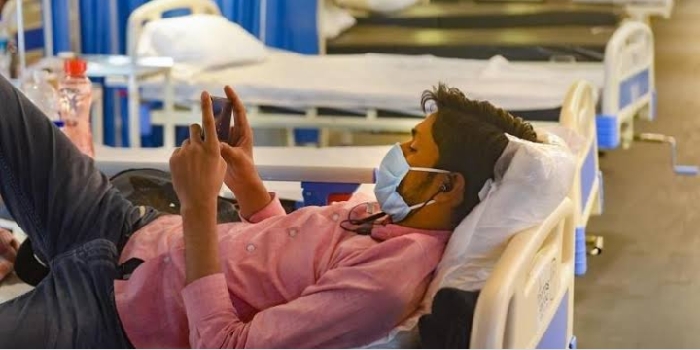
New Delhi, Aug 2: The Centre has written to all states and Union Territories stating that smartphones and tablet devices should be allowed for hospitalised Covid-19 patients so that they can interact with family and friends through video conferencing, which would provide them psychological support.

Though mobile phones are allowed in hospital wards, the missive was issued following some representation from the kin of patients alleging otherwise.

Director-General of Health Services (DGHS) in the Health Ministry Dr Rajiv Garg in the letter to the principal secretaries of health and medical education of states and Union territories said appropriate protocols for disinfecting devices and allotting timeslots can be developed by the hospital concerned to facilitate contact between patients and their family.

He underlined that administrative and medical teams should be responsive to the psychological needs of patients admitted in Covid-19 wards and ICUs of various hospitals.

"Social connection can calm down patients and also reinforce the psychological support given by the treating team. Please instruct all concerned that they should allow smartphones and tablet devices in patient areas so that the patient can video conference with their family and friends," stated the letter issued on July 29.

"Though mobile phones are allowed in the wards to enable a patient stay in touch with his or her family, we received representations from the patient families from some states stating mobile phones are not being allowed by hospital administrations because of which they were not being able to stay in contact with the patient," said Dr Garg.

Comments

Add new comment

  • Coastaldigest.com reserves the right to delete or block any comments.
  • Coastaldigset.com is not responsible for its readers’ comments.
  • Comments that are abusive, incendiary or irrelevant are strictly prohibited.
  • Please use a genuine email ID and provide your name to avoid reject.