



President's rule imposed in Uttarakhand

March 27, 2016

New Delhi, Mar 27: Uttarakhand was today brought under President's rule by the Centre on grounds of "breakdown of governance" in a controversial decision which comes in the wake of a political crisis triggered by a rebellion in the ruling Congress.president
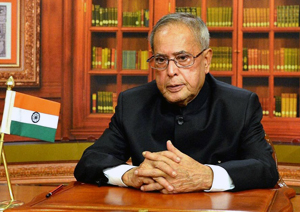
President Pranab Mukherjee signed the proclamation under Art 356 of the Constitution dismissing the Congress government headed by Harish Rawat and placing the Assembly under suspended animation this morning on the recommendation of the Union Cabinet.
The Cabinet had held an emergency meeting here last night presided over by Prime Minister Narendra Modi, who had cut short a visit to Assam to return to the capital for the purpose.

The Cabinet considered several reports received from Governor K K Paul, who had described the political situation as volatile and expressed apprehensions over possible pandemonium during the scheduled trial of strength in the state Assembly tomorrow.

Finance Minister Arun Jaitley is believed to have briefed the President late last night explaining the rationale for the Cabinet's recommendation.

The dismissal of the Rawat government now renders tomorrow's confidence vote infructuous.

It also came amidst reports that Speaker Govind Singh Kunjwal had disqualified 9 rebel Congress MLAs that would have enabled Rawat to sail through in the trust vote.

The Congress denounced the decision calling it a "murder of democracy" and said it showed that BJP did not believe in democracy.

The political crisis in the state arose after the controversial circumstances in which the Appropriation Bill was declared passed in the Assembly by the Speaker with the BJP and the rebel Congress claiming that a division of votes pressed by them was not allowed.

They alleged that the Bill was defeated in the voice vote by a majority of the members present but the Speaker did not test it in a proper division of votes.

The opposition claimed that it had a majority of 35 MLAs, including 9 rebels, in the House that day out of 67 MLAs present. The BJP said the 35 MLAs had written to the Speaker in advance that they would be voting against the bill but the Speaker had refused to take it into his consideration.

Last night, the Union Cabinet met amidst reports that the Speaker had disqualified the rebel Congress MLAs that would would have helped the beleaguered government.

Apprehending imposition of President's rule, the Congress had attacked the BJP saying it was resorting to the extreme step as its earlier moves had failed.

Comments

Abdullah
 - 
Sunday, 27 Mar 2016

The president Pranab Mukerjee working as a RSS agent.

Add new comment

  • Coastaldigest.com reserves the right to delete or block any comments.
  • Coastaldigset.com is not responsible for its readers’ comments.
  • Comments that are abusive, incendiary or irrelevant are strictly prohibited.
  • Please use a genuine email ID and provide your name to avoid reject.
Agencies
May 13,2020

New Delhi, May 13: Finance Minister Nirmala Sitharaman on Wednesday announced Rs 3 lakh crore collateral-free automatic loan for businesses, including MSMEs.

This will benefit 45 lakh small businesses, she said detailing parts of the Rs 20 lakh crore economic stimulus package.

The loan will have 4-year tenure and will have a 12-month moratorium, she said.

Also, Rs 20,000 crore subordinated debt will be provided for stressed MSMEs, she said adding this would benefit 2 lakh such businesses.

The Finance Minister said a fund of funds for MSME is being created, which will infuse Rs 50,000 crore equity in MSMEs with growth potentials.

Also, MSME definition has been changed to allow units with investment up to Rs 1 crore to be called micro-units in place of Rs 25 lakh now.

Also units with turnover up to Rs 5 crore to be called micro-units, she said, adding a turnover based criteria is being introduced to define small businesses.

The investment and turnover limits for small and medium businesses have likewise been raised to allow them to retain fiscal and other benefits, she said.

Global tenders will be banned for government procurement up to Rs 200 crore, she said, adding this would help MSMEs to compete and supply in government tenders.

Comments

JM
 - 
Thursday, 14 May 2020

Fully automatic loan..... not reachable to poor needy......

Add new comment

  • Coastaldigest.com reserves the right to delete or block any comments.
  • Coastaldigset.com is not responsible for its readers’ comments.
  • Comments that are abusive, incendiary or irrelevant are strictly prohibited.
  • Please use a genuine email ID and provide your name to avoid reject.
Agencies
March 12,2020

The Ministry of Health and Family Welfare has prepared a draft for guidelines for home quarantine, as well as for the use of masks by public, in view of coronavirus.

What to do in Home Quarantine?

The government says, for those taking refuge to home quarantine should stay in a well-ventilated single-room preferably with an attached or separate toilet. It adds that if another family member needs to stay in the same room, it's advisable to maintain a distance of at least 1 metre between the two.

The government advised, coronavirus patients to stay away from elderly people, pregnant women, children and persons with co-morbidities within the household as their immune system may be low. The health minister also suggested to restrict the patient's movement within the house. "Under no circumstances attend any social/religious gathering e.g. wedding, condolences, etc, said the guideline.

It also instructed the corona virus infected person to avoid sharing household items like dishes, drinking glasses, cups, eating utensils, towels, bedding, or other items with others at home. The guideline also demanded that even though home quarantine, the patient should wear a surgical mask at all times. "The mask should be changed every 6-8 hours and disposed off. Disposable masks are never to be reused, it added.

"Masks used by patients/ caregivers/ close contacts during home care should be disinfected using ordinary bleach solution (5 per cent) or sodium hypochlorite solution (1%) and then disposed of either by burning or deep burial," instructs the government.

Even for family members of a patient, the health ministry clearly instructs to use disposable gloves when cleaning the surfaces or handling soiled linen. No visitors, under any circumstances will be allowed, said the guideline.

"In case the person being quarantined becomes symptomatic, all his close contacts will be home quarantined (for 14 days) and followed up for an additional 14 days or till the report of such case turns out negative on lab testing," states the draft.

How to wear & dump masks?

There is a specific and elaborate do's and don'ts also released by the ministry. For those unsure in which mask to choose, it says, "Medical masks of different sizes and shapes are available in the market. The common ones are flat pleated masks of woven fabric which covers the nose and mouth and affixed behind the head with straps/ elastic fasteners. There are also conical or duck bill shaped masks with valves (or without valves) that fit in the contour of face over the nose and mouth, but are costlier."

However, the ministry warns, medical masks should not be used by healthy persons who are not having any symptoms "because it creates a false sense of security". Instead, it suggests to refrain from touching face, mouth, nose and eyes as well as washing hands regularly with soap for 20 seconds each time.

However, when a person develops a cough or fever, the suspected patient needs to switch to medical masks. "Use of medical three layer masks when ill, will prevent your infection from spreading to others. However you also need to wash your hands frequently to avoid spreading infection to others," read the guideline.

Even if one is not tested positive but showing symptoms, they are advised to wear masks while visiting a healthcare facility. "Close family contacts of such suspect/confirmed cases undergoing home care should also use Triple layer medical mask," it warns.

The ministry has also given point by point guideline on how to use a mask like to make sure that they are facing down while unfolding or for that matter to ensure there are no gaps on either side of the mask.

It even warns, "Fit flexible nose piece (a metallic strip that can easily be located) over nose-bridge" to ensure no one else are infected. The government also warns against simple dumping of the masks once used. Instead one should disinfect "using ordinary bleach solution (5 per cent) or sodium hypochlorite solution (1 per cent) and then disposed of either by burning or deep burial," says the Health Ministry.

COVID-19 emerged in early December 2019 in China's Wuhan province and has now spread to over 100 countries. As on March 9, 2020, India has reported 42 cases mostly among those who had travelled from affected countries.

However the government says, "It causes a minor illness in majority of patients with symptoms of fever and or cough. A small proportion of such persons may progress to severe disease with difficulty in breathing."

Comments

Add new comment

  • Coastaldigest.com reserves the right to delete or block any comments.
  • Coastaldigset.com is not responsible for its readers’ comments.
  • Comments that are abusive, incendiary or irrelevant are strictly prohibited.
  • Please use a genuine email ID and provide your name to avoid reject.
Agencies
June 6,2020

United Nations, Jun 6: The coronavirus disease has not "exploded" in India, but the risk of that happening remains as the country moves towards unlocking its nationwide lockdown that was imposed in March to contain the Covid-19, according to a top WHO expert.

WHO Health Emergencies Programme Executive Director Michael Ryan on Friday said the doubling time of the coronavirus cases in India is about three weeks at this stage.

“So the direction of travel of the epidemic is not exponential but it is still growing,” he said, adding that the impact of the pandemic is different in different parts of India and varies between urban and rural settings.

“In South Asia, not just in India but in Bangladesh and...in Pakistan, other countries in South Asia, with large dense populations, the disease has not exploded. But there is always the risk of that happening,” Ryan said in Geneva.

He stressed that as the disease generates and creates a foothold in communities, it can accelerate at any time as has been seen in a number of settings.

Ryan noted that measures taken in India such as the nationwide lockdown have had an impact in slowing transmission but the risk of an increase in cases looms as the country opens up.

“The measures taken in India certainly had an impact in dampening transmission and as India, as in other large countries, open up and as people begin to move again, there's always a risk of the disease bouncing back up,” he said.

He added that there are specific issues in India regarding the large amount of migration, the dense populations in the urban environment and the fact that many workers have no choice but to go to work every day.

India went past Italy to become the sixth worst-hit nation by the COVID-19 pandemic.

India saw a record single-day jump of 9,887 coronavirus cases and 294 deaths on Saturday, pushing the nationwide infection tally to 2,36,657 and the death toll to 6,642, according to the health ministry.

The lockdown in India, was first clamped on March 25 and spanned for 21 days, while the second phase of the curbs began on April 15 and stretched for 19 days till May 3. The third phase of the lockdown was in effect for 14 days and ended on May 17. The fourth phase ended on May 31.

The country had registered 512 coronavirus infection cases till March 24.

The nation-wide lockdown in containment zones will continue till June 30 in India but extensive relaxations in a phased manner from June 8 are listed in the Union home ministry's fresh guidelines on tackling the Covid-19 pandemic issued last week.

WHO Chief Scientist Soumya Swaminathan said the over 200,000 current coronavirus cases in India, a country of over 1.3 billion people, "look big but for a country of this size, it's still modest.”

She stressed that it is important for India to keep track of the growth rate, the doubling time of the virus and to make sure that that number doesn't get worse.

She said that India is a “heterogeneous and huge country” with very densely populated cities and much lower density in some rural areas and varying health systems in different states and these offer challenges to the control of Covid-19.

Swaminathan added that as the lockdown and restrictions are lifted, it must be ensured that all precautions are taken by people.

“We've been making this point repeatedly that really if you want behaviour change at a large level, people need to understand the rationale for asking them to do certain things (such as) wearing masks,” she said.

In many urban areas in India, it's impossible to maintain physical distancing, she said adding that it then becomes very important for people to wear appropriate face coverings when they are out, in office settings, in public transport and educational institutions.

“As some states are thinking about opening, every institution, organisation, industry and sector needs to think about what are the measures that need to be put in place before you can allow a functioning and it may never be back to normal.”

She said that in many professions working from home can be encouraged but in several jobs, people have to go to work and in such cases measures must be put in place that allow people to protect themselves and others.

“I think communication and behaviour change is a very large part of this whole exercise,” she added.

Comments

Add new comment

  • Coastaldigest.com reserves the right to delete or block any comments.
  • Coastaldigset.com is not responsible for its readers’ comments.
  • Comments that are abusive, incendiary or irrelevant are strictly prohibited.
  • Please use a genuine email ID and provide your name to avoid reject.