


Putin ordered campaign to influence prez election: US intel

January 7, 2017

Washington, Jan 7: The US intelligence community in a new declassified file today accused Russian President Vladimir Putin of ordering an "influence campaign" to help Donald Trump win the White House and denigrate his Democratic rival Hillary Clinton in a bid to undermine public faith in the American democratic process.
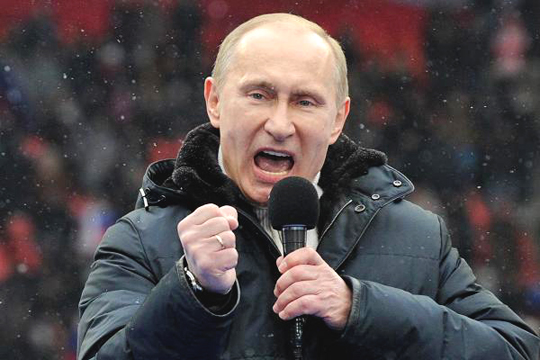
Putin

US President-elect Donald Trump was quick to refute the conclusion, saying hacking did not impact the November 8 presidential polls outcome.

"We assess Russian President Vladimir Putin ordered an influence campaign in 2016 aimed at the US presidential election," the Director of National Intelligence said in a report.

The 31-page report alleges that Russia's goals were to undermine public faith in the US democratic process, denigrate Democratic presidential candidate Hillary Clinton and harm her electability and potential presidency.

"We further assess Putin and the Russian government developed a clear preference for President-elect Trump. We have high confidence in these judgements," the US intelligence community said in the which was submitted to outgoing US President Barack Obama on Thursday.

Obama had ordered a comprehensive probe into allegations of Russian hacking the Democratic party's email system. A team of intelligence officials briefed Trump and Vice President-elect Mike Pence on the report in New York.

"While Russia, China, other countries, outside groups and people are consistently trying to break through the cyber infrastructure of our governmental institutions, businesses and organisations including the Democrat National Committee, there was absolutely no effect on the outcome of the election including the fact that there was no tampering whatsoever with voting machines," Trump said in a statement after the meeting.

"There were attempts to hack the Republican National Committee (RNC), but the RNC had strong hacking defences and the hackers were unsuccessful.

"I will appoint a team to give me a plan within 90 days of taking office. The methods, tools and tactics we use to keep America safe should not be a public discussion that will benefit those who seek to do us harm. Two weeks from today I will take the oath of office and America's safety and security will be my number one priority," Trump said, adding that there is a need to aggressively combat and stop cyberattacks.

Pence said Trump has made it very clear that the US is going to take aggressive action in the early days of the new administration to combat cyberattacks and protect the security of its citizens from this type of intrusion in the future.

The report alleged that Russian efforts to influence the 2016 US presidential poll represent the most recent expression of Moscow's longstanding desire to undermine the US-led liberal democratic order, but these activities demonstrated a significant escalation in directness, level of activity and scope of effort compared to previous operations.

"We also assess Putin and the Russian government aspired to help President-elect Trump's election chances when possible by discrediting secretary Clinton and publicly contrasting her unfavourably to him. All three agencies agree with this judgement. CIA and FBI have high confidence in this judgement; NSA has moderate confidence," the report said.

It said Moscow's approach evolved over the course of the campaign based on Russia's understanding of the electoral prospects of the two main candidates.

"When it appeared to Moscow that secretary Clinton was likely to win the election, the Russian influence campaign began to focus more on undermining her future presidency.

"Further information has come to light since election day that, when combined with Russian behaviour since early November 2016, increases our confidence in our assessments of Russian motivations and goals," it alleged.

Moscow's influence campaign followed a Russian messaging strategy that blends covert intelligence operations such as cyber activity with overt efforts by Russian government agencies, state-funded media, third-party intermediaries and paid social media users or "trolls", the report said.

"Russia, like its Soviet predecessor, has a history of conducting covert influence campaigns focused on US presidential elections that have used intelligence officers and agents and press placements to disparage candidates perceived as hostile to the Kremlin.

"We assess Moscow will apply lessons learned from its Putin-ordered campaign aimed at the US presidential election to future influence efforts worldwide, including against US allies and their election processes," the report said.

House Foreign Affairs Chairman Ed Royce said this report confirms what is already know, Putin's acts of aggression pose serious threats to vital US interests.

"The Obama administration's response to Putin's propaganda machine was weak and ineffective in Eastern Europe, and now we are paying the price here at home," Royce said.

Describing the intelligence community report on Russian hacking as stunning, House Minority Leader Nancy Pelosi wished that American people could have access to more details.

"The American people have a right to know what a foreign power did to disrupt our election, regardless of the election's outcome. Putin's assault on American democracy was political thuggery in support of Trump and there must be consequences," Pelosi said.

Comments

Add new comment

  • Coastaldigest.com reserves the right to delete or block any comments.
  • Coastaldigset.com is not responsible for its readers’ comments.
  • Comments that are abusive, incendiary or irrelevant are strictly prohibited.
  • Please use a genuine email ID and provide your name to avoid reject.
News Network
March 4,2020

Beijing/Zurich, Mar 4: China has approved the use of Swiss drugmaker Roche's anti-inflammation drug Actemra for patients who develop severe complications from the coronavirus as it urgently hunts for new ways to combat the deadly infection that is spreading worldwide.

China is hoping that some older drugs could stop severe cytokine release syndrome (CRS), or cytokine storms, an overreaction of the immune system which is considered a major factor behind catastrophic organ failure and death in some coronavirus patients.

Actemra, a biologic drug approved in 2010 in the United States for rheumatoid arthritis (RA), inhibits high Interleukin 6 (IL-6) protein levels that drive some inflammatory diseases.

China's National Health Commission said in treatment guidelines published online on Wednesday that Actemra can now be used to treat coronavirus patients with serious lung damage and high IL-6 levels.

Separately, researchers in the country are testing Actemra, known generically as tocilizumab, in a clinical trial expected to include 188 coronavirus patients and running until May 10.

Roche, which donated 14 million yuan ($2.02 million) worth of Actemra during February, said the trial was initiated independently by a third party with the aim of exploring the efficacy and safety of the drug in coronavirus patients with CRS.

It added that there was currently no published clinical trial data on the drug's safety or efficacy against the virus.

More than 3,000 people have died and 93,000 have been infected by the novel coronavirus thought to have originated in Wuhan, China, before spreading to around 90 countries including the United States, Italy, Switzerland, France and Germany.

The Swiss company, for which China is its No. 2 market behind the United States, also makes diagnostic gear to detect the coronavirus.

Since Actemra's approval a decade ago, it has become a go-to drug against other inflammatory conditions, including cytokine storms in cancer patients receiving cell therapies from Novartis and Gilead Sciences.

In 2012 it helped save the life of a young U.S. girl, the first child to be treated for leukaemia with Novatis' Kymriah, from a post-treatment rush of IL-6.

Priced at between $20-30,000 annually for RA according to SSR Health, Roche's medicine is also used for rare juvenile arthritis and giant cell arteritis, or inflammation of the blood vessels.

Comments

Add new comment

  • Coastaldigest.com reserves the right to delete or block any comments.
  • Coastaldigset.com is not responsible for its readers’ comments.
  • Comments that are abusive, incendiary or irrelevant are strictly prohibited.
  • Please use a genuine email ID and provide your name to avoid reject.
News Network
February 1,2020

Washington, Feb 1: The Indian economy experienced some abrupt slowdown in 2019 due to turbulence in non-banking financial institutions and major reform measures such as GST and demonetisation, but it is not in a recession, IMF Managing Director Kristalina Georgieva has said.

"The Indian economy indeed has experienced an abrupt slowdown in 2019. We had to revise our growth projections, downwards to four percent for last year. We are expecting 5.8 per cent (growth rate) in 2020 and then an upward trajectory to 6.5 percent in 2021," Georgieva told a group of foreign journalists here on Friday.

"It appears that the main reason for this slowdown was the non-banking financial institutions experiencing a turbulence," she said on the eve of Union Finance Minister Nirmala Sitharaman presenting the annual budget in Parliament on Saturday.

She said India had undertaken some important reforms that over the longer term would be beneficial for the country, but they do have some short-term impact.

"For example, coming with the unified tax system, and the demonetisation that took place. These are steps that over time are beneficial, but of course they might, might be somewhat disruptive over short term," Georgieva said in response to a question.

The International Monetary Fund (IMF) Managing Director said that there is not a lot of fiscal space in India. “But we also recognise that the policies of the government on that side, on the fiscal side have been prudent. We will see how the reading of the budget, the submission of the budget goes, tomorrow,” she said.

In the medium-term, she said, the IMF remains optimistic about India. “This is why we see that upswing potential for the growth in the country,” she said.

Georgieva said that the current economic slowdown cannot be described as a recession. "No.... You're far from that. But it is a significant slowdown, not the recession," she said.

The IMF managing Director noted that the consumption in India also slowed down and that contributed to the overall slowdown in the economy. The IMF would be keen to see what India does to get relatively sound macroeconomic fundamentals to pay off in terms of better growth trajectory, she said ahead of the budget.

One thing that is important for India is that budgetary revenue have been below target. "The country knows that. The finance minister knows it. They need to increase budgetary revenue collection so they can improve their fiscal position. I said it's tight on the spending side, but I also want to stress that there is room to improve collection on the revenue side," she said.

Comments

Add new comment

  • Coastaldigest.com reserves the right to delete or block any comments.
  • Coastaldigset.com is not responsible for its readers’ comments.
  • Comments that are abusive, incendiary or irrelevant are strictly prohibited.
  • Please use a genuine email ID and provide your name to avoid reject.
News Network
February 16,2020

Munich, Feb 16: Iran's foreign minister said Saturday that US President Donald Trump is receiving bad advice if he believes an American "maximum pressure" campaign against his country will cause the government in Tehran to collapse.

Foreign Minister Mohammad Javad Zarif told a group of top defense officials and diplomats at the Munich Security Conference that the information provided to the president has dissuaded Trump from accepting offers from other leaders to mediate between Washington and Tehran.

"President Trump has been convinced that we are about to collapse so he doesn't want to talk to a collapsing regime," Zarif said.

To support his argument, the Iranian minister cited Trump's decision to pull out unilaterally in 2018 from Iran's nuclear deal with the US and other world powers. Trump said the landmark 2015 accord didn't address Iran's ballistic missile program or regional activities and needed to be renegotiated.

Since then, the Trump administration's re-imposition of US sanctions in a campaign of so-called "maximum pressure" have taken a severe toll on the Iranian economy and sent Iran's currency plunging.

"I believe President Trump, unfortunately, does not have good advisers," Zarif said. "He's been wanting for Iran to collapse since he withdrew from the nuclear deal." Zarif also said the killing of Iranian Gen. Qassem Soleimani in a US drone strike in Iraq on January 3 was a miscalculation by Washington that has galvanized support for Iran instead of increasing pressure on the regime.

The Iran nuclear deal, known as the Joint Comprehensive Plan of Action or JCPOA, promised Iran economic incentives in exchange for curbs on its nuclear program. It was intended to prevent Tehran from developing a nuclear bomb, which Iran insists it does not want to do.

Since the US withdrawal, the deal's other signatories - Germany, France, Britain, Russia and China - have unsuccessfully struggled to come up with ways to offset the effects of the new American sanctions.

Washington has pressured the other countries - so far without success - to abandon the deal entirely US Secretary of State Mike Pompeo said at the Munich Security Conference earlier Saturday that while there may be disagreements on what to do with the JCPOA, "when I talk to my counterparts here in Europe, everybody gets it."

"Everyone understands that these are folks who continue to build out their nuclear program," Pompeo said. "So there's a common understanding about the threat; we have tactical differences on how to proceed."

In recent months, Iran has steadily violated the limitations the deal placed on the amount of enriched uranium and heavy water it can stockpile, the number and type of centrifuges it can operate, and the purity of the uranium it enriches.

Iranian officials insist the moves are intended only to put pressure on the countries that remain part of the deal to provide economic help to Iran and that all the measures taken are fully reversible.

Zarif rejected Trump's suggestion of negotiating a new deal, saying the one negotiated during the Obama administration was the only vehicle for talks on Iran's nuclear program.

"There is no point in talking over something you already talked about. You don't buy a horse twice," he said.

"It's not about opening talks with the United States. It's about bringing the United States to the negotiating table that's already there," Zarif said.

Comments

Add new comment

  • Coastaldigest.com reserves the right to delete or block any comments.
  • Coastaldigset.com is not responsible for its readers’ comments.
  • Comments that are abusive, incendiary or irrelevant are strictly prohibited.
  • Please use a genuine email ID and provide your name to avoid reject.