



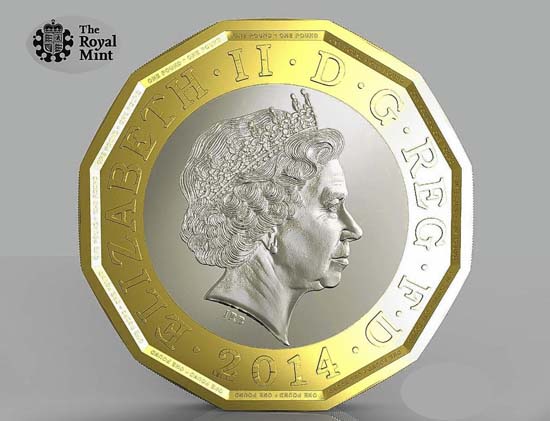
Royal Mint to cast coins from bullion from India

April 7, 2014

Britain_Royal_mintLondon, Apr 7: Britain's Royal Mint has started minting coins from Indian bullion cargo recovered from a British ship more than 70 years after it was sunk by a German U-boat.

The British ship with a cargo of 2,800 bars of silver bullion was on its way to London from Kolkata in 1941 when the ship, SS Gairsoppa, was torpedoed by a German submarine off the Irish coast.

The ship spent 70 years lost beneath the waves before being found in 2011, about 460km off the Irish coast, at a depth of three miles, half a mile deeper than the Titanic.

The deepest rescue operation in maritime history was carried out by a US company and the silver bullion was recovered from the seabed.

A portion of it was passed to the Royal Mint which began striking the coins on Friday, edged with the name SS Gairsoppa.

According to a recent report in The Telegraph, Shane Bissett, the Royal Mint's director of bullion and commemorative coin, said: "This incredible story marks yet another exciting moment in the Royal Mint's fascinating 1,000-year history.

"The traditional Britannia coin design, Philip Nathan's elegant portrayal of a windswept Britannia looking out to sea, is the perfect image for the coins struck from SS Gairsoppa's long-lost cargo.

"We are so pleased to be able to bring these coins to the market at long last, albeit more than 70 years later than expected."

According to the report, in December 1940 the Royal Mint was running dangerously low in stocks of silver due to the onset of war and called in emergency supplies from India.

The SS Gairsoppa sailed from Calcutta carrying the silver under the protection of a naval convoy.

But after battling a heavy storm it began running short of coal off the coast of Southern Ireland and was forced to break free and head for the safety of Galway Harbour.

The slow merchant ship was spotted by a German U-boat patrolling the British waters and was torpedoed at 12.08am on February 17, 1941. It sank within 20 minutes.

Three lifeboats were launched but only Second Officer Richard Ayres made it to land and survived to tell the tale.

His lifeboat started with 31 men but after spending 13 deadly days he was the only sailor to make it to dry land alive.

He was awarded an MBE in recognition of his heroic efforts to keep fellow survivors alive, as well as a War Medal for bravery at sea, and amazingly returned to sea nine months later.

Comments

Add new comment

  • Coastaldigest.com reserves the right to delete or block any comments.
  • Coastaldigset.com is not responsible for its readers’ comments.
  • Comments that are abusive, incendiary or irrelevant are strictly prohibited.
  • Please use a genuine email ID and provide your name to avoid reject.
Agencies
March 15,2020

Cybercriminals continue to exploit public fear of rising coronavirus cases through malware and phishing emails in the guise of content coming from the Centers for Disease Control and Prevention (CDC) in the US and World Health Organisation (WHO), says cybersecurity firm Kaspersky.

In the APAC region, Kaspersky has detected 93 coronavirus-related malware in Bangladesh, 53 in the Philippines, 40 in China, 23 in Vietnam, 22 in India and 20 in Malaysia. 

Single-digit detections were monitored in Singapore, Japan, Indonesia, Hong Kong, Myanmar, and Thailand. 

Along with the consistent increase of 2019 coronavirus cases comes the incessant techniques cybercriminals are using to prey on public panic amidst the global epidemic, the company said in a statement. 

Kaspersky also detected emails offering products such as masks, and then the topic became more commonly used in Nigerian spam emails. Researchers also found scam emails with phishing links and malicious attachments.

One of the latest spam campaigns mimics the World Health Organisation (WHO), showing how cybercriminals recognise and are capitalising on the important role WHO has in providing trustworthy information about the coronavirus.

"We would encourage companies to be particularly vigilant at this time, and ensure employees who are working at home exercise caution. 

"Businesses should communicate clearly with workers to ensure they are aware of the risks, and do everything they can to secure remote access for those self-isolating or working from home," commented David Emm, principal security researcher.

Some malicious files are spread via email. 

For example, an Excel file distributed via email under the guise of a list of coronavirus victims allegedly sent from the World Health Organisation (WHO) was, in fact, a Trojan-Downloader, which secretly downloads and installs another malicious file. 

This second file was a Trojan-Spy designed to gather various data, including passwords, from the infected device and send it to the attacker.

Comments

Add new comment

  • Coastaldigest.com reserves the right to delete or block any comments.
  • Coastaldigset.com is not responsible for its readers’ comments.
  • Comments that are abusive, incendiary or irrelevant are strictly prohibited.
  • Please use a genuine email ID and provide your name to avoid reject.
Agencies
May 30,2020

The GST Council is unlikely to make major changes in the indirect tax structure at its next meeting slated mid June.

A top government source said that the Centre is not in favour of increasing tax rates on any goods or service as it could further impact consumption and demand that is already suppressed due the COVID-19 pandemic and lockdown.

It was widely expected that the GST Council could consider raising tax rates and cess on certain non-essential items to boost revenue for states and the Centre. Several states have reportedly taken an over 80-90 per cent hit in GST collections in April, the official data for which has not yet been released by the Centre.

"The need of the hour is to boost consumption and improve demand. By categorising items into essential and non-essential and then raising taxes on non-essential is not what Centre favours. But, the issue on rates and relief will be decided by the GST Council that is meeting next month," the finance ministry official source quoted above said.

The GST Council is chaired by the Union finance minister and thus the views of the Centre play out strongly in the council meetings.

However, the Council will also have to balance the expectations of the states whose revenues have nosedived after the coronavirus outbreak and wide scale disruption to businesses while they have still not been paid GST compensation since the December-January period.

To the question of wider scale job losses in the period of lockdown as businesses get widely impacted, the official said that the Finance Ministry has asked the labour ministry to collect data on job losses during Covid-19 and is constantly engaging with the ministry to oversee job losses and salary cuts.

On restrictions put on Chinese investment in India, the official clarified that no decision had yet been taken to restrict China through the Foreign Portfolio Investment (FPI) route.

Asked about monetising government debt, the official said that the issue would be looked at when we reach a stage. It has not come to that stage yet.

In the government's over Rs 20 lakh crore economic package, the official defended its structure while suggesting that comparisons with the economic packages of other countries should not be drawn as India's needs were different from others.

"We have gone in more reforms that is needed to give strength to the economy. This is required more in our country," the official source said.

Comments

Add new comment

  • Coastaldigest.com reserves the right to delete or block any comments.
  • Coastaldigset.com is not responsible for its readers’ comments.
  • Comments that are abusive, incendiary or irrelevant are strictly prohibited.
  • Please use a genuine email ID and provide your name to avoid reject.
Agencies
July 2,2020

Leiden, Jul 2: Astronomers have discovered a luminous galaxy caught in the act of reionizing its surrounding gas only 800 million years after the Big Bang.

The research, led by Romain Meyer, PhD student at UCL in London, UK, has been presented at the virtual annual meeting of the European Astronomical Society (EAS).

Studying the first galaxies that formed 13 billion years ago is essential to understanding our cosmic origins. One of the current hot topics in extragalactic astronomy is 'cosmic reionization,' the process in which the intergalactic gas was ionized (atoms stripped of their electrons).

Cosmic reionization is similar to an unsolved murder: We have clear evidence for it, but who did it, how and when? We now have strong evidence that hydrogen reionization was completed about 13 billion years ago, in the first billion years of the universe, with bubbles of ionized gas slowly growing and overlapping.

The objects capable of creating such ionized hydrogen bubbles have however remained mysterious until now: the discovery of a luminous galaxy in which 60-100 percent of ionizing photons escape, is likely responsible for ionizing its local bubble. This suggests the case is closer to being solved.

The two main suspects for cosmic reionization are usually 1) a population of numerous faint galaxies leaking ~10 percent of their energetic photons, and 2) an 'oligarchy' of luminous galaxies with a much larger percentage (>50 percent) of photons escaping each galaxy.

In either case, these first galaxies were very different from those today: galaxies in the local universe are very inefficient leakers, with only <2-3 percent of ionizing photons escaping their host. To understand which galaxies governed cosmic reionization, astronomers must measure the so-called escape fractions of galaxies in the reionization era.

The detection of light from excited hydrogen atoms (the so-called Lyman-alpha line) can be used to infer the fraction of escaping photons. On the one hand, such detections are rare because reionization-era galaxies are surrounded by neutral gas which absorbs that signature hydrogen emission.

On the other hand, if this hydrogen signal is detected it represents a 'smoking gun' for a large ionized bubble, meaning we have caught a galaxy reionizing its surroundings. The size of the bubble and the galaxy's luminosity determines whether it is solely responsible for creating this ionized bubble or if unseen accomplices are necessary.

The discovery of a luminous galaxy 800 million years after the Big Bang supports the scenario where an 'oligarchy' of bright leakers emits most of the ionizing photons.

"It is the first time we can point to an object responsible for creating an ionized bubble, without the need for a contribution from unseen galaxies.

Additional observations with the upcoming James Webb Space Telescope will enable us to study further what is likely one of the best suspects for the unsolved case of cosmic reionization," said Meyer.

Comments

Add new comment

  • Coastaldigest.com reserves the right to delete or block any comments.
  • Coastaldigset.com is not responsible for its readers’ comments.
  • Comments that are abusive, incendiary or irrelevant are strictly prohibited.
  • Please use a genuine email ID and provide your name to avoid reject.