


Saudi Arabia’s ‘look-east’ policy pays off

March 17, 2017

Beijing, Mar 17: Chinese foreign affairs analysts say that a series of agreements signed by Saudi Arabia and China is a “win-win” situation for both countries.
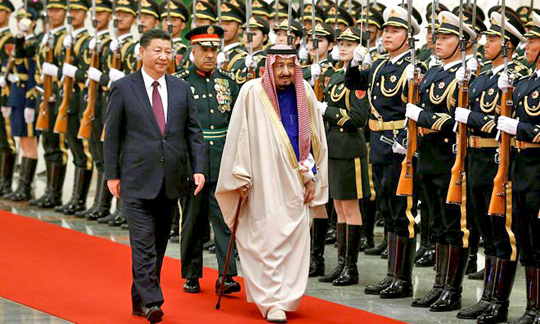
Saudi3

Saudi Arabia’s King Salman oversaw the signing of deals worth potentially $65 billion on the first day of a visit to Beijing on Thursday, as the world’s largest oil exporter looks to cement ties with China.

Dr. Zeng Ji, chair of the Department of International Affairs at Sun Yat-sen University, China, told Arab News the deals consist of 35 projects that include covering productive capacity, trade, space industry, new energy and education.

“So far, I have noticed that little is mentioned about oil deals,” Zeng said. “It suggests that Sino-Saudi economic cooperation becomes more pluralistic nowadays, compared with China’s traditional reliance on Saudi oil. For China, the Middle East, including Saudi Arabia ... is not only a provider of energy. The paramount need for China is to export its over-abundant productive capacity.”

Zeng added the Middle East would accelerate China’s ambitious initiative aimed at tighter economic links with countries extending to Europe and Africa through the Middle East.

He also said the “deals suggest a win-win situation in the eyes of both countries.”

Dr. Degang Sun of the Institute of Shanghai International Studies University said China and Saudi Arabia are a perfect match in potential trade and investments.

“The two sides’ economies are supplementary to each other,” Degang told Arab News.

“In recent years, China put forward the ‘One Belt and One Road Initiative’ and the Saudi government put forward Vision 2030 in 2016. The two sides’ development strategies are compatible with each other. China perceives Saudi Arabia as the pivotal state in implementing its ‘One Belt and One Road,’ and China’s investment in and trade with Saudi Arabia will enhance the diversification and industrialization of the Saudi economy in the next decade.”

He said Saudi Arabia “looking east” and China “looking west” will enhance their strategic partnership.

Few other details were given about the 14 memoranda of understanding (MoU) that were signed on Thursday.

Besides the MoUs agreed between the two governments, Saudi and Chinese companies signed 21 deals, ranging from exploring investments in oil and petrochemical plants to e-commerce and co-operating in renewable energy markets.

Comments

Add new comment

  • Coastaldigest.com reserves the right to delete or block any comments.
  • Coastaldigset.com is not responsible for its readers’ comments.
  • Comments that are abusive, incendiary or irrelevant are strictly prohibited.
  • Please use a genuine email ID and provide your name to avoid reject.
Agencies
August 2,2020

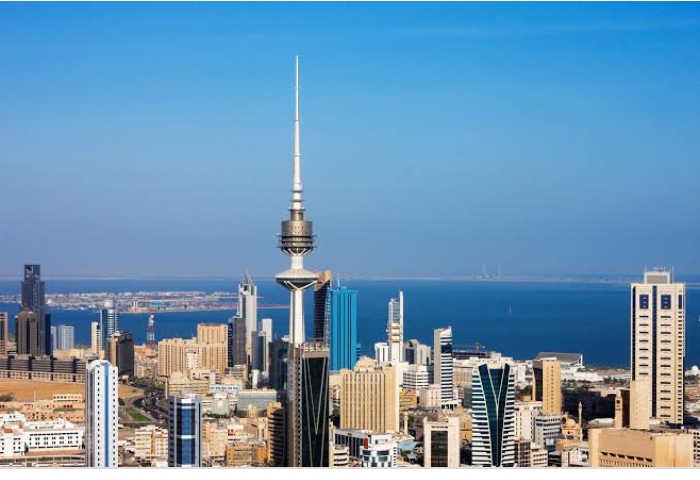
Kuwait, Aug 2: Kuwait has barred entry of foreign passengers from over 30 countries including India and China.

A circular from the Director General Civil Aviation, State of Kuwait directed all airlines operating at Kuwait International Airport to adhere to the instructions in this regard.

"Based on the decision of the Health Authority in State of Kuwait, no foreign passenger coming from the down listed countries will be allowed to enter the State of Kuwait," the circular read.

These include- India, Iran, China, Brazil, Colombia, Armenia, Bangladesh, Philippines, Syria, Spain, Singapore, Bosnia and Herzegovina, Sri Lanka, Nepal, Iraq, Mexico, Indonesia, Chile, Pakistan, Egypt, Lebanon, Hong Kong, Italy, North Macedonia, Moldova, Panama, Beirut ,Serbia Montenegro, Dominican Republic and Kosovo.

The circular stated that such restriction will also include the passengers were present 14 days before the date of travel until further notice.

The ban was announced the same day Kuwait began a partial resumption of commercial flights according to Khaleej Times, which quoted authorities stating that Kuwait International Airport would run at about 30 per cent capacity from Saturday, gradually increasing in coming months.

According to the latest data from Johns Hopkins University, Kuwait has reported 67,448 cases of coronavirus while the fatalities related to the virus stand at 453.

Comments

Add new comment

  • Coastaldigest.com reserves the right to delete or block any comments.
  • Coastaldigset.com is not responsible for its readers’ comments.
  • Comments that are abusive, incendiary or irrelevant are strictly prohibited.
  • Please use a genuine email ID and provide your name to avoid reject.
News Network
July 1,2020

Riyadh, Jul 1: Saudis braced Wednesday for a tripling in value added tax, another unpopular austerity measure after the twin shocks of coronavirus and an oil price slump triggered the kingdom's worst economic decline in decades.

Retailers in the country reported a sharp uptick in sales this week of everything from gold and electronics to cars and building materials, as shoppers sought to stock up before VAT is raised to 15 percent.

The hike could stir public resentment as it weighs on household incomes, pushing up inflation and depressing consumer spending as the kingdom emerges from a three-month coronavirus lockdown.

"Cuts, cuts, cuts everywhere," a Saudi teacher in Riyadh told AFP, bemoaning vanishing subsidies as salaries remain stagnant.

"Air conditioner, television, electronic items," he said, rattling off a list of items he bought last week ahead of the VAT hike.

"I can't afford these things from Wednesday."

With its vast oil wealth funding the Arab world's biggest economy, the kingdom had for decades been able to fund massive spending with no taxes at all.

It only introduced VAT in 2018, as part of a push to reduce its dependence on crude revenues.

Then, seeking to shore up state finances battered by sliding oil prices and the coronavirus crisis, it announced in May that it would triple VAT and halt a cost-of-living monthly allowance to citizens.

The austerity push underscores how Saudi Arabia's once-lavish spending is becoming a thing of the past, with the erosion of the welfare system leaving a mostly young population to cope with reduced incomes and a lifestyle downgrade.

That could pile strain on a decades-old social contract whereby citizens were given generous subsidies and handouts in exchange for loyalty to the absolute monarchy.

The rising cost of living may prompt many to ask why state funds are being lavished on multi-billion-dollar projects and overseas assets, including the proposed purchase of English football club Newcastle United.

Shopping malls in the kingdom have drawn large crowds in recent days as retailers offered "pre-VAT sales" and discounts before the hike kicks in.

A gold shop in Riyadh told AFP it saw a 70 percent jump in sales in recent weeks, while a car dealership saw them tick up by 15 percent.

Once the new rate is in place, businesses are predicting depressed sales of everything from cars to cosmetics and home appliances.

Capital Economics forecast inflation will jump up to six percent year-on-year in July, from 1.1 percent in May, as a result.

"The government ended the country's lockdown (in June) and there are signs that economic activity has started to recover," Capital Economics said in a report.

"Nonetheless, we expect the recovery to be slow-going as fiscal austerity measures bite."

The kingdom also risks losing its edge against other Gulf states, including its principal ally the United Arab Emirates, which introduced VAT at the same time but has so far refrained from raising it beyond five percent.

"Saudi Arabia is taking massive risks with contractionary fiscal policies," said Tarek Fadlallah, chief executive officer of the Middle East unit of Nomura Asset Management.

But the kingdom has few choices as oil revenue declines.

Its finances have taken another blow as authorities massively scaled back this year's hajj pilgrimage, from 2.5 million pilgrims last year to around a thousand already inside the country, and suspended the lesser umrah because of coronavirus.

Together the rites rake in some $12 billion annually.

The International Monetary Fund warned the kingdom's GDP will shrink by 6.8 percent this year -- its worst performance since the 1980s oil glut.

The austerity drive would boost state coffers by 100 billion riyals ($26.6 billion), according to state media.

But the measures are unlikely to plug the kingdom's huge budget deficit.

The Saudi Jadwa Investment group forecasts the shortfall will rise to a record $112 billion this year.

Comments

Add new comment

  • Coastaldigest.com reserves the right to delete or block any comments.
  • Coastaldigset.com is not responsible for its readers’ comments.
  • Comments that are abusive, incendiary or irrelevant are strictly prohibited.
  • Please use a genuine email ID and provide your name to avoid reject.
News Network
April 16,2020

Dubai, Apr 16: Saudi Arabia reported 518 new cases of coronavirus, bringing the total number of infections in the country to 6380, the Ministry of Health announced on Thursday.

According to the ministry of health, the number of recoveries today were 59, making total of recoveries in the kingdom 990, with 71 critical cases in intensive care.

The ministry also confirmed 4 deaths, bringing the total number of deaths in the kingdom to 83.

Saudi Arabia imposed a 24-hour curfew and lockdown on the cities of Riyadh, Tabuk, Dammam, Dhahran and Hofuf and throughout the governorates of Jeddah, Taif, Qatif and Khobar. This week the curfew was extended until further notice by king Salman

Overall, Saudi Arabia has reported one of the lowest rates of infections in the region, with around 6000 cases in a population of over 30 million.

Private sector support

Saudi Arabia has allocated SR50 billion (Dhs49 billion)to support the private sector as part of its package of initiatives approved by King Salman on Wednesday aimed at mitigating economic repercussions from the coronavirus disease (COVID-19).

The package targets small and medium-sized enterprises (SMEs) and economic activities that have been most affected by the pandemic.

Comments

Add new comment

  • Coastaldigest.com reserves the right to delete or block any comments.
  • Coastaldigset.com is not responsible for its readers’ comments.
  • Comments that are abusive, incendiary or irrelevant are strictly prohibited.
  • Please use a genuine email ID and provide your name to avoid reject.