


Swiss money trail: From gold & diamond to stocks & bitcoins

June 29, 2014

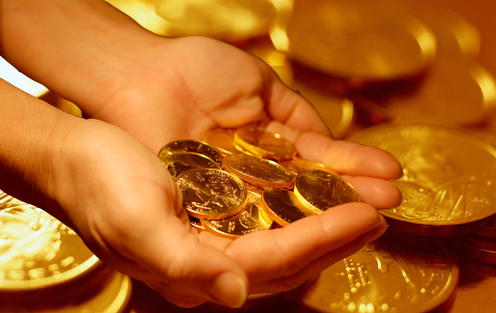
Swiss GoldZurich/New Delhi, Jun 29: As Switzerland commits to cooperate in India's fight against black money, a new strategy of 'layering' through gold and diamond trade has come to light at Swiss banks to thwart any attempt for identification of real beneficiary owners of funds entrusted with them.

The activities and avenues being used for such 'layering' include diamond trade, gold and other jewellery exports, stock market transactions through use of complex funds, as also the fund transfer through new-age virtual currencies like bitcoin.

At a time when Switzerland has been facing intense pressure to act on the alleged use of Swiss banks for stashing black money by Indians, the government data of the Alpine nation shows that India has become the top destination for its gold exports with trade worth close to 6 billion Swiss francs (about Rs 40,000 crore) since the beginning of this year.

According to government and banking sources, there is a growing suspicion that a portion of gold and diamond trade is being used to route funds from Swiss banks to India and other destinations.

At the same time, the banks in Switzerland are now getting an undertaking signed by their clients, where the customer agrees to take responsibility for any possible regulatory or administrative compliance with international norms.

The development regarding alleged use of diamond and gold trade, as also stock market transactions and bitcoins, for layering of black money comes at a time when there has been an intense debate about Swiss authorities' assistance in India's fight against black money, which has been a politically sensitive issue in the country.

A senior Swiss government official recently said that Switzerland was ready to help India with data under its 'spontaneous information exchange' initiative on a proactive basis, although the European country continues to resist any information-sharing on requests based on 'stolen data'.

The statement triggered a major debate and Switzerland's Secretariat for International Financial Matters (SIF) issued a public statement on this matter. Some reports went on to suggest that Swiss authorities have already shared a list of Indians alleged to have stashed black money, but any such development was denied by both the government.

When contacted, SIF spokesperson Mario Tuor confirmed that the Swiss authorities "are in contact with the Indian government", but refused to share further details.

In reply to emailed queries, Tuor said that Switzerland is looking forward to working together with the new government in India in its fight against tax evasion.

Tuor, however, refused to comment on his reported remarks that Switzerland has not shared any list with India, neither it was preparing one for sharing with the Indian authorities.

The other routes being tapped by some Swiss bankers and their clients for 'layering' of their funds include art works, as also virtual currencies, they added.

'Layering' is generally second stage of money laundering process and this involves moving illicit funds around the financial system through a complex series of transactions to complicate the paper trail.

This 'layering' typically takes place between the first stage -- 'placement' of black money in the financial system either in cash vaults, or through a series of cash or sham financial transactions -- and before the final 'integration' stage when money is put back into the financial system through various transactions for the benefit of its final recipient.

The latest data compiled by Switzerland's Federal Customs Administration (FCA) shows that exports to India of gold, silver and coins to India has been rising consistently since January this year (981 million Swiss francs) and reached 1.2 billion Swiss francs (about Rs 8,000 crore) in May 2014.

Moreover, India accounted for over 32 per cent of entire Swiss exports of such items during May, up from just about 14 per cent at the beginning of this year. In the process, India has overtaken China as biggest destination for Swiss gold exports. Interestingly, Switzerland's overall gold export figures have fallen in recent months, but exports to India are rising.

Under global pressure, Switzerland decided earlier this year to provide country-wise breakdown of its gold trade.

The Financial Action Task Force (FATF), a global financial crimes combating body, had also said in one of its recent reports that India is one of the five countries where instances have been found that trade accounts of diamond business are being used to launder illegal funds.

Switzerland is also in the process of easing its various regulations, including those related to sharing of information with foreign jurisdictions in cases of suspected tax evasion and other financial crimes.

When asked whether India would be a beneficiary for automatic information exchange once a revised Tax Administrative Assistance Act comes into force in August, SIF spokesperson declined to give any direct answer and said it would depend on various developments within the country.

"Switzerland is actively taking part in international efforts aimed at better combating tax fraud and evasion such as the development of a worldwide standard for automatic exchange of information. Like India, Switzerland has endorsed the declaration on automatic exchange of information..." Tuor said.

On specific query that whether India would benefit, the spokesperson said that Switzerland would first wait until the new global standard on automatic exchange in tax matters has been defined by the OECD and accepted by the G20.

"Secondly, the Swiss government will propose how to implement the new standard in Switzerland. Thirdly, the Swiss parliament will decide on the government's proposals... I can't give you any further details," Tuor said.

Comments

Add new comment

  • Coastaldigest.com reserves the right to delete or block any comments.
  • Coastaldigset.com is not responsible for its readers’ comments.
  • Comments that are abusive, incendiary or irrelevant are strictly prohibited.
  • Please use a genuine email ID and provide your name to avoid reject.
Agencies
May 19,2020

Washington DC, May 19: US President Donald Trump has threatened to permanently halt funding for the World Health Organisation (WHO) if it did not commit to improvements within 30 days, and to reconsider the membership of the United States in the global health body.

On Monday, Trump wrote a letter to WHO Director-General Tedros Ghebreyesus that read, "If WHO doesn't commit to major substantive improvements within the next 30 days, I will make my temporary freeze of US funding to WHO permanent and reconsider our membership in the organisation."

Trump had temporarily suspended US' contribution to the WHO last month, accusing it of promoting China's "disinformation" about the coronavirus outbreak, although WHO officials denied the accusation and Beijing said that it was transparent and open.

"The only way forward for the WHO is if it can actually demonstrate independence from China. My administration has already started discussions with you on how to reform the organisation. But action is needed quickly. 

We do not have time to waste," Trump said in the letter.

"I cannot allow American taxpayer dollars to continue to finance an organisation that, in its present state, is so clearly not serving America's interests," he added.

On Monday, the WHO said that an independent review of the global coronavirus response would begin at the earliest and it received backing from China, where the virus was first discovered.

Comments

Add new comment

  • Coastaldigest.com reserves the right to delete or block any comments.
  • Coastaldigset.com is not responsible for its readers’ comments.
  • Comments that are abusive, incendiary or irrelevant are strictly prohibited.
  • Please use a genuine email ID and provide your name to avoid reject.
News Network
May 7,2020

United Nations, May 7: An average of 80,000 COVID-19 cases were reported each day in April to the World Health Organization, the top UN health agency has said, noting that South Asian nations like India and Bangladesh are seeing a spike in the infections while the numbers are declining in regions such as Western Europe.

WHO Director-General Tedros Adhanom Ghebreyesus said on Wednesday that countries must also be able to manage any risk of the disease being imported into their territories, and communities should be fully educated to adjust to what will be a "new norm".

He said as the countries press forward in the common fight against COVID-19, they should also lay the groundwork for resilient health systems globally.

"More than 3.5 million cases of COVID-19 and almost 250,000 deaths have now been reported to the WHO. Since the beginning of April, an average of around 80,000 new cases have been reported to the WHO every day," Ghebreyesus said in Geneva yesterday.

Asserting that the virus cases were not just numbers, he said: "every single case is a mother, a father, a son, a daughter, a brother, sister or friend".

He said while the numbers are declining in Western Europe, more cases are being reported every day from Eastern Europe, Africa, South-East Asia, the Eastern Mediterranean and the Americas. Even within regions and within countries, there are divergent trends, the agency added.

While some countries are reporting an increase in COVID-19 cases over time, many have seen caseloads rise because they have ramped up testing, the WHO official said.

"We've also seen in Europe and Western Europe a fundamental decrease in the number of cases, but we have seen an associated increase in the number of cases reported in places like the Russian Federation. Southeast, the Western Pacific areas are relatively on the downward trend like Korea and others, but then we do see in South Asia, in places like Bangladesh, in India, some trends towards increase.

"So it's very difficult to say that any particular region is improving or (not improving). There are individual countries within each region that are having difficulties getting on top of this disease and I am particularly concerned about those countries that have (an) ongoing humanitarian crisis," WHO's Executive Director Michael Ryan said.

The death toll due to COVID-19 in India rose to 1,783 while the number of cases climbed to 52,952 on Thursday, registering an increase of 89 deaths and 3,561 cases in the last 24 hours, the Union Health Ministry said.

The number of active COVID-19 cases stood at 35,902 while 15,266 people have recovered, it said.

Noting that while seeing an increase in the number of cases is not good in terms of transmission, WHO's Emerging Diseases and Zoonoses Unit head Maria Van Kerkhove said: "but I don't want to equate that with something (being) wrong".

"I want to equate that with countries are working very hard to increase their ability to find the virus, to find people with the virus, to have testing in place to identify who has COVID-19, and putting into place what they need to do to care for those patients," Kerkhove said.

With more countries considering easing restrictions implemented to curb the spread of the coronavirus, the WHO has again reminded the authorities of the need to maintain vigilance.

"The risk of returning to lockdown remains very real if countries do not manage the transition extremely carefully, and in a phased approach," Ghebreyesus said.

He urged countries to consider the UN agency's six criteria for lifting stay-at-home measures.

That advice includes ensuring surveillance is strong, cases are declining and transmission is controlled. Health systems also must be able to detect, isolate, test and treat cases, and to trace all contacts.

Additionally, the risk of outbreak in settings such as health facilities and nursing homes needs to be minimised, while schools, workplaces and other public locations should have preventive measures in place.

"The COVID-19 pandemic will eventually recede, but there can be no going back to business as usual. We cannot continue to rush to fund panic but let preparedness go by the wayside," he said.

He said the crisis has highlighted the importance of strong national health systems as the foundation of global health security: not only against pandemics but also against the multitude of health threats that people across the world face every day.

"If we learn anything from COVID-19, it must be that investing in health now will save lives later," Ghebreyesus said.

While the world currently spends around USD 7.5 trillion on health annually, the WHO believes the best investments are in promoting health and preventing disease.

"Prevention is not only better than cure, it's cheaper, and the smartest thing to do," he said.

The deadly coronavirus, which originated from the Chinese city of Wuhan in December last year, has infected over 3.7 million people and killed 263,831 people globally, according to a tally by Johns Hopkins University.

Comments

Add new comment

  • Coastaldigest.com reserves the right to delete or block any comments.
  • Coastaldigset.com is not responsible for its readers’ comments.
  • Comments that are abusive, incendiary or irrelevant are strictly prohibited.
  • Please use a genuine email ID and provide your name to avoid reject.
News Network
July 26,2020

Seoul, Jul 26: North Korean authorities have imposed a lockdown on the border city of Kaesong after discovering what they called the country's first suspected case of the novel coronavirus, state media reported Sunday.

Leader Kim Jong Un convened an emergency politburo meeting on Saturday to implement a "maximum emergency system and issue a top-class alert" to contain the virus, official news agency KCNA said.

If confirmed, it would be the first officially recognised COVID-19 case in the North where medical infrastructure is seen as woefully inadequate for dealing with any epidemic.

KCNA said a defector who had left for the South three years ago returned on July 19 after "illegally crossing" the heavily fortified border dividing the countries.

But there have been no reports in the South of anyone leaving through what is one of the world's most secure borders, replete with minefields and guard posts.

Pyongyang has previously insisted not a single case of the coronavirus had been seen in the North despite the illness having swept the globe, and the country's borders remain closed.

The patient was found in Kaesong City, which borders the South, and "was put under strict quarantine", as would anybody who had come in close contact, state media said.

It was a "dangerous situation... that may lead to a deadly and destructive disaster", the media outlet added.

Kim was quoted as saying "the vicious virus could be said to have entered the country", and officials on Friday took the "preemptive measure of totally blocking Kaesong City".

The nuclear-armed North closed its borders in late January as the virus spread in neighbouring China and imposed tough restrictions that put thousands of its people into isolation, but analysts say the North is unlikely to have avoided the contagion.

South Korea is currently recording around 40 to 60 cases a day.

Earlier this month Kim warned against any "hasty" relaxation of anti-coronavirus measures, indicating the country will keep its borders closed for the foreseeable future.

Comments

Add new comment

  • Coastaldigest.com reserves the right to delete or block any comments.
  • Coastaldigset.com is not responsible for its readers’ comments.
  • Comments that are abusive, incendiary or irrelevant are strictly prohibited.
  • Please use a genuine email ID and provide your name to avoid reject.